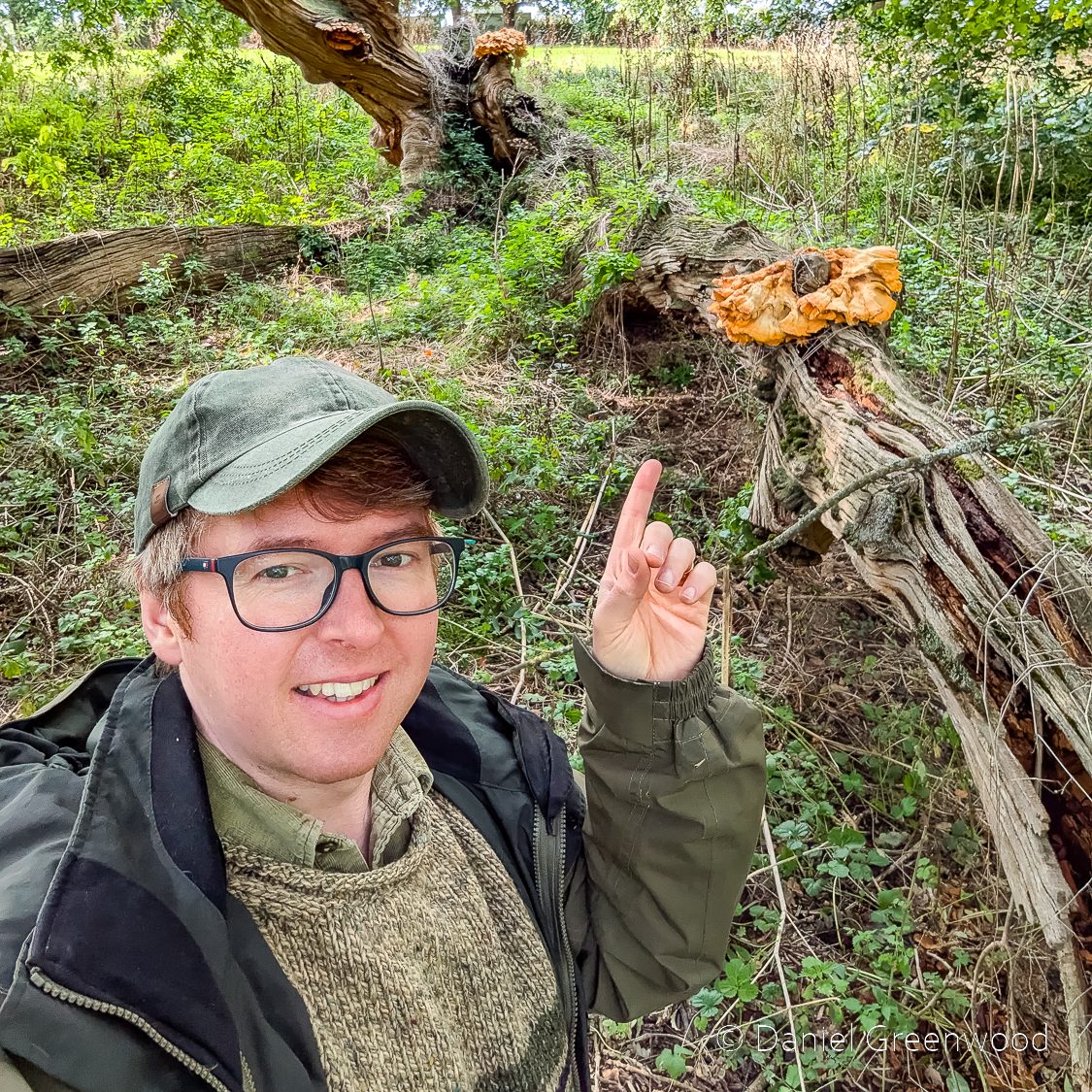

Widecombe-in-the-Moor, Dartmoor, Devon, November 2025
Welcome to the final post from my Dartmoor 2025 series. This features the mushrooms I photographed during a 12 mile circular walk from the Bovey area to Widecombe-in-the-Moor and back in November 2025.
This is a walk my wife and I had wanted to do for about ten years, and it was worth the wait. I know more about mushrooms now than I did in 2016, so that’s also helped to appreciate the walk more.
This post is going to be quite lichen and waxcap-heavy, such is the unique nature of Dartmoor and its climate: rain, ancient grasslands/moorlands, and rocks.
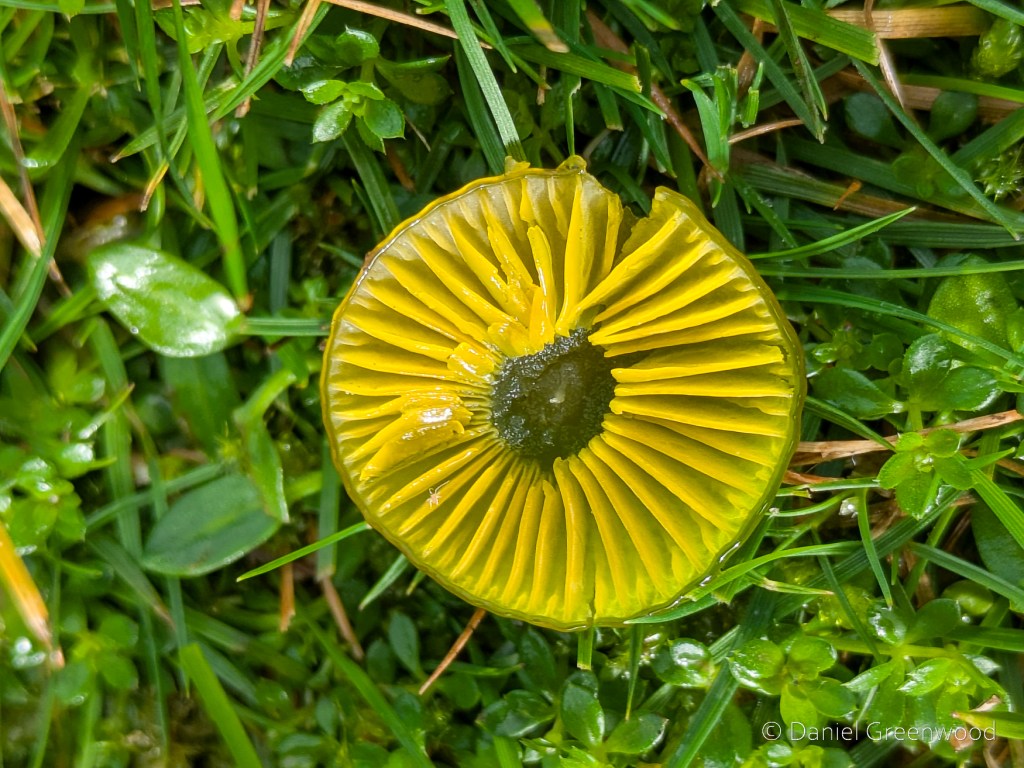
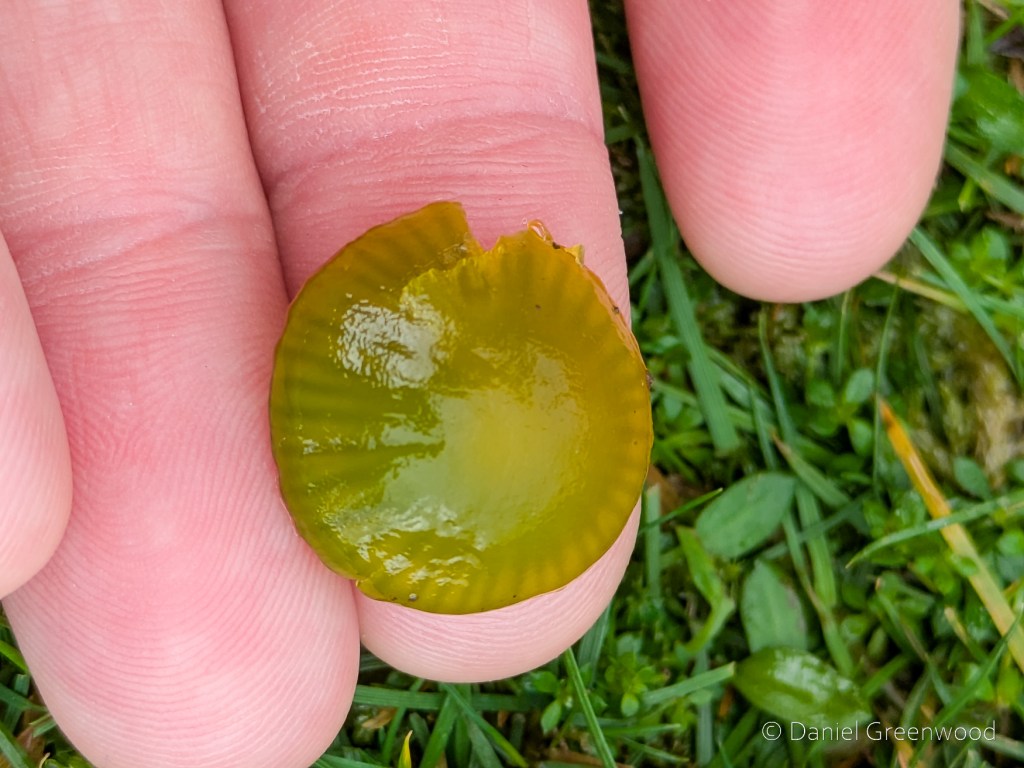
The first sighting of note was on the way through Haytor. These are some of the only parrot waxcaps I saw during the visit, or at least there was the cap of one.
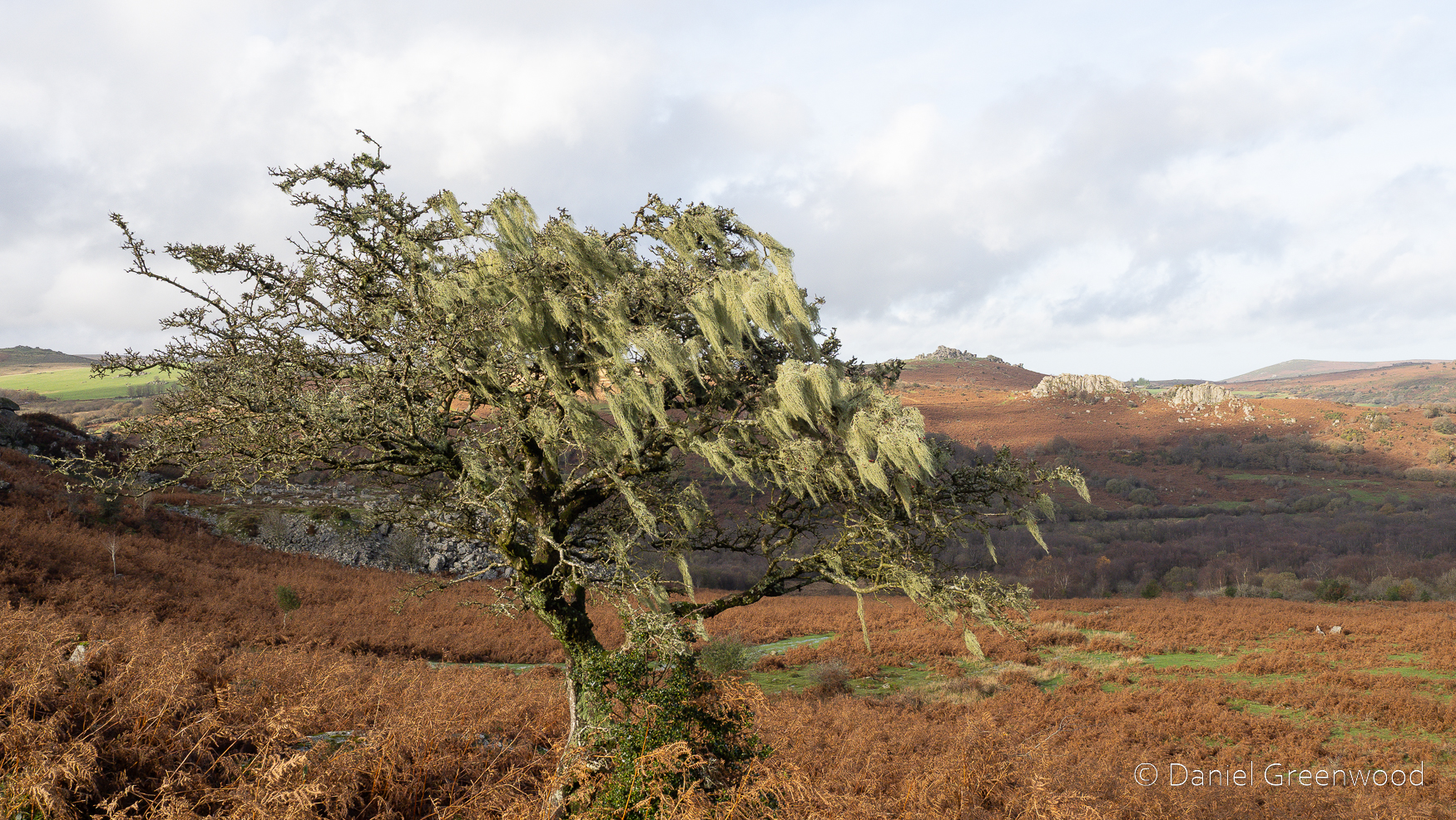
Passing through Holwell Quarry you encounter a magnificent Dartmoor view. This hawthorn is bedraggled with string of sausages lichen.
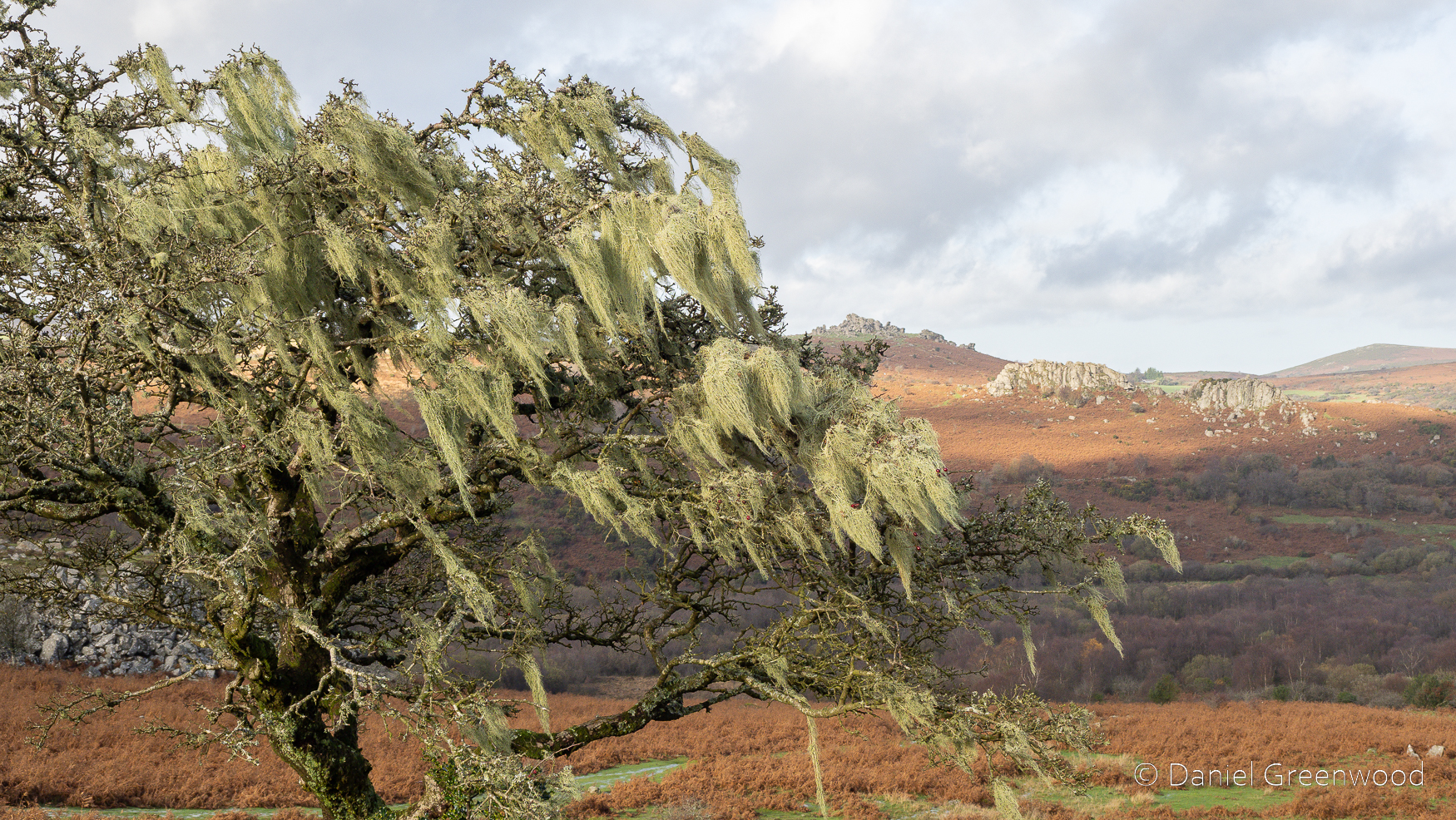
Beyond the lichens you can see two tors – Greator Rocks (324m) and Hound Tor (419m).
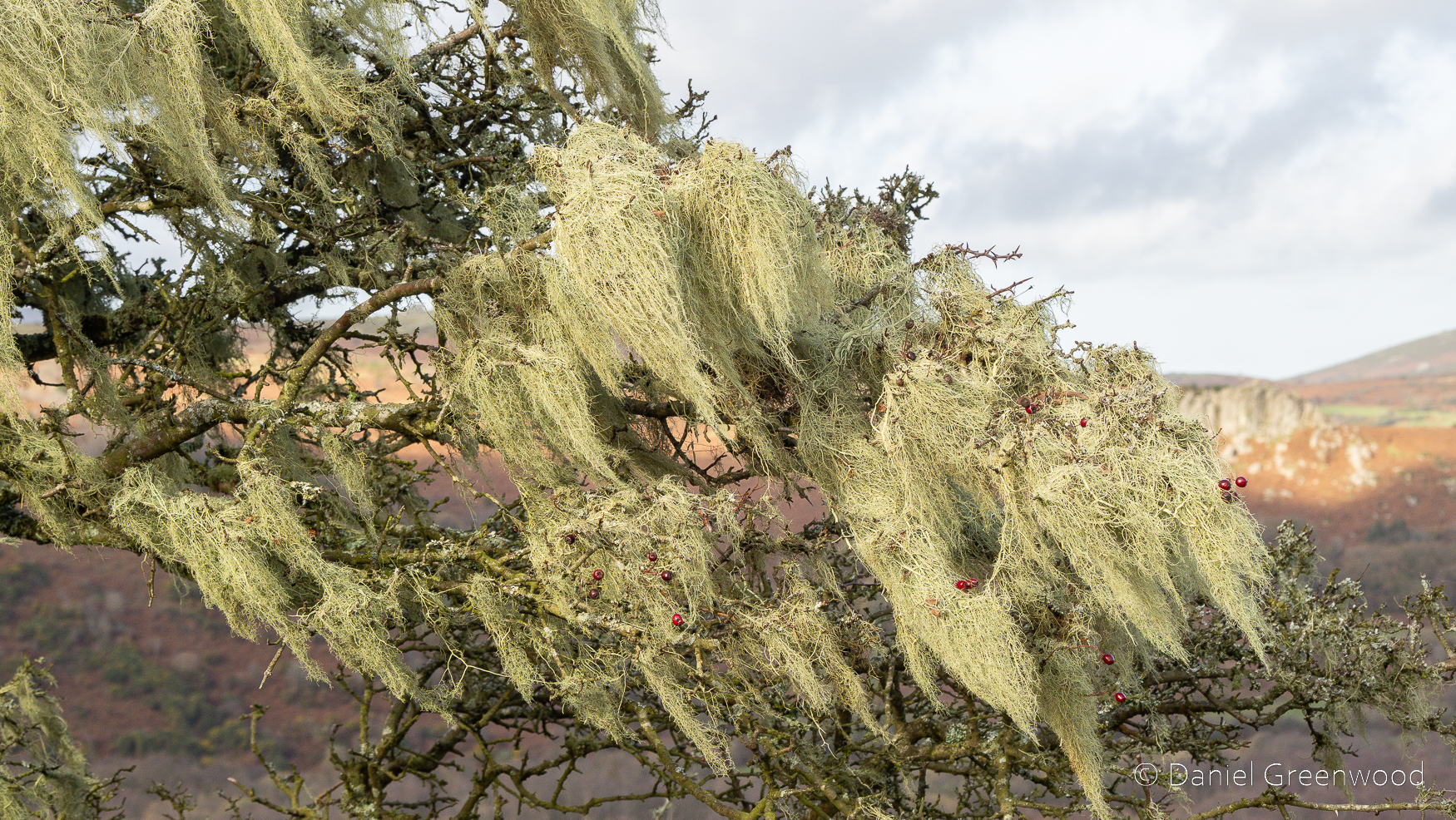
Beard lichens like this are a sign of the wetness of Dartmoor and the clean air. Will they survive the warming climate?
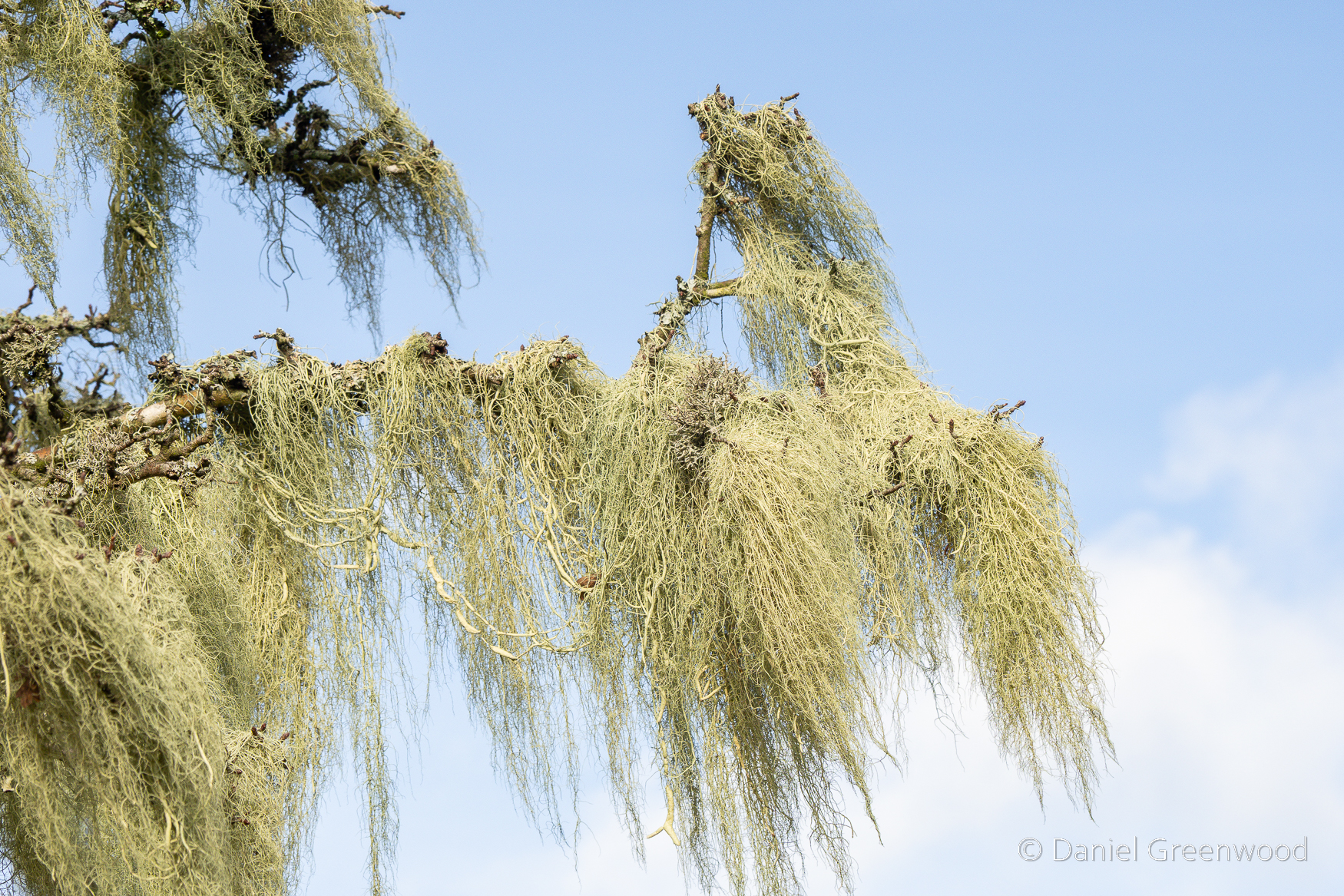
There’s a lovely example of the sausage-like fruiting growths of the lichen in the middle-left of the image.
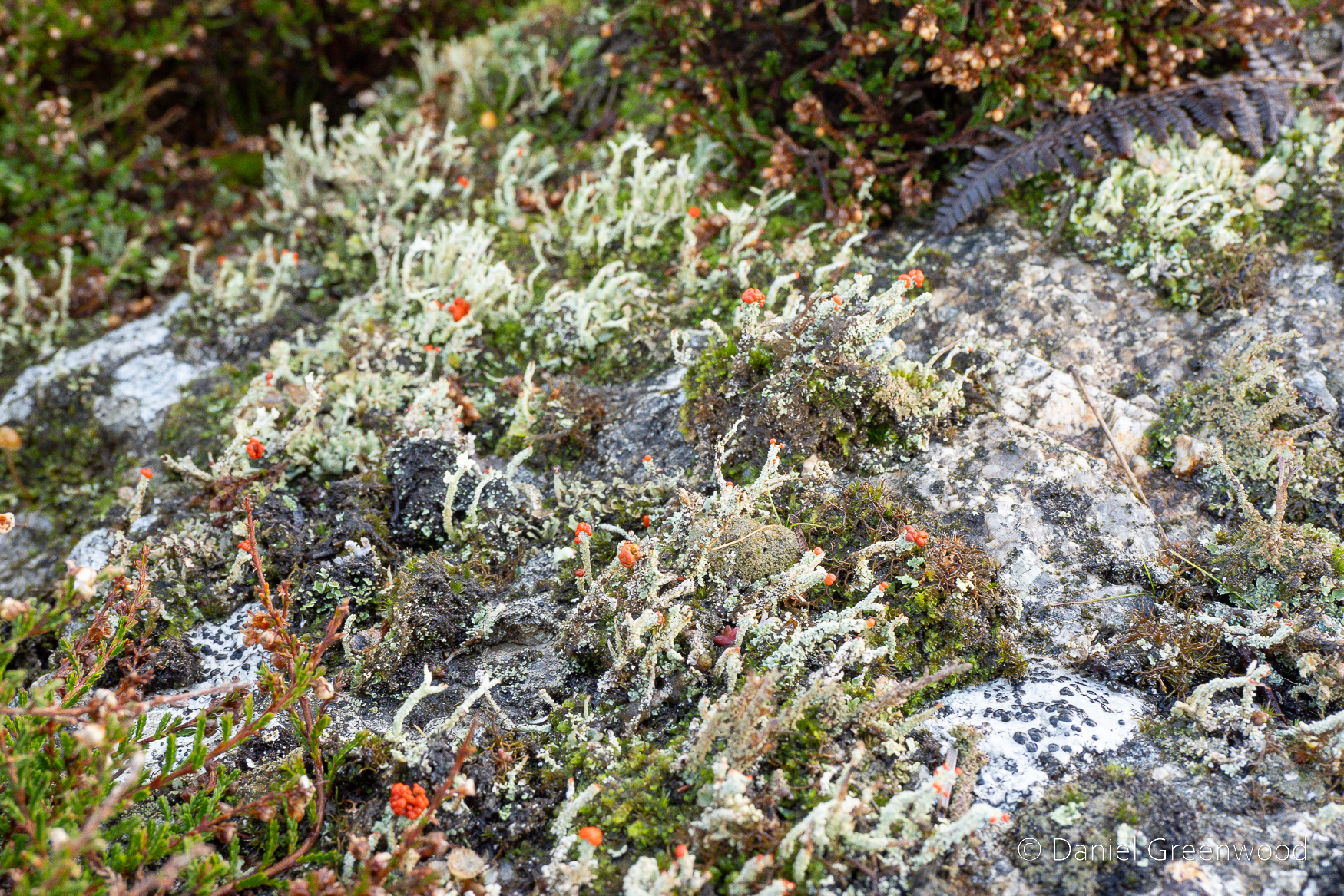
On nearby boulders were what I call lipstick lichens, in the Cladonia family. They’re one of the soldier lichens, officially.
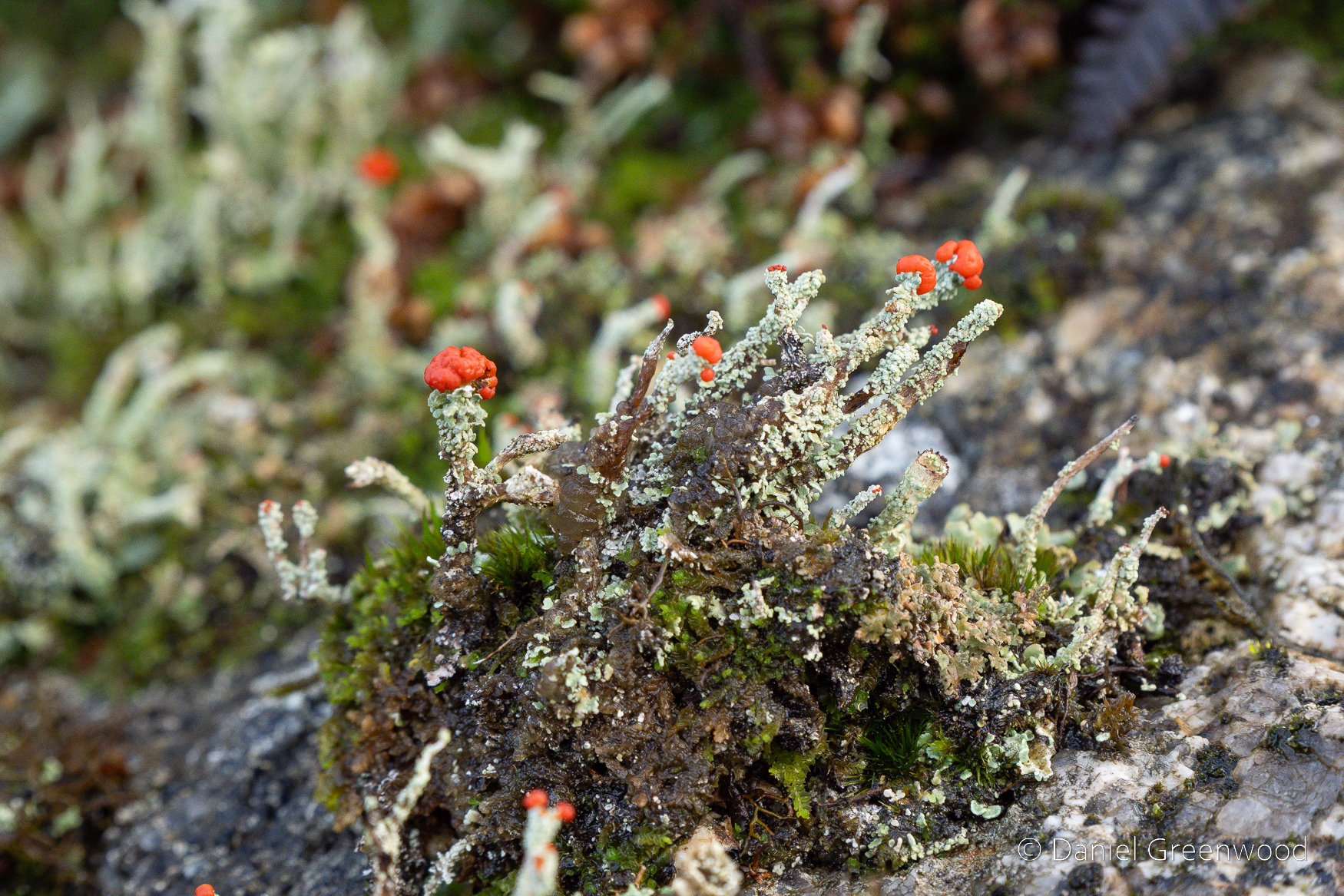
They appear to have been growing on a lump if moss attached to the rock, quite the perilous existence.
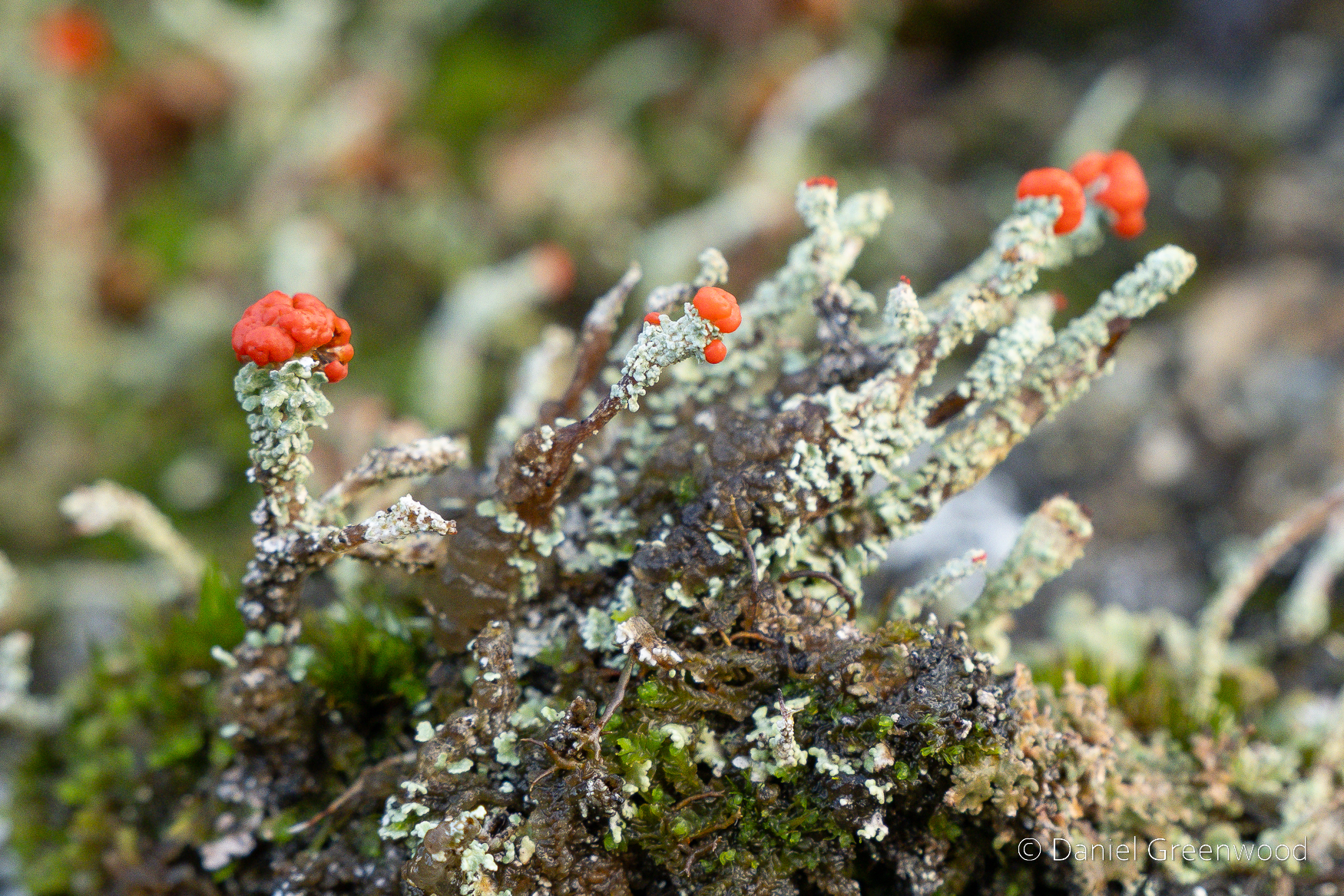
Positively pouting.
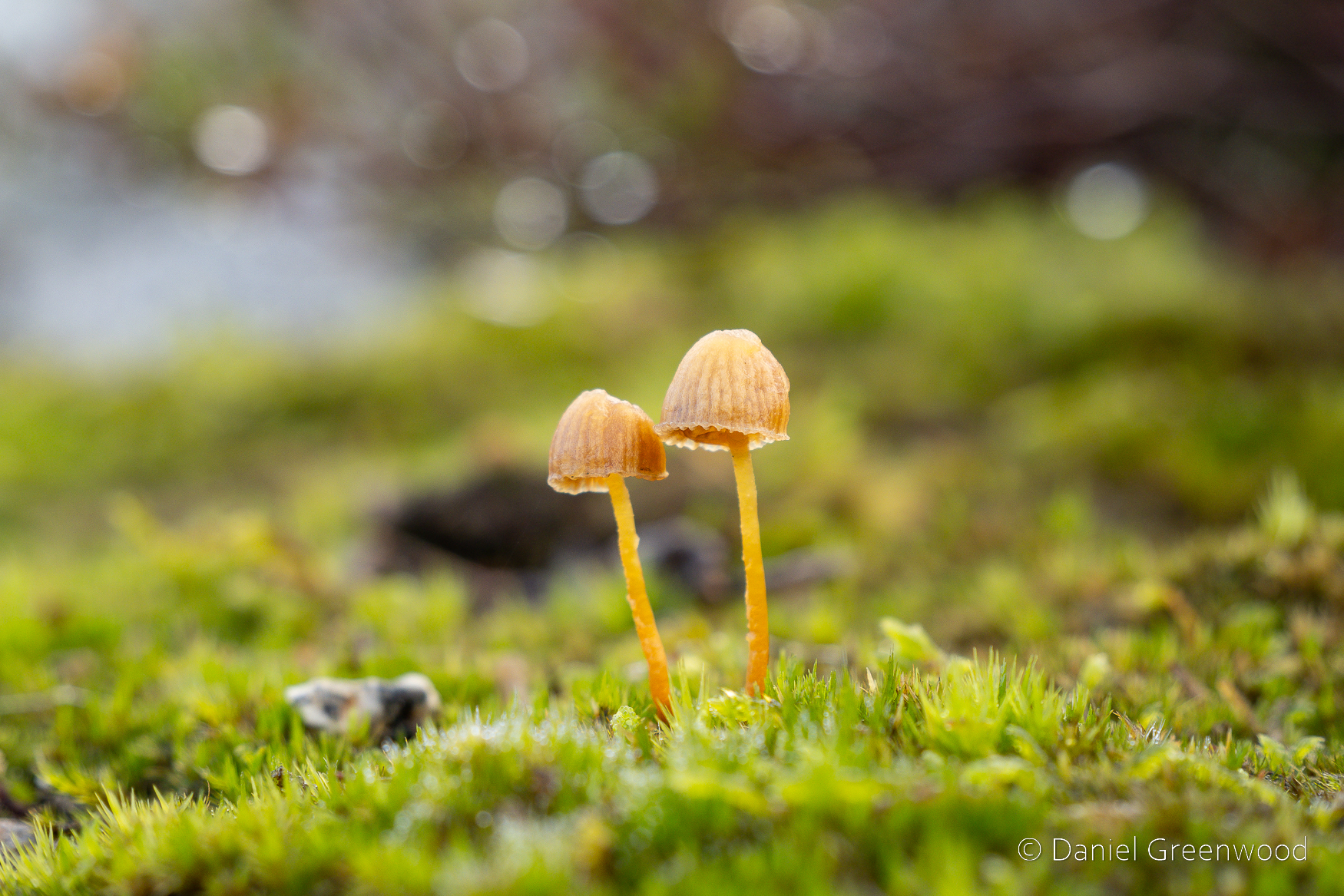
These are moss bells, in the Galerina family (funeral bell, etc.).
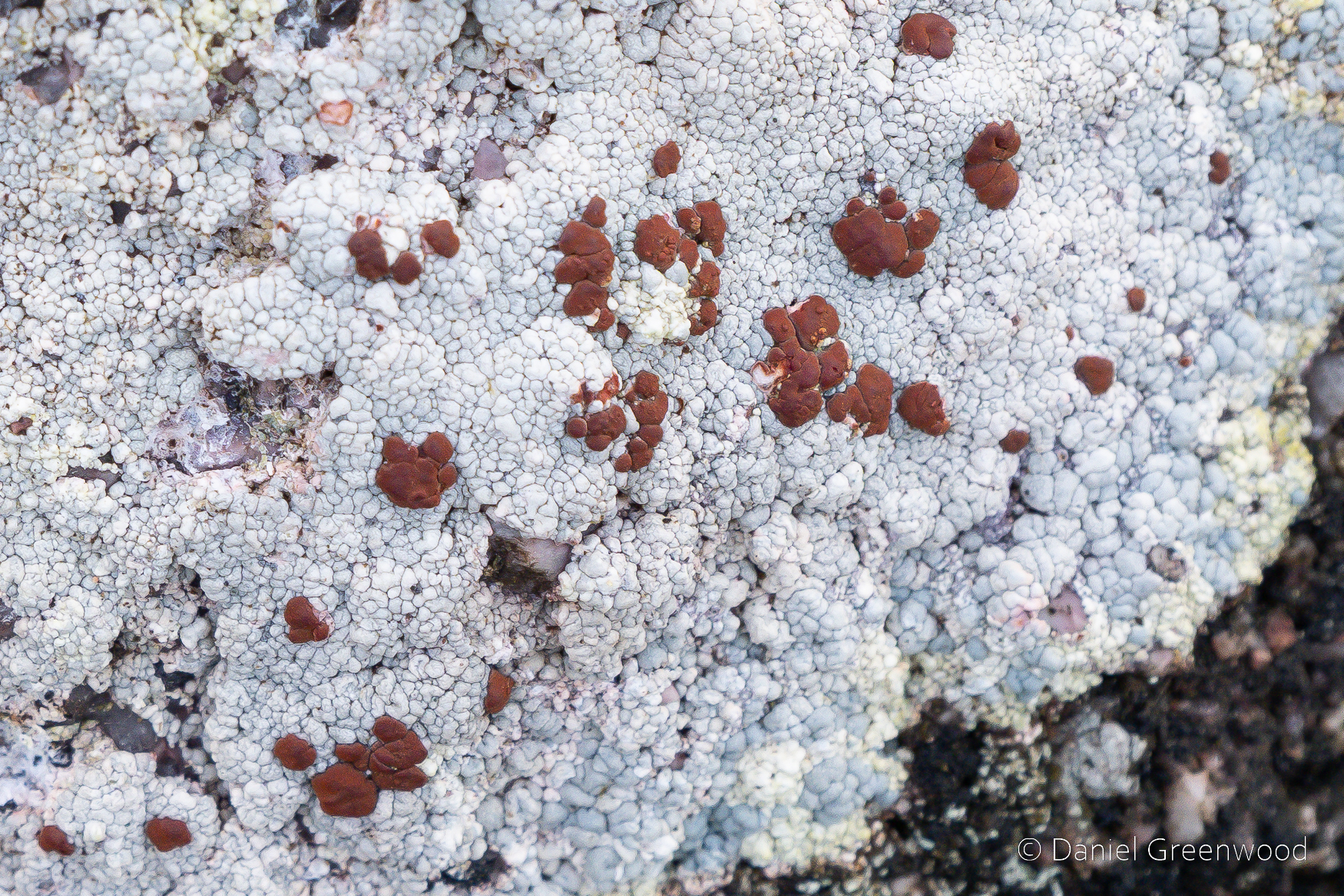
This is an interesting one. iNaturalist has given me an ID of alpine bloodspot lichen. It only has four records for Dartmoor on iNaturalist and looks to be confined to higher, rocky ground in the UK, mainly in Scotland.
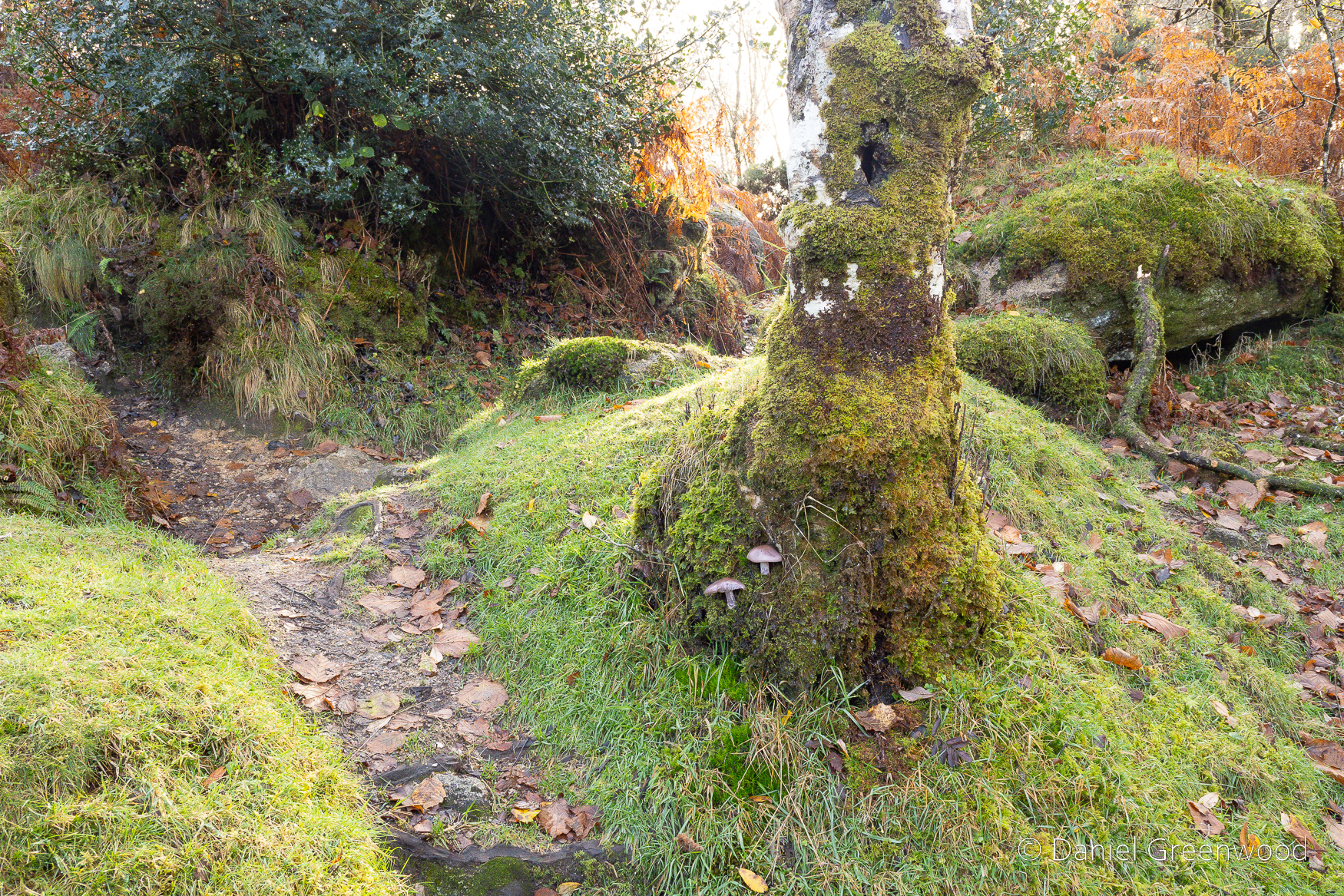
Away from the quarry and down to the banks of Becka Brook a lovely mossy world appears. At the base of a birch tree were two mushrooms tucked away.
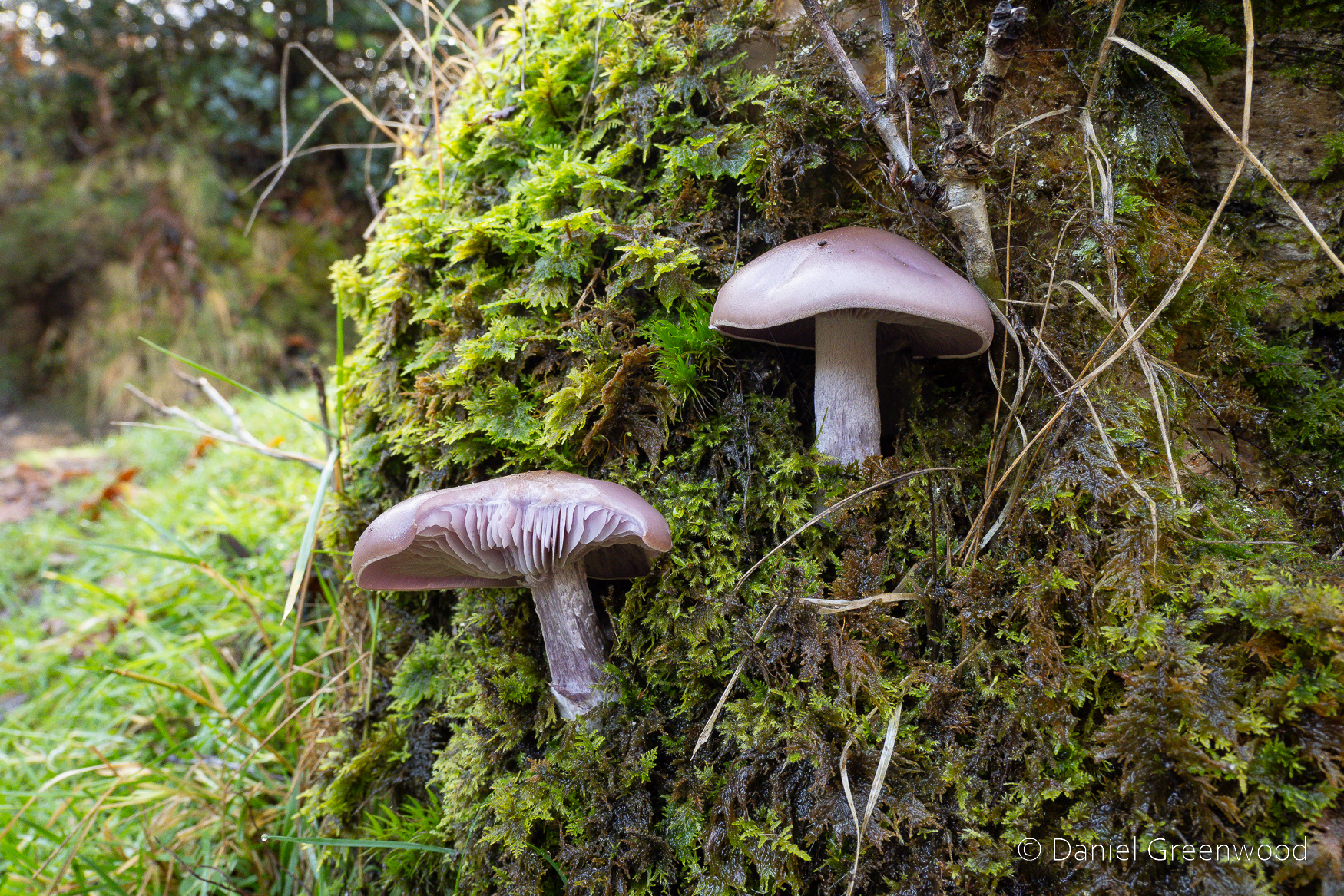
I think these are wood blewit. They still have the purple hue to the cap.
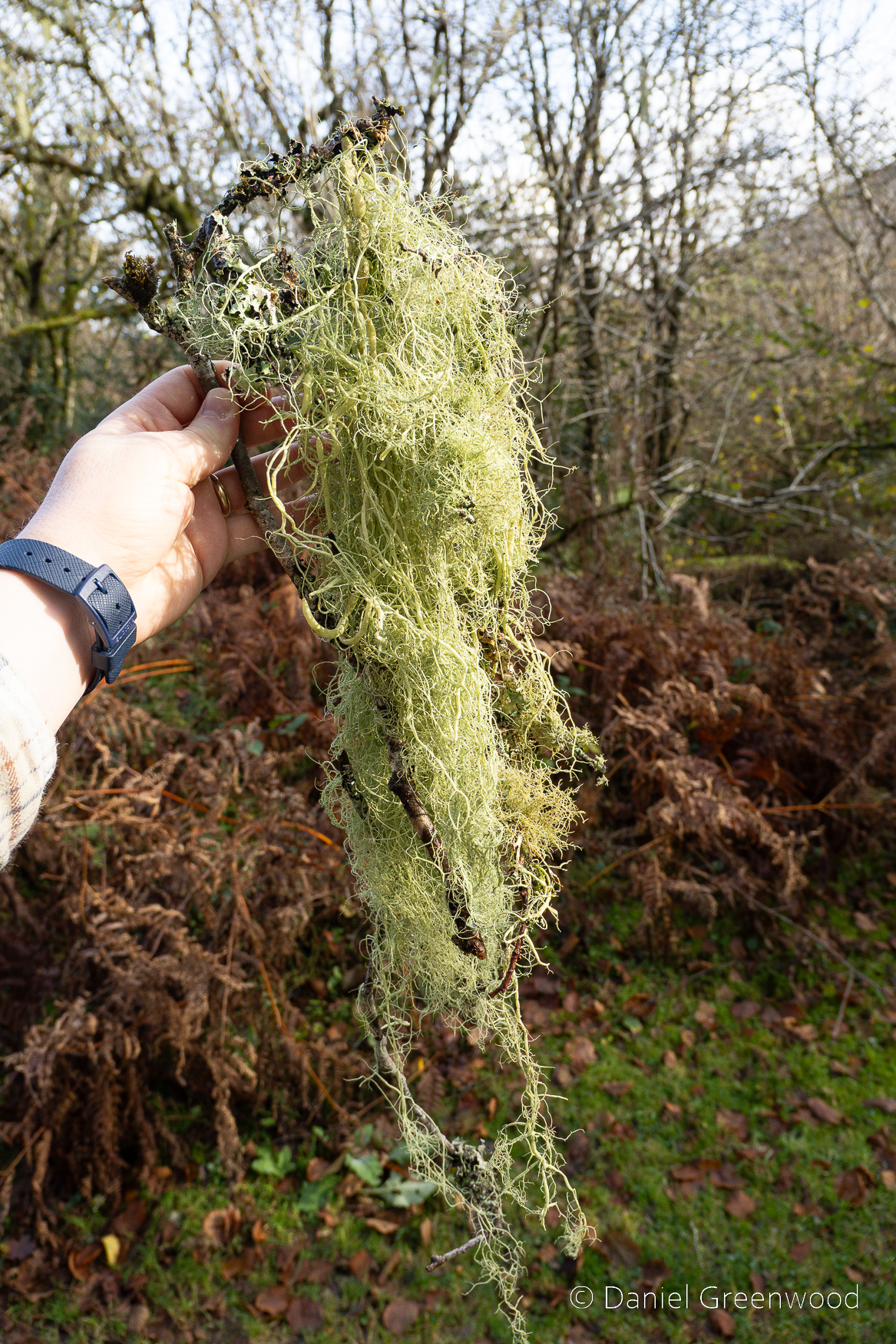
Down by the brook was yet more string of sausages lichen. This beard was attached to twigs lying on the ground.
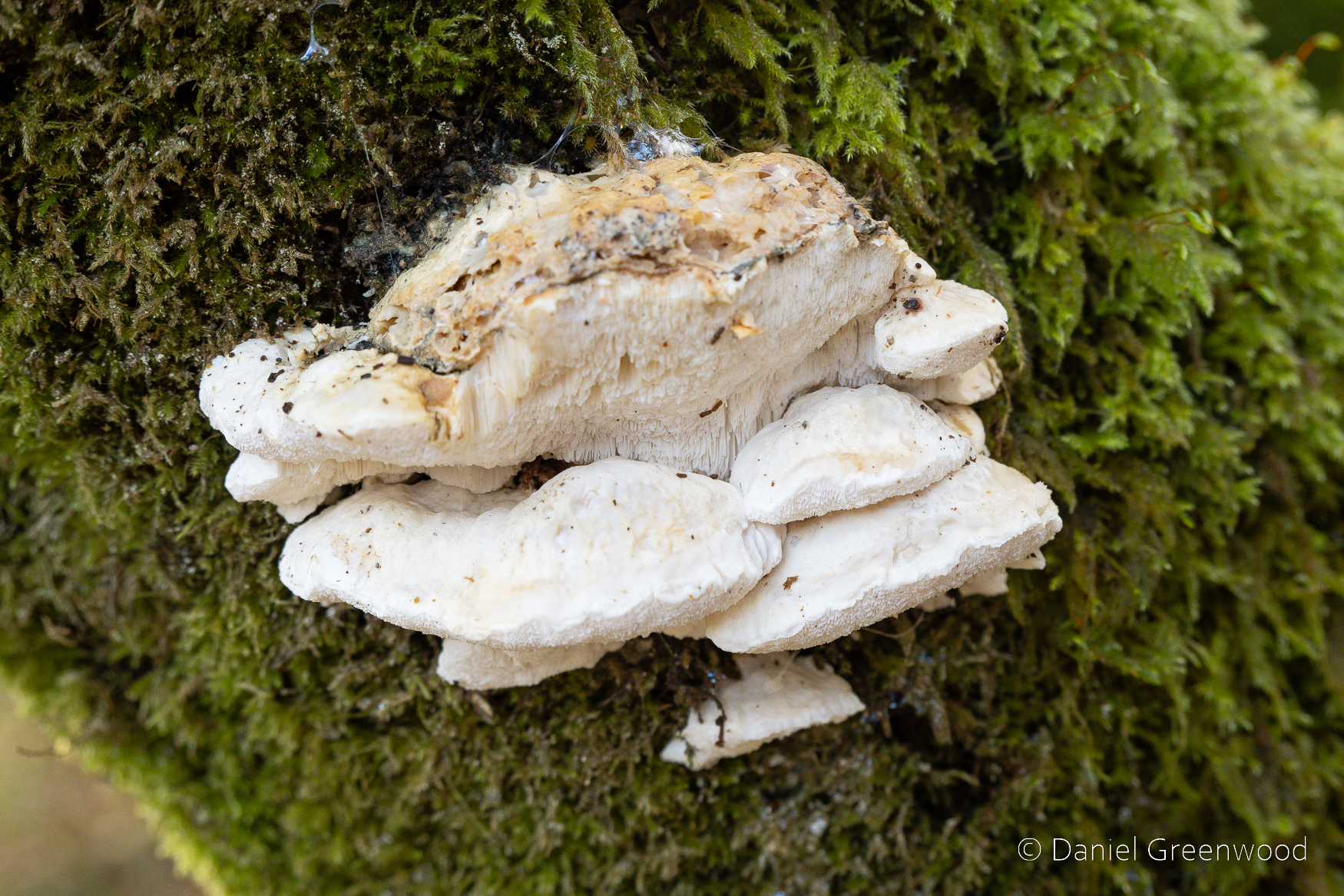
I’m not sure what type of bracket this is.
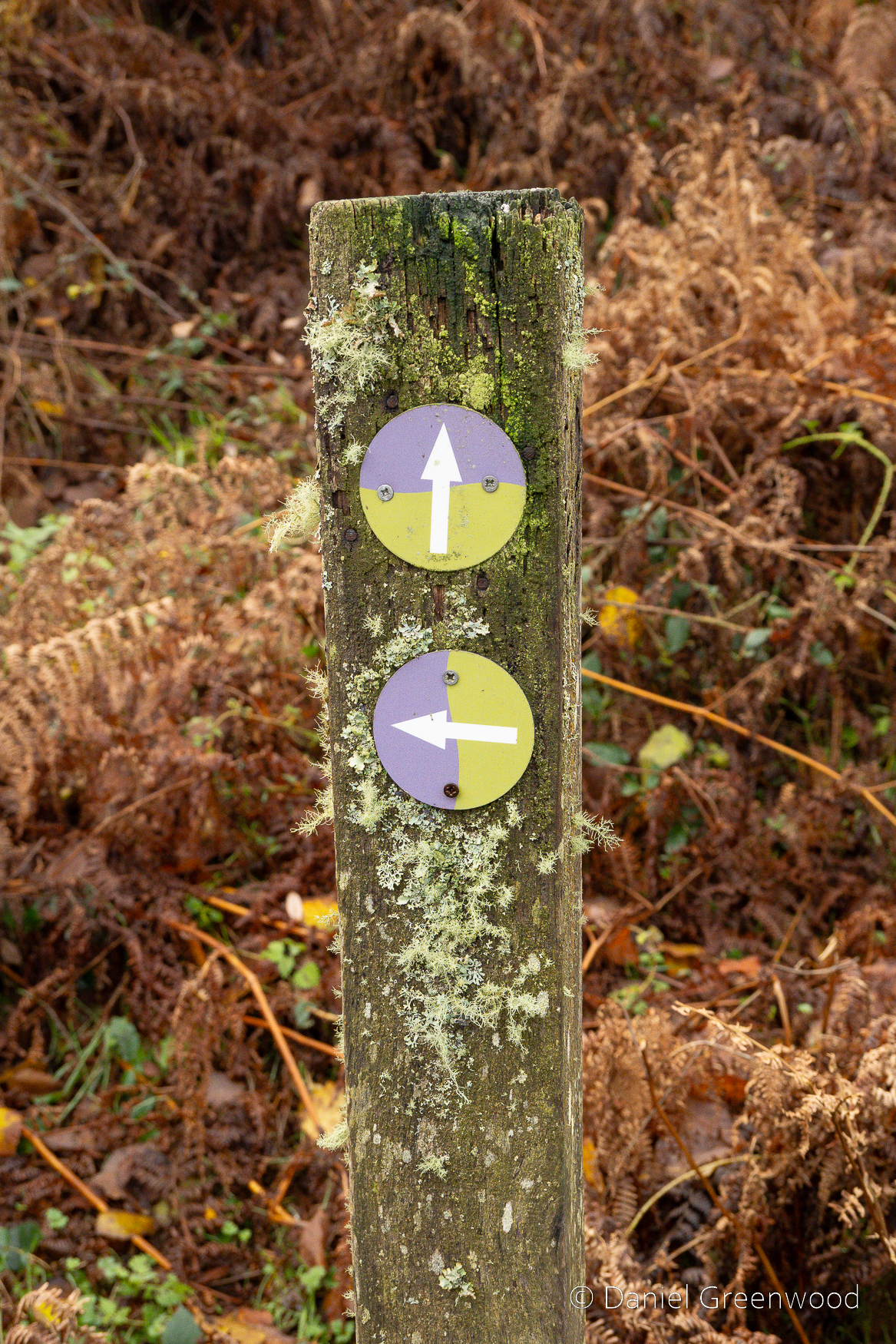
‘This way for lichen!’ I love a good lichen-encrusted fencepost.
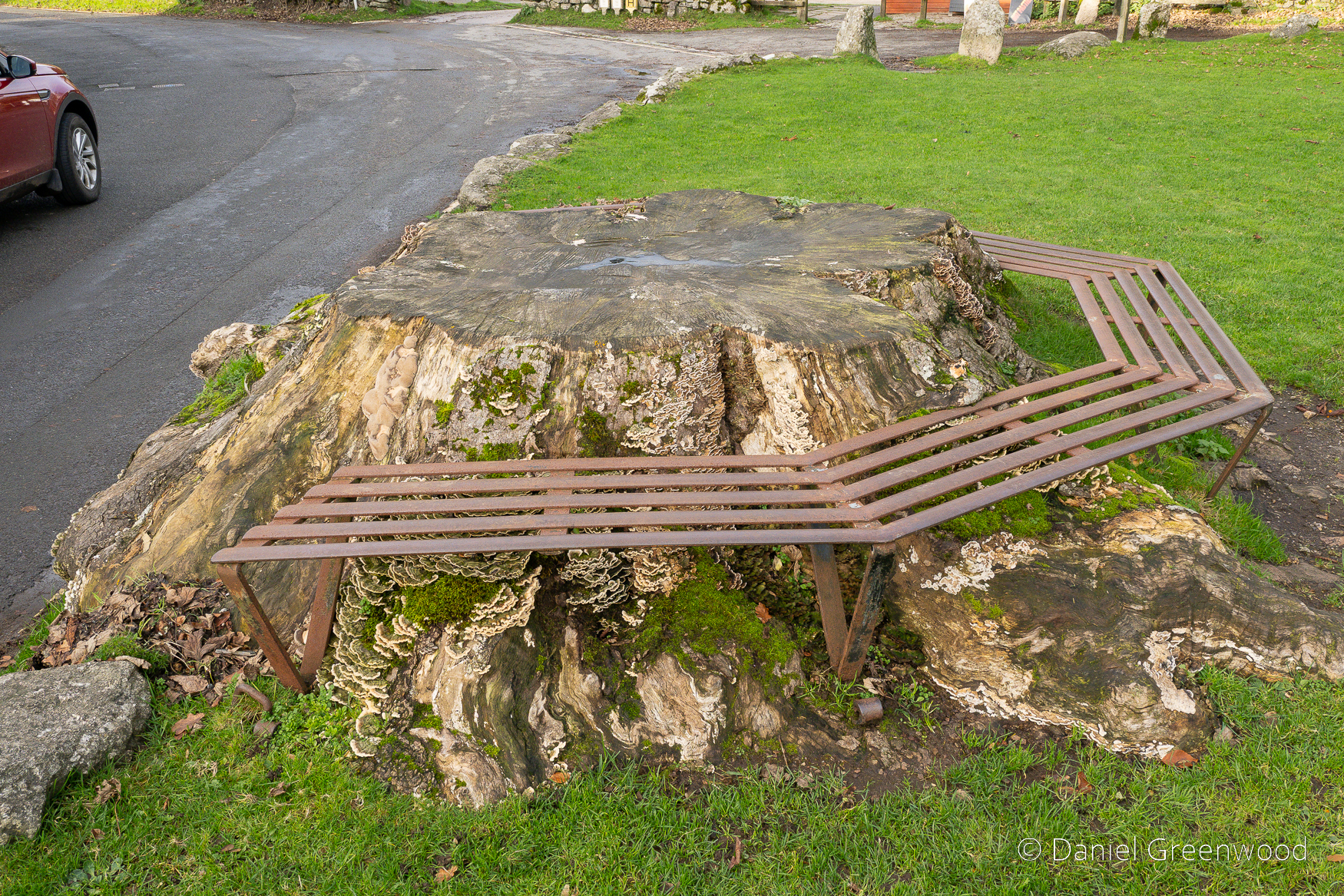
Now then, we reached Widecombe’s village after a couple of hours walking over the moors. In the heart of the village is a huge sycamore stump that I’ve posted about before:
The tree was felled around 2020 or so and is now decaying into a magnificent habitat for fungi.
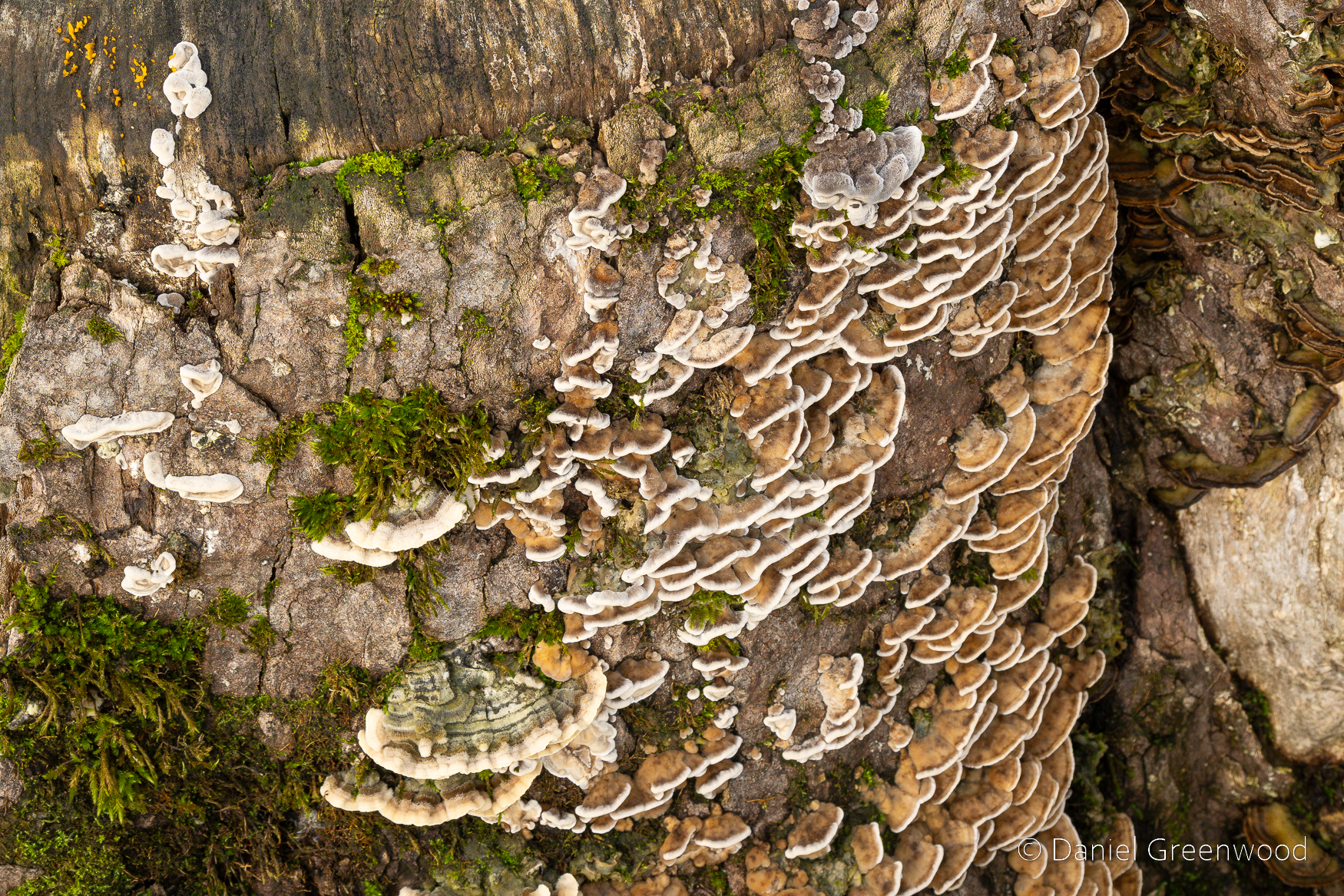
This could be smoky bracket.
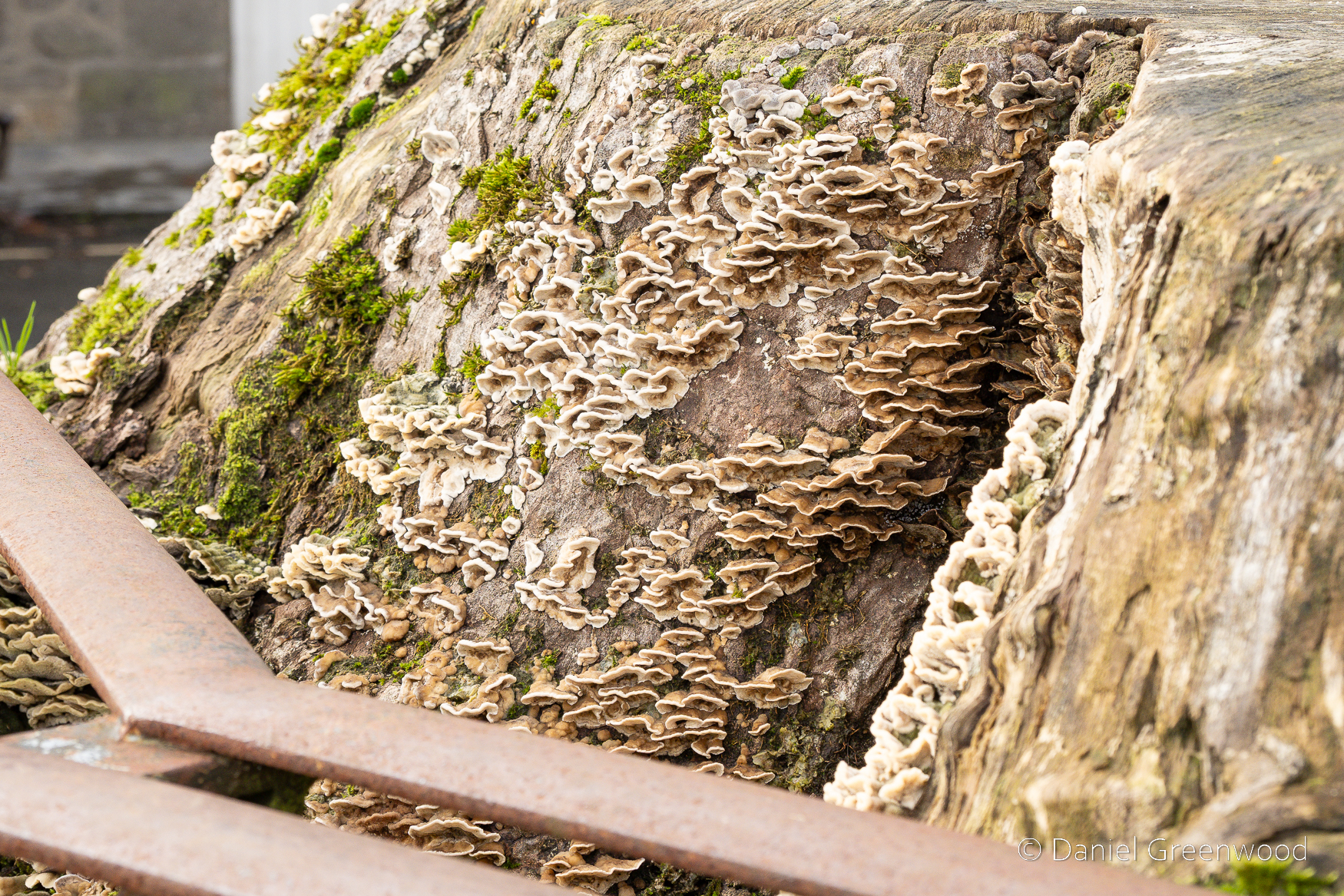
The pores appear to be white.
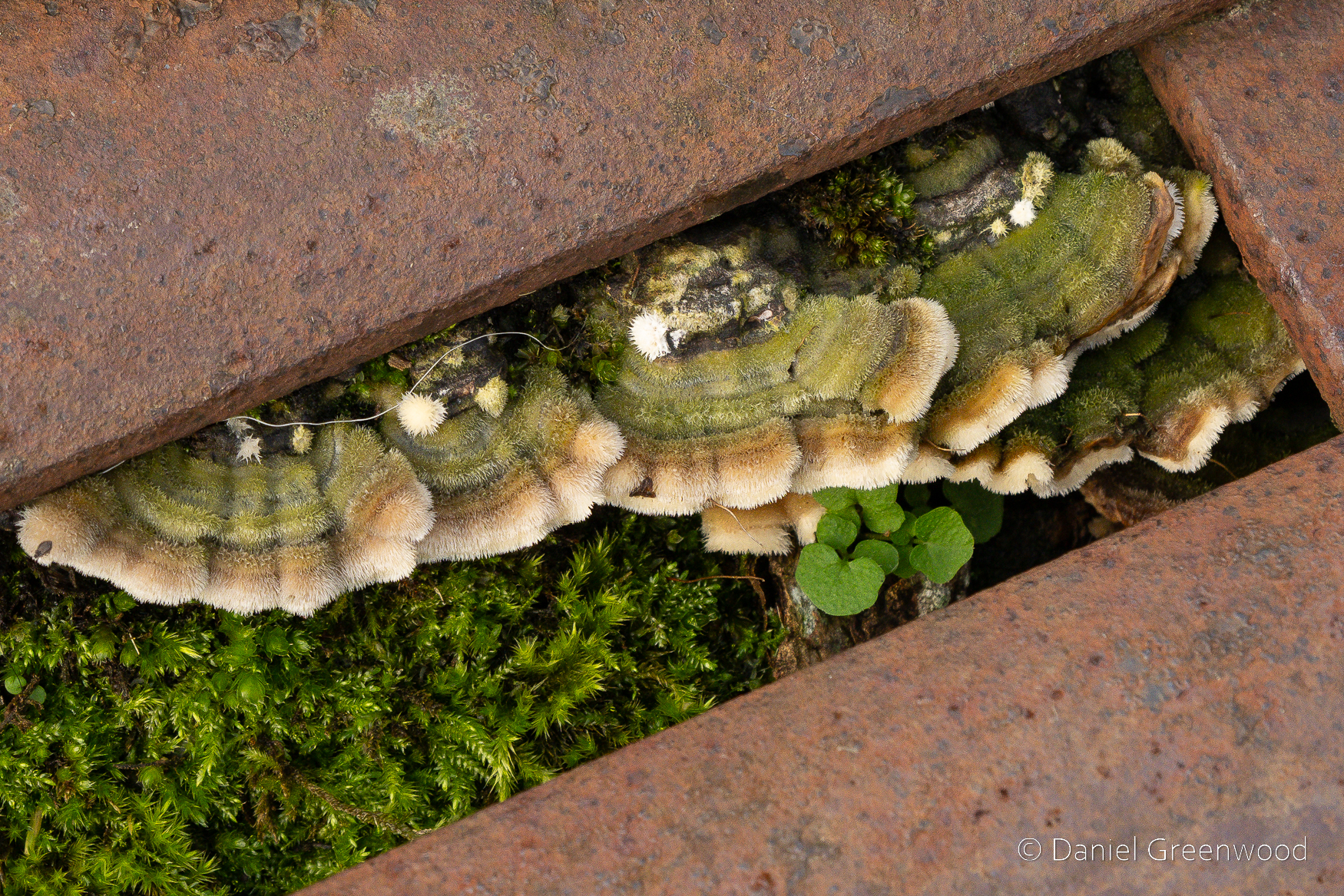
This furry little number could be turkeytail. The ‘furriness’ looks to be the hyphae of the fungus as it grows.
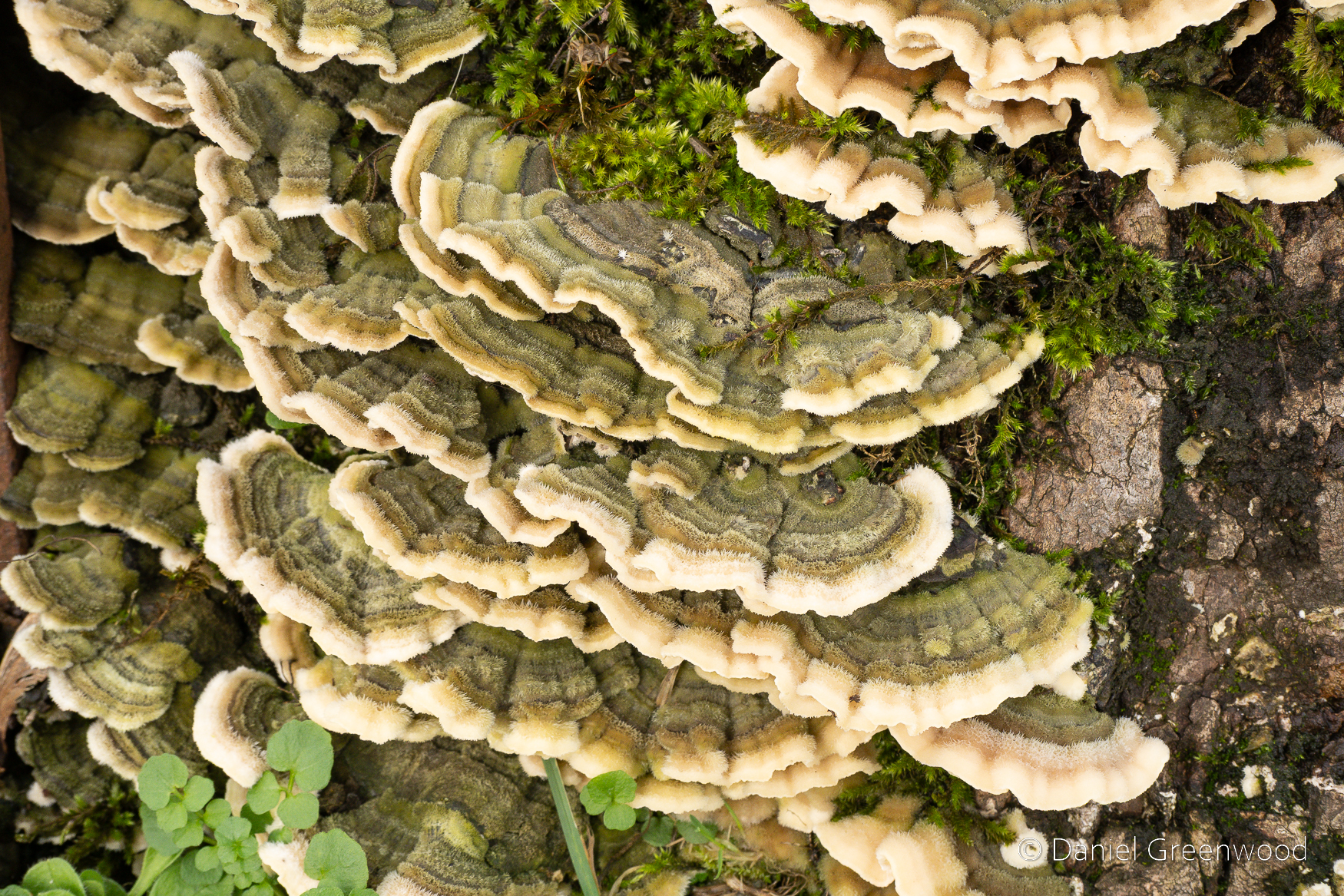
They really are like skirts or petticoats.
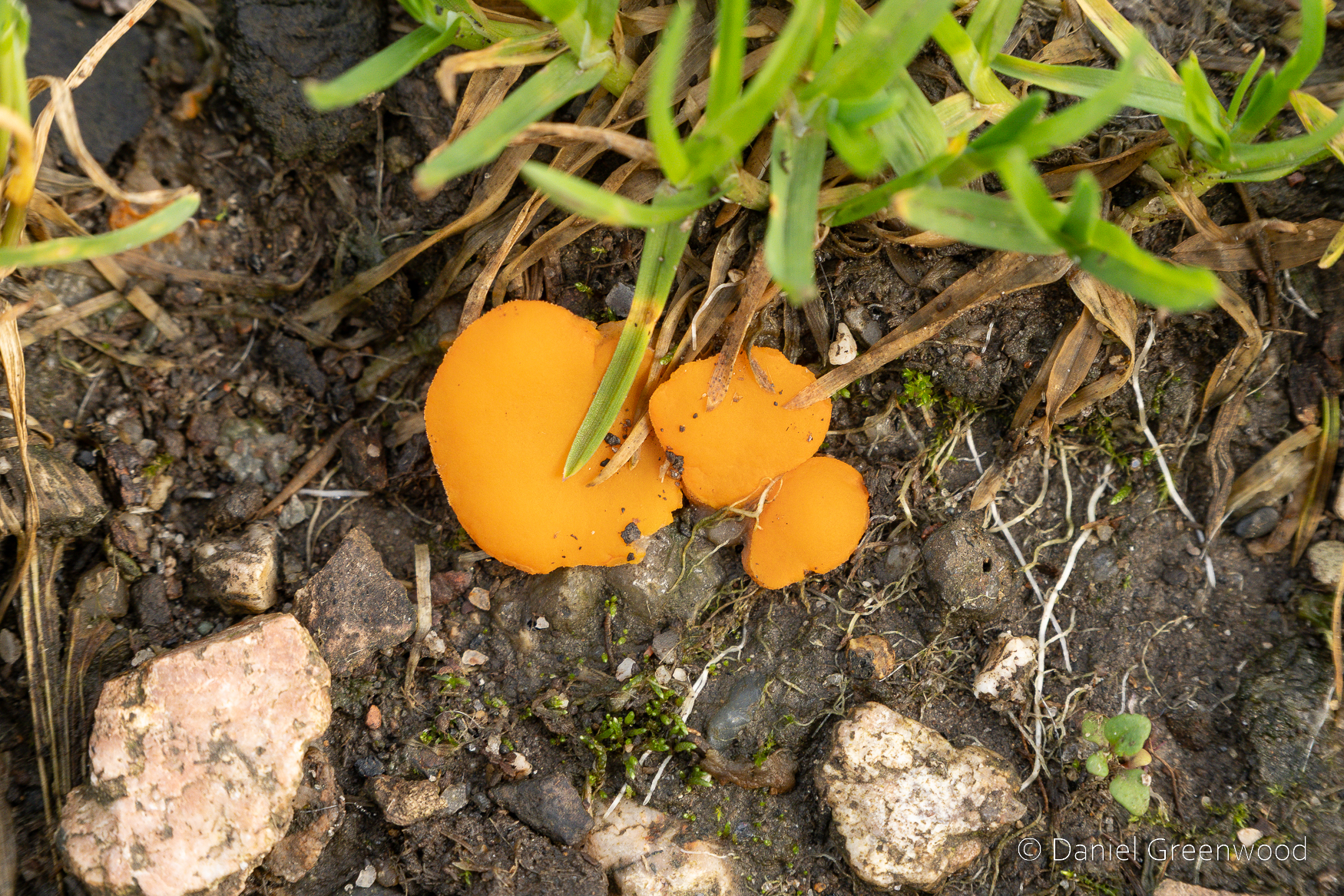
There was a tiny patch of orange peel fungus growing on bare soil next to the stump.
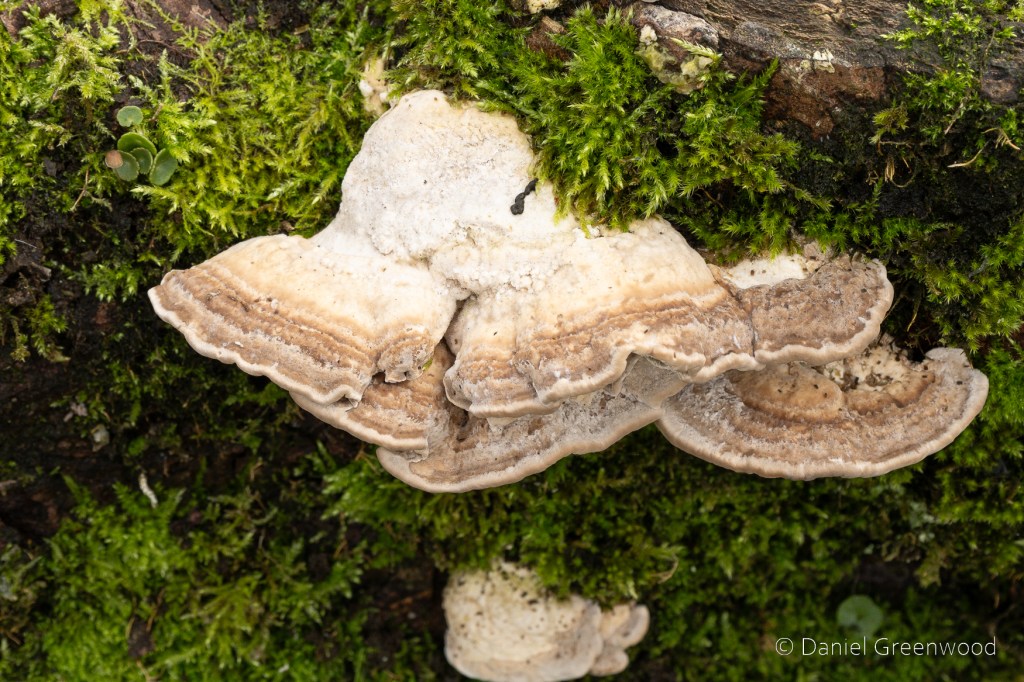
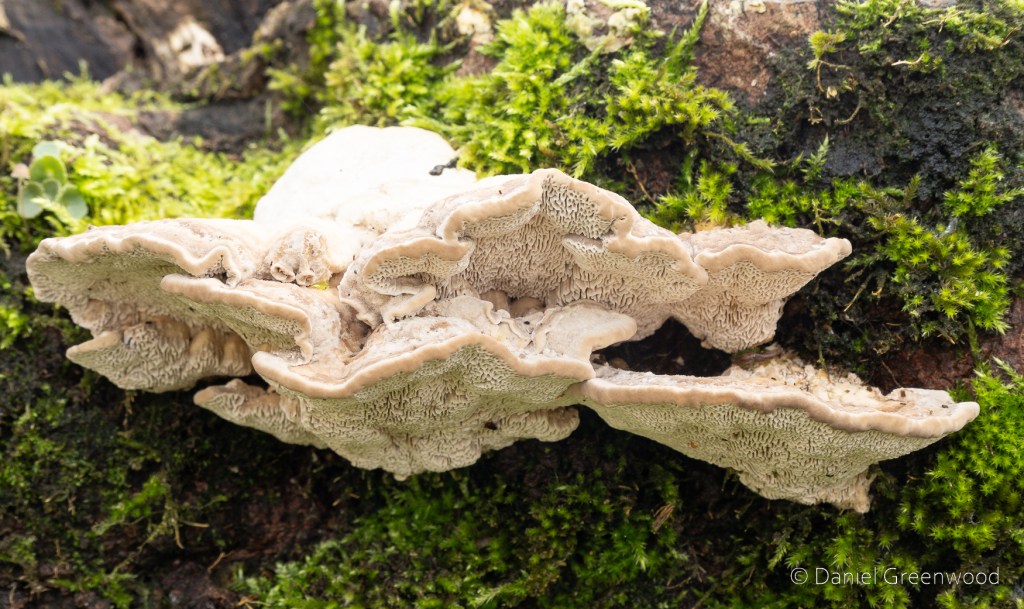
My guess here is lumpy bracket due to the massing of lumpy bits at the head of the bracket.
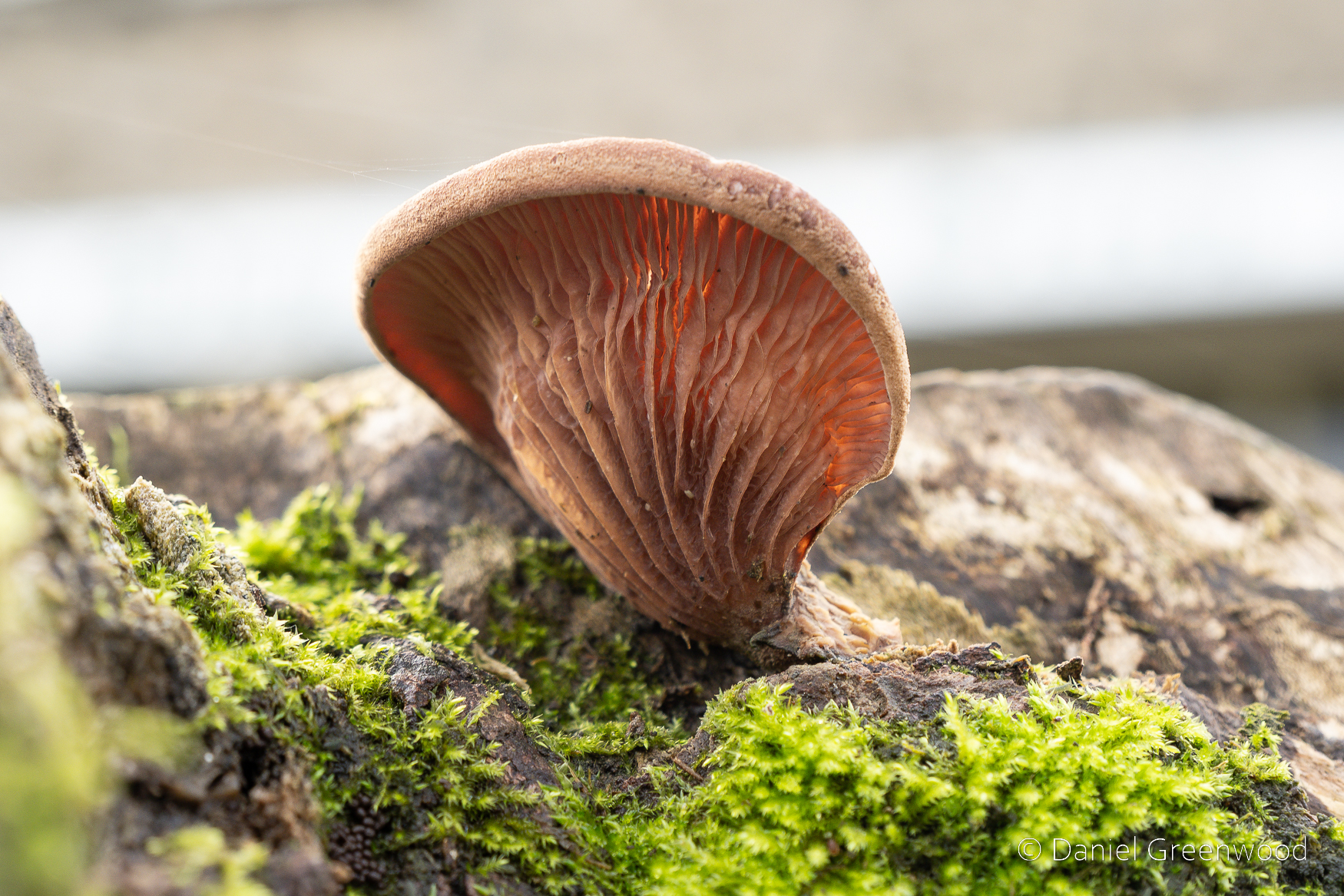
This is an exciting one as it’s my first – lilac oysterling (Panus conchatus).
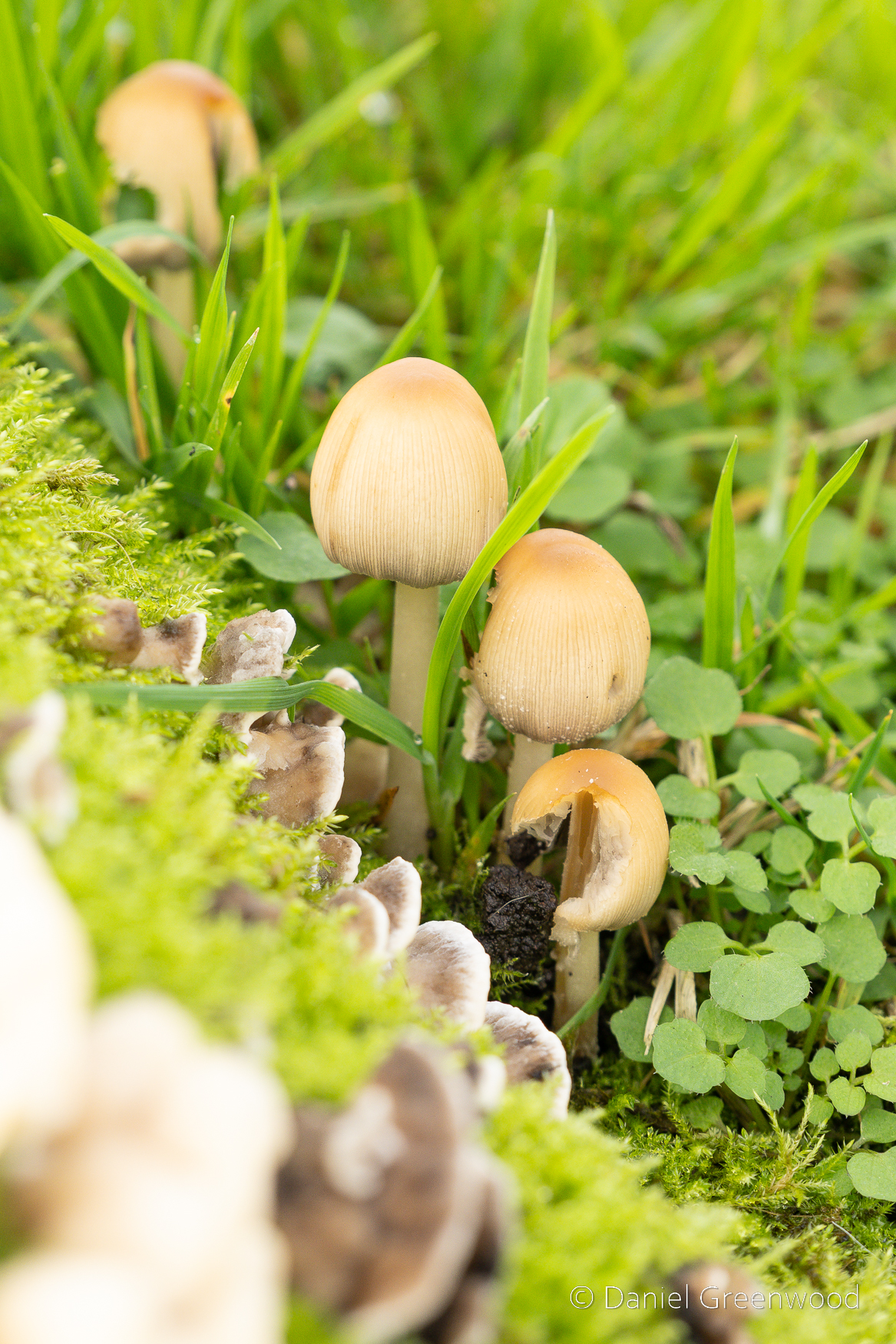
I would call these glistening inkcaps as they have the white speckles on the cap, but people on iNaturalist are only happy with Section Micacei. I would absolutely expect to find them at the base of a tree stump.
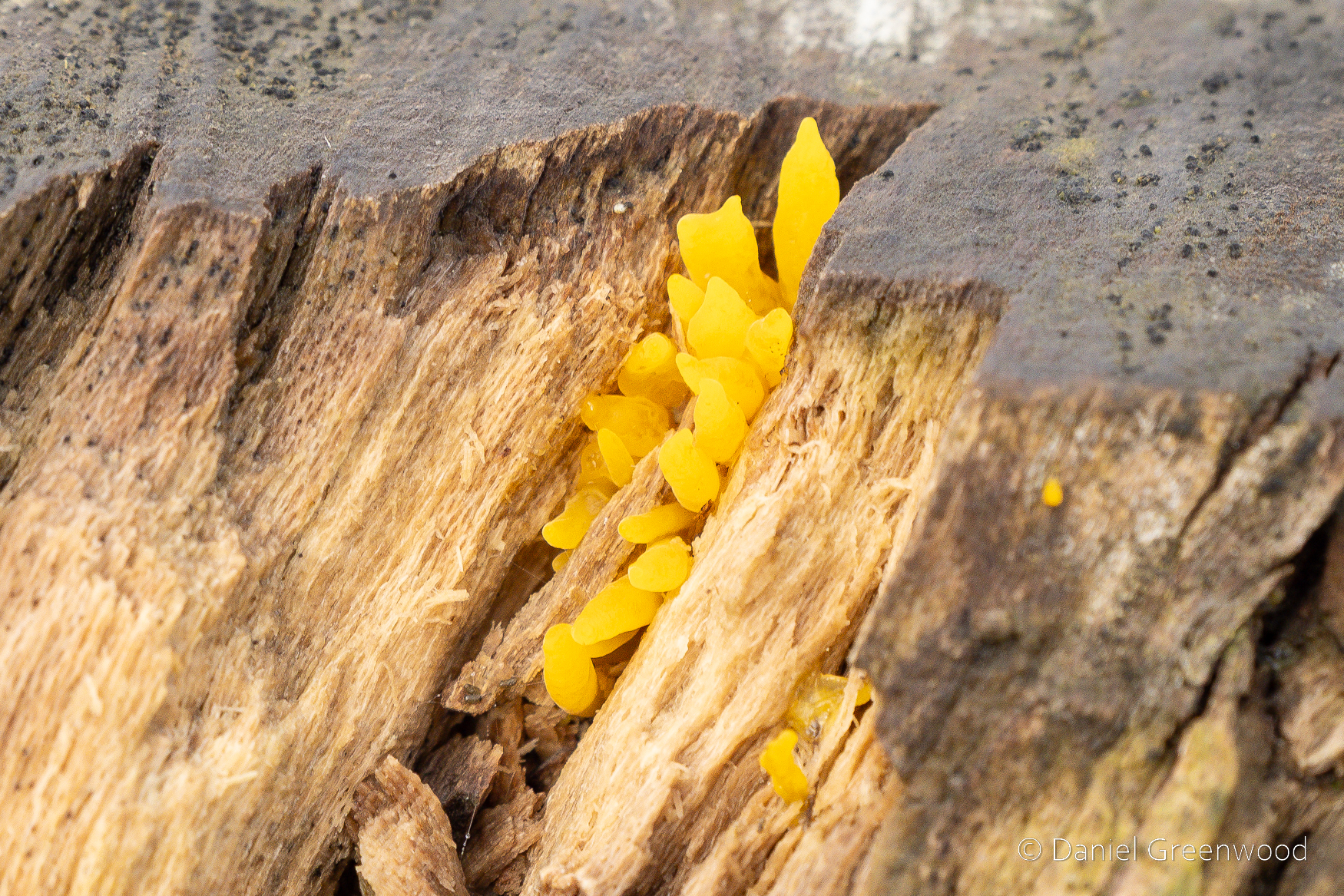
This is one of the stagshorns (Calocera) but it wasn’t far enough on to suggest it might be yellow stagshorn.
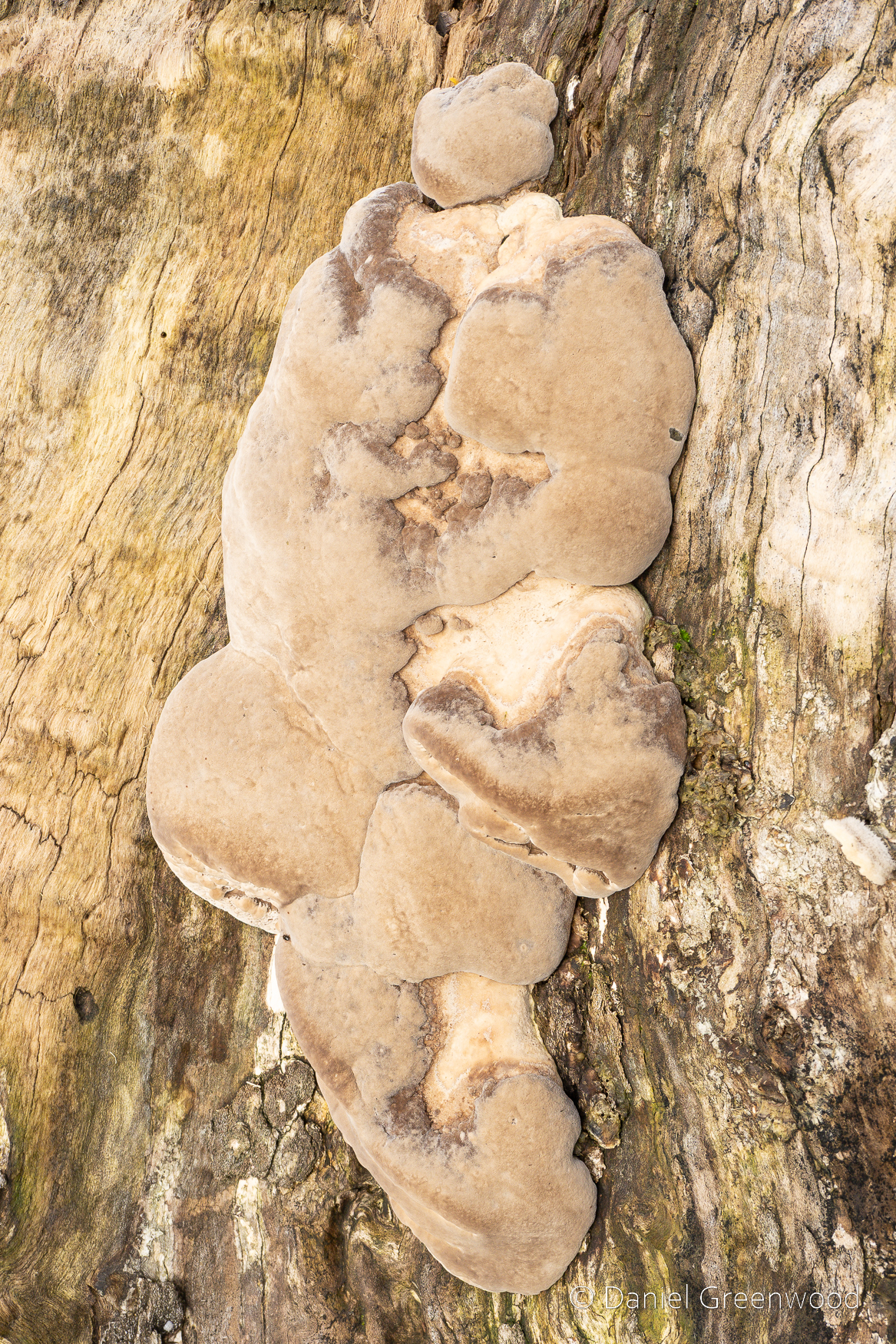
This is the beginnings of a larger bracket of which I am unsure. Can you see two cloudy faces kissing?
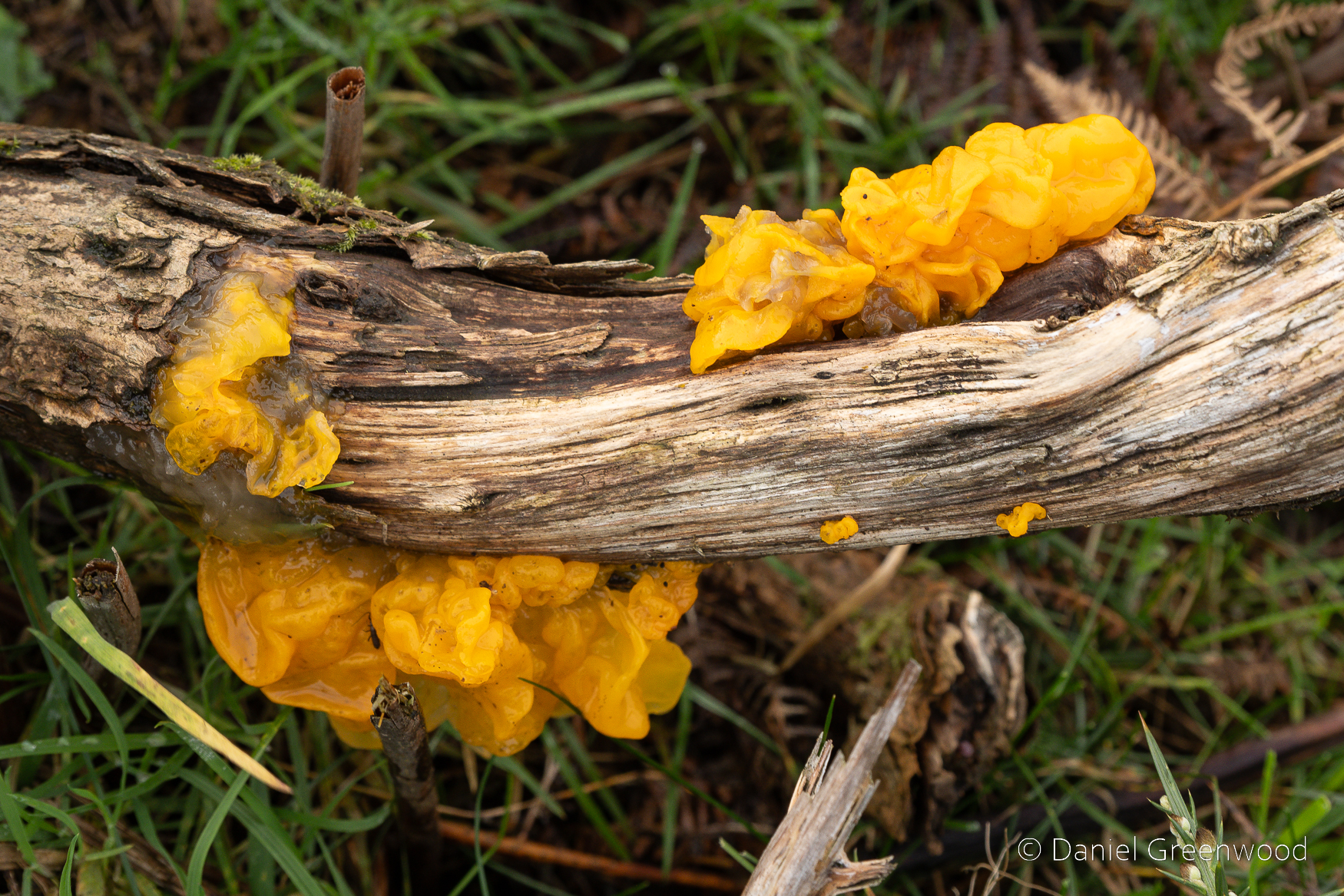
Away from Widecombe village we climbed up onto the moors again, and were greeted by yellow brain. This is a familiar sight on Dartmoor, and even more so on gorse, where it parasitises another fungus.
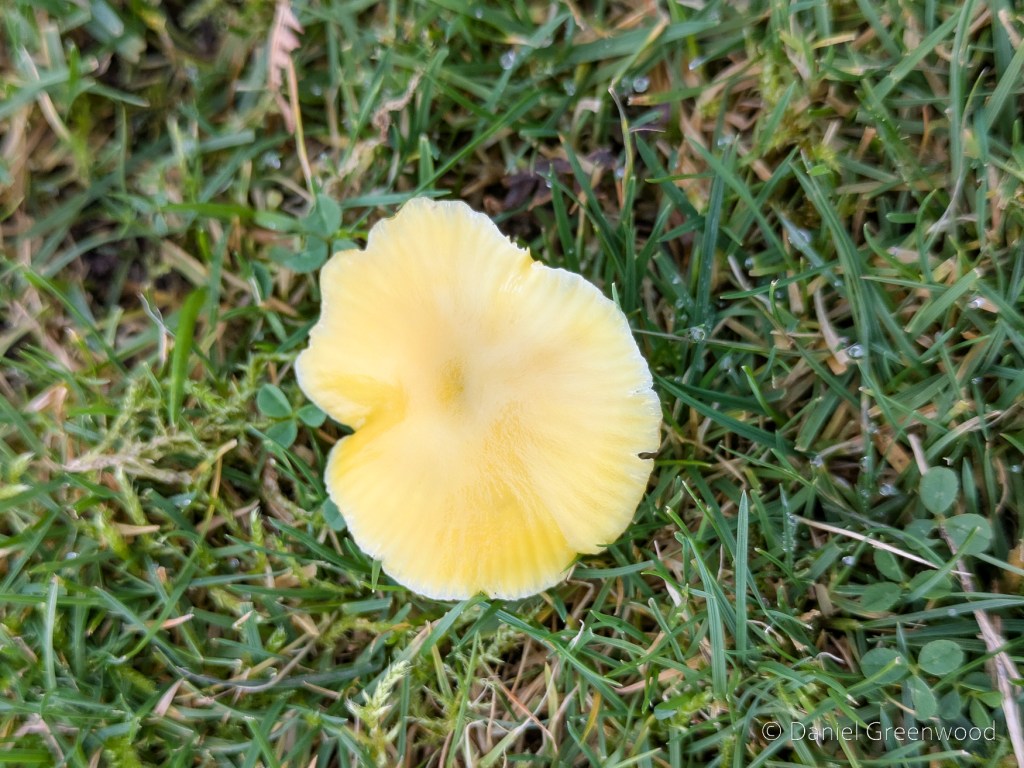
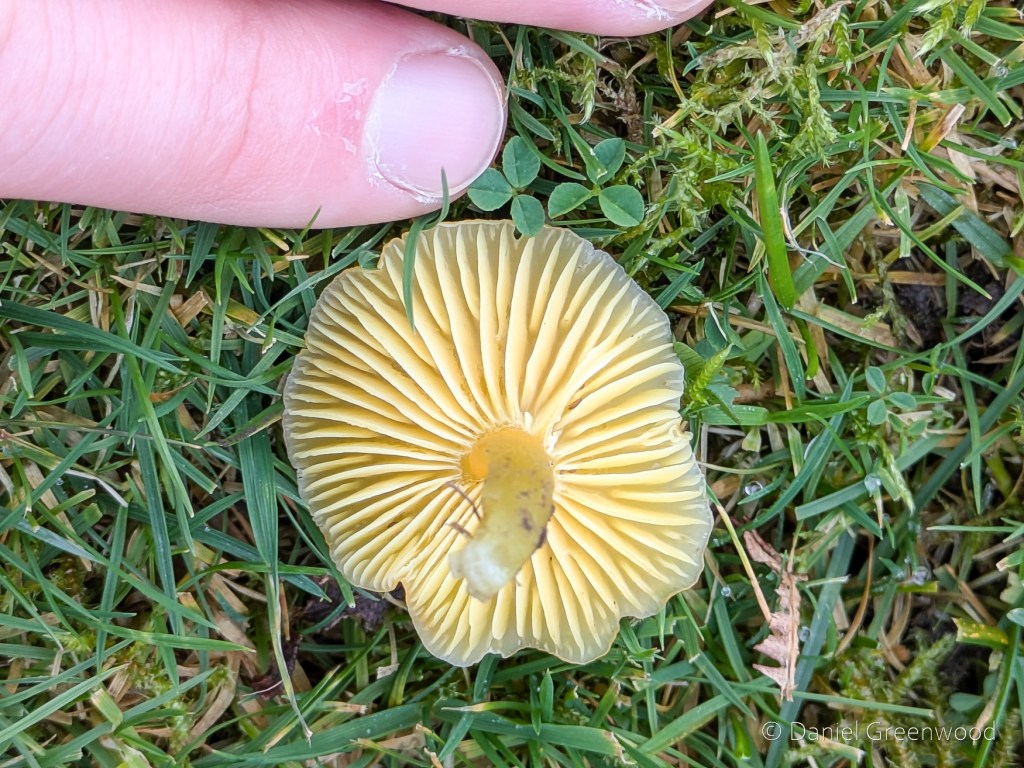
Butter waxcap growing in the moorland grass above Widecombe.
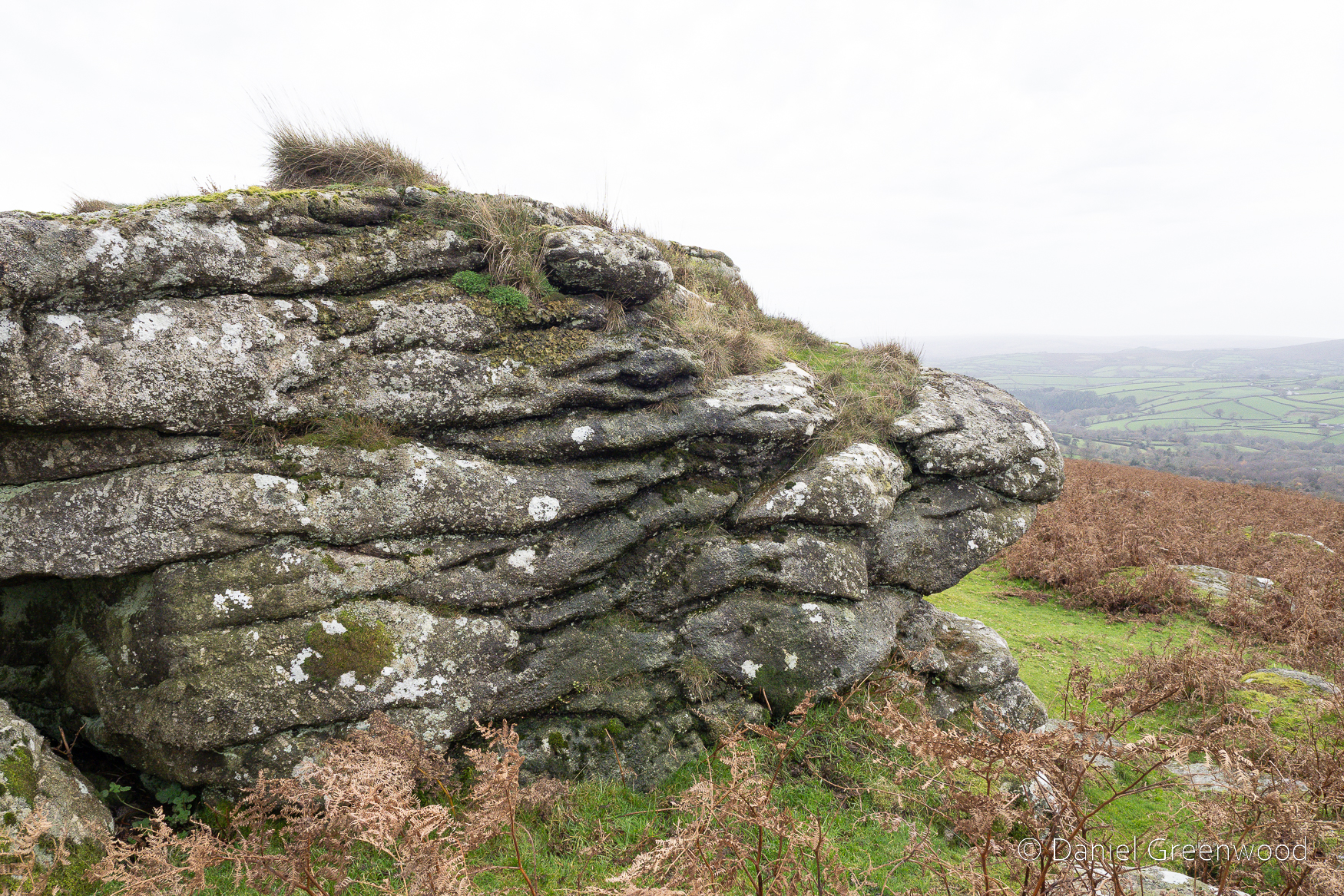
I was surprised that this tor isn’t named on the maps. It was quite substantial. Locally I am sure it would have a name.
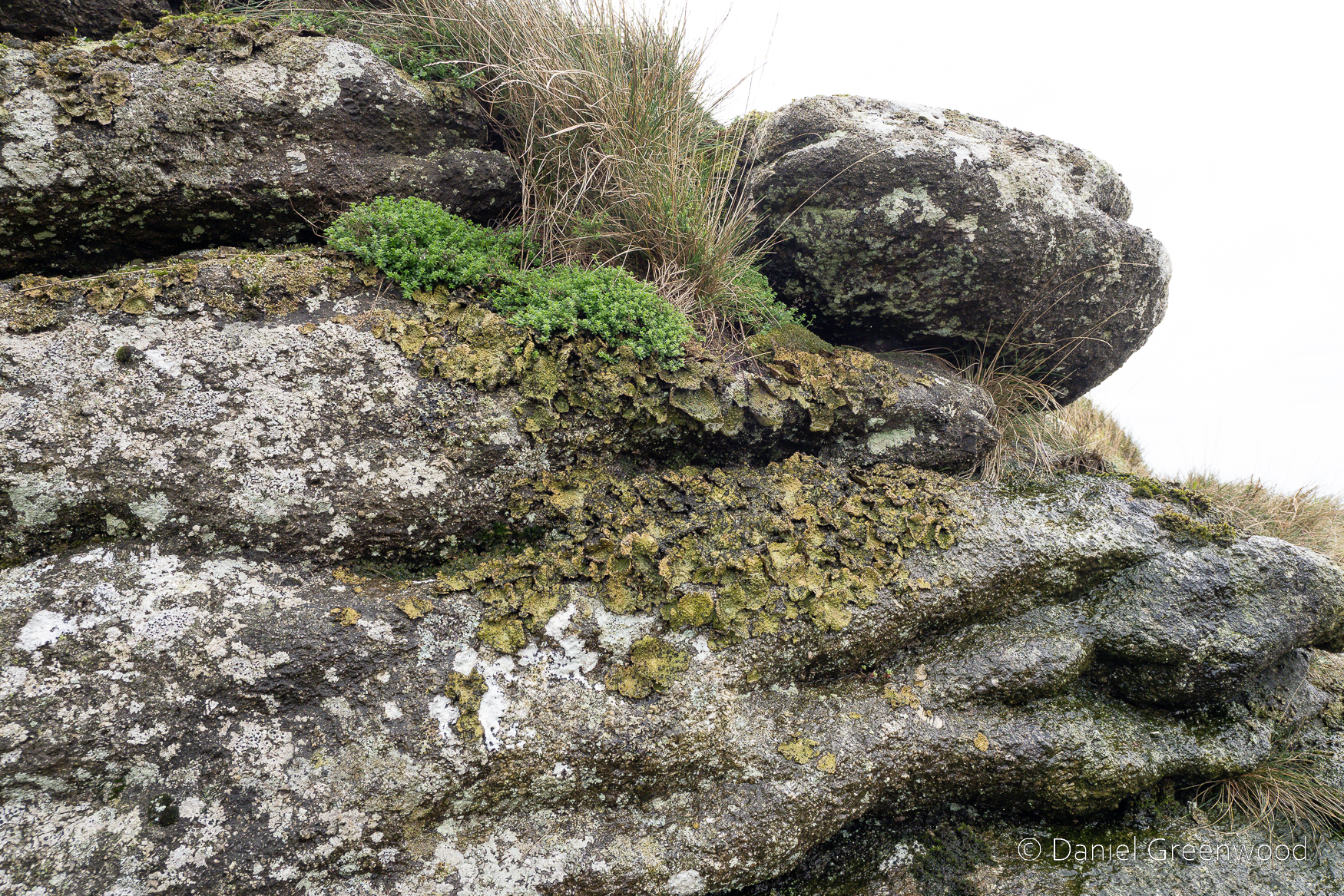
The rocks were home to this rather slimy-looking lichen.
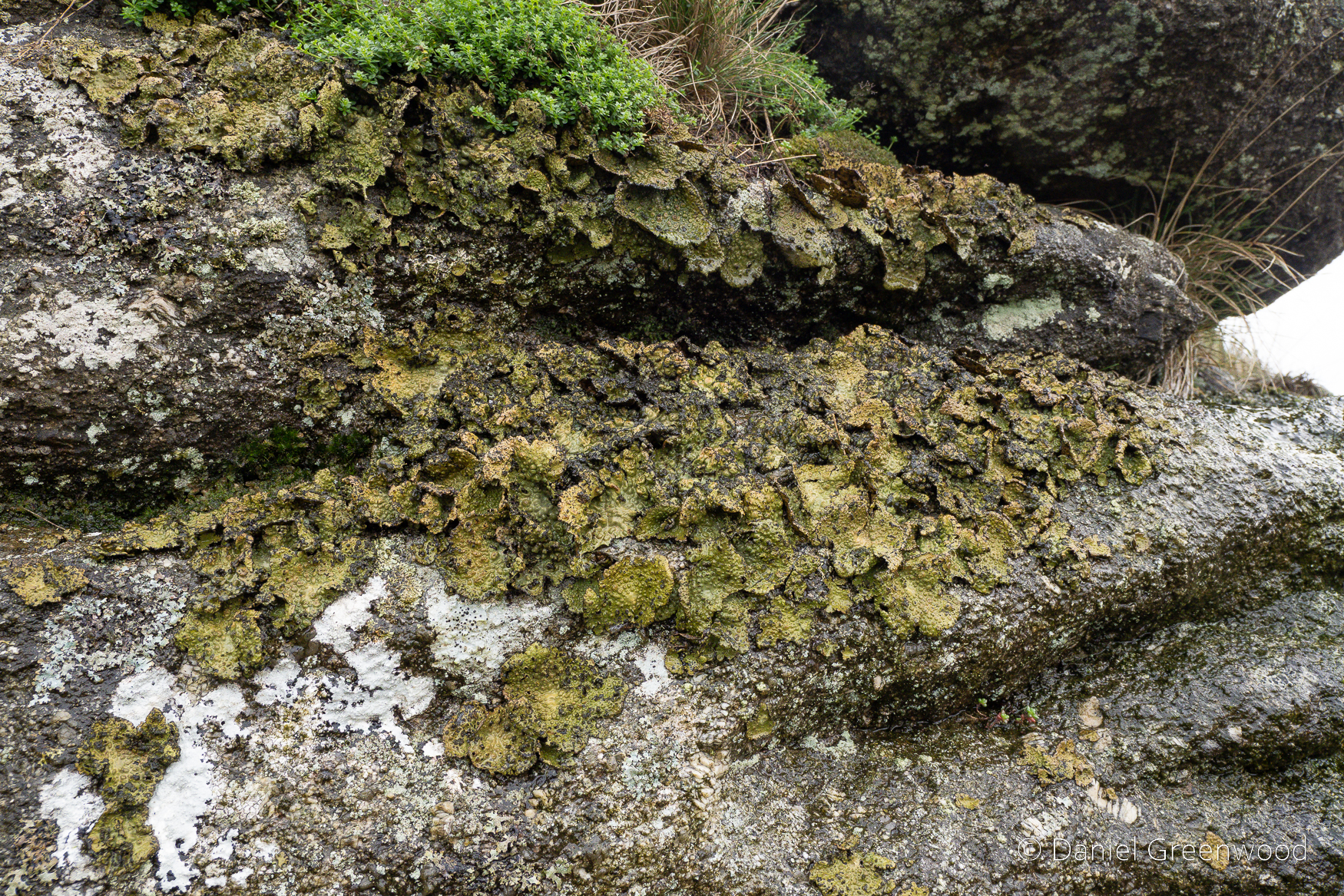
It’s Lasallia pustulata, a species I’ve seen near Wistmans Wood, but it was white rather than green. I wonder if this is algae making it this colour?
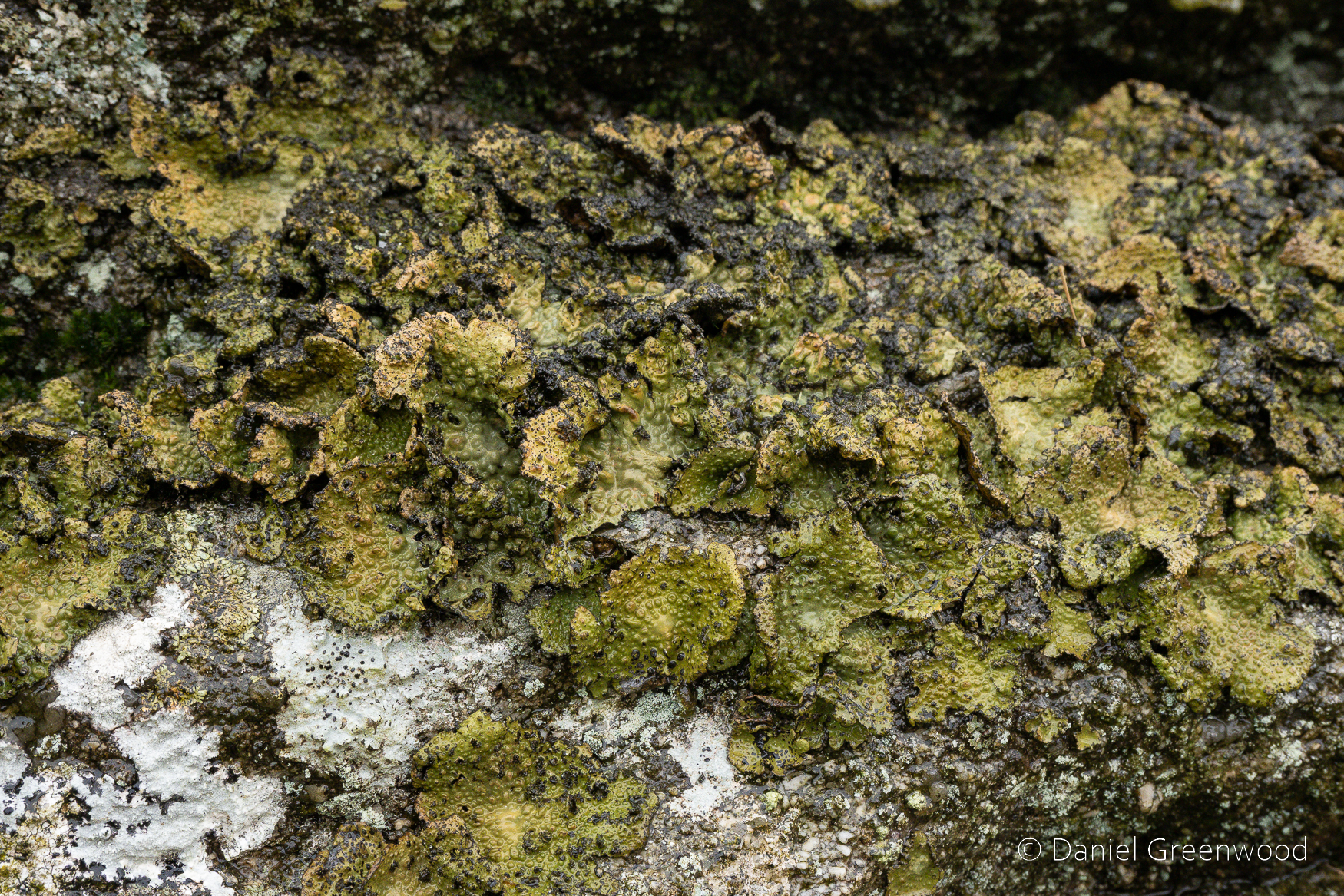
It’s rather toad-like in colour and texture.
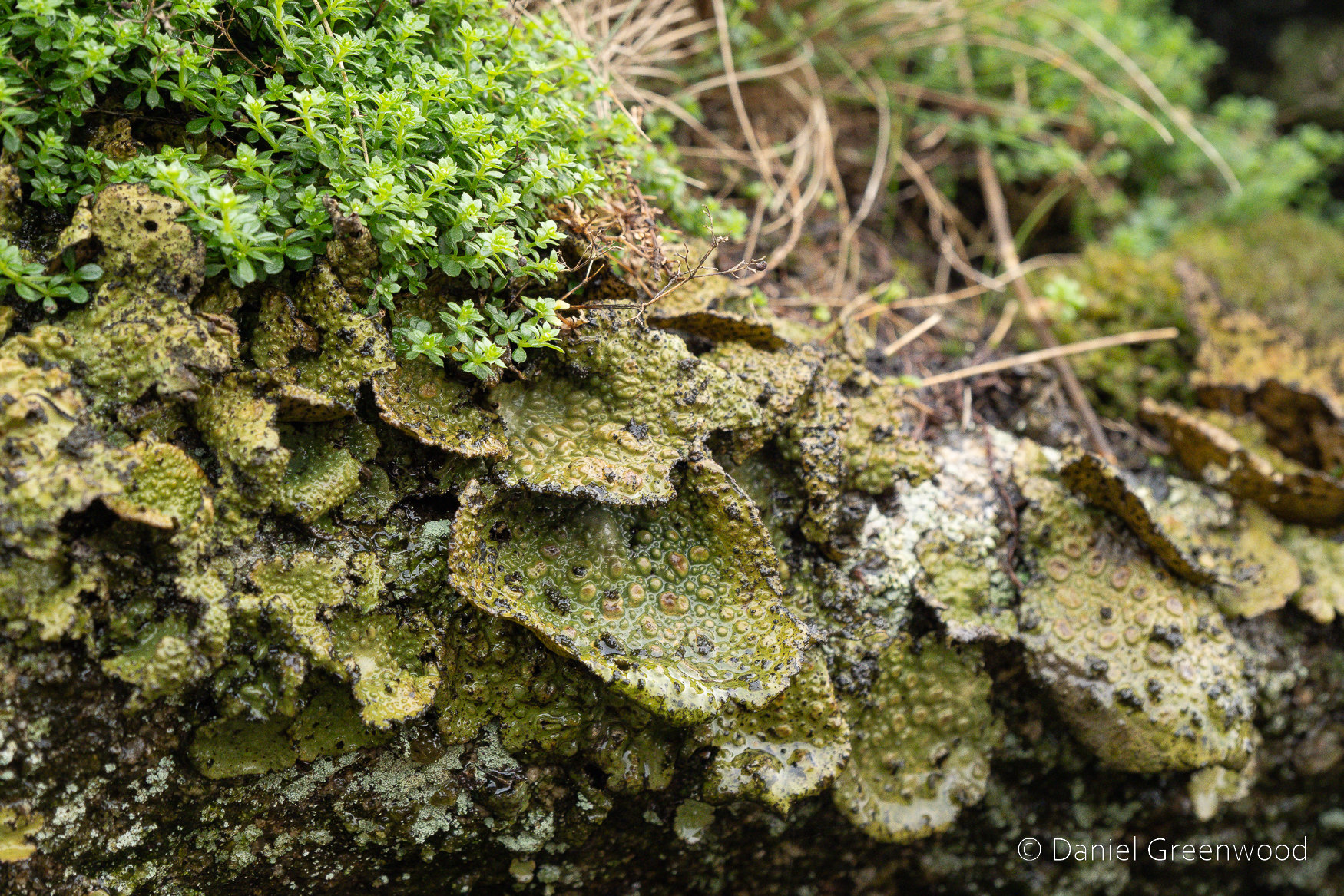
You can see the naan-bread bubbles in the centre, which are something to look out for when identifying the lichen.
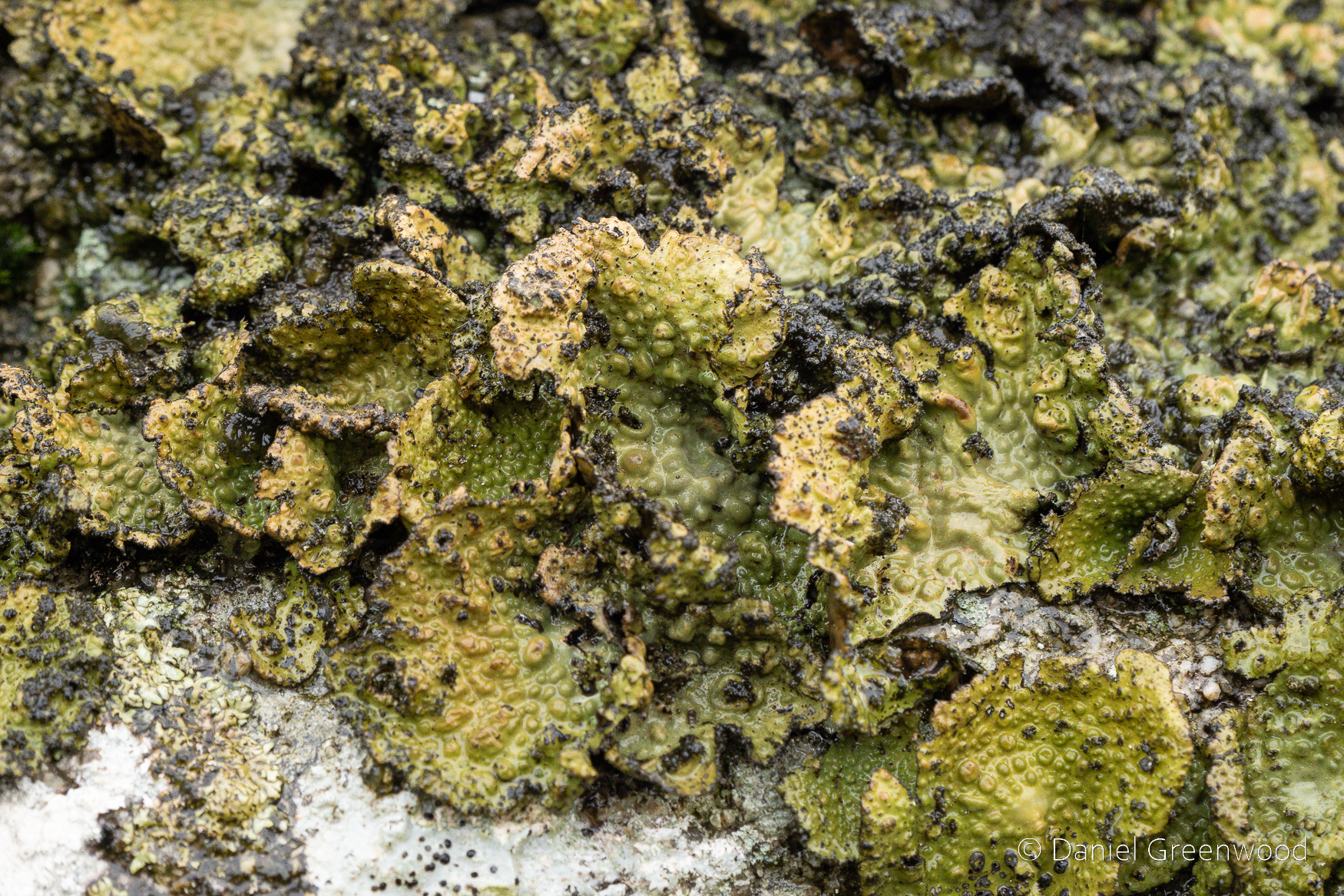
‘Pustulata’ must relate to the spot-like bubbles on the lichen. Nice! I’ll stick with naan-bread bubbles.
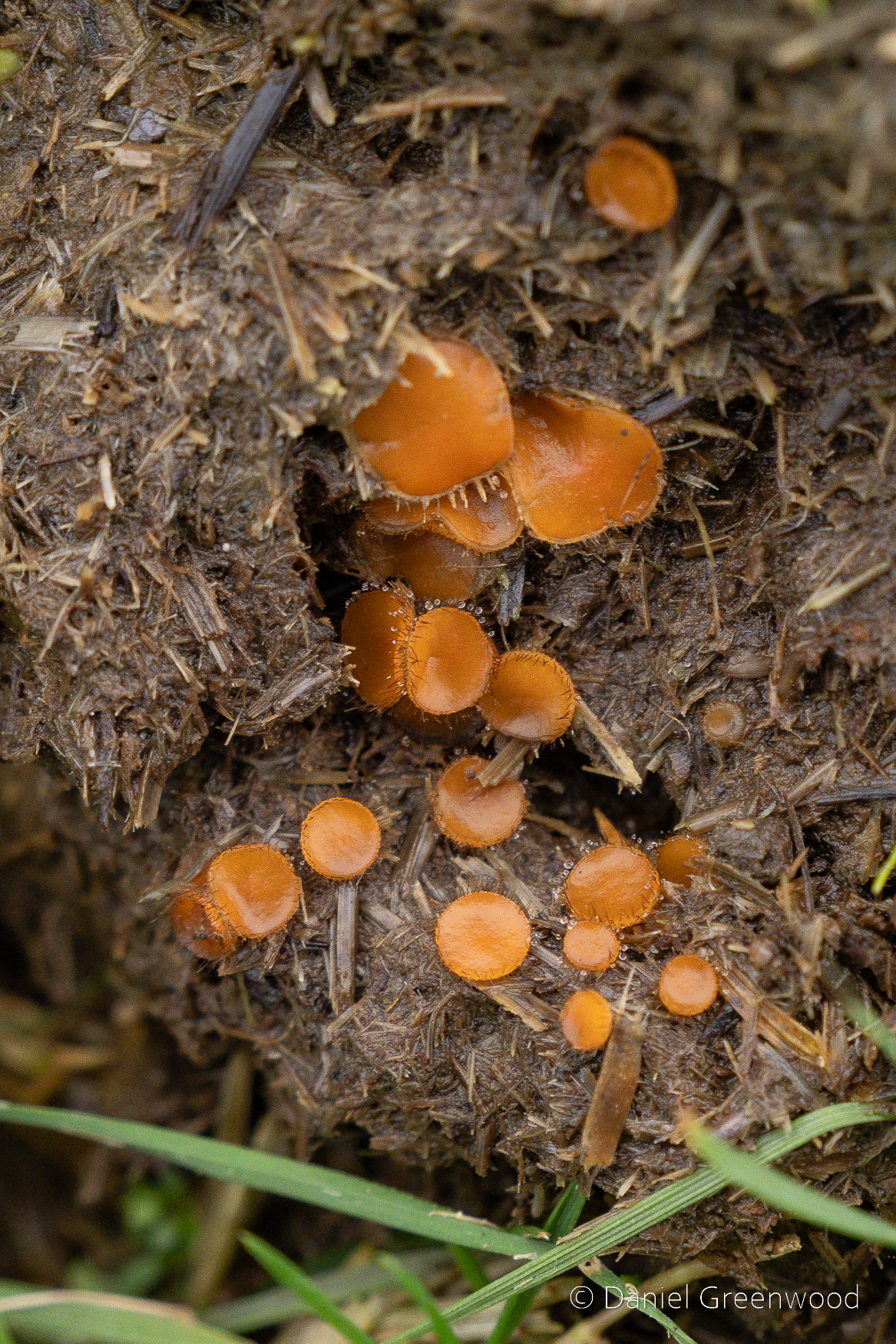
There are a lot of grazing animals on Dartmoor which means there’s plenty of dung (and dungi). These are eyelash fungi, Scutellinia. There are droplets attached to the black ‘eyelashes’ on the edge of the orange fruiting cups.
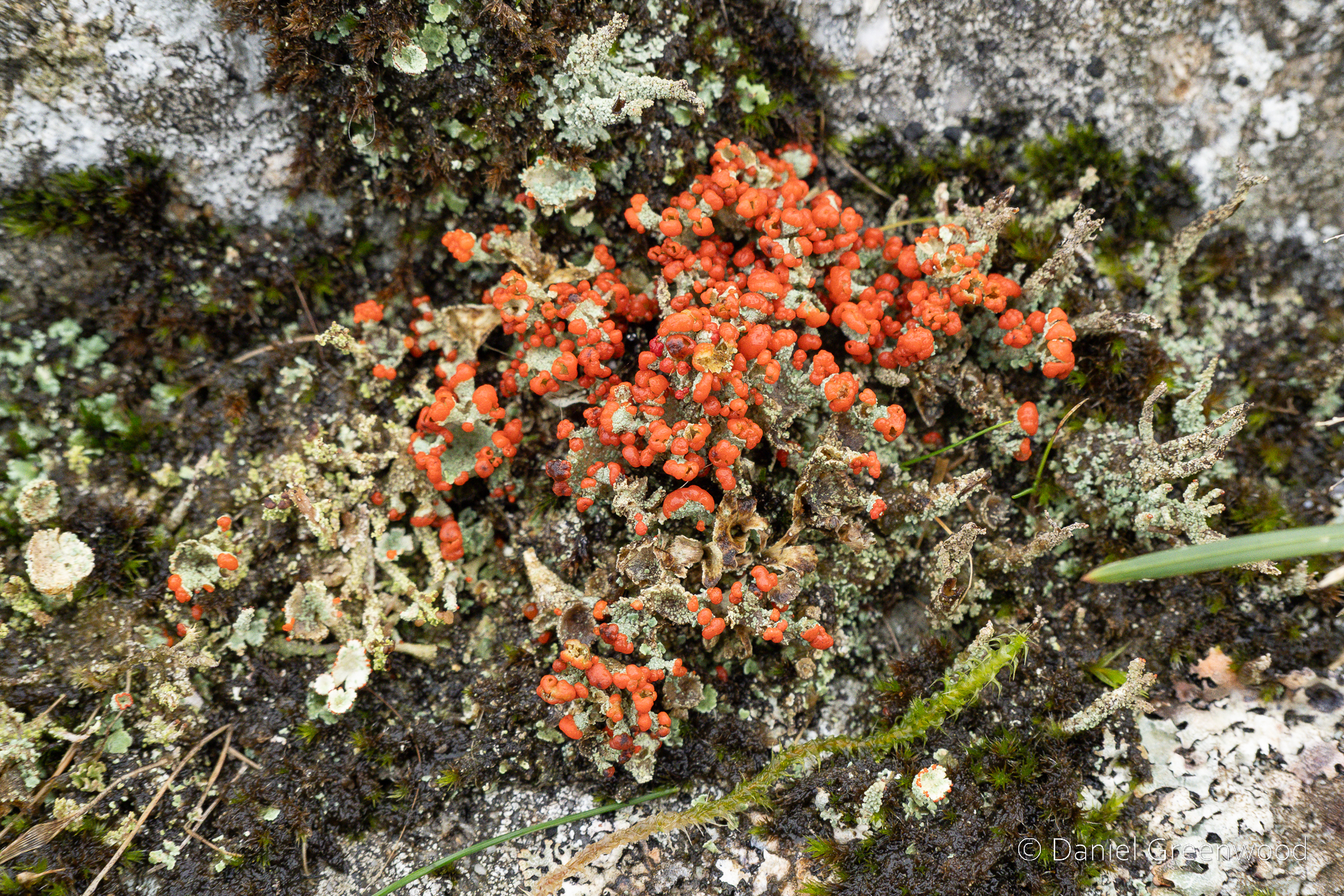
Another massing of Cladonia/lipstick/British soldier lichens.
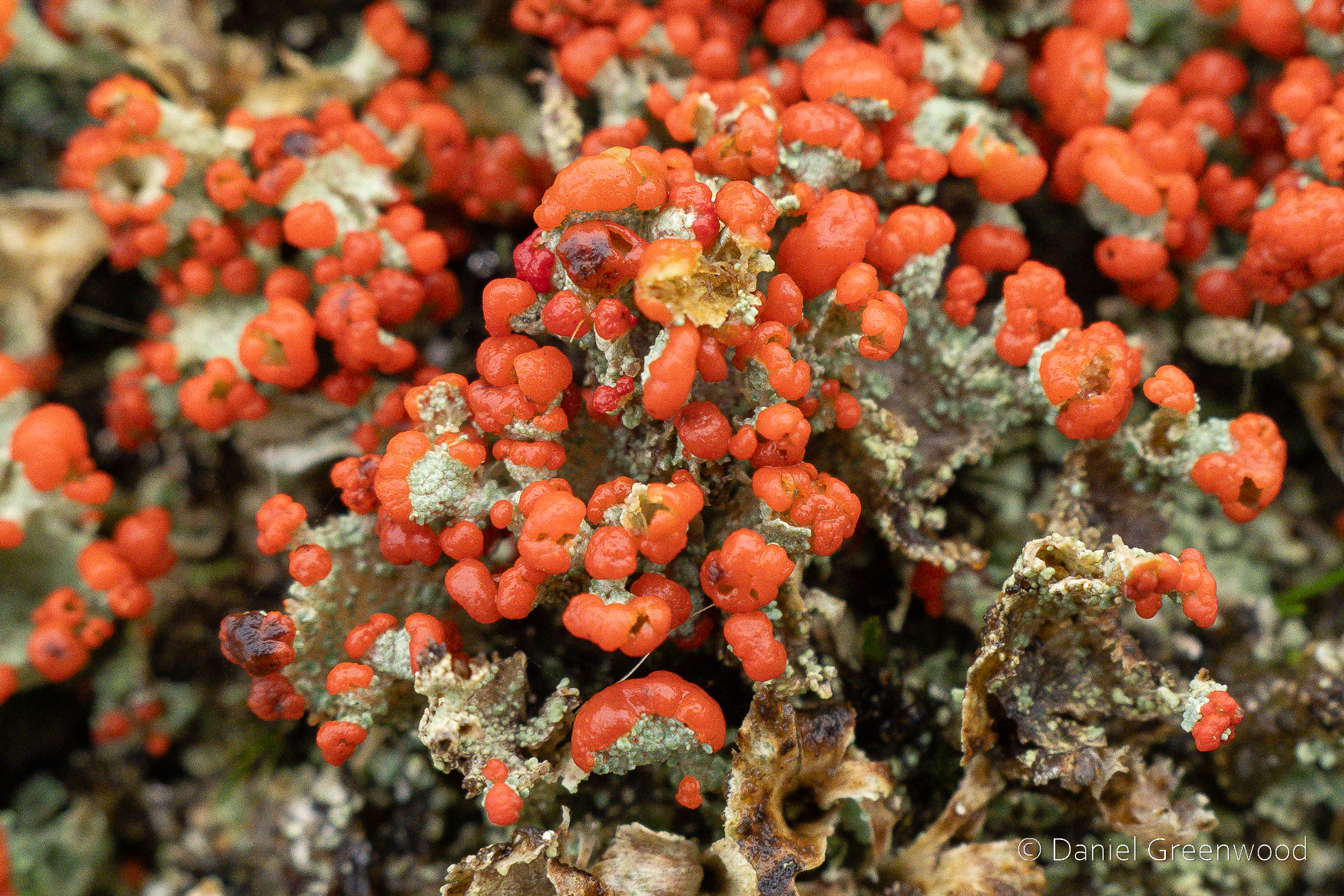
This collection was far fruitier than the first one.
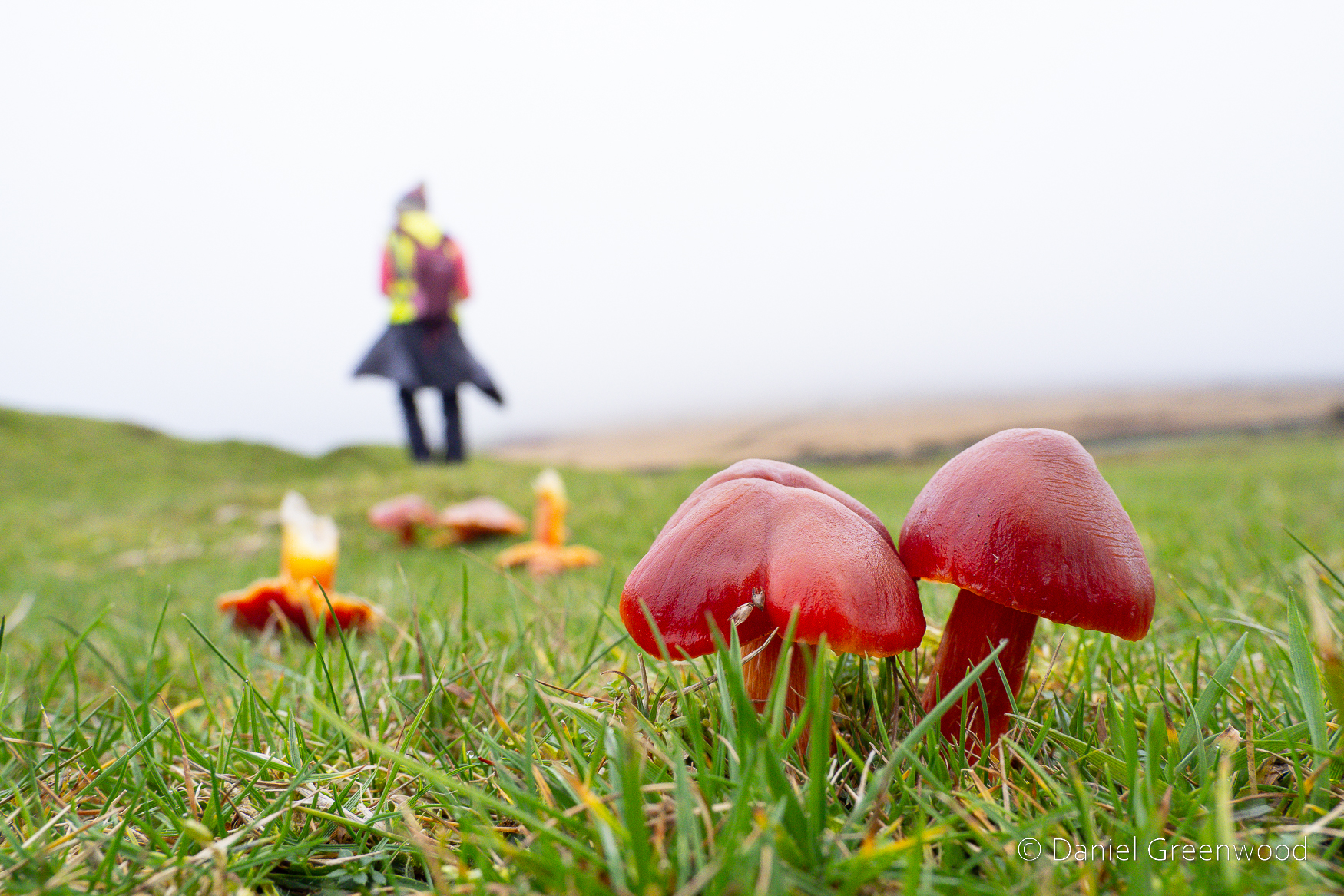
As we reached the hilltop where the road forks off in several directions, we found something special.
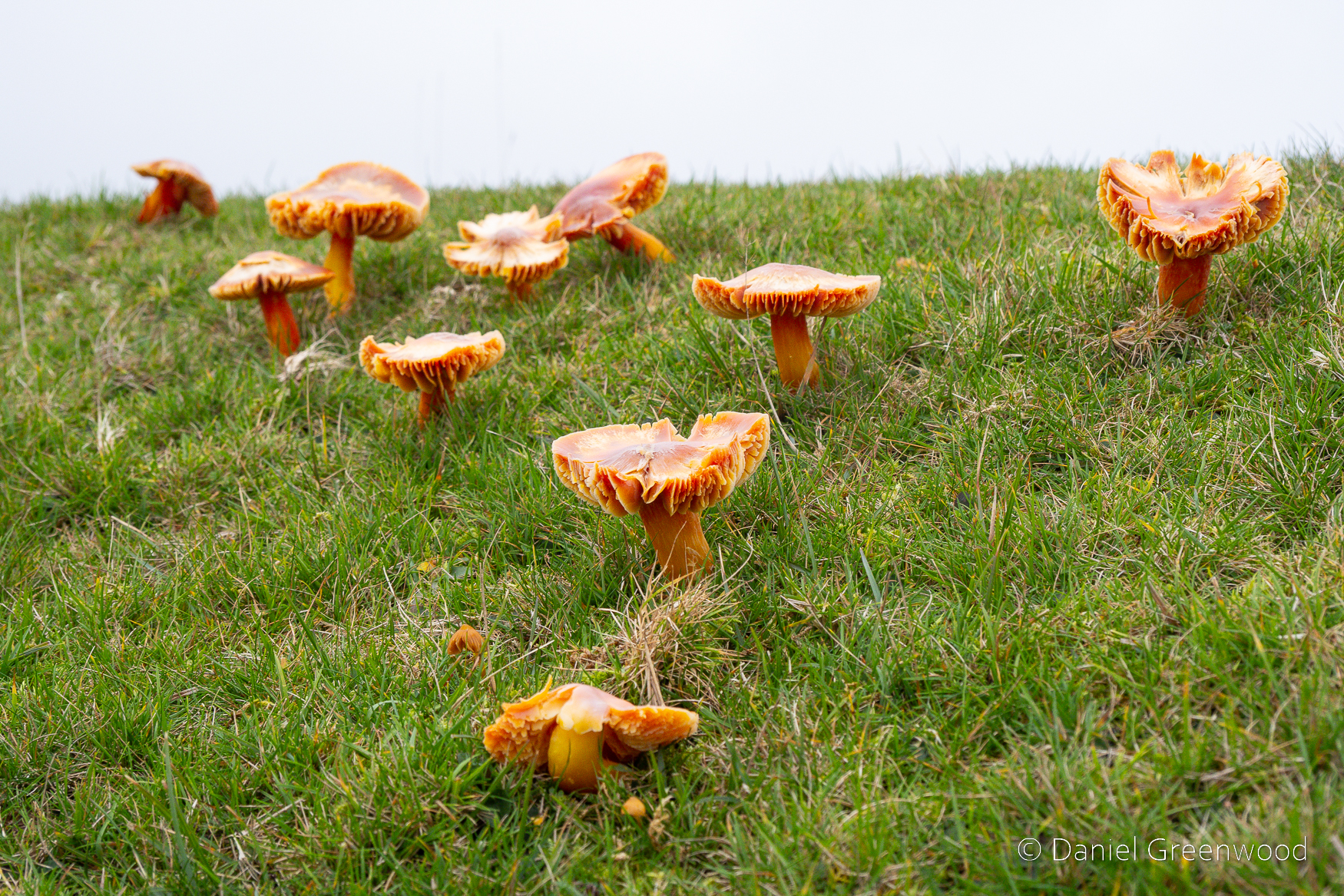
In the well-cropped grassland tens of crimson waxcaps were growing at the edge of the road.
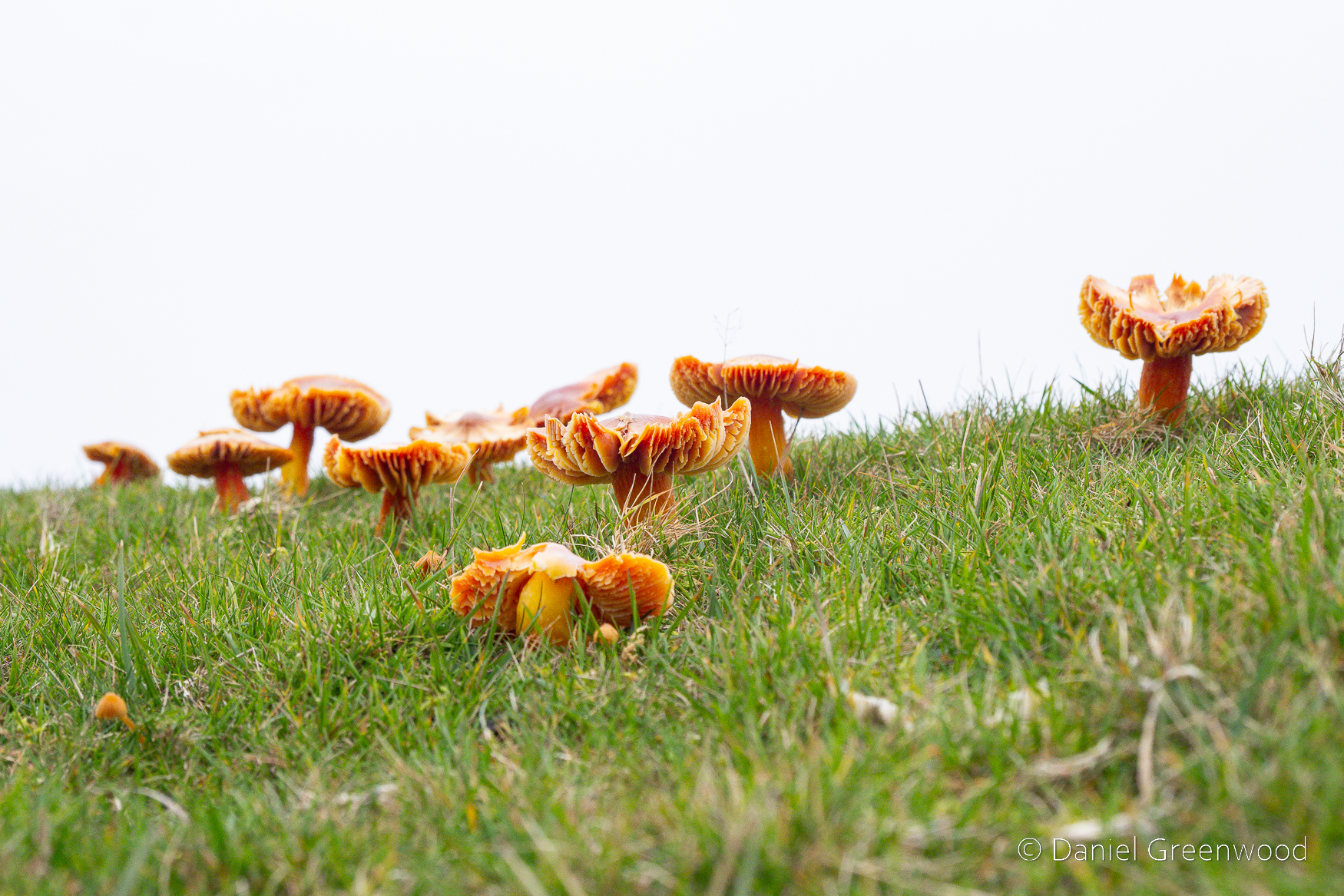
It was a superb display. The light was drawing in and I could only stop for a short while.
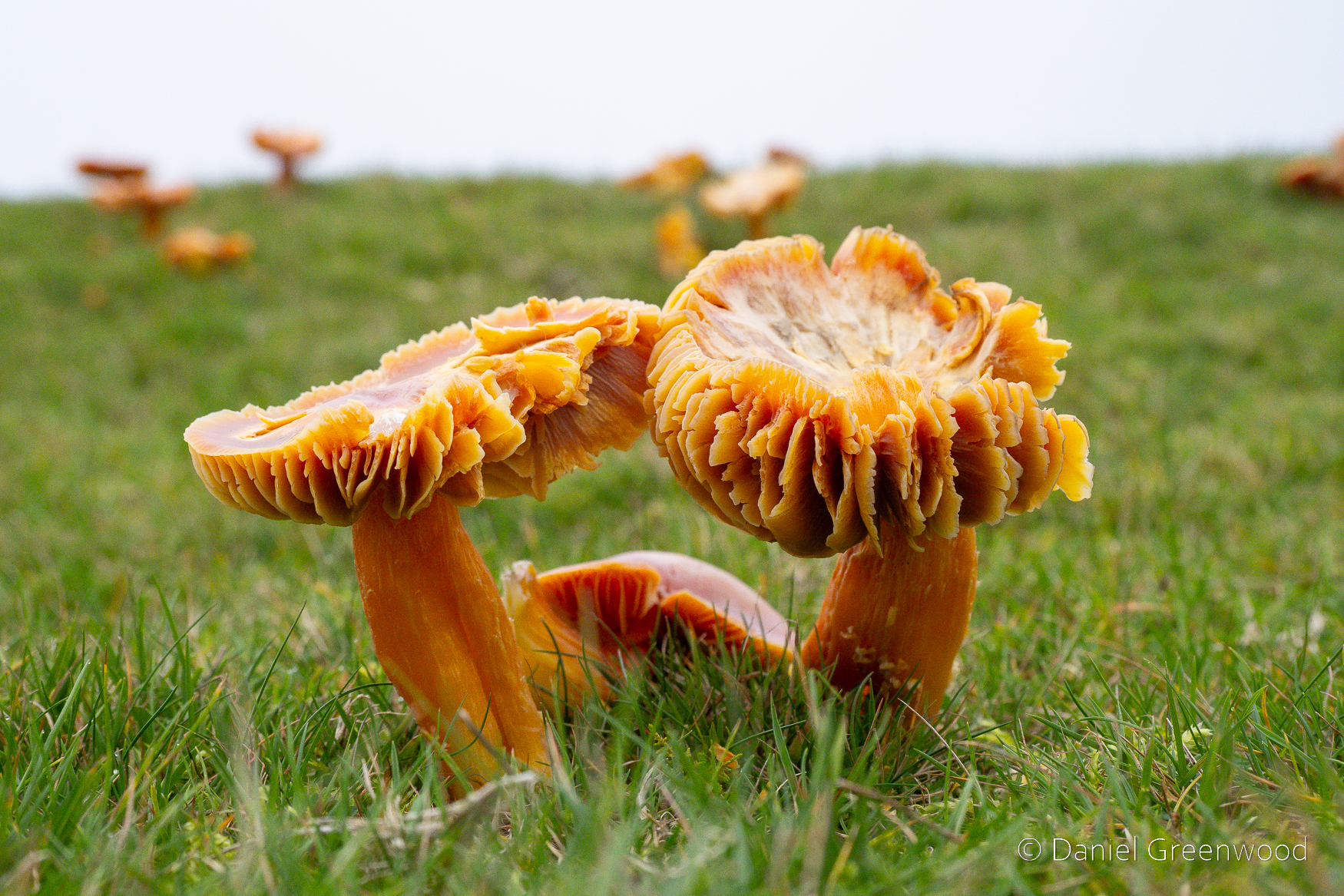
These ones were rain sodden.
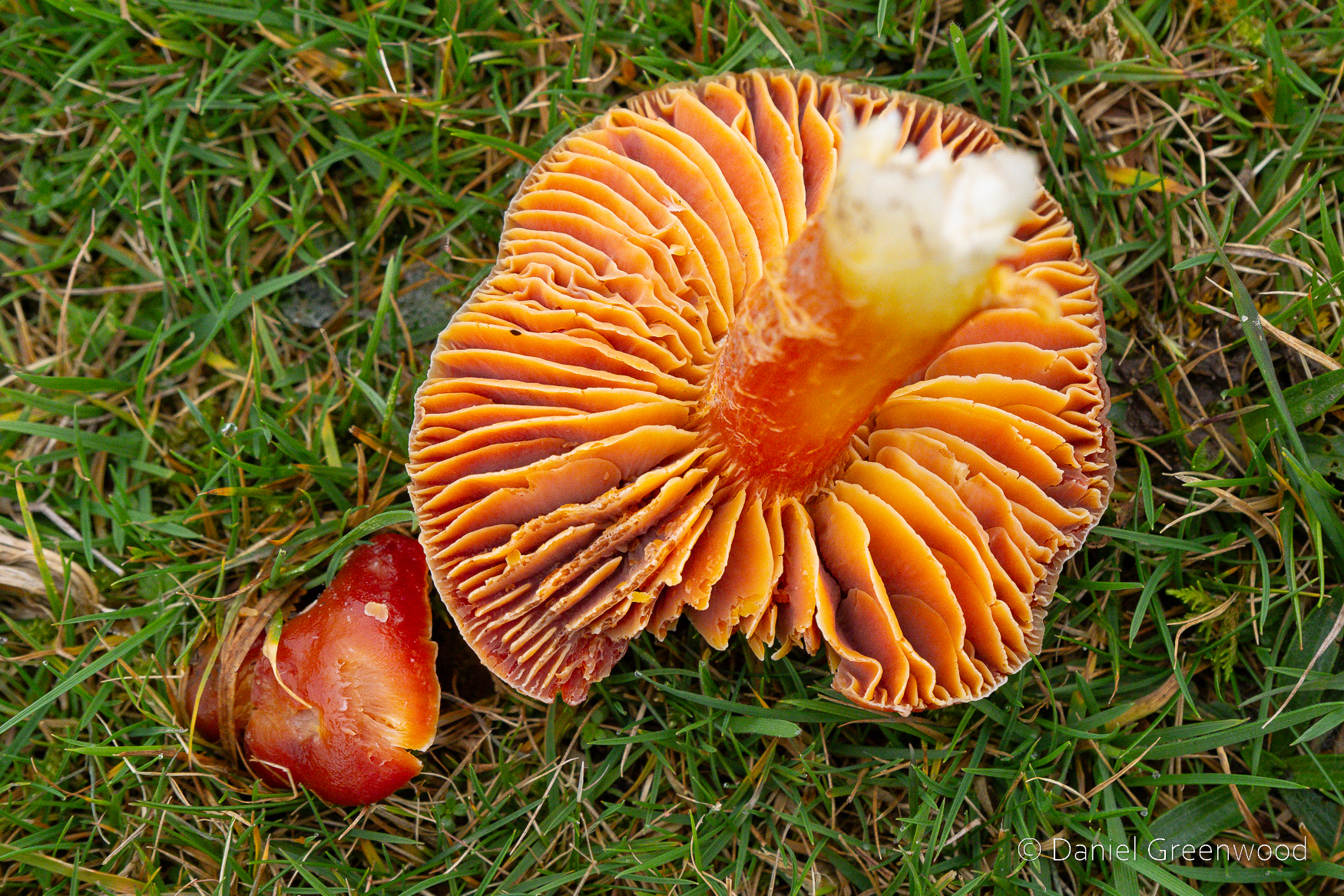
Upturned by ponies or other people, the gills glowed like flames.
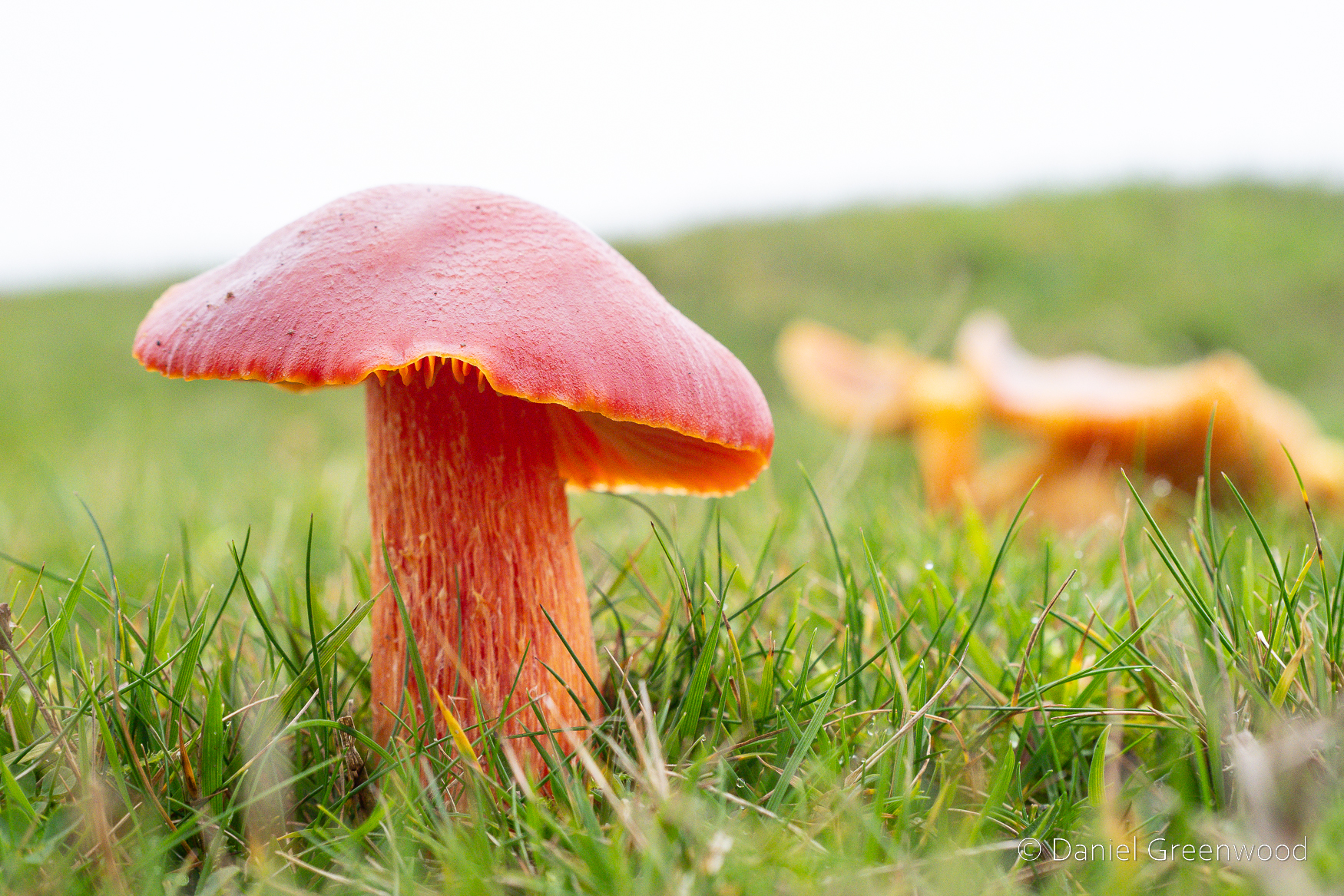
Crimson waxcaps look very much like jelly sweets to me.
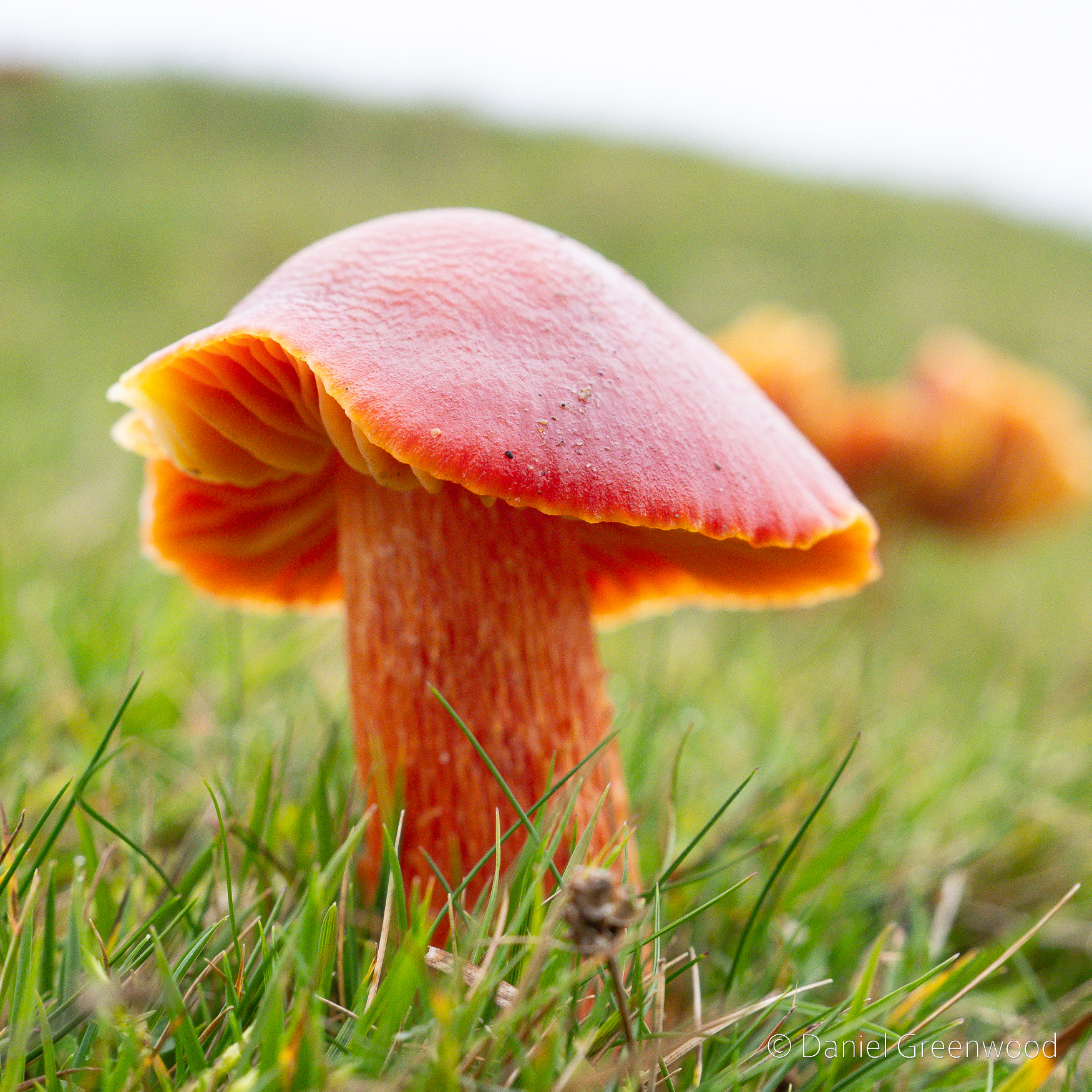
This one had a lovely kink in its cap.
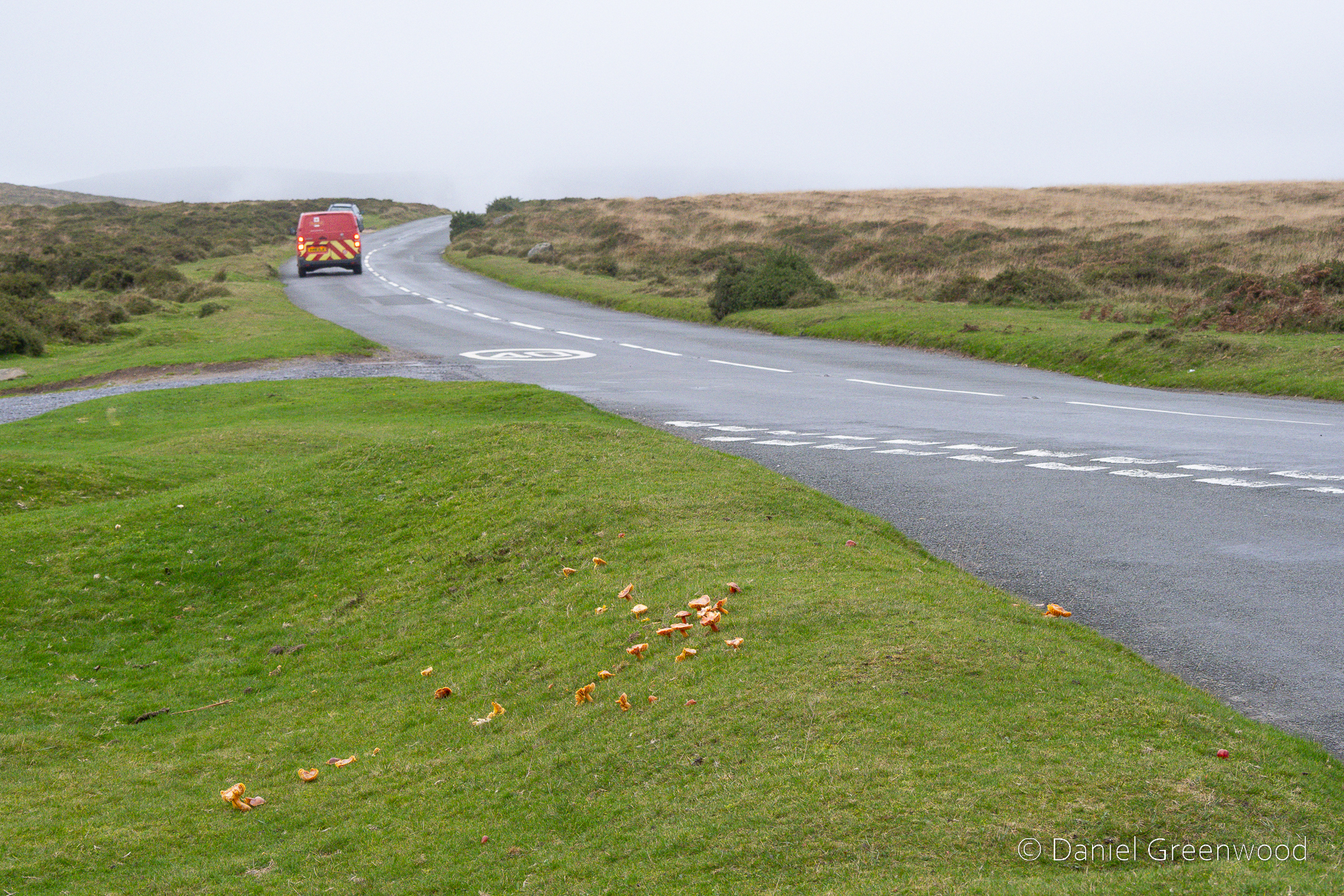
It looks rather disparate from here, but it’s all about getting closer to see how wonderful they really are.
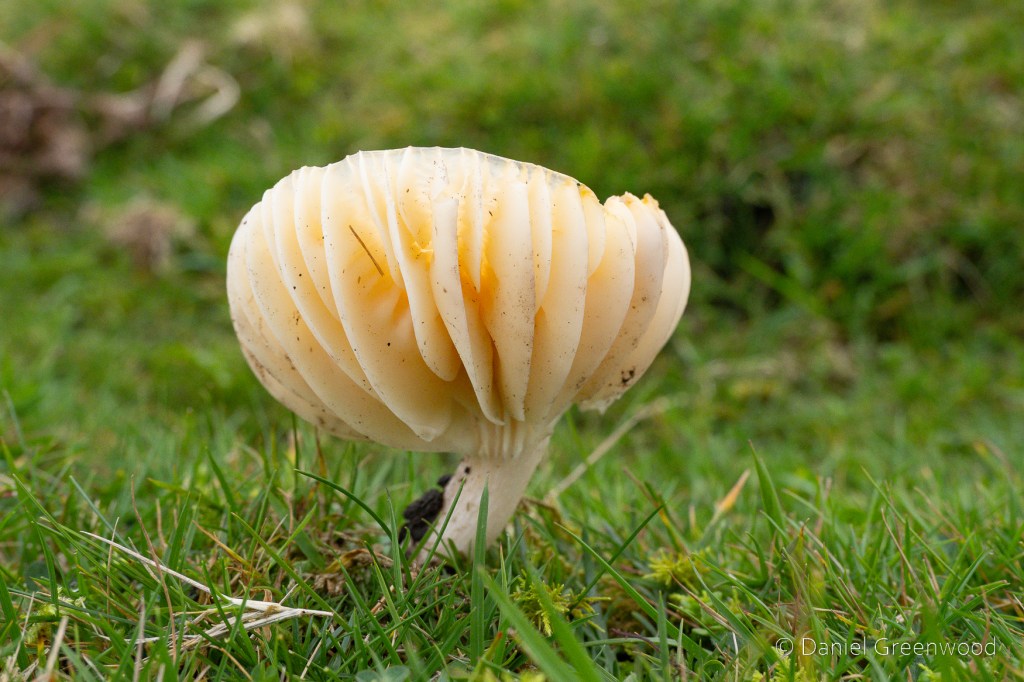
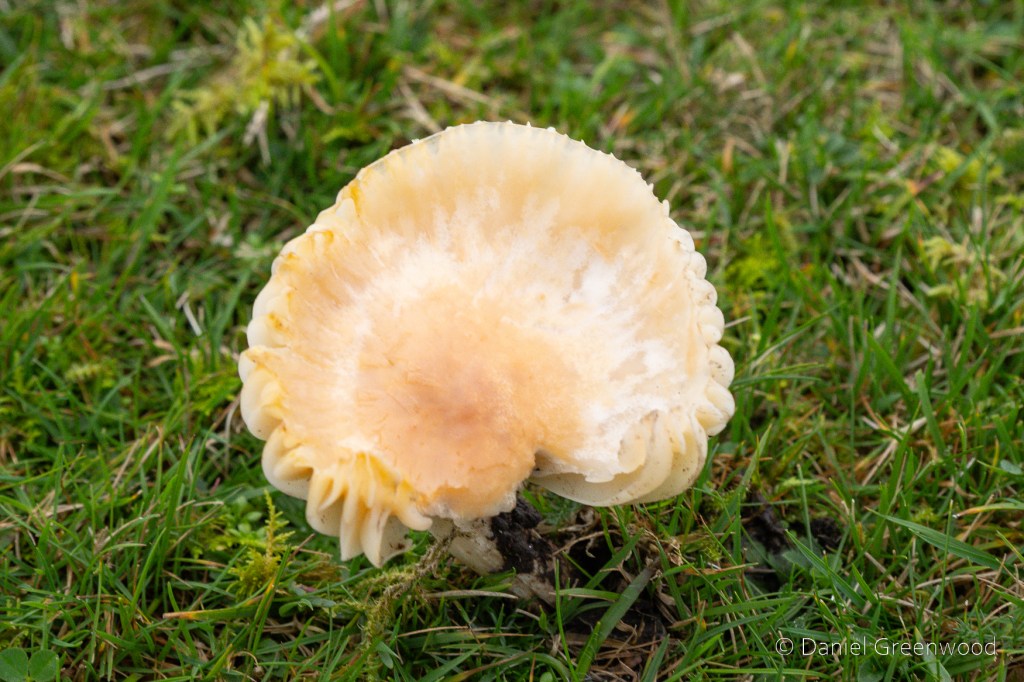
We were marching towards Haytor in order to get home before the night and mist moved in, but there was a moment to capture a couple of photos of a meadow waxcap. 2025 was not a strong year for them, probably because of the very dry summer. I wonder if 2026 will be the same?
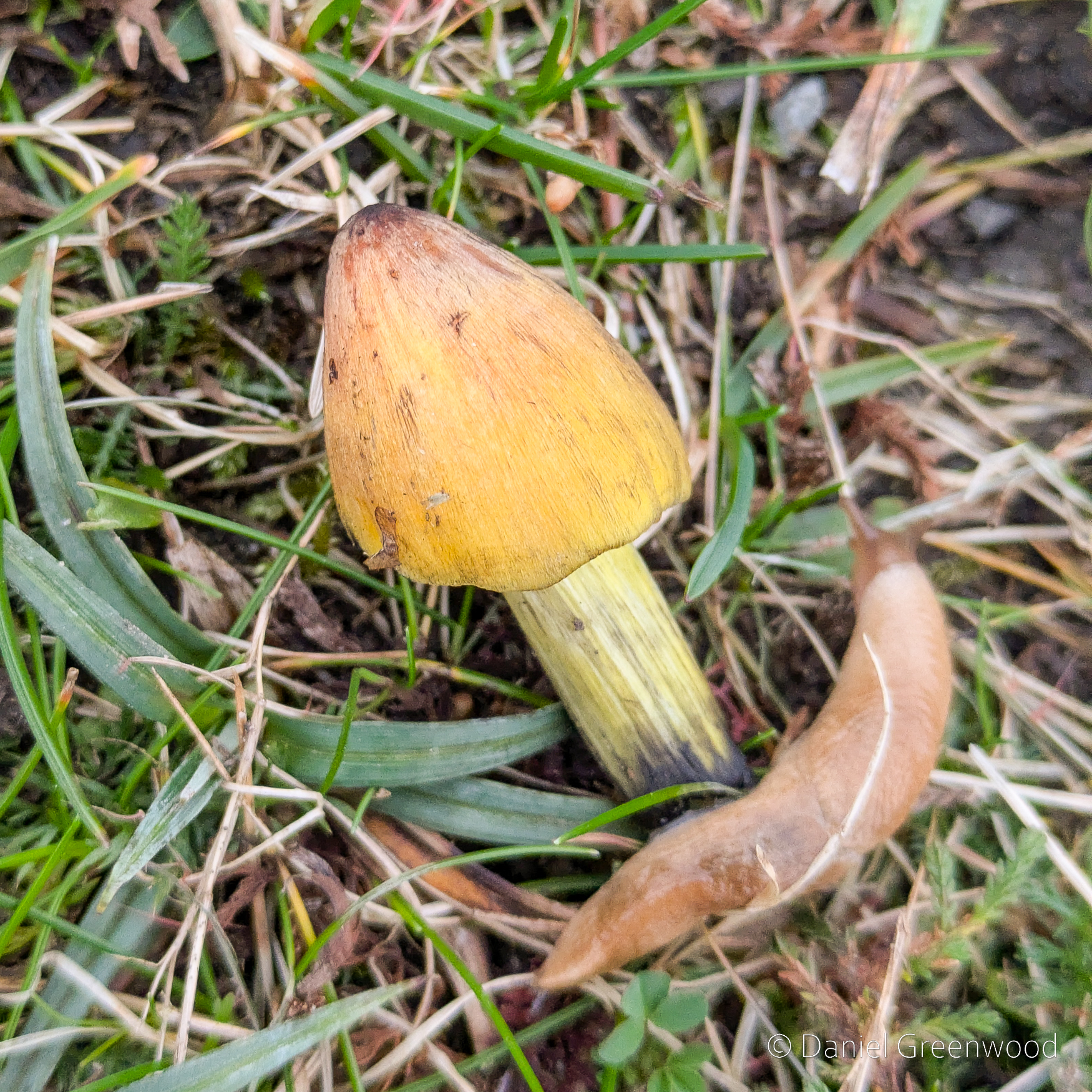
My final effort with my phone camera, this looks like one of the blackening waxcaps/witches bonnets growing at the road side. I only just noticed the blurry slug creeping around the stem!
Thanks for reading.
More Dartmoor fungi posts:
 Fungi Friday 🍄
Leave a comment