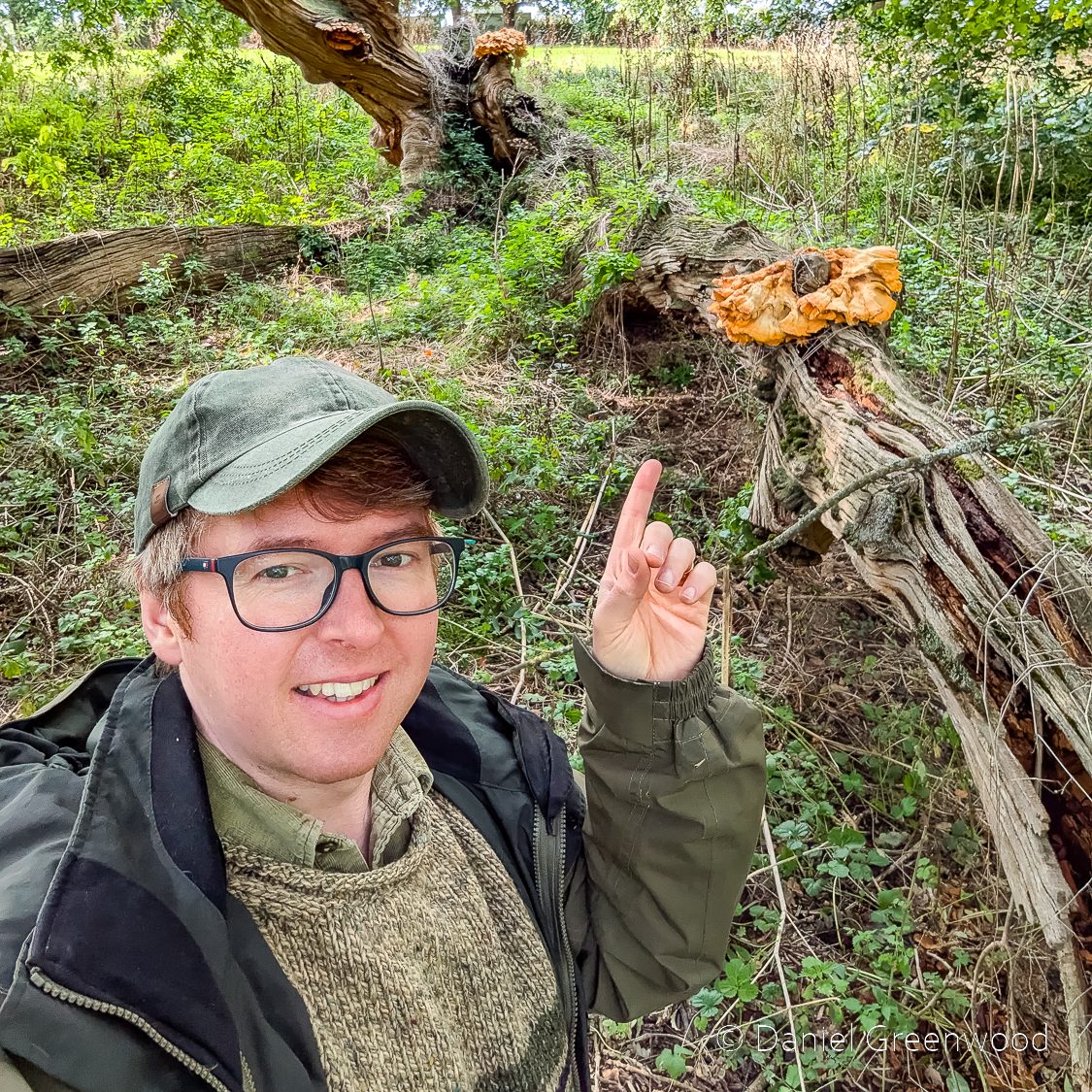
Parishes of Bovey Tracey, Manaton, and Ilsington in Dartmoor National Park, November 2025
Welcome the second post from my annual account of the fungi I photographed on Dartmoor (National Park) in Devon, south-west England in mid-November 2025. Here’s my first one:
You can see some previous accounts of Dartmoor fungi photo-walks at the bottom of this post.
A reminder that I am not encouraging people to pick or remove mushrooms in these areas. Photographers should also take care not to damage habitats by trampling things and compacting woodland soils. A reminder also that there are byelaws around foraging and Dartmoor is patrolled by National Park rangers.
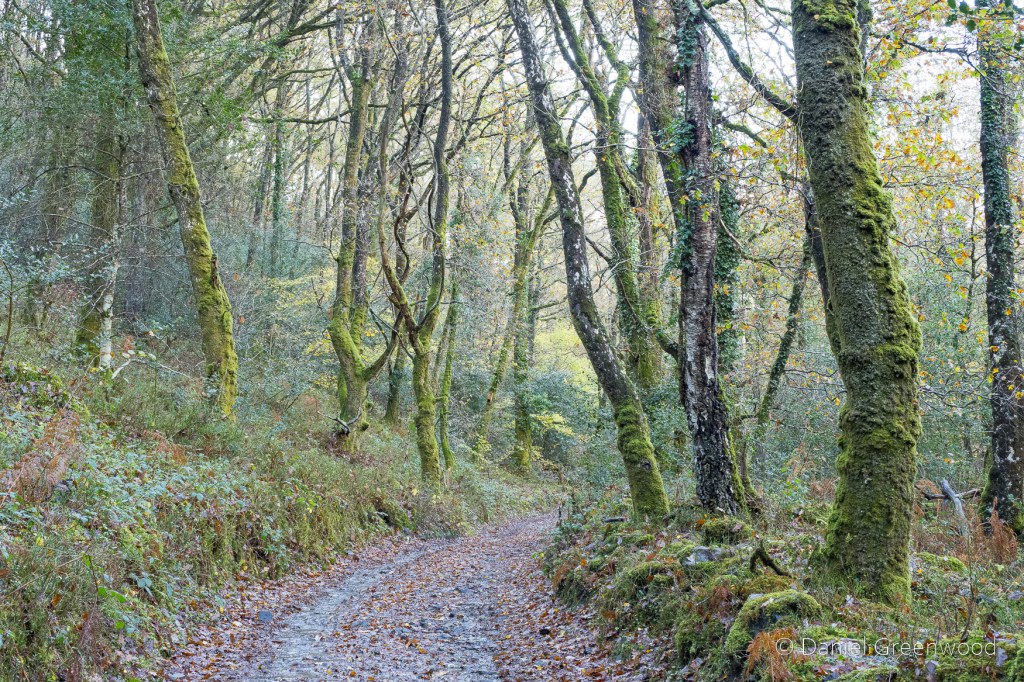
This post is based on a 10 mile walk around the East Dartmoor Woods and Heaths National Nature Reserve and the valley of the River Bovey (‘bovv-ee’ to the uninitiated, not ‘bove-ee’) from the hamlet of Brimley. It can be done from Bovey Tracey if you’re coming by public transport, but it will make it a few miles longer.
I write these blogs in my spare time because I want to raise awareness about the beauty and diversity of fungi. If you enjoy reading them you can support my blog here.
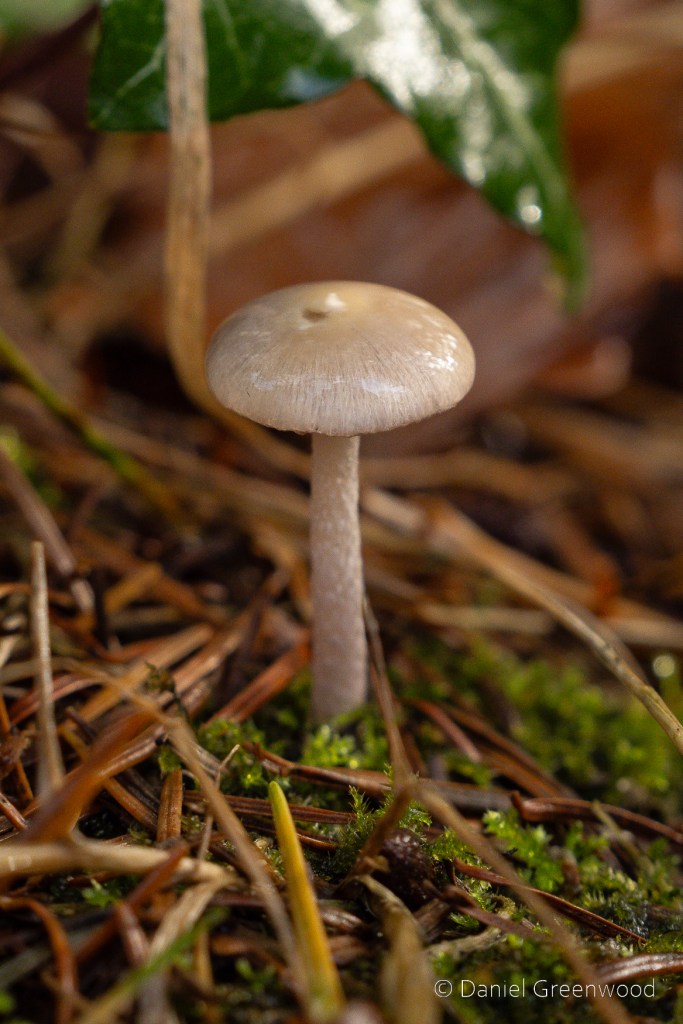
My first photo of the walk – this isn’t a species I can identify. I was wondering if the markings on the cap could mean it’s a fibrecap, but it’s not a group I am familiar with.
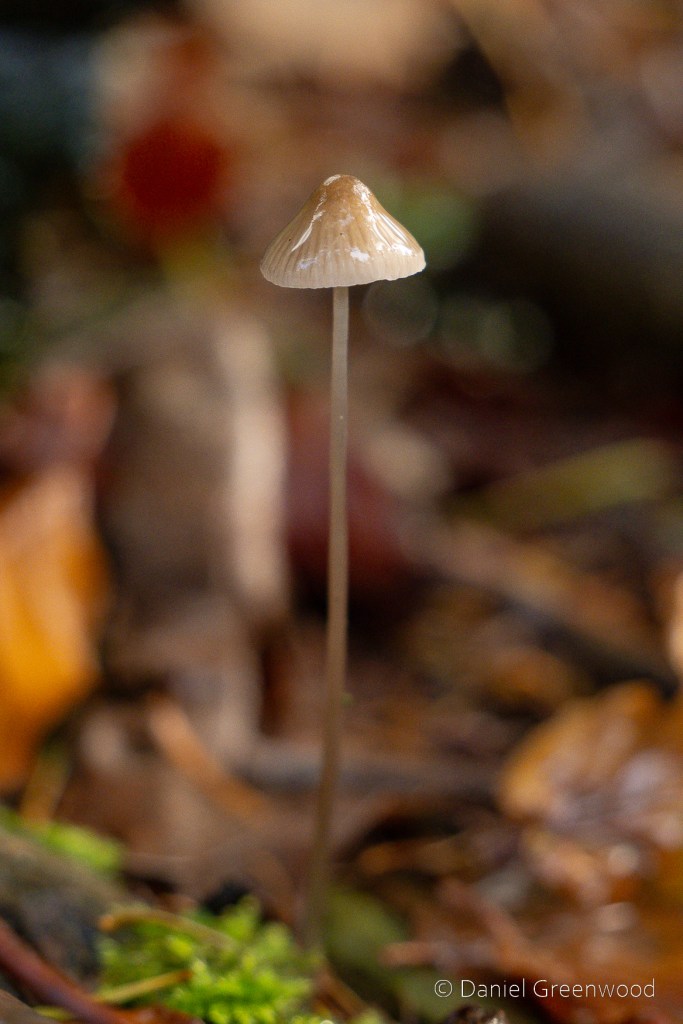
This is a bonnet with a very long stem.
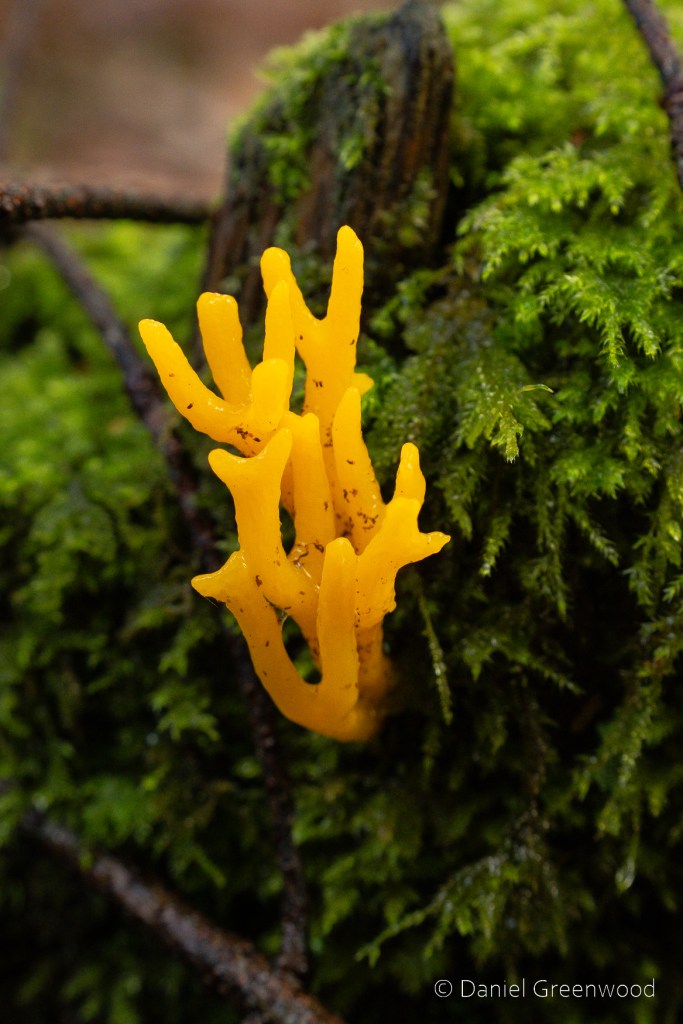
Yellow stagshorn is a common species of mossy oak woodlands such as those on Dartmoor.
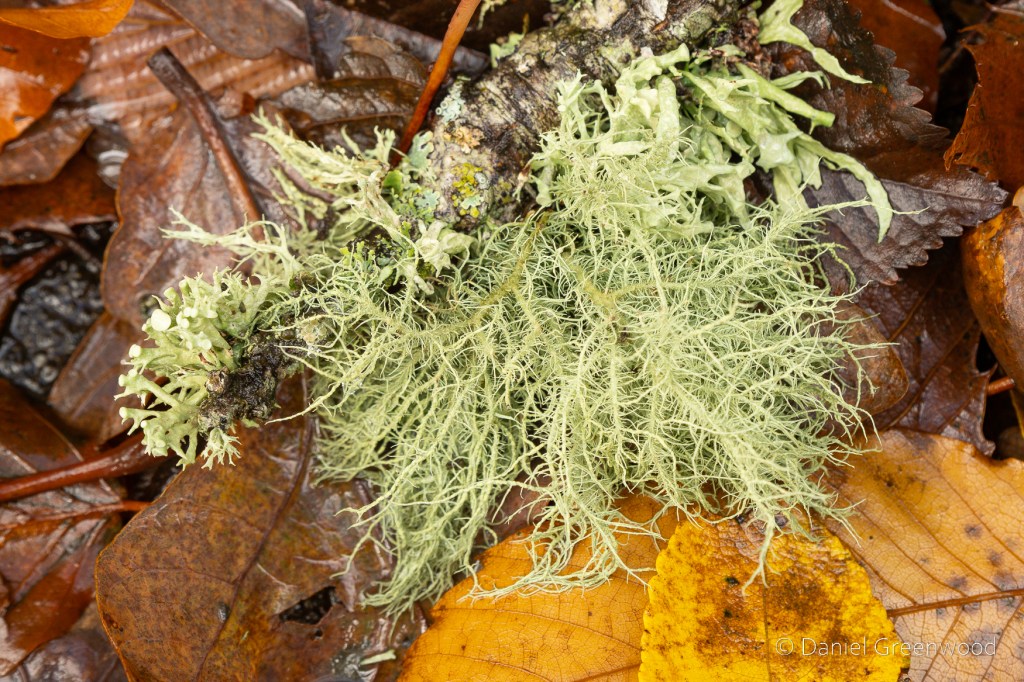
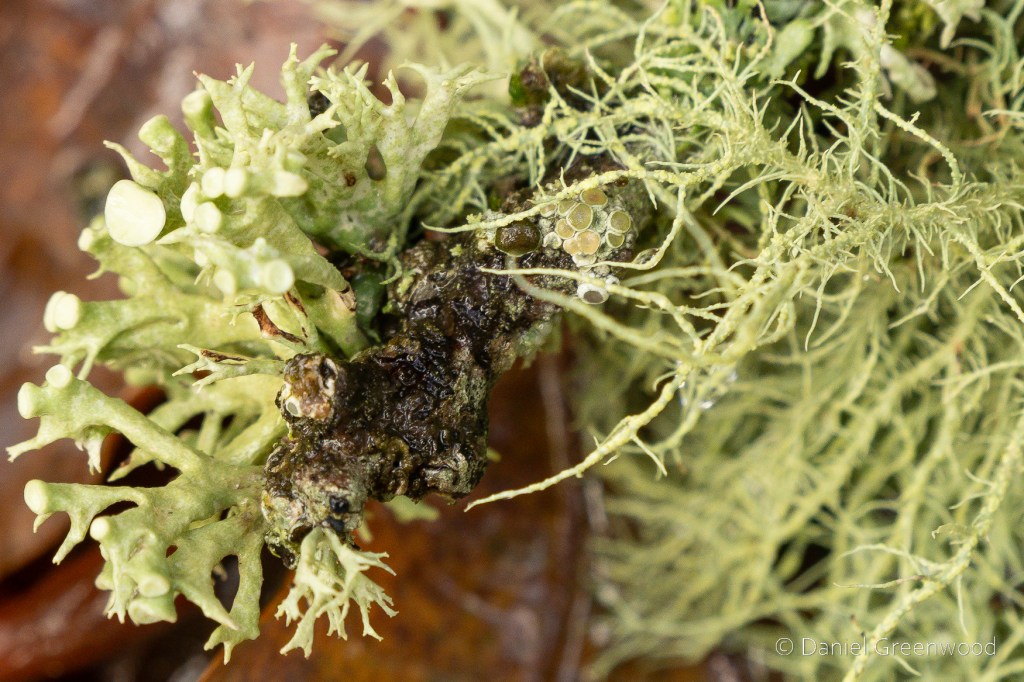
There are two lichens on this stick, the stringier one is an usnea lichen. The one on the left is dotted ribbon lichen.
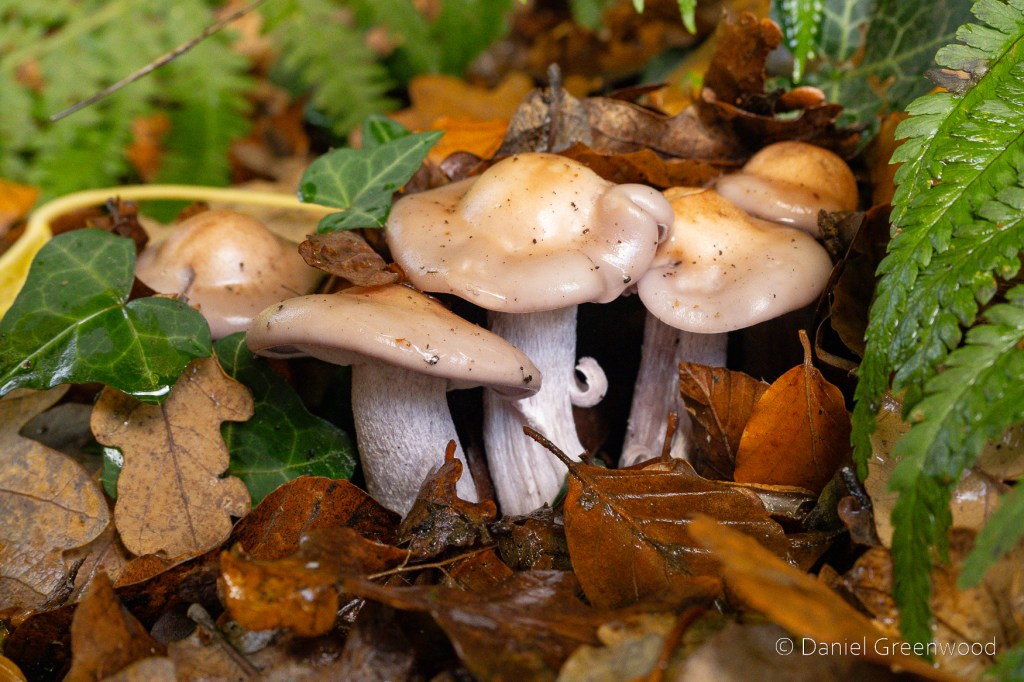
Blewits huddled at the roadside.
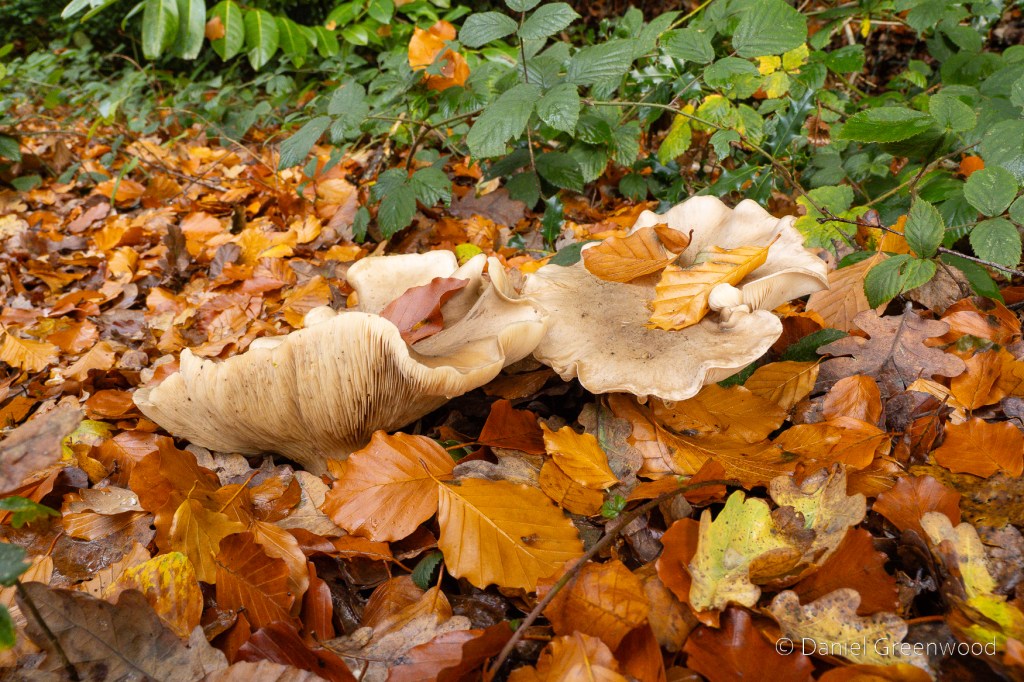
A common autumn mushroom, clouded funnel.
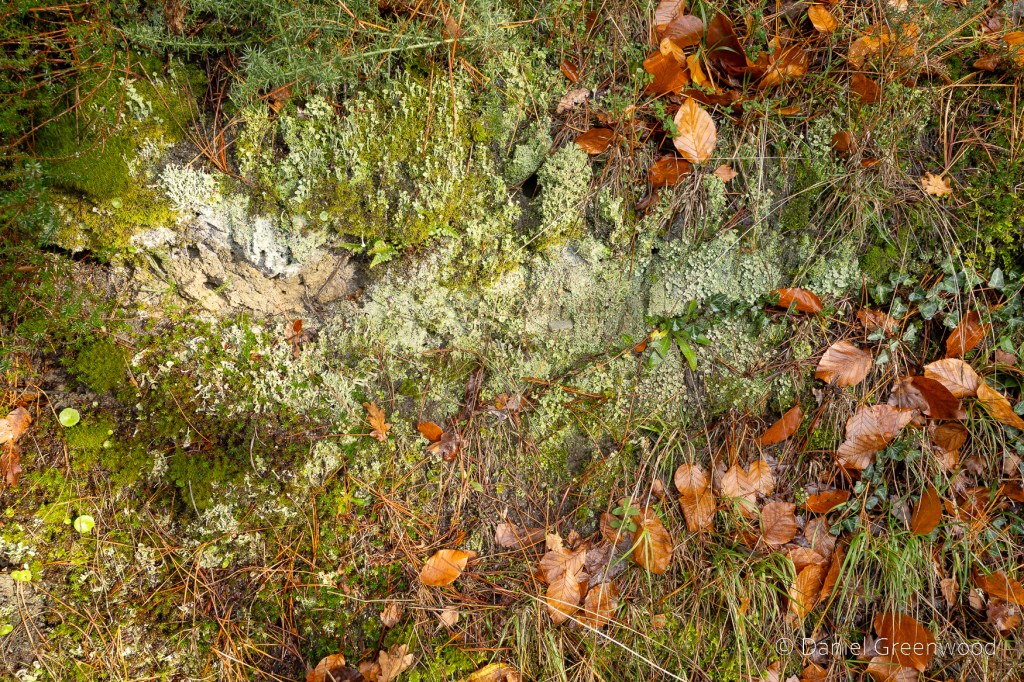
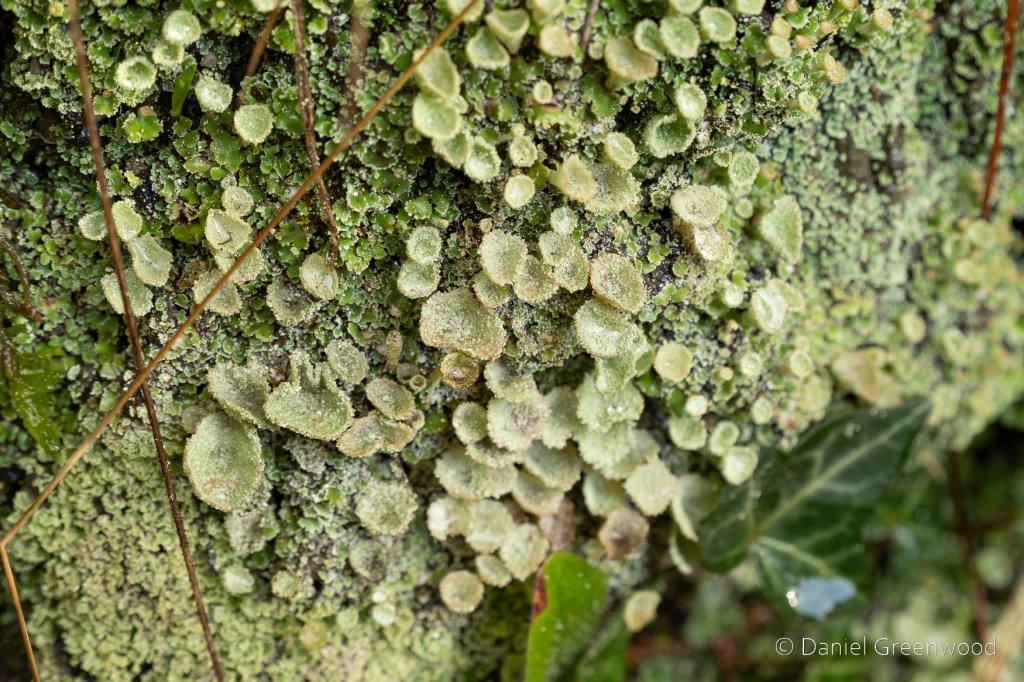
Cladonia lichens massed on an exposed area of soil at the roadside.
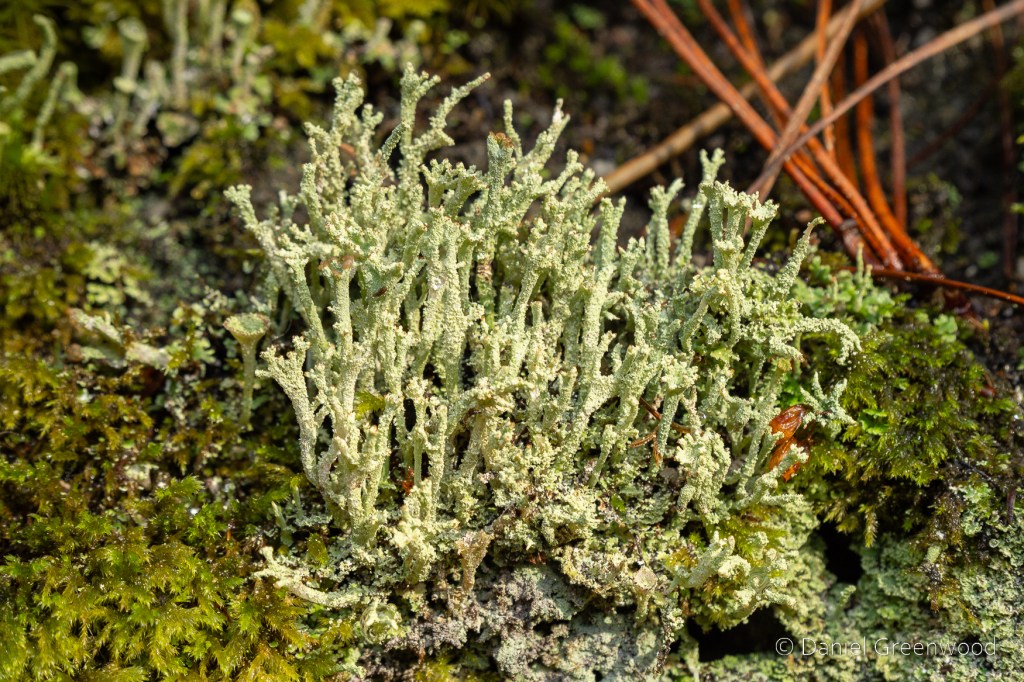
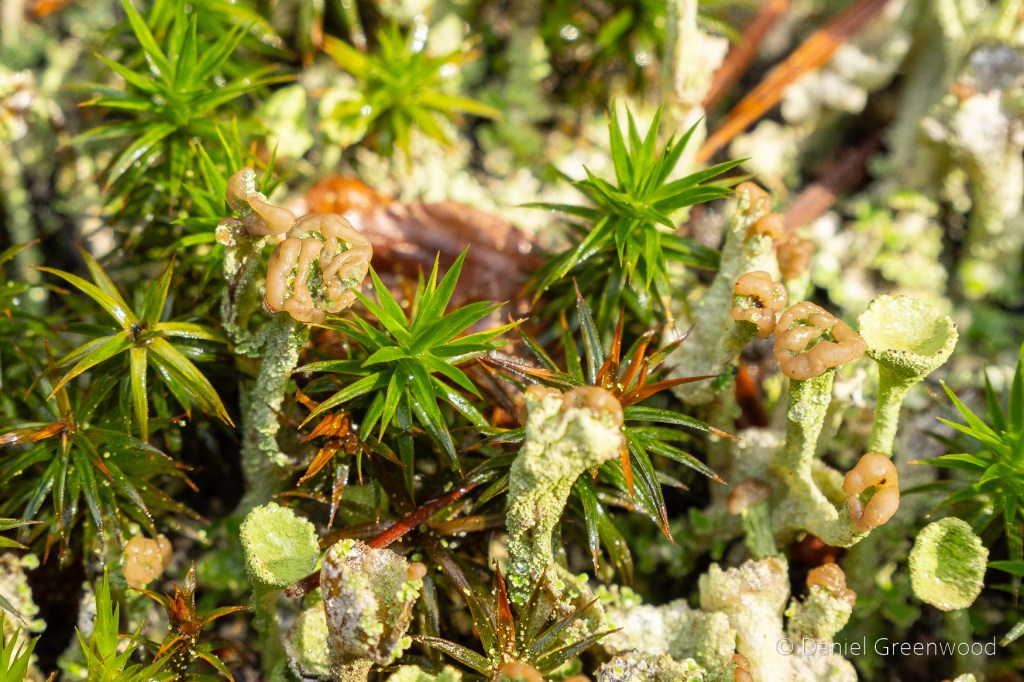
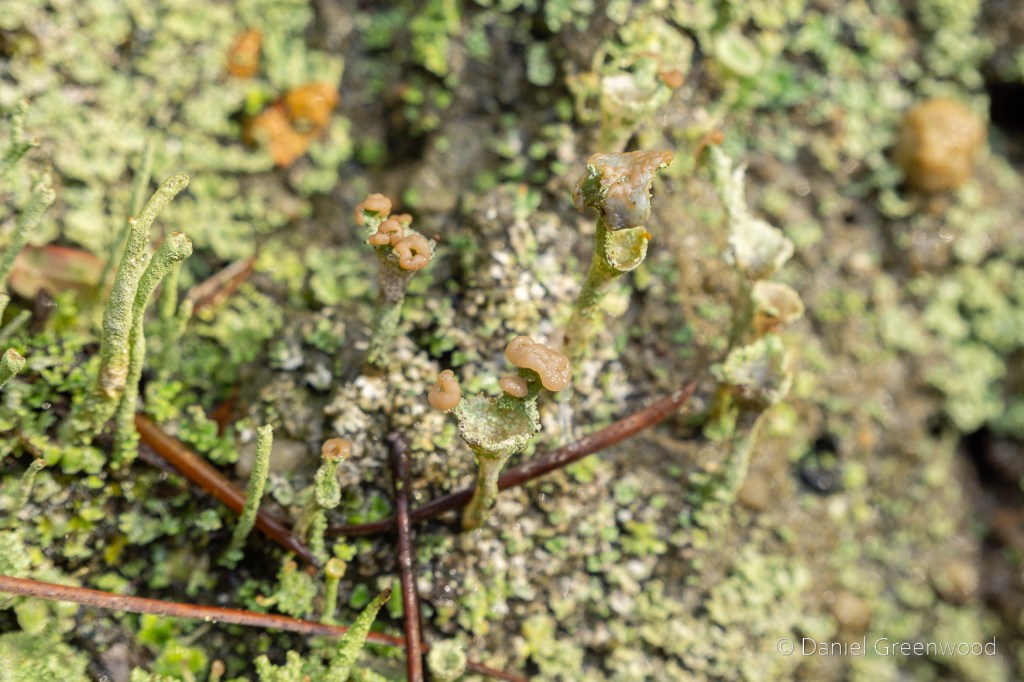
I think this is branched pixie cup lichen (Cladonia ramulosa).
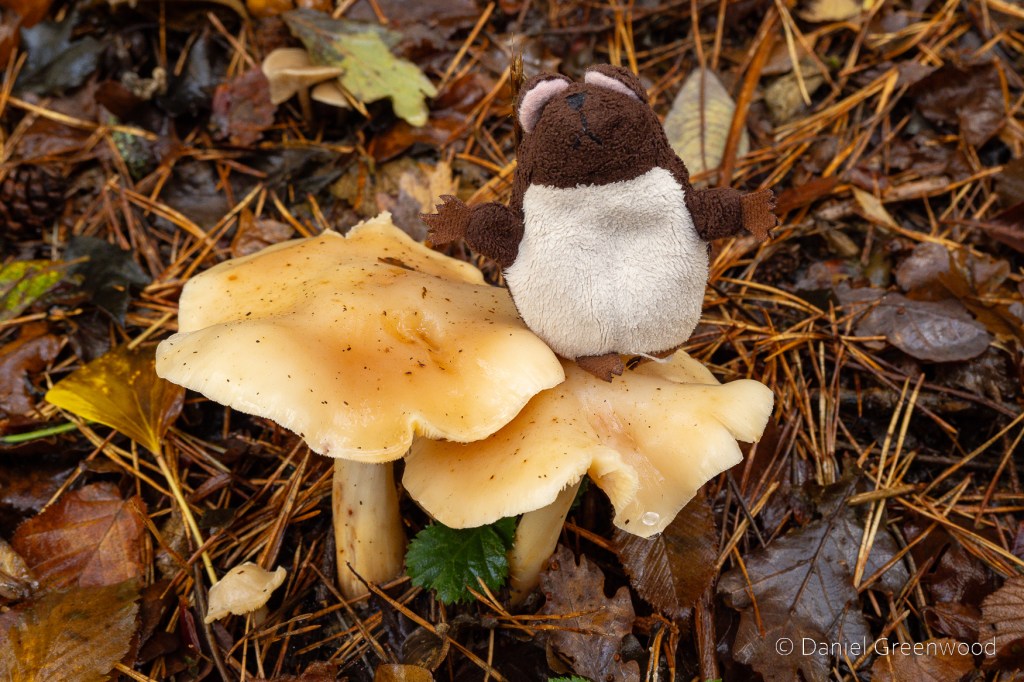
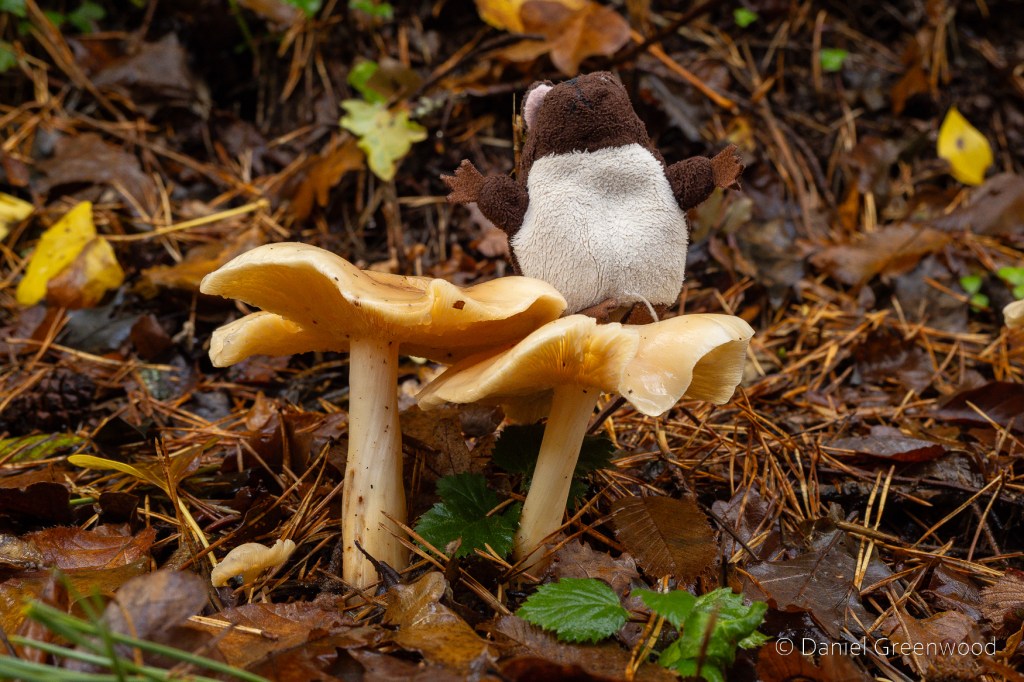
The ‘dormice’ in Devon are rather confiding. This one was sitting on top of a pair of spotted toughshank. I’ve only seen this species once before, both occasions have been under pine in moorland/heathland habitat. Maybe that ‘mouse’ will be back later.
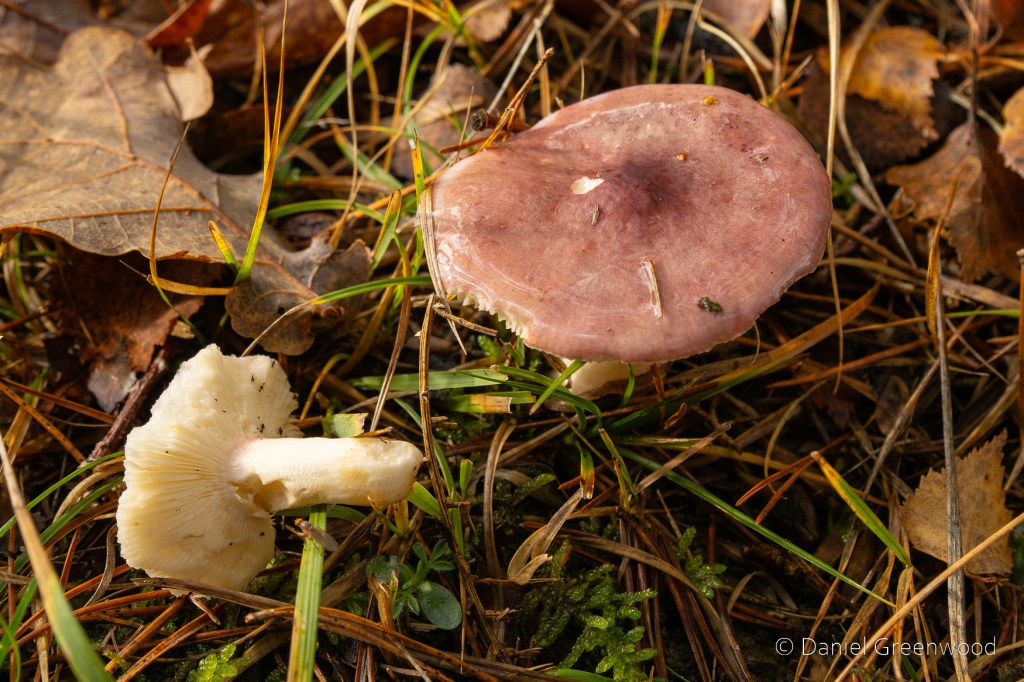
Some nibbled russulas.
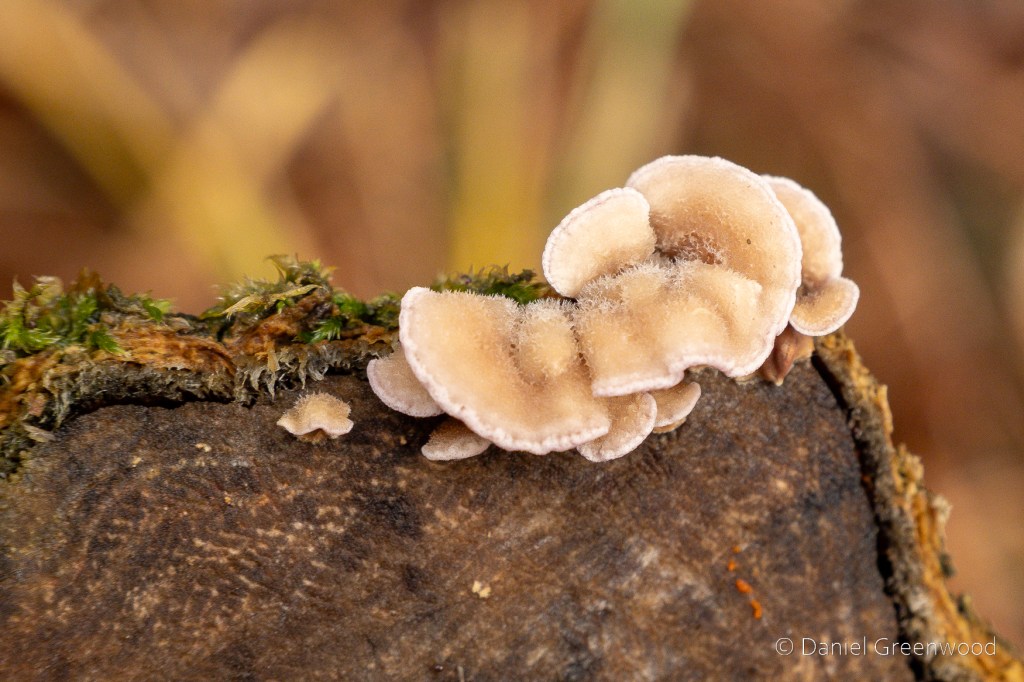
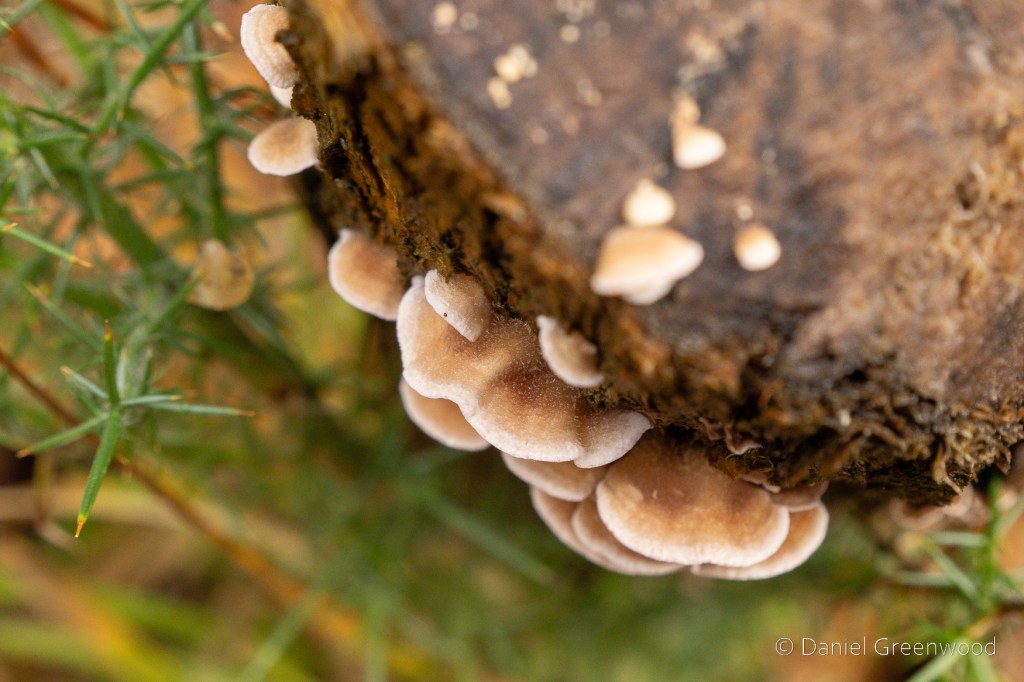
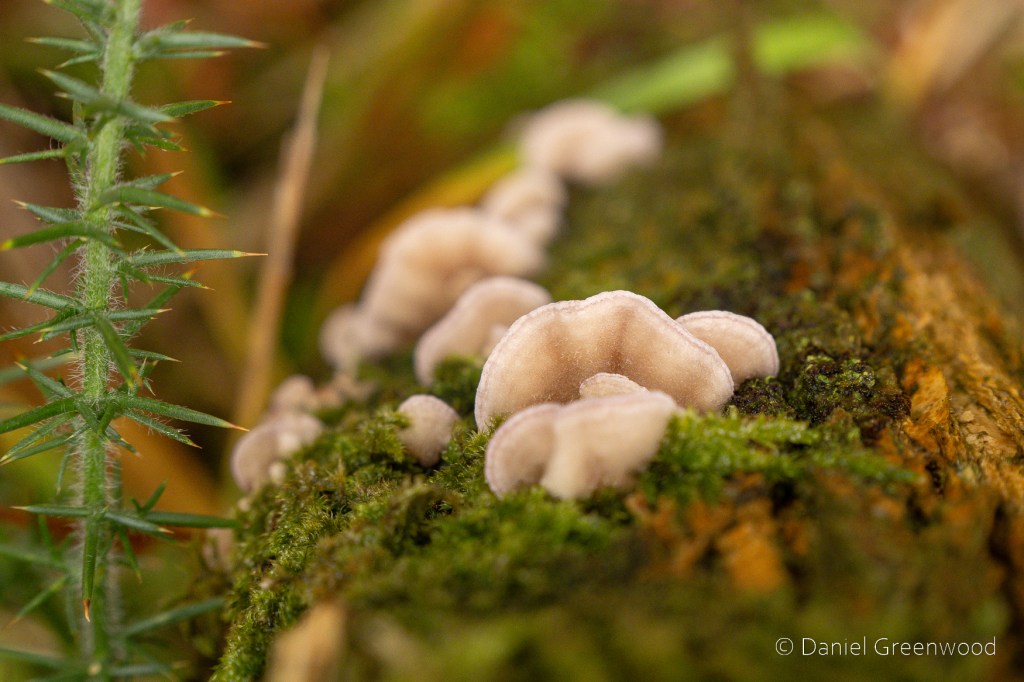
This could be silverleaf fungus, not yet producing the more typical purple colouring.
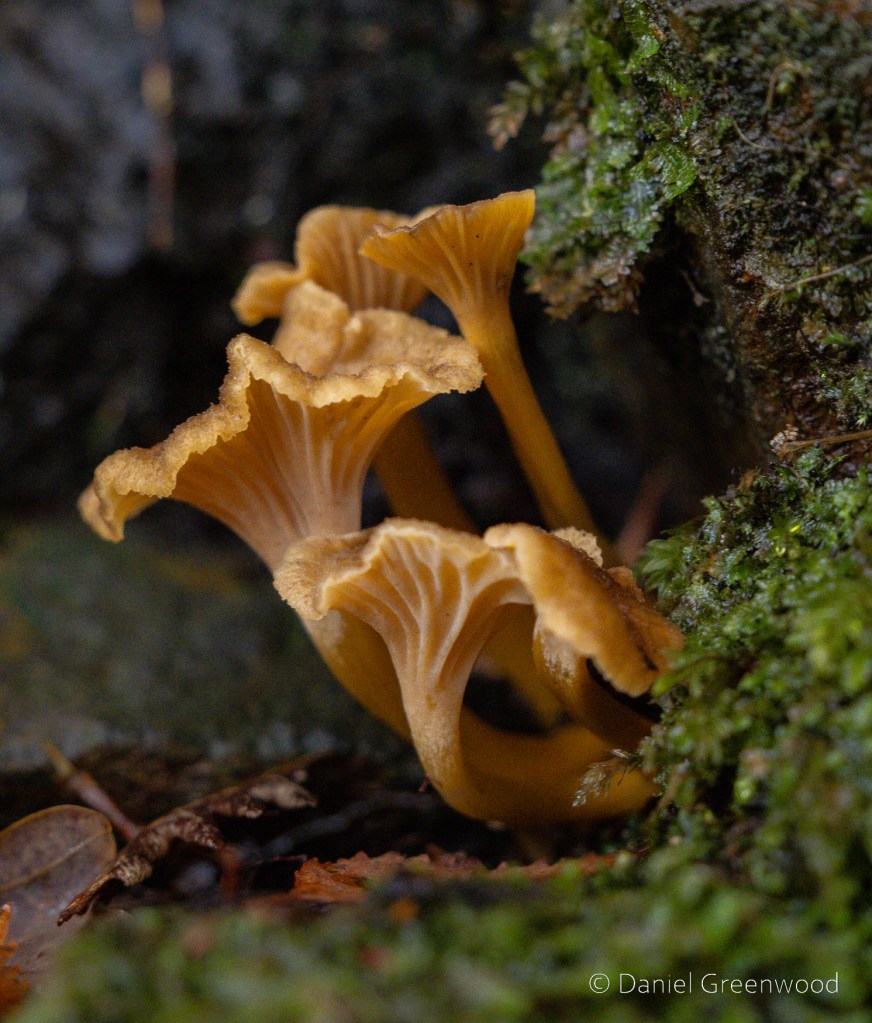
Winter chantarelles are a fairly common species around November time, able to survive the rain you often get at this time of year (especially on Dartmoor).
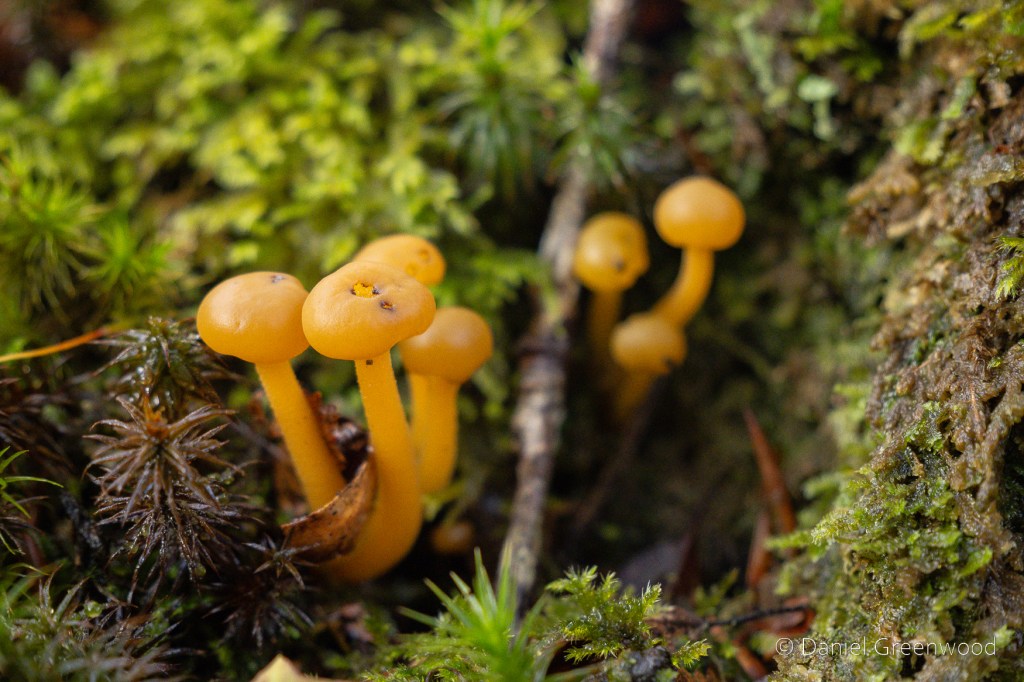
The same goes for jelly babies, which I often find near to chantarelles in wet, mossy habitat.
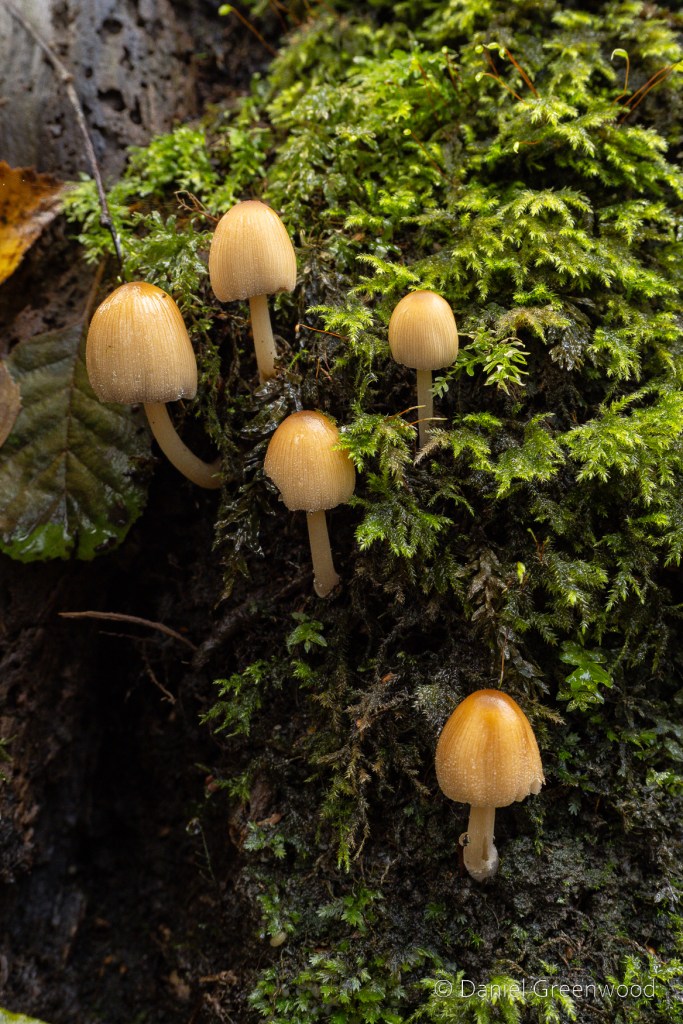
Glistening inkcaps, which iNaturalist users will only really allow to be defined as Section Micacei. I presume it’s because some may require DNA testing to separate them? I can’t find any clear explanation of the issues. I’m happy to call them glistening inkcap where the white dusting appears on the cap.
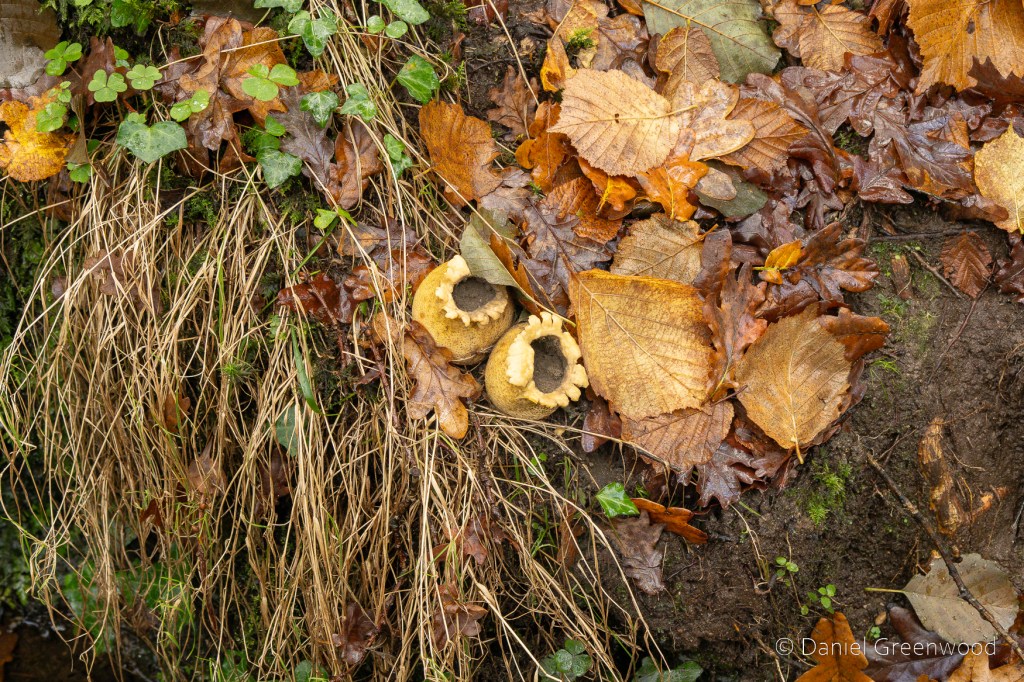
Common earthball looking like cartoon sunflowers, or lash-heavy eyes.
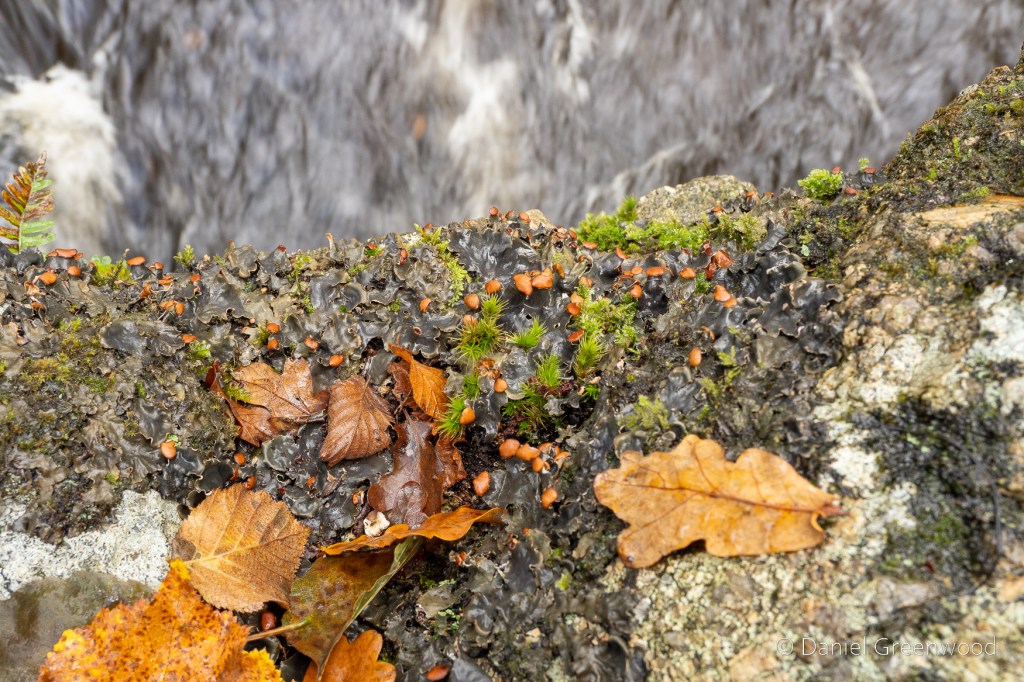
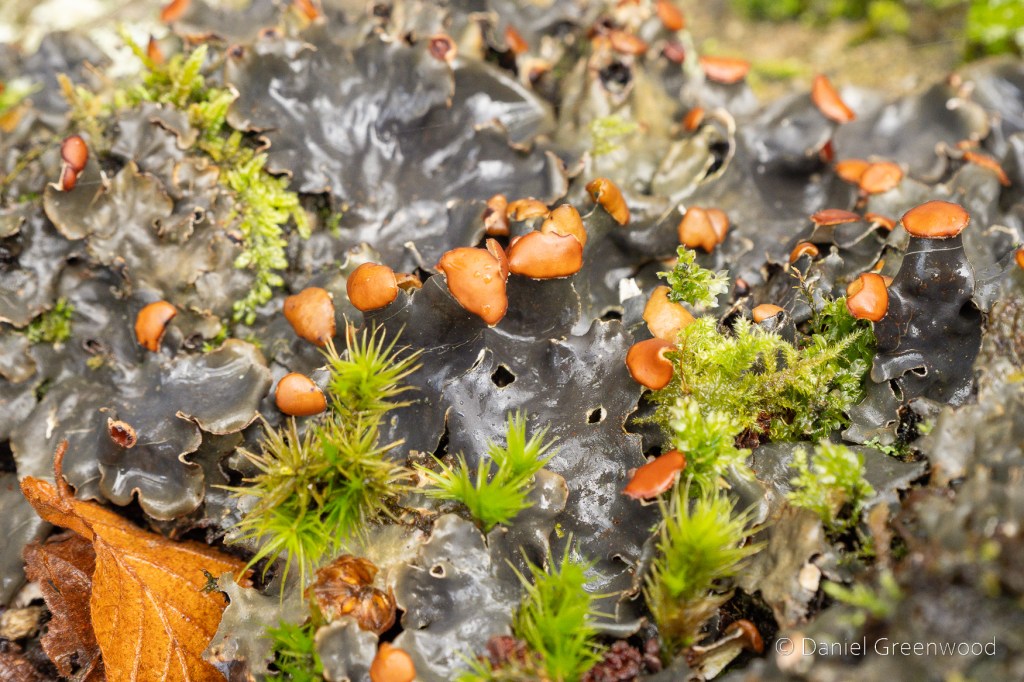
At this point of the walk we had reached a wonderful footbridge that goes over the rushing River Bovey. In the first image you can see the water flowing beneath. The fungus here is a lichen, a dog lichen. The scientific name is Peltigera, which has an interesting etymology, explained below:
The generic name is derived from the Latin language pelta (small shield), and refers to the shield-shaped thallus in these species.
https://www.inaturalist.org/taxa/54294-Peltigera
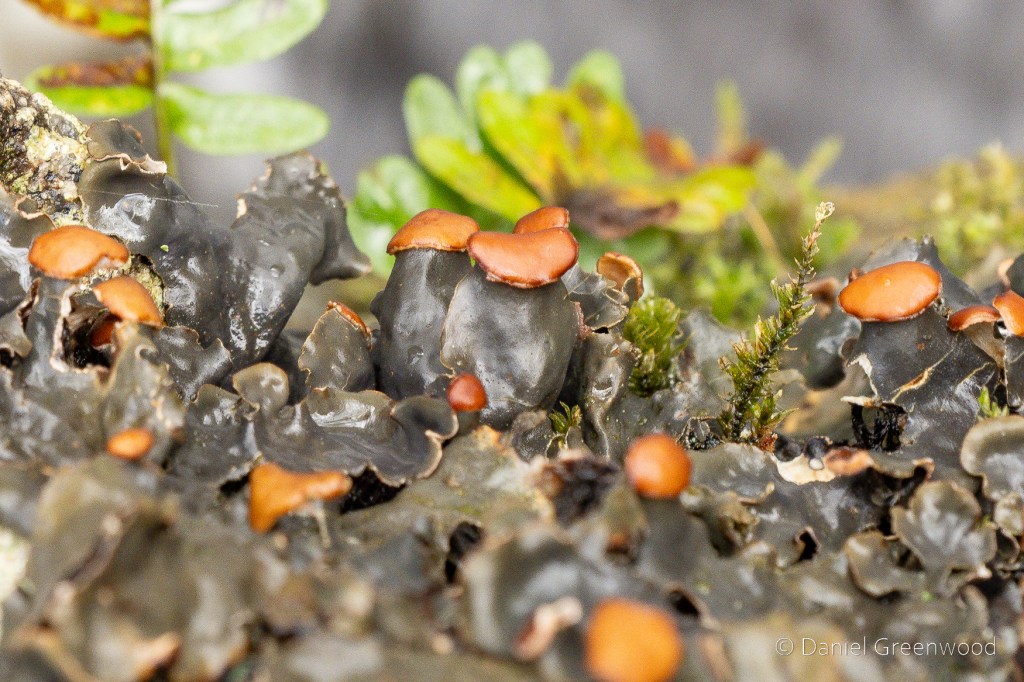
The thallus is the larger spread of the lichen (dark grey section), but the apothecia (the brown caps) also look like shields in their own right if you ask me.
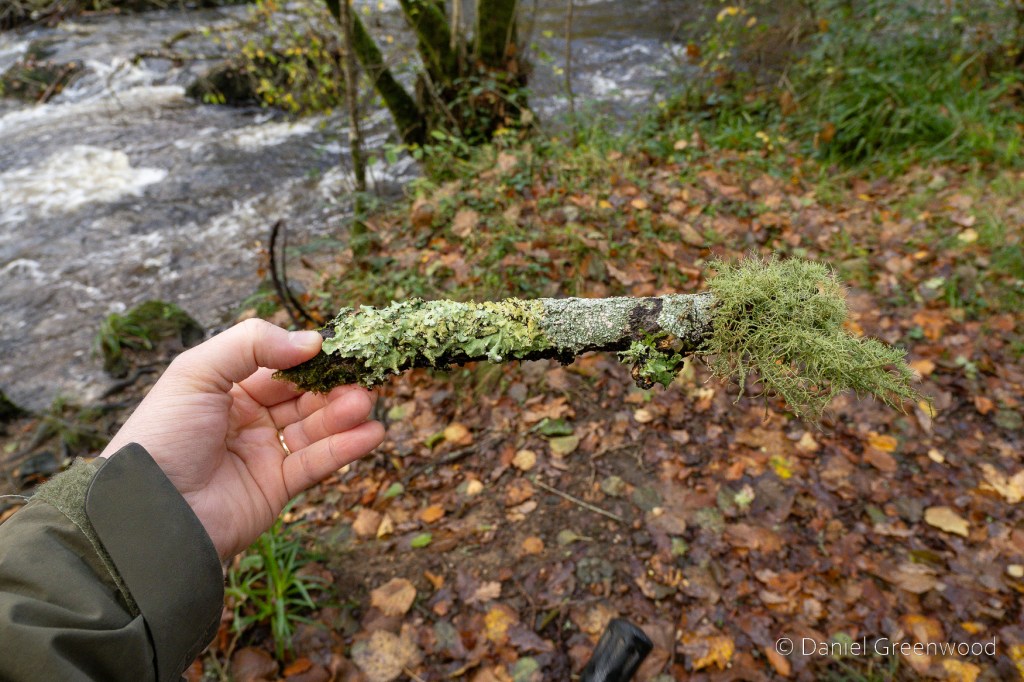
Next to the Bovey this delicious #StickOfTheWeek was on the ground. There are several species of lichen here.
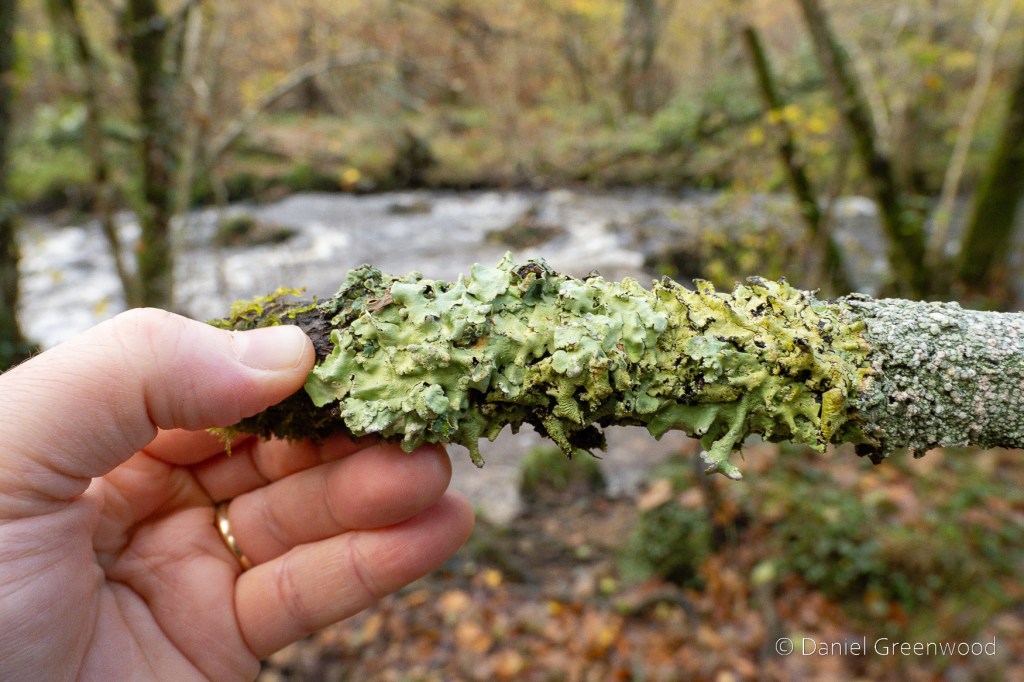
The first species is the common greenshield lichen.
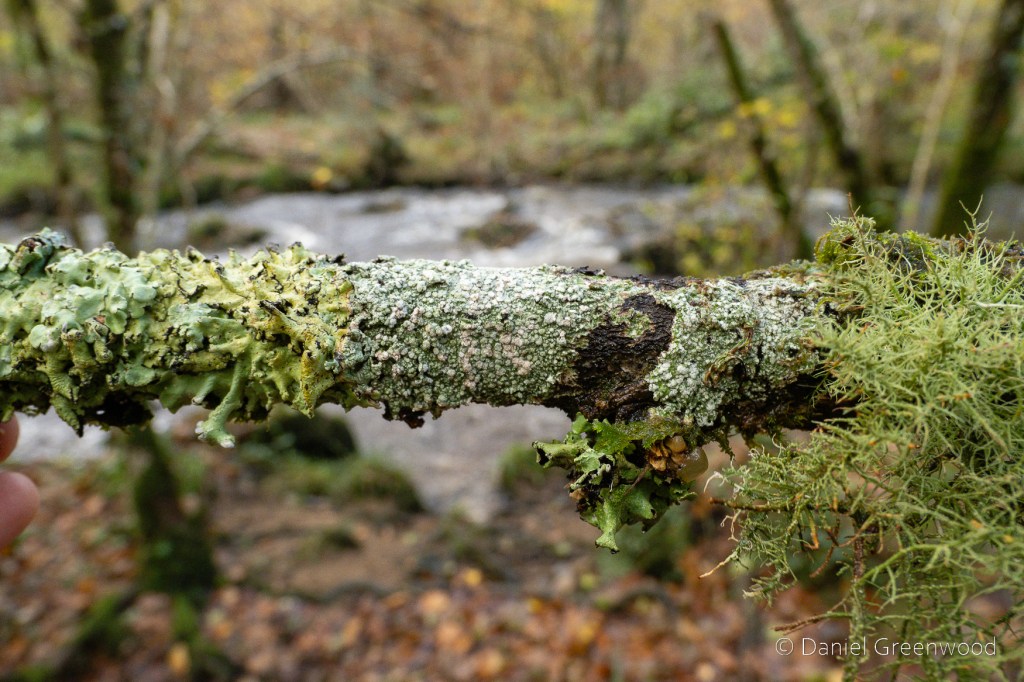
There is another crustose lichen in the centre.
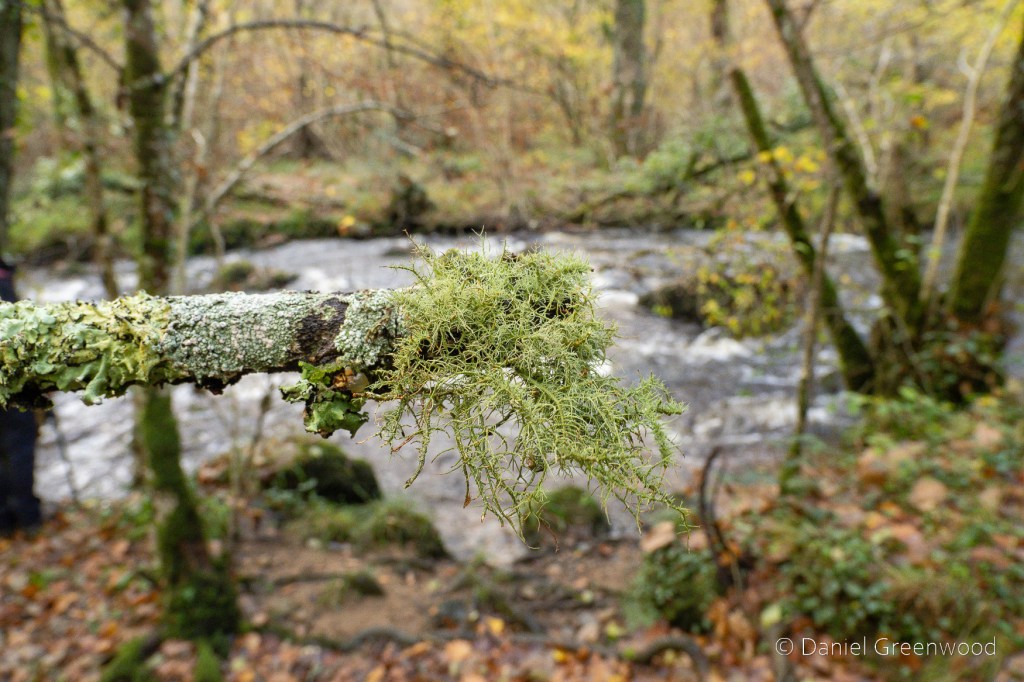
The shaggy mane at the top of the stick is a species of usnea or beard lichen, which are only found in certain habitats. The Atlantic oak woodlands of Devon and other western parts of the UK & Ireland are home to these magnificent species. This one might be Usnea cornuta
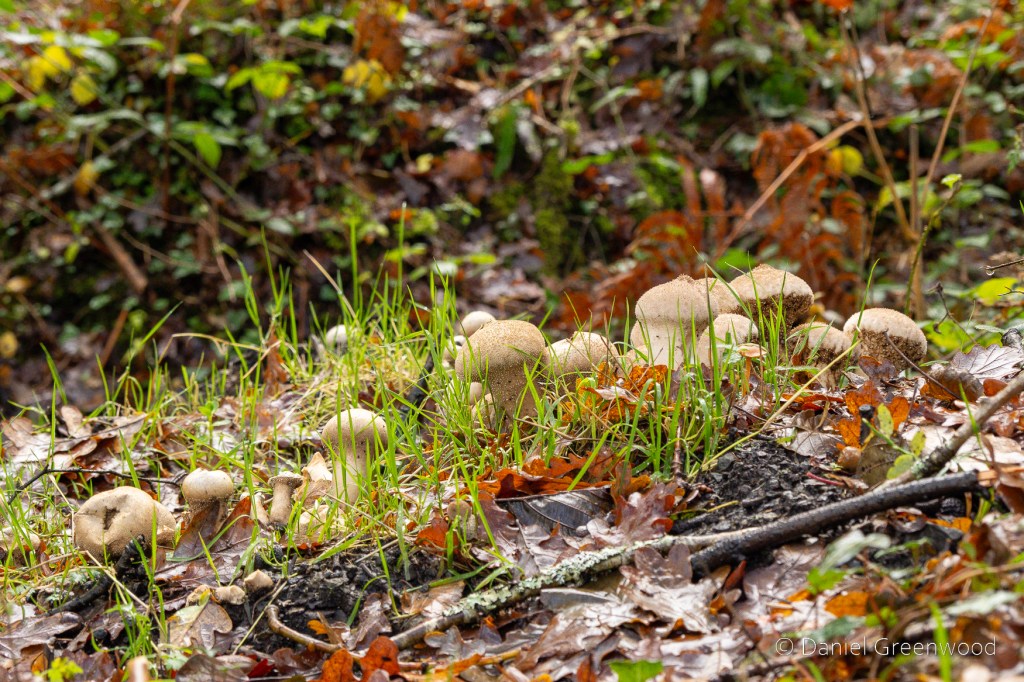
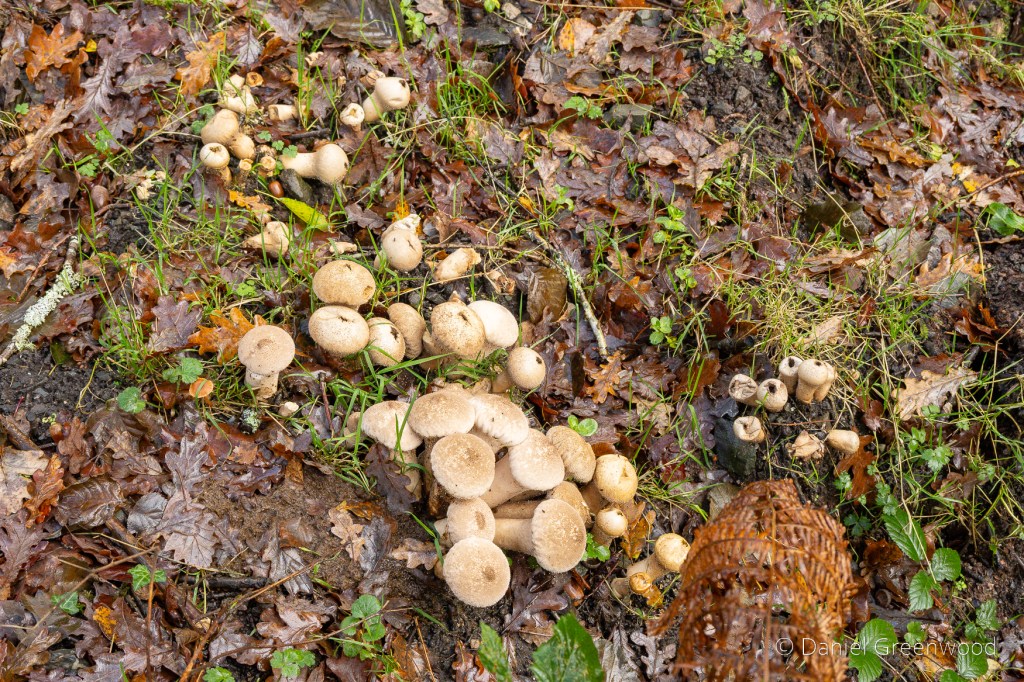
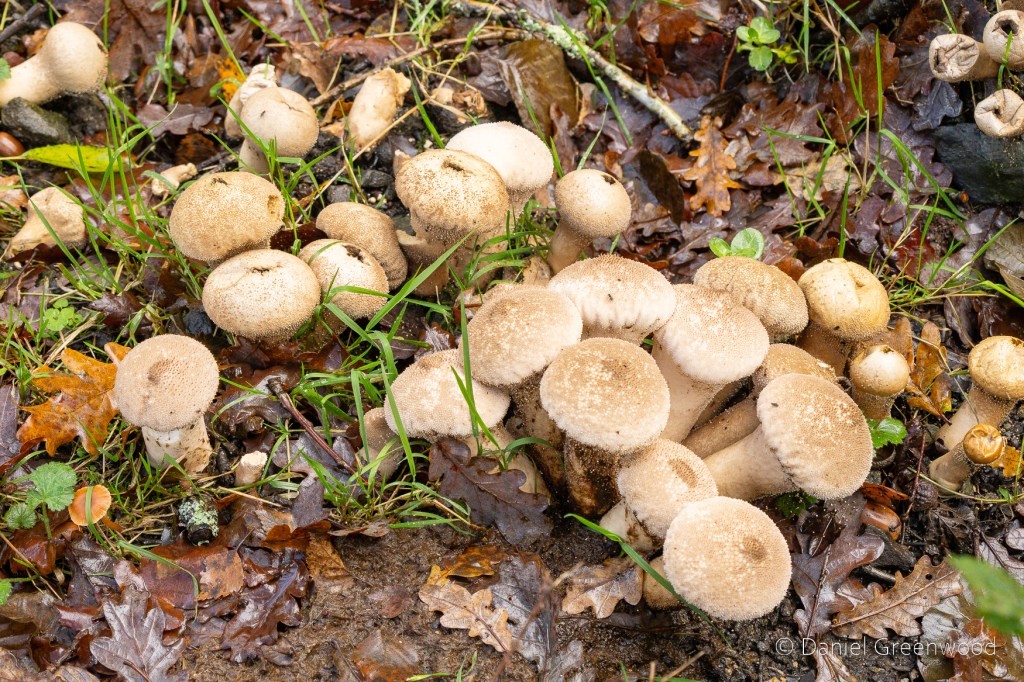
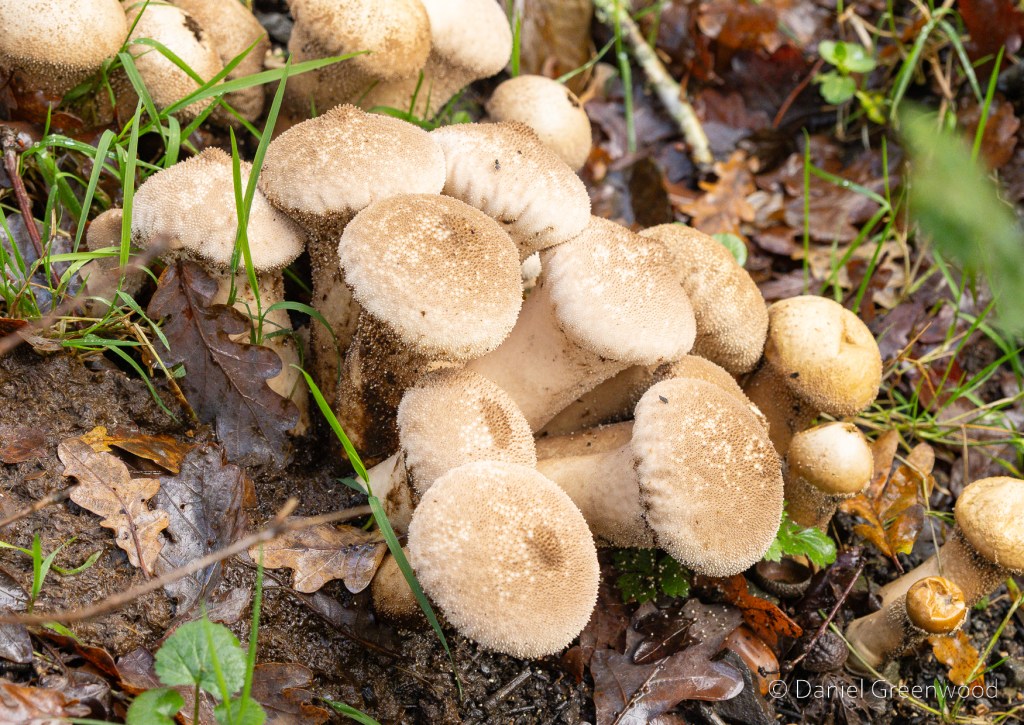
A sign the season is turning is when you find these brown and soggy puffballs. This impressive collection is pestle puffball in my opinion.
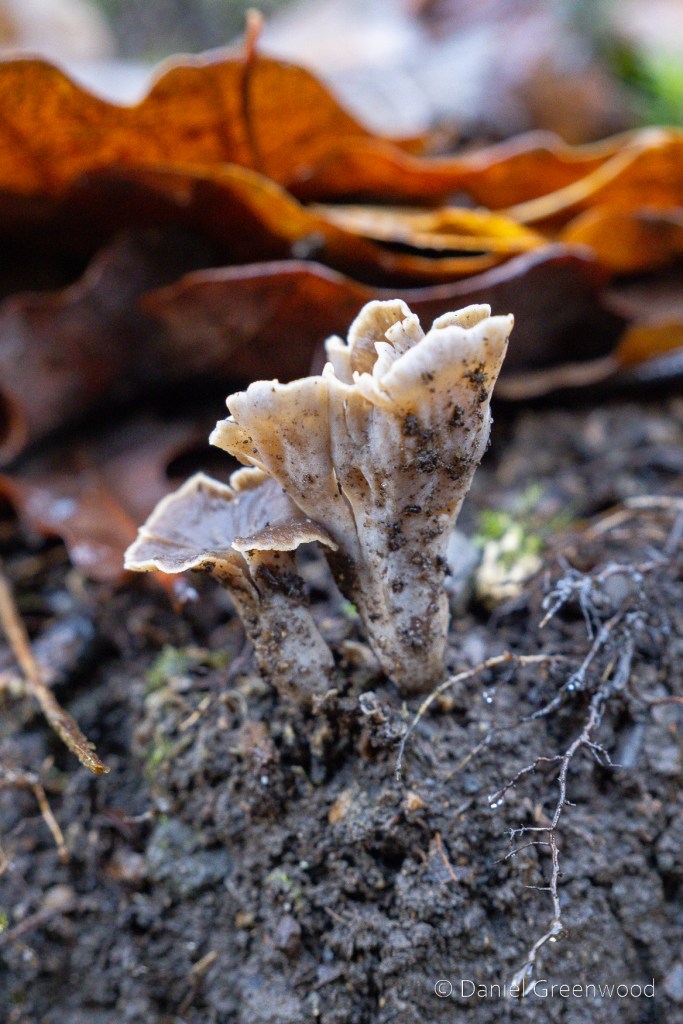
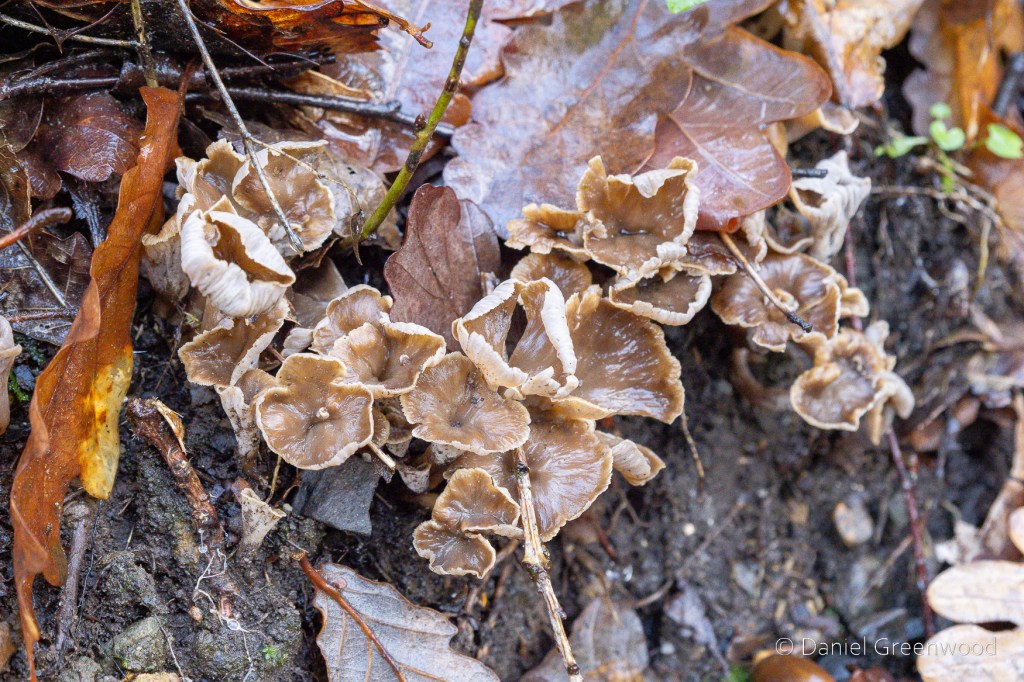
Something I have only ever found once or twice, this is sinuous chantarelle.
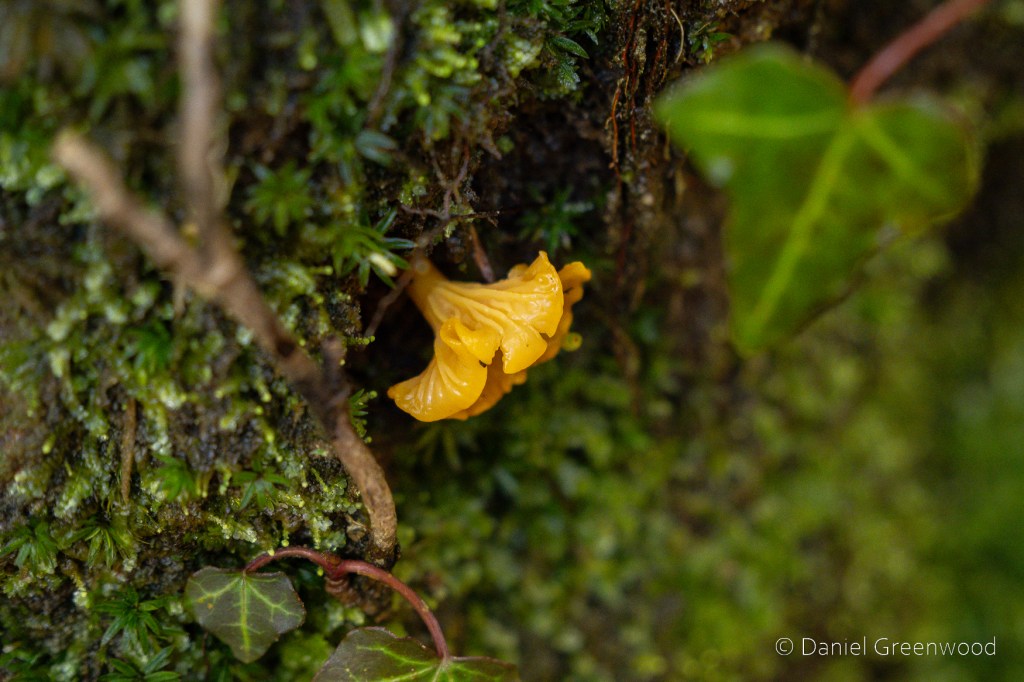
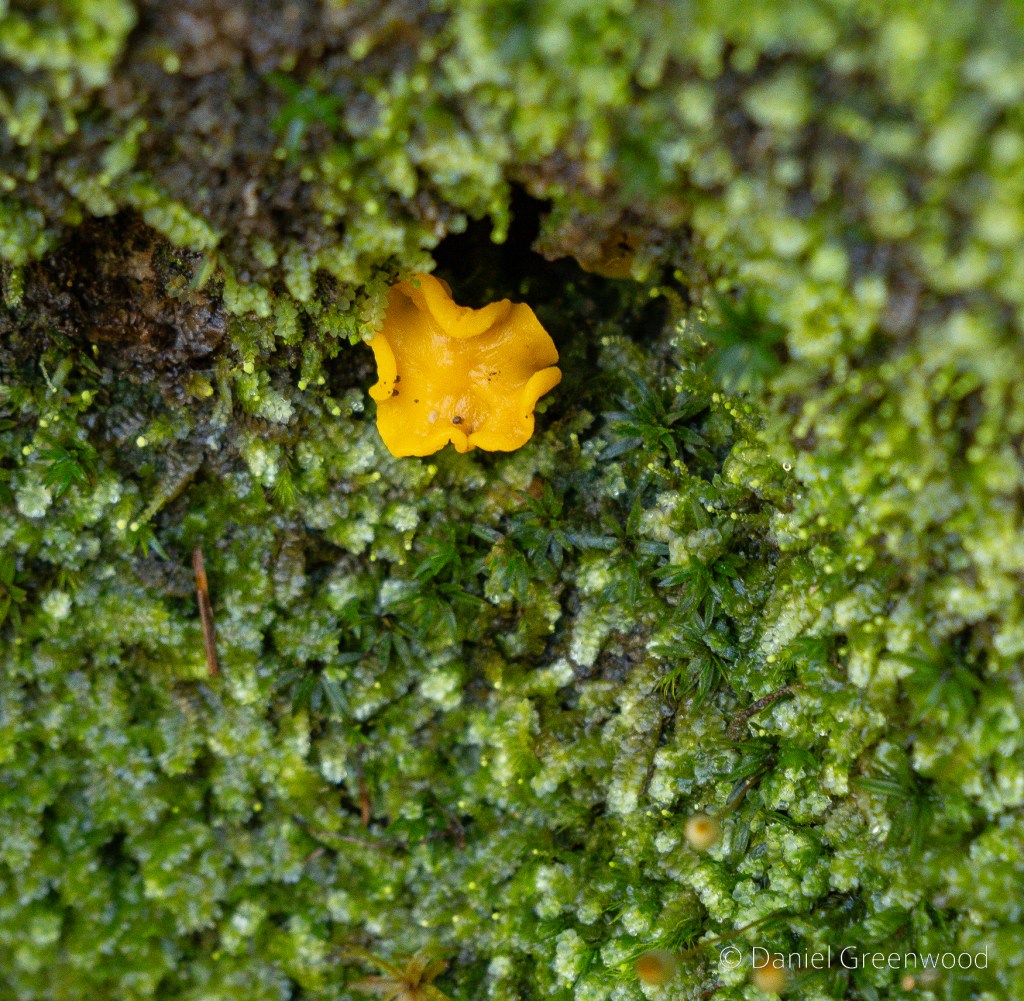
Nearby was a golden chantarelle.
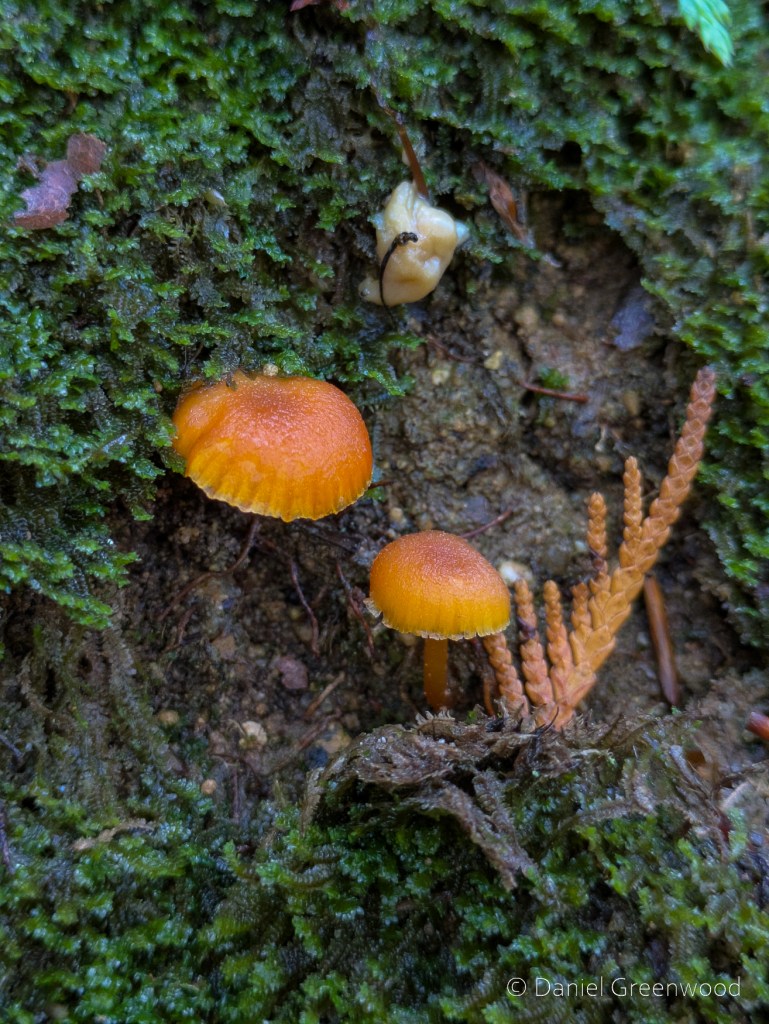
I’m not sure what these are, they look quite waxcappy.
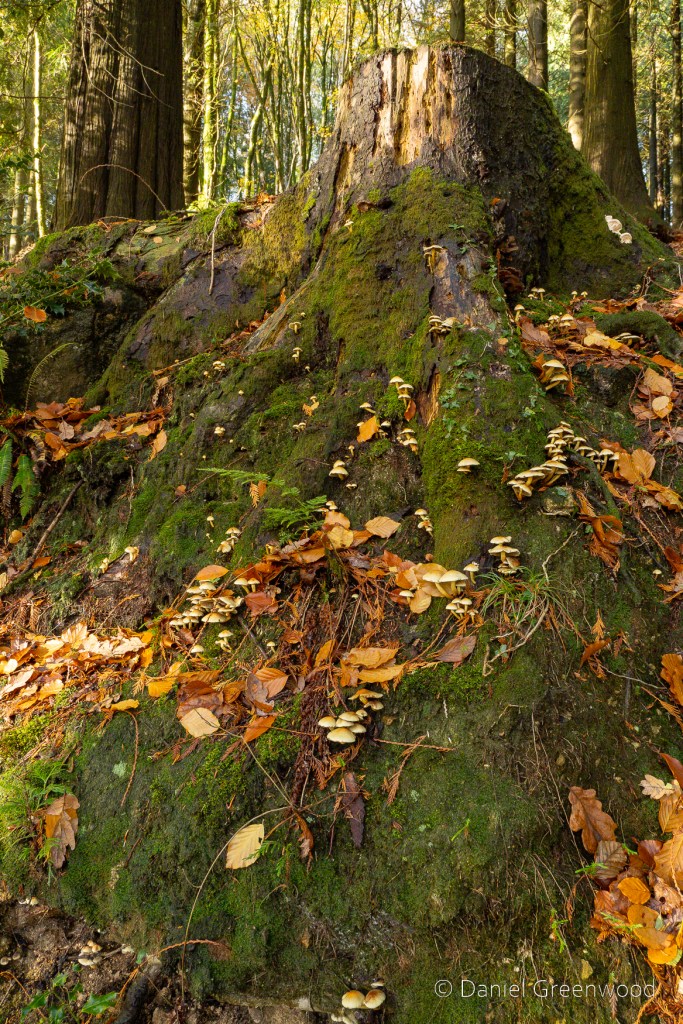
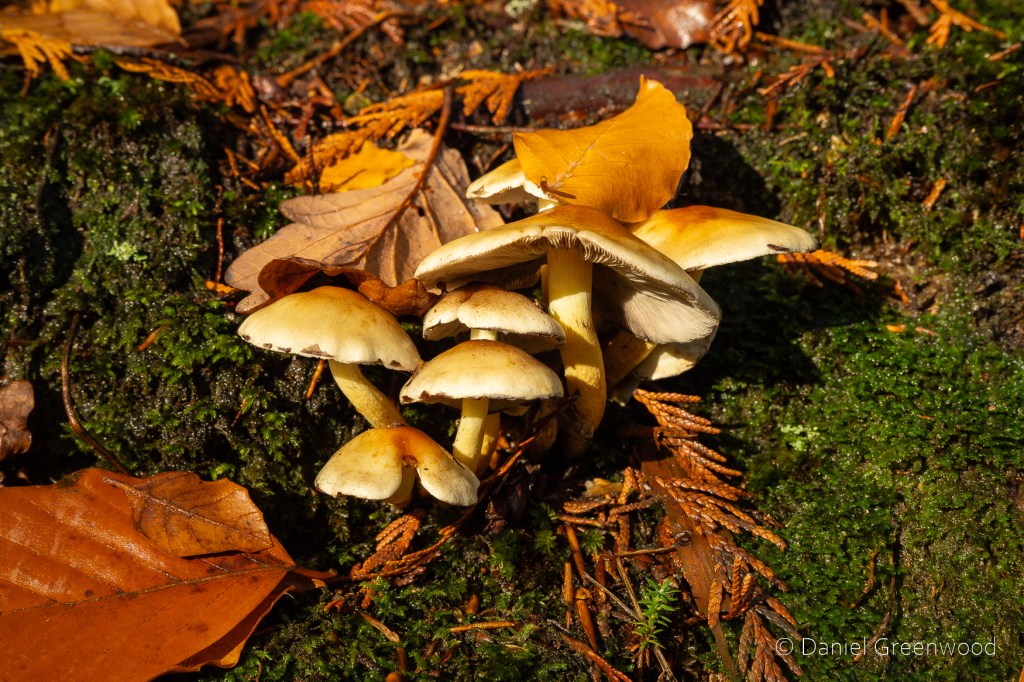
Sulphur tuft expoding from the stump of a felled conifer.
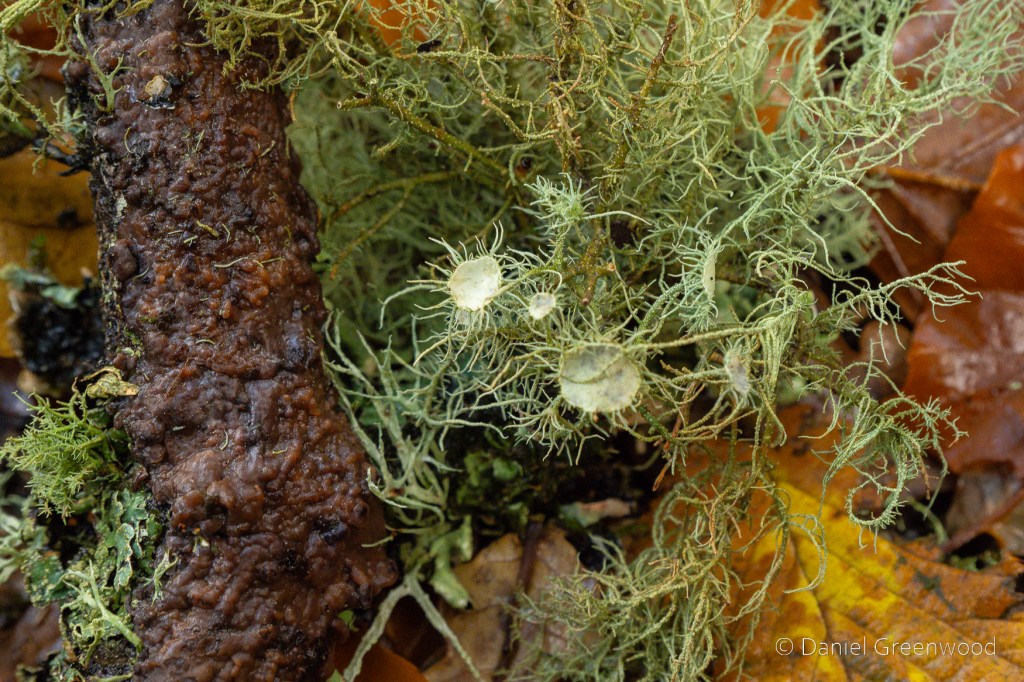
One of the real beauties of Dartmoor – Usnea florida. I’ve written a blog about this along the River Dart. Also it appears to have antibiotic properties, but it’s rare so don’t harvest it:
Usnea lichen also contains potent antibiotics which can halt infection and are broad spectrum and effective against tuberculosis bacterial. Usnic acid (C18H16O7), a potent antibiotic and antifungal agent, is found in most species
https://www.theguardian.com/environment/2010/jun/25/name-a-species-usnea-florida

What a stunner! I feel healthier just looking at it.
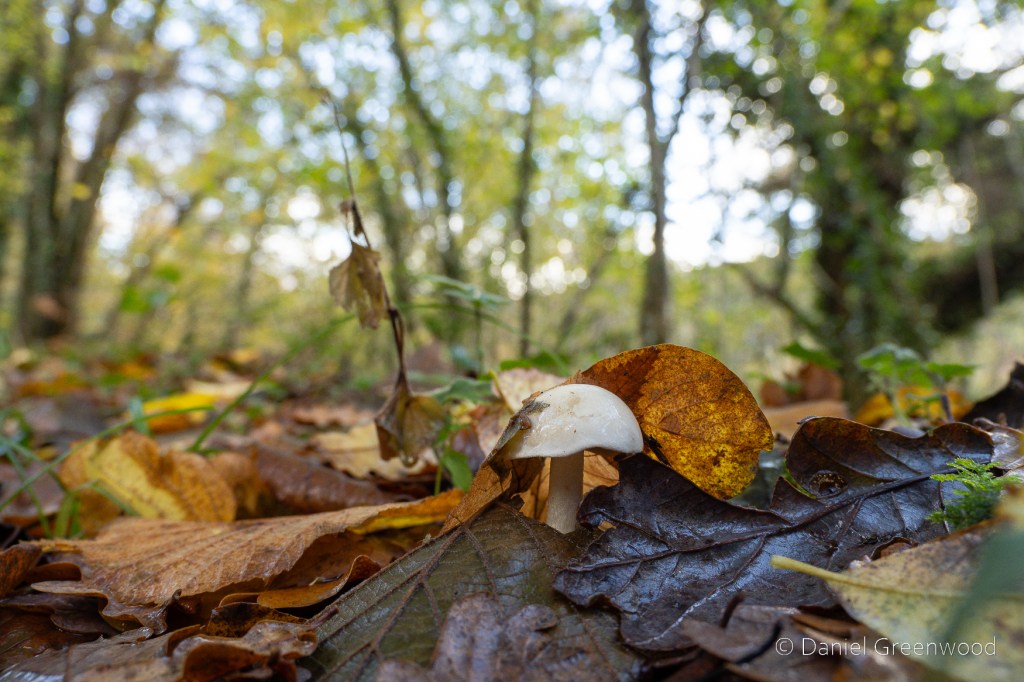
Let’s not forget the more simple mushrooms of this world, pushing through the heavy oak leaf litter. I don’t know what this one is.
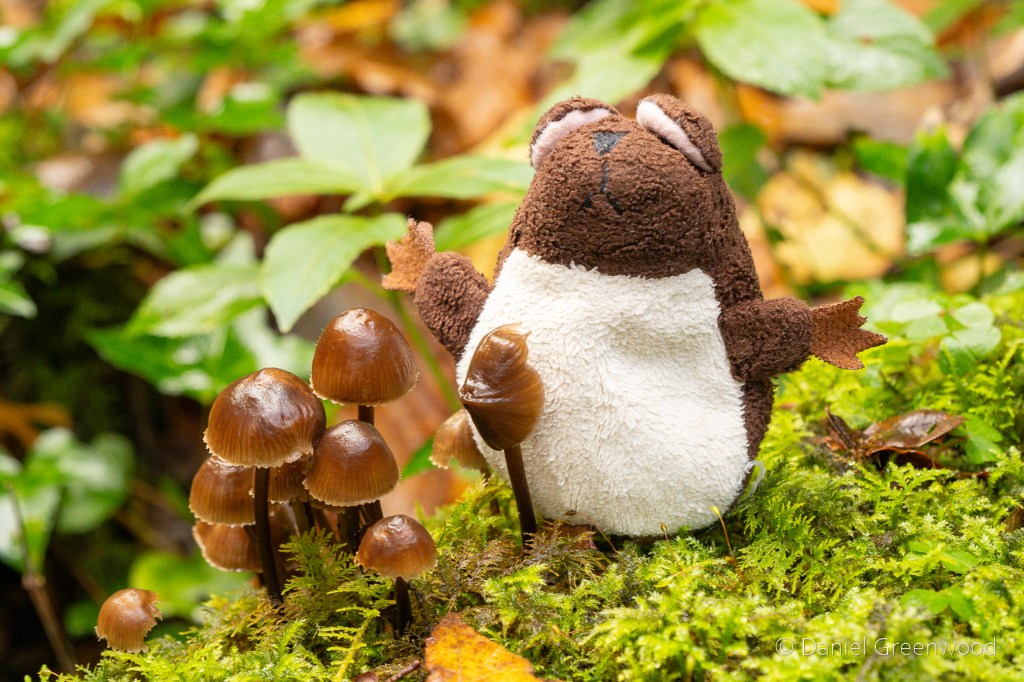
Omg, there’s that ‘dormouse’ again popping up to give scale to some of these bonnets.
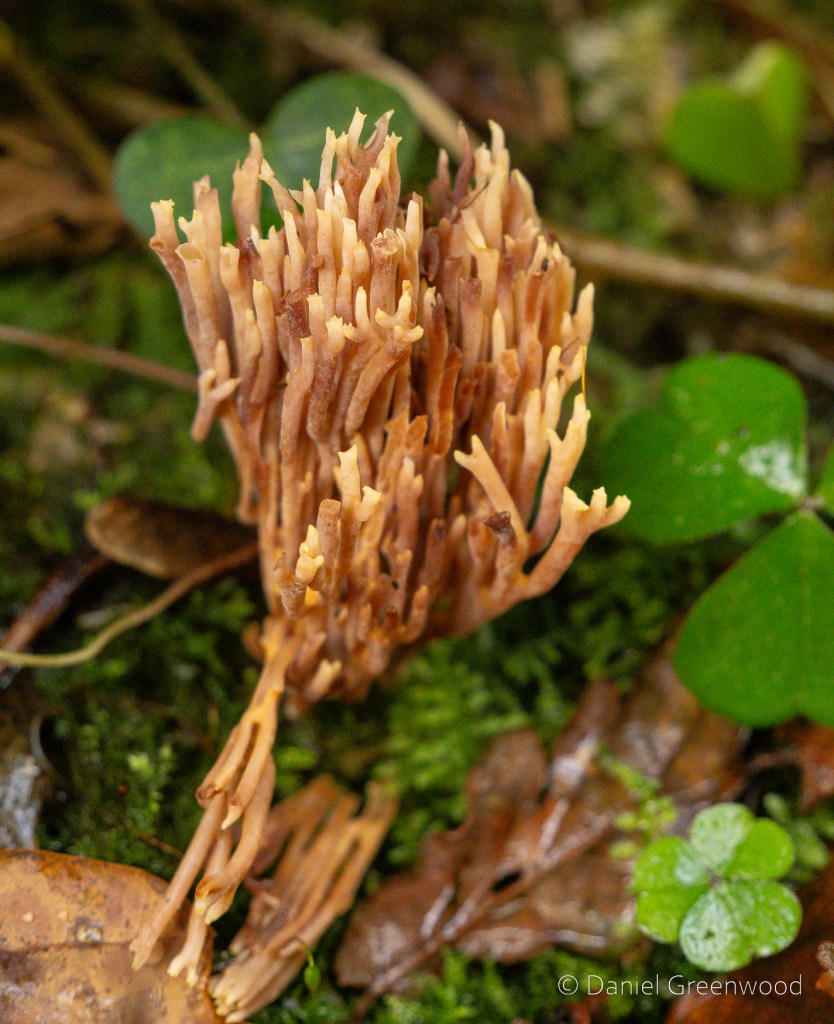
One of the only corals we encountered during this walk – upright coral fungus.
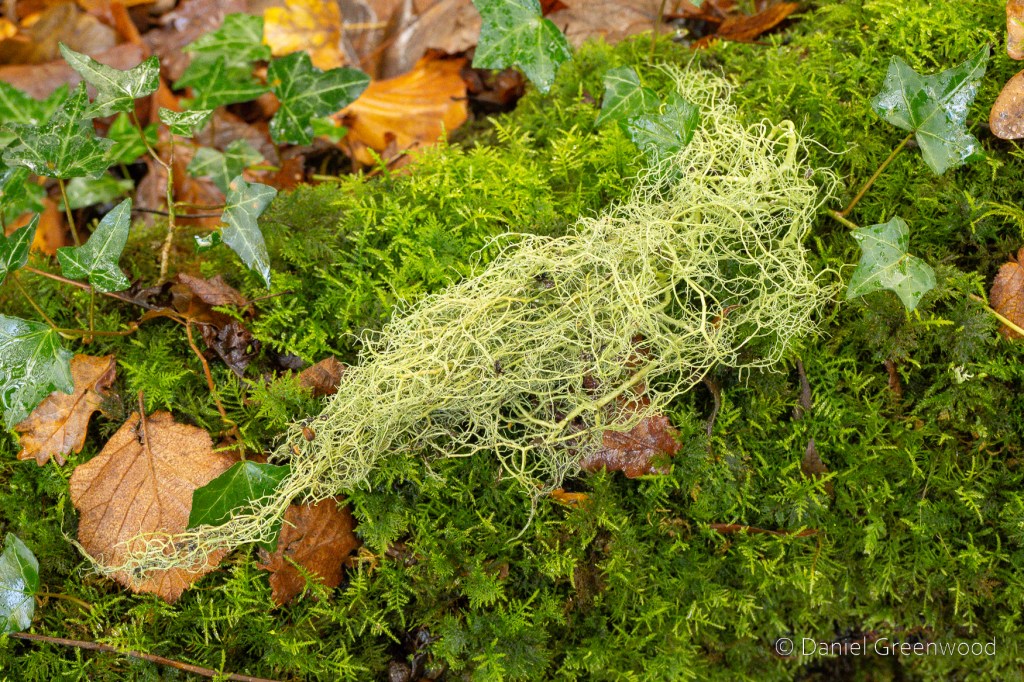
Another lovely Usnea lichen, this time the magnficently named string of sausages lichen. It’s struggling to cope with the modern world (aren’t we all):
This lichen is very sensitive to air pollution, especially from sulphur dioxide; it has a widespread but sparse distribution in mainland Europe, but has become extinct in many areas […]. In the British Isles, it used to be widespread but disappeared from many areas during the Industrial Revolution. It is reasonably common in southwestern England, from the New Forest westwards, and is known from scattered locations in Wales, particularly Pembrokeshire. It is rare in southern and western Ireland.
https://www.inaturalist.org/taxa/410737-Usnea-articulata
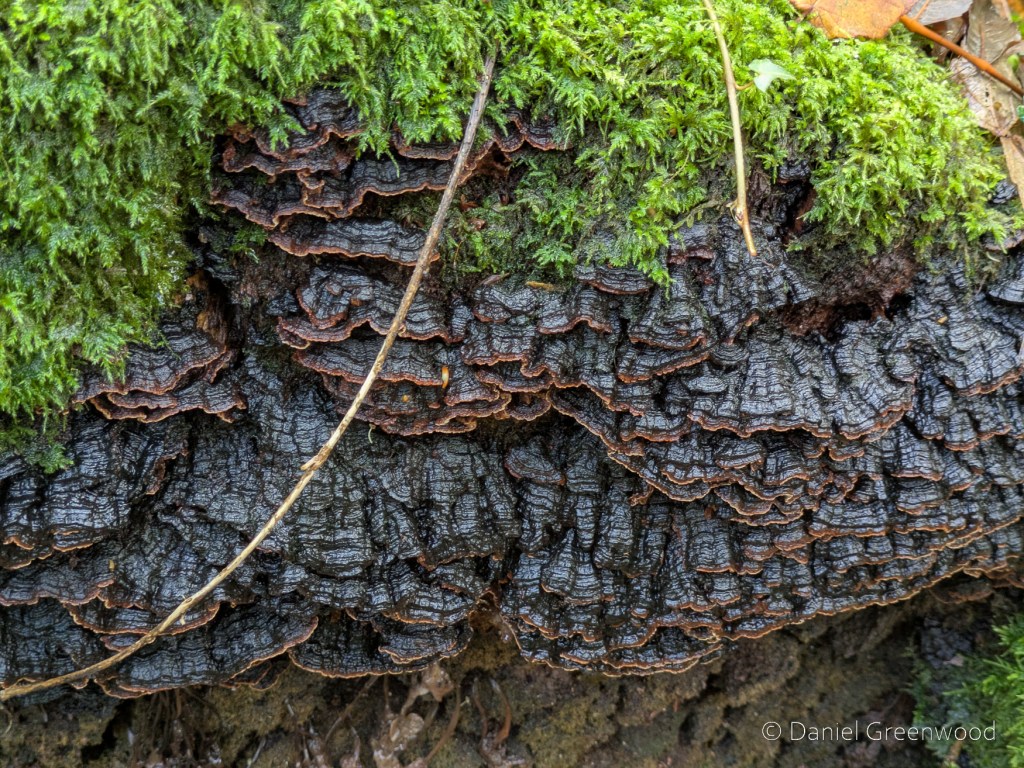
This rather evil-looking crust fungus is oak curtain. I learned to identify this species in London’s oak woodlands.
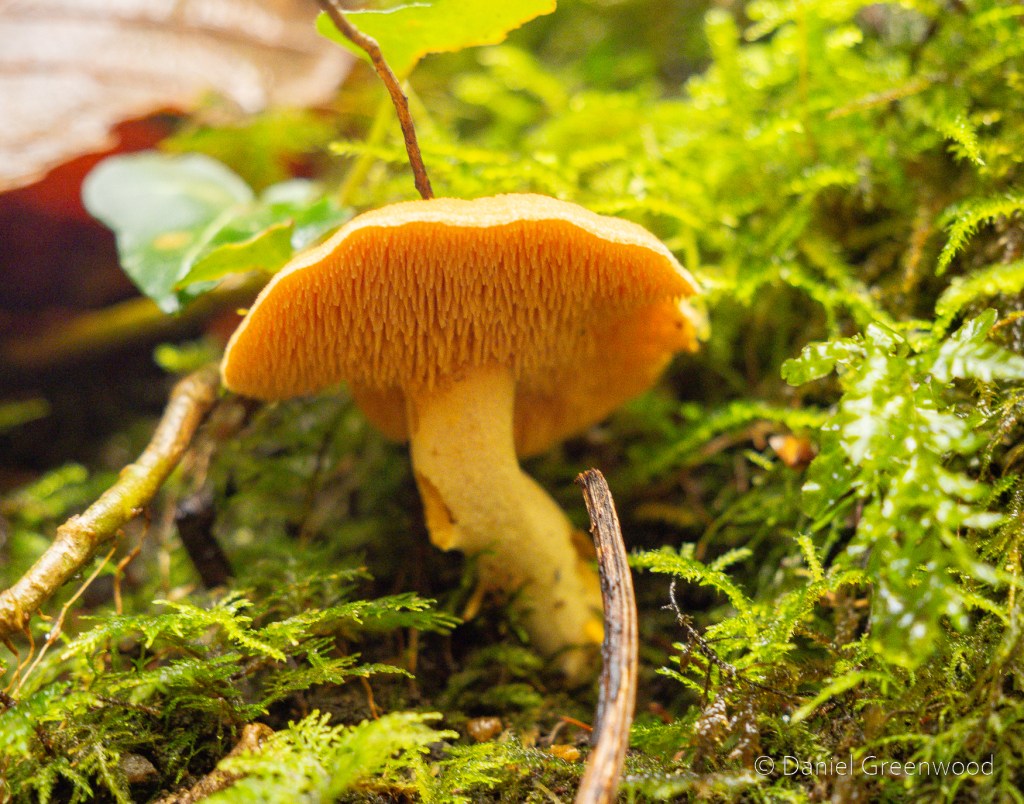
Not a great pic (they all get a bit worse in some ways from this point onwards because darkness was drawing in) but it’s a terracotta hedgehog! Again, I didn’t forage these or any others during this walk.
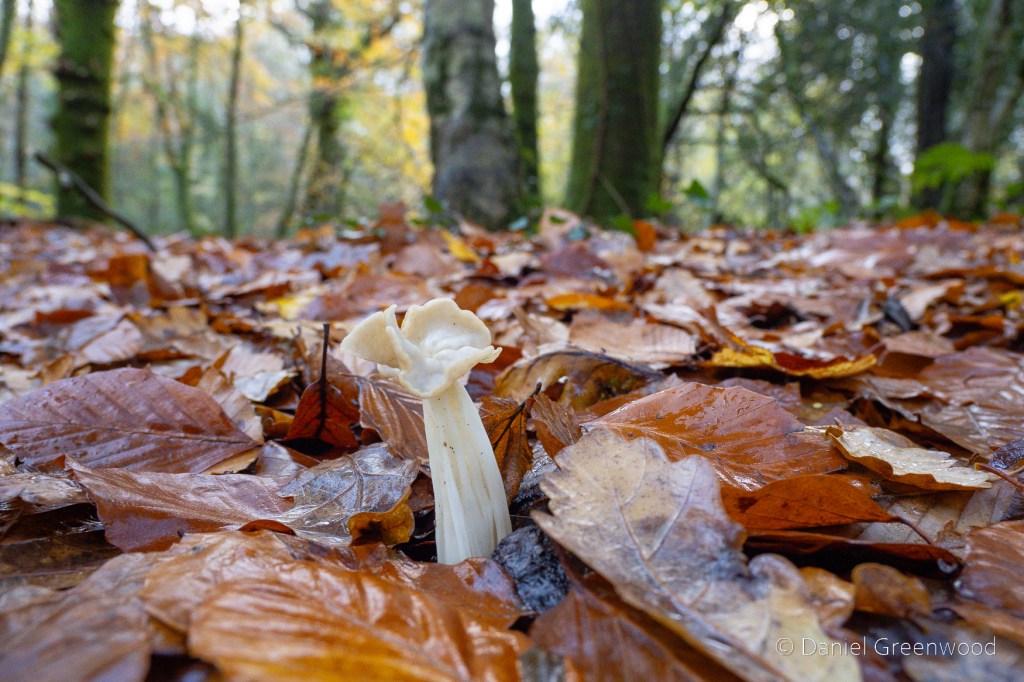
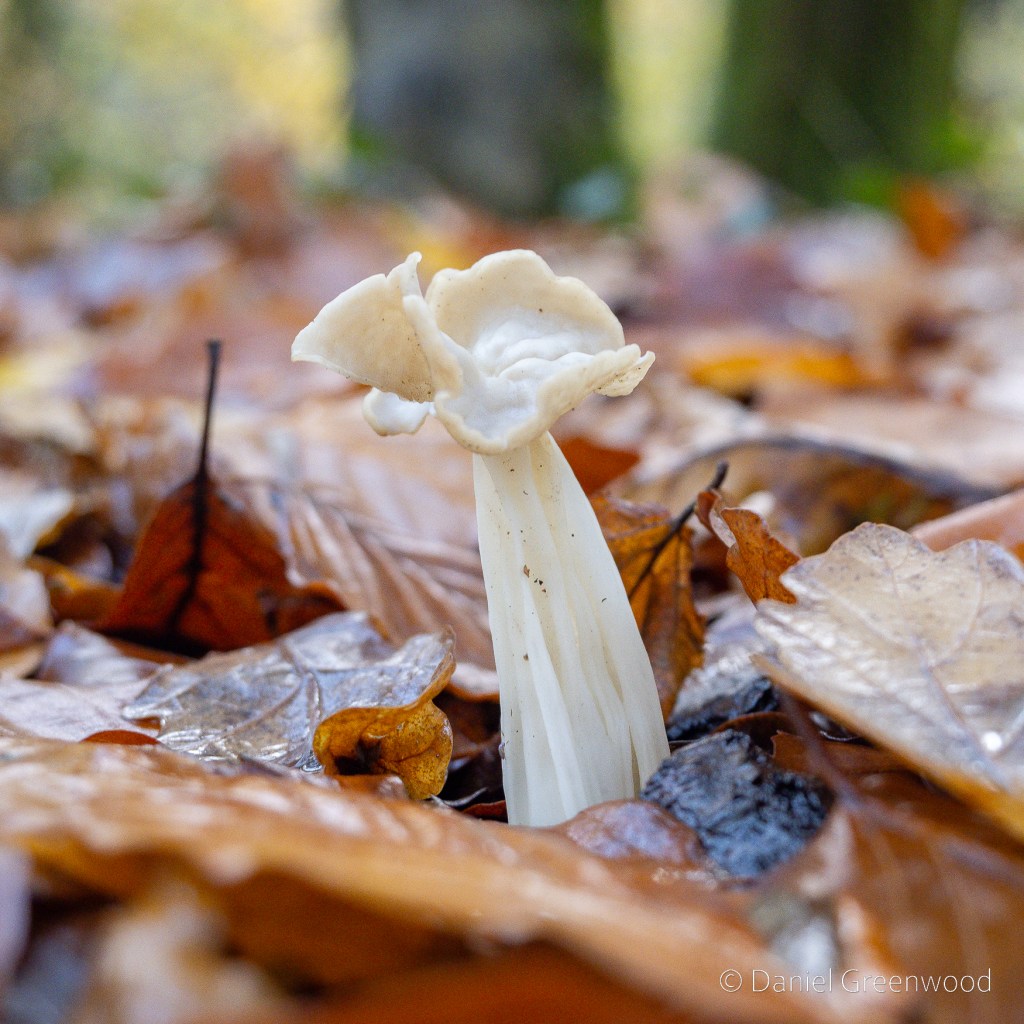
White saddle breaking out of the leaf litter.
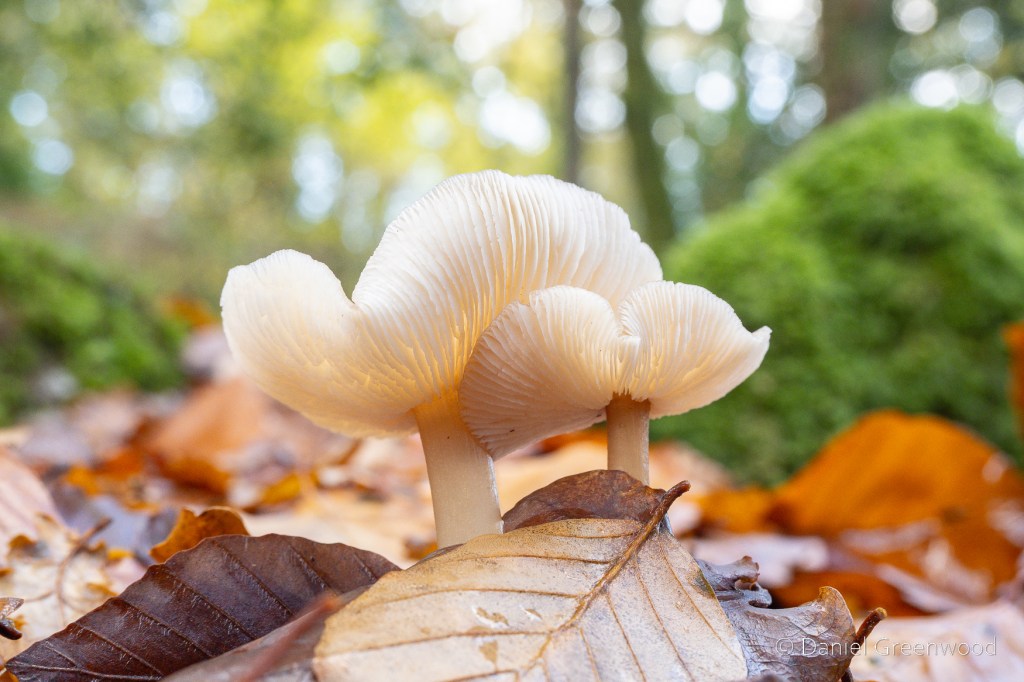
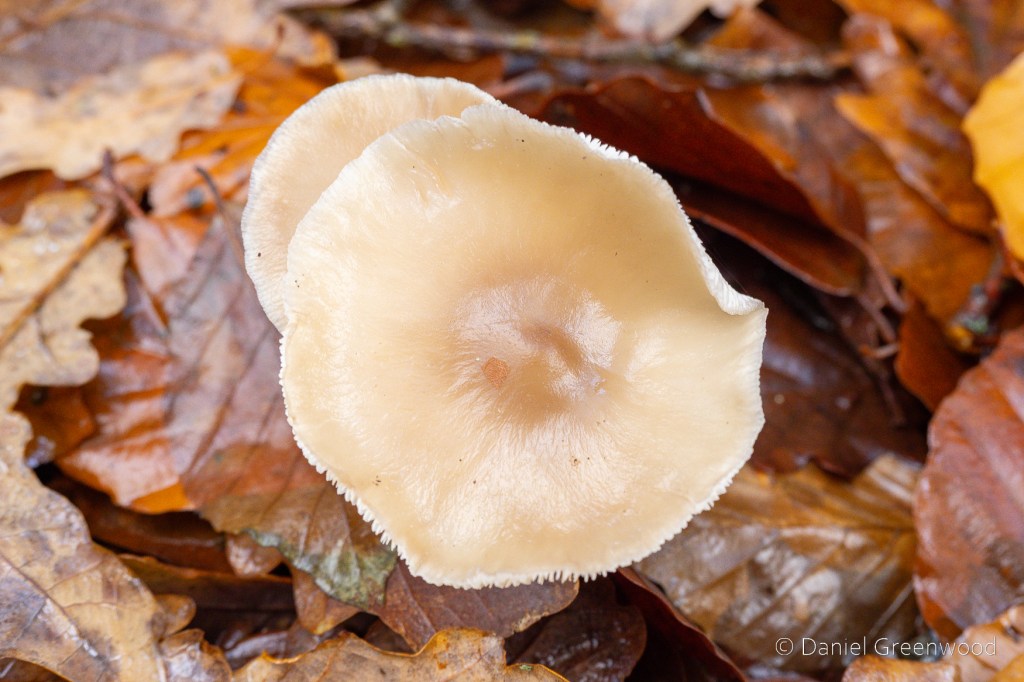
This is interesting. Butter cap is a species I am familiar with but this could be Rhodocollybia asema, a pale butter cap. That would be a first for me.
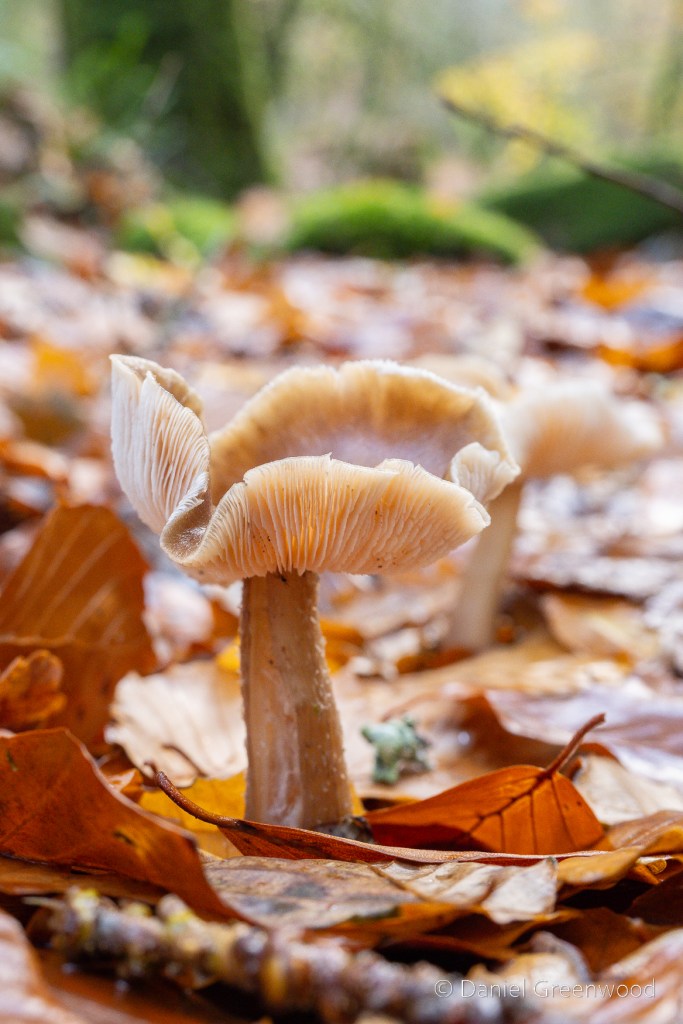
My guess is this is another species of Rhodocollybia, or simply a butter cap, but I don’t know enough to say if it’s the same as the one above. The colour is darker.
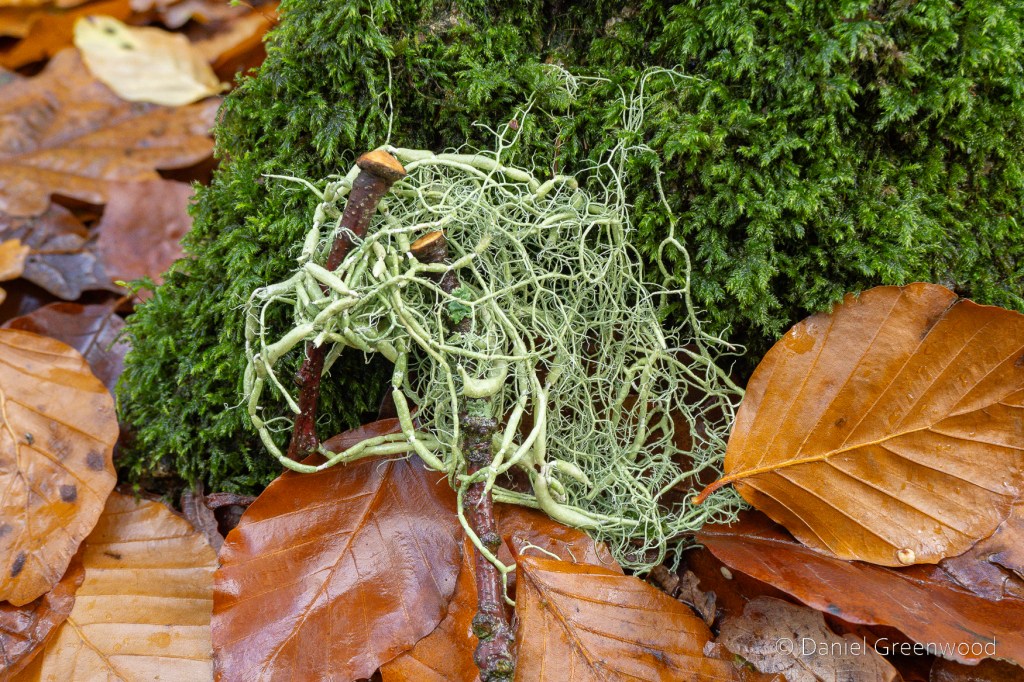
Another wonderful example of string of sausages lichen.
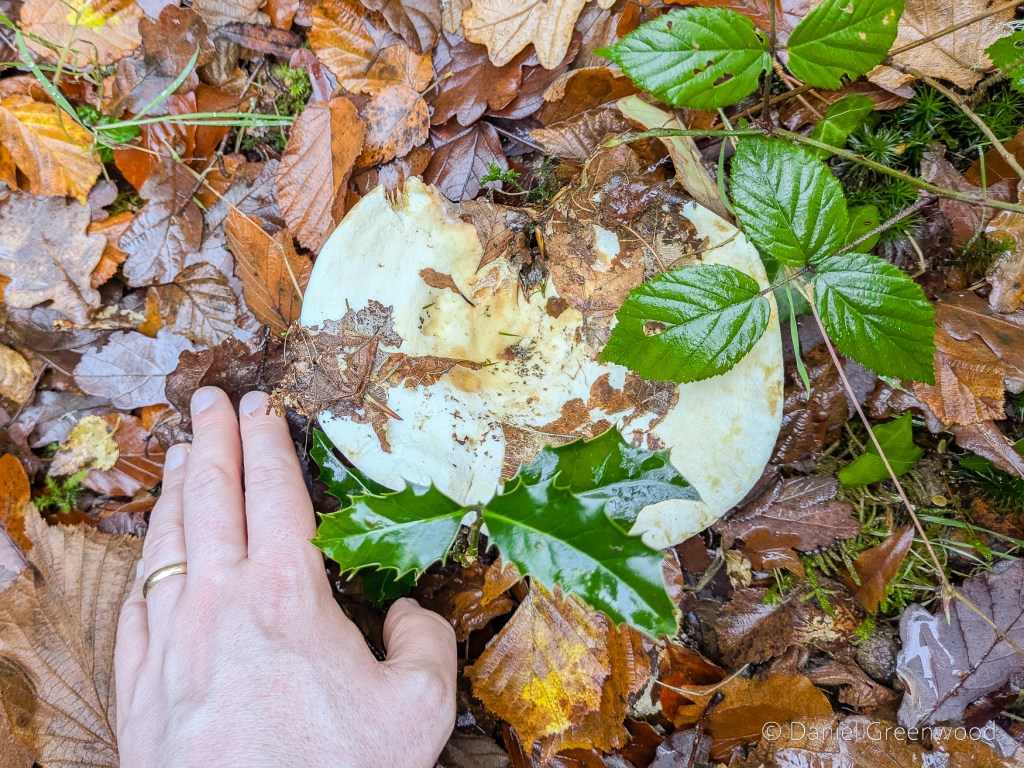
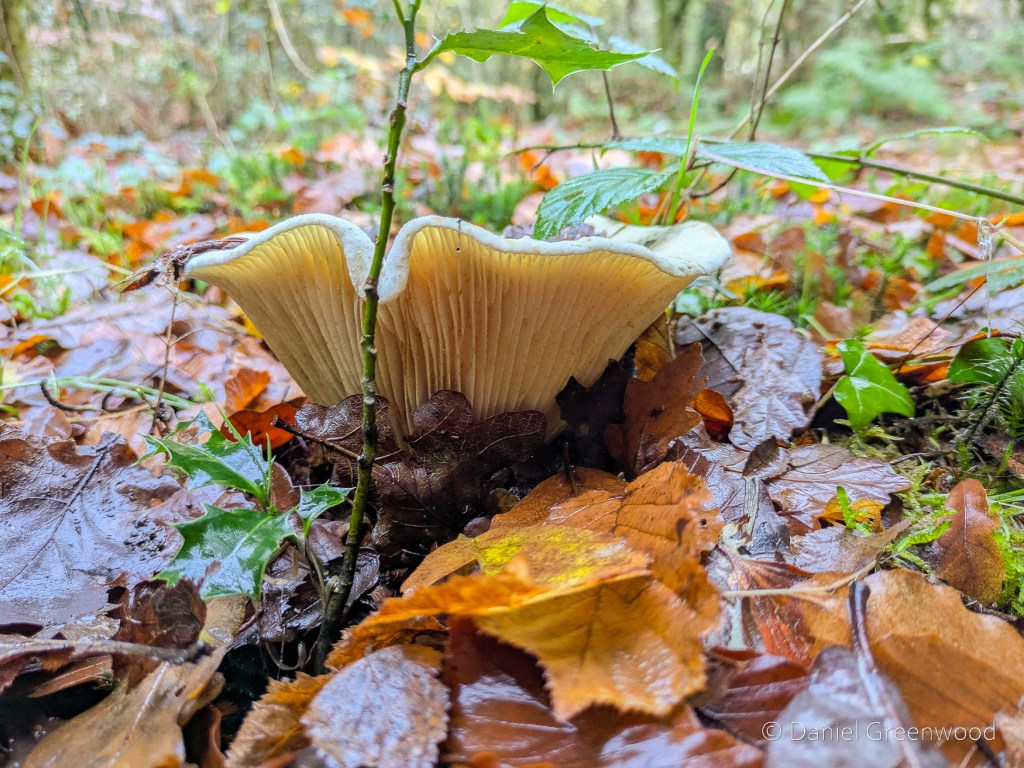
The light was bad in the woods and I was tired, so I lazily used my phone camera. These are jpeg files edited in Lightroom which is outrageous behaviour, but it’s another of those big funnel russulas I noticed popping up in the autumn of 2025.
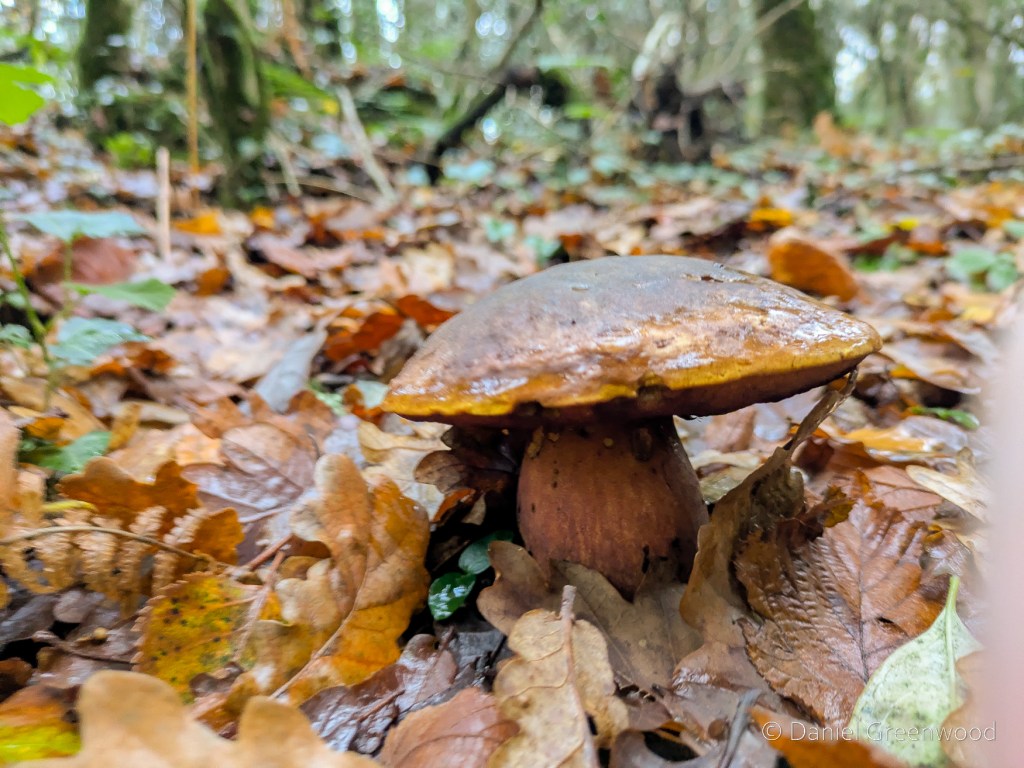
Blurry pic with my finger on the right hand side (literally) but it’s a nice species, probably one of the more colourful boletes.
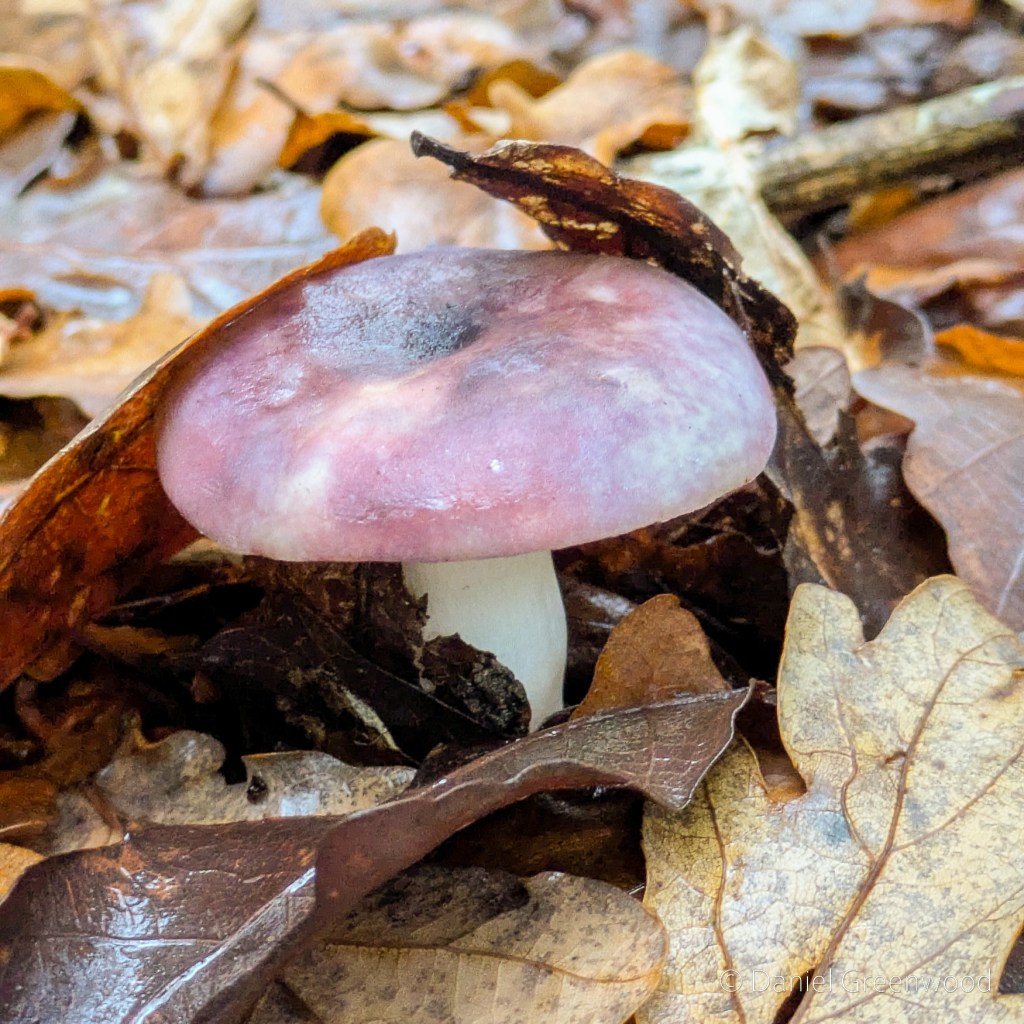
I liked the colour of this russula, a bit like the purples and pinks of a nebula.
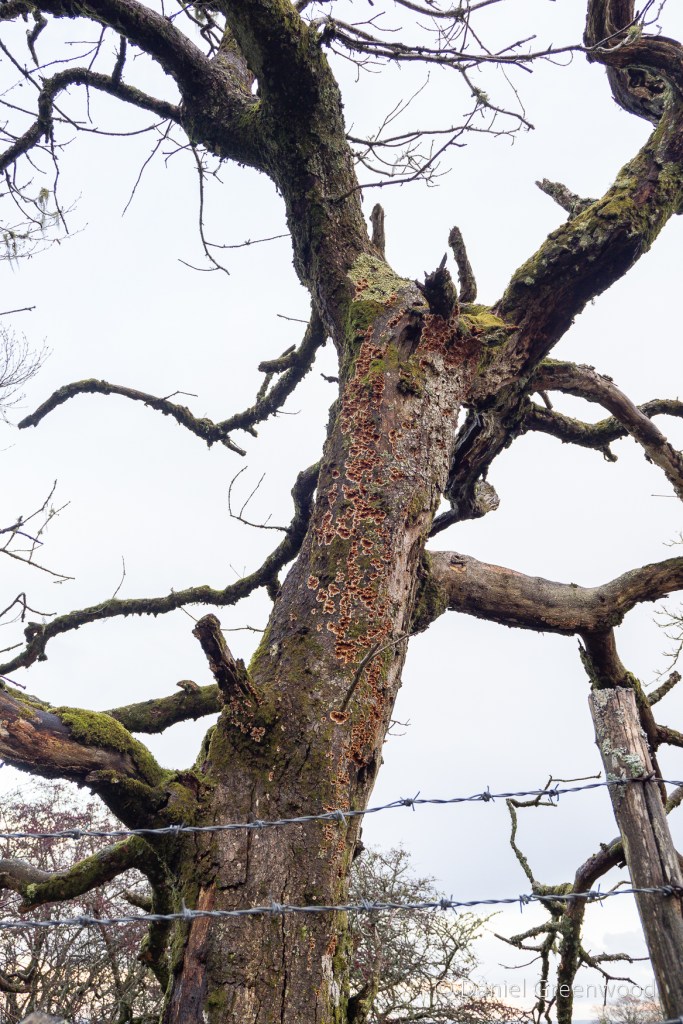
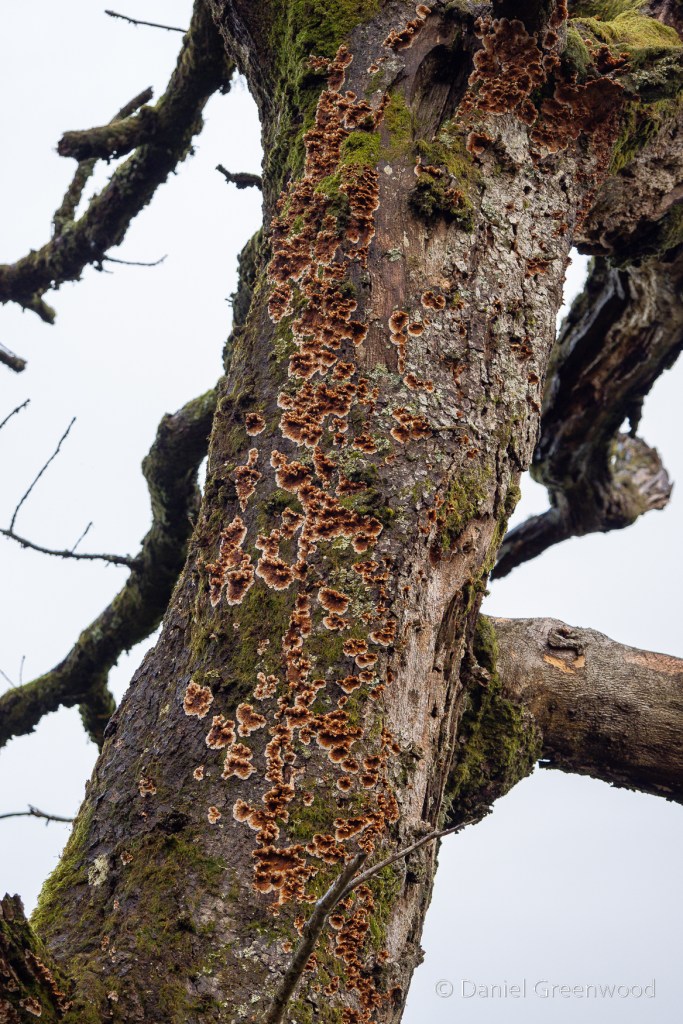
Escaping the woods and making our way back up onto the moor, I noticed this crust growing on a dead/diseased oak at the roadside. My guess is bleeding oak crust.
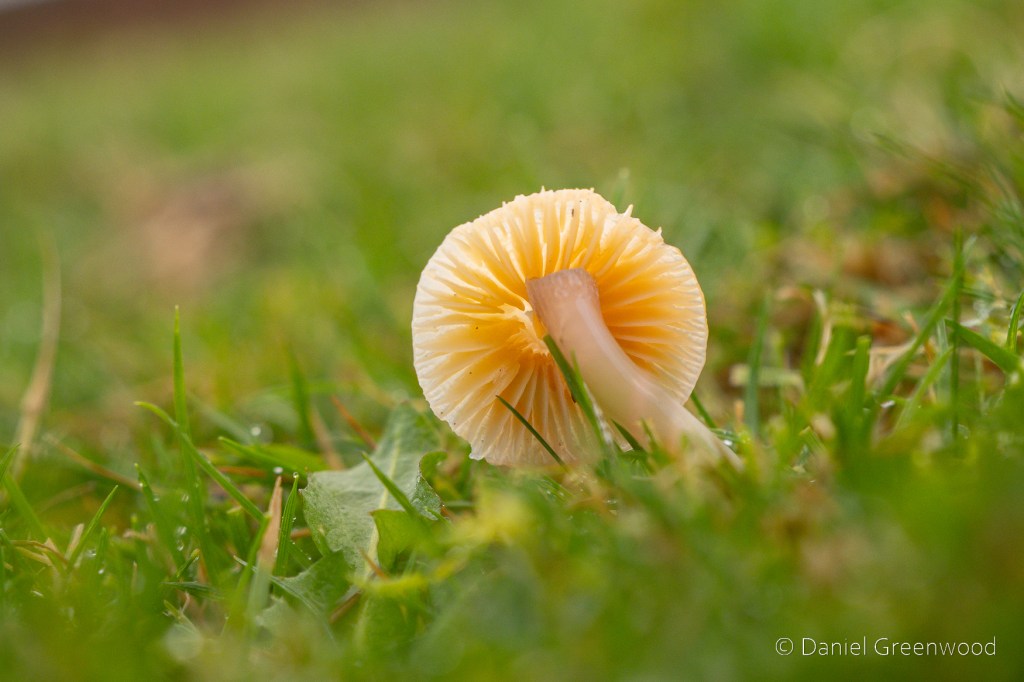
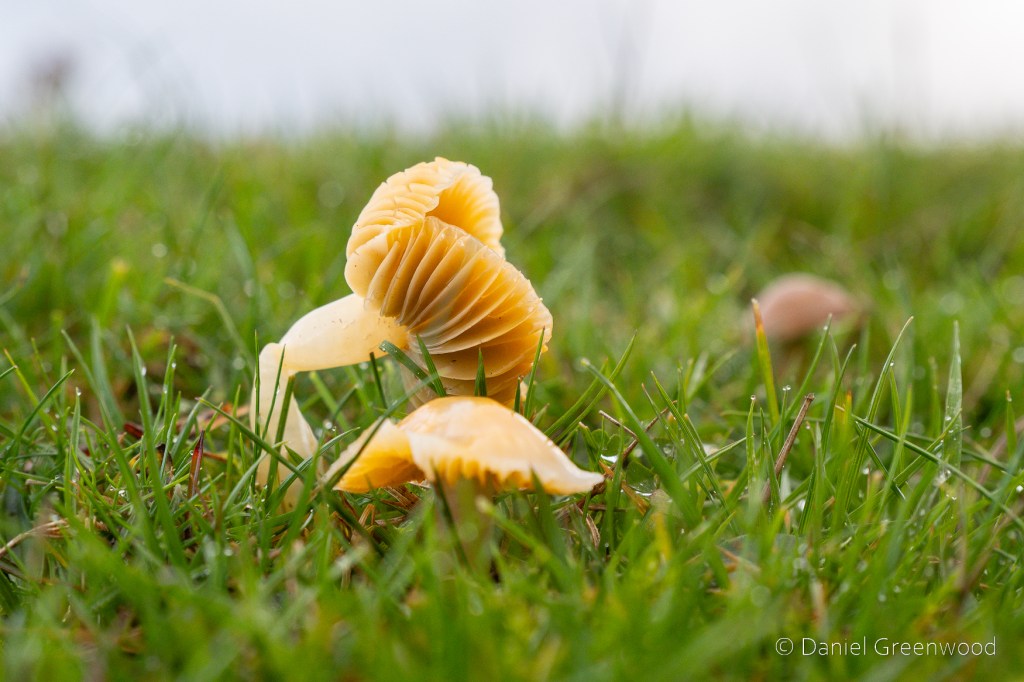
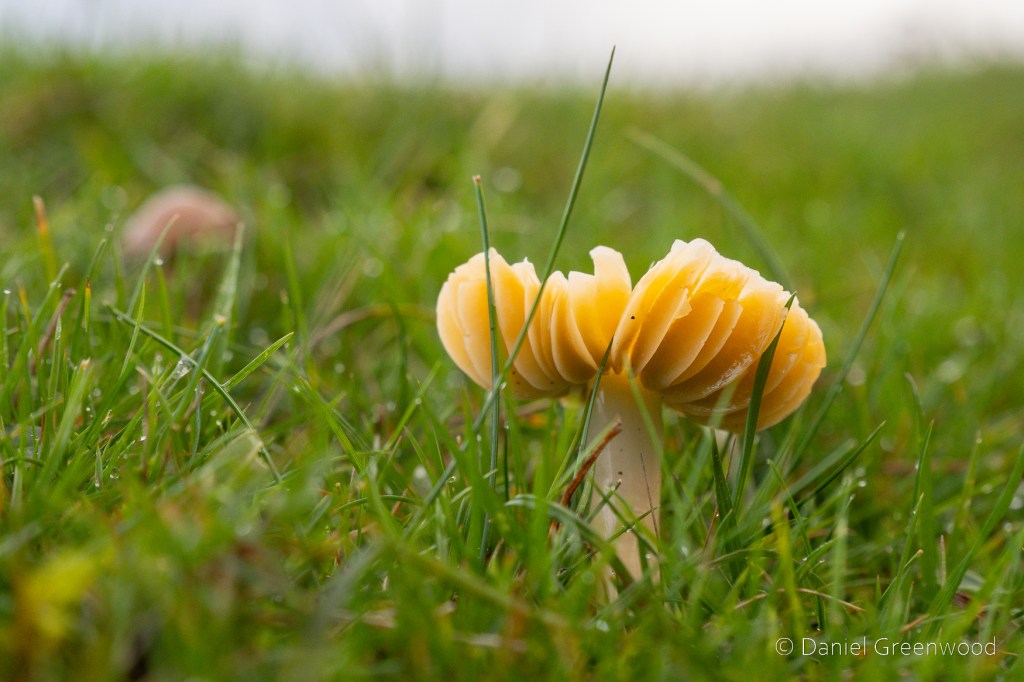
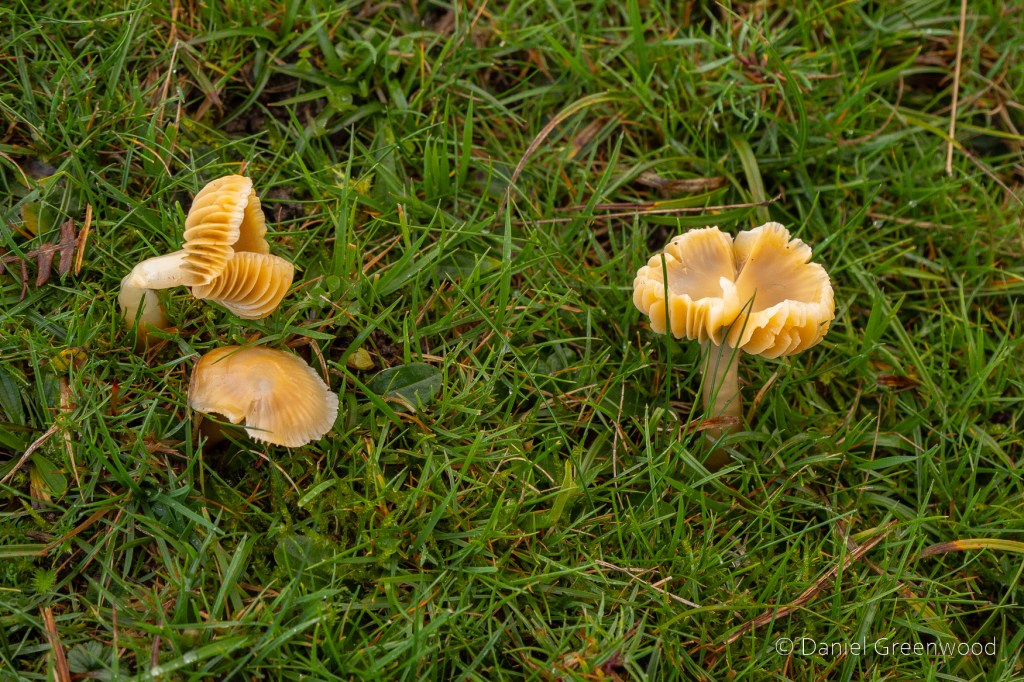
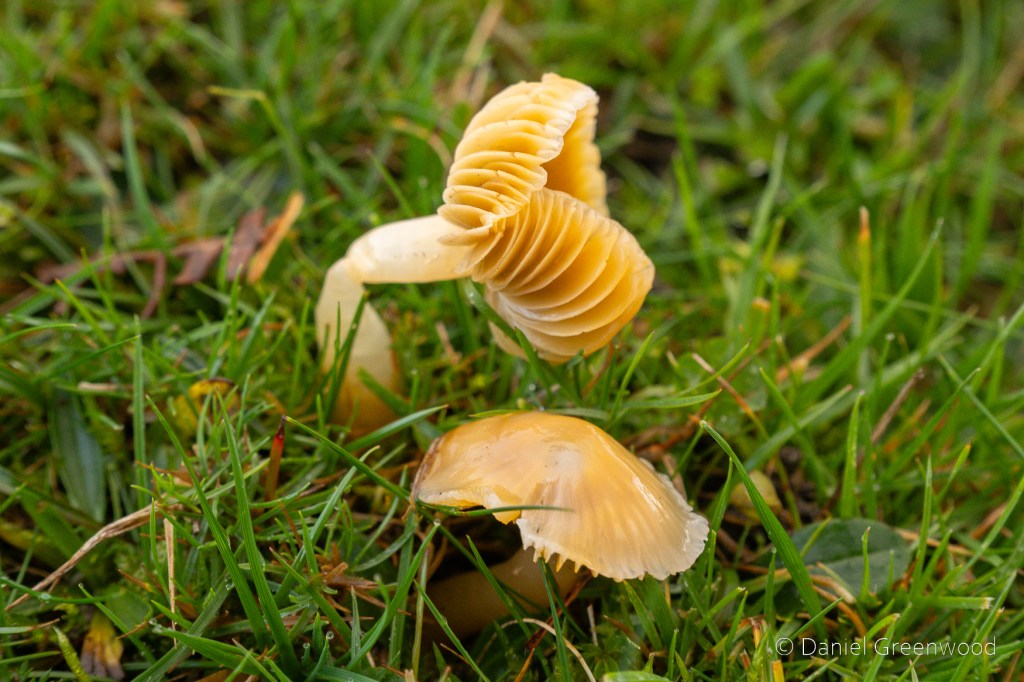
And where better to finish this post but with a clutch of waxcaps on the moorland turf. I think these are probably parrot waxcaps, but I don’t know for sure. That’s the beauty of all this!
Thanks for reading.
I write these blogs in my spare time because I want to raise awareness about the beauty and diversity of fungi. If you enjoy reading them you can support my blog here.
More Dartmoor fungi blogs:


Leave a Reply