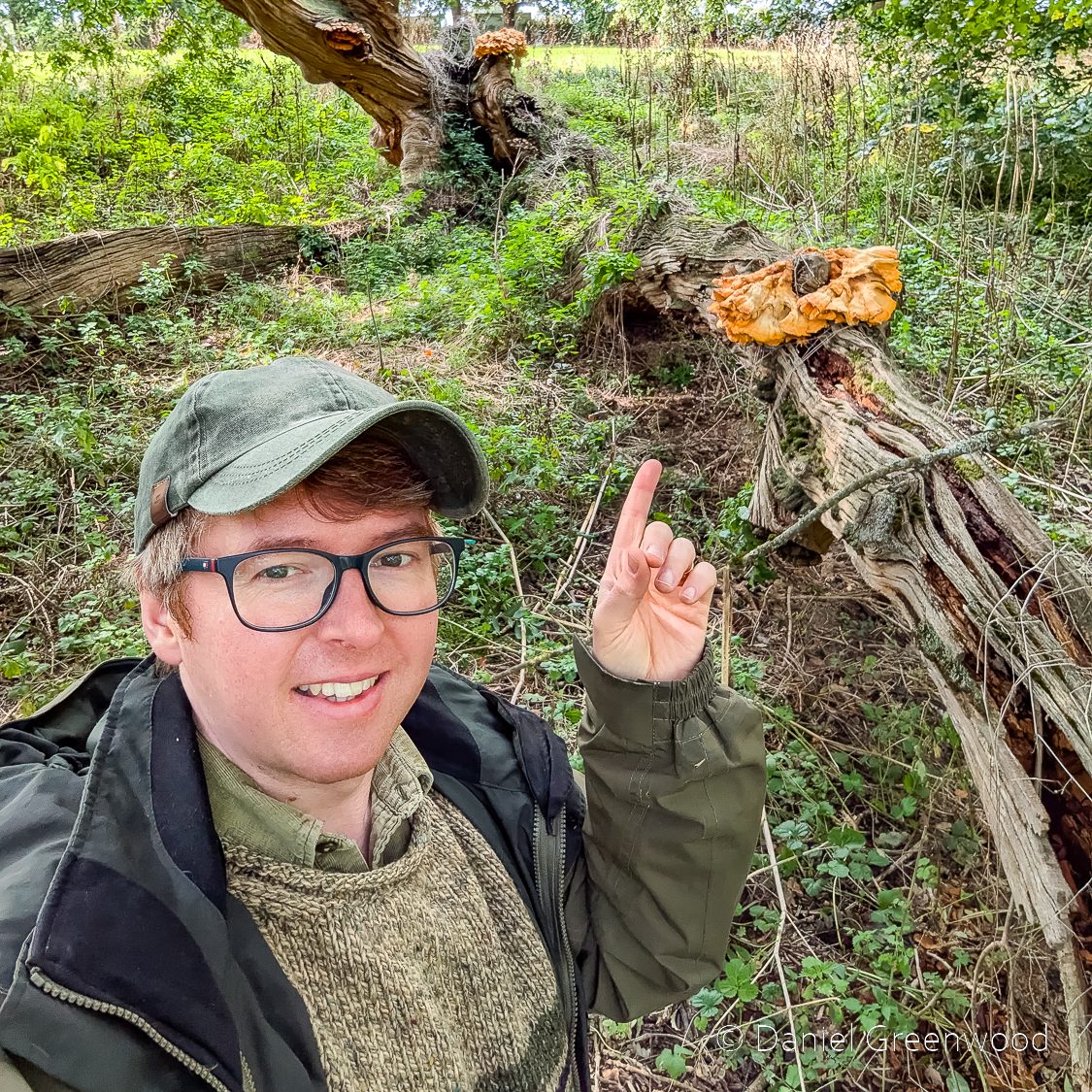
Near Petworth, West Sussex, August 2026
This blog is sunburnt.
I drove out to a special area of woodland near Petworth to see how the usually autumnal month of August was getting on.
Answer: I didn’t see a single mushroom on the ground.
Around the same time last year I saw mushrooms in the soil, which suggests the drought and rolling heatwaves have caused harm, as expected.
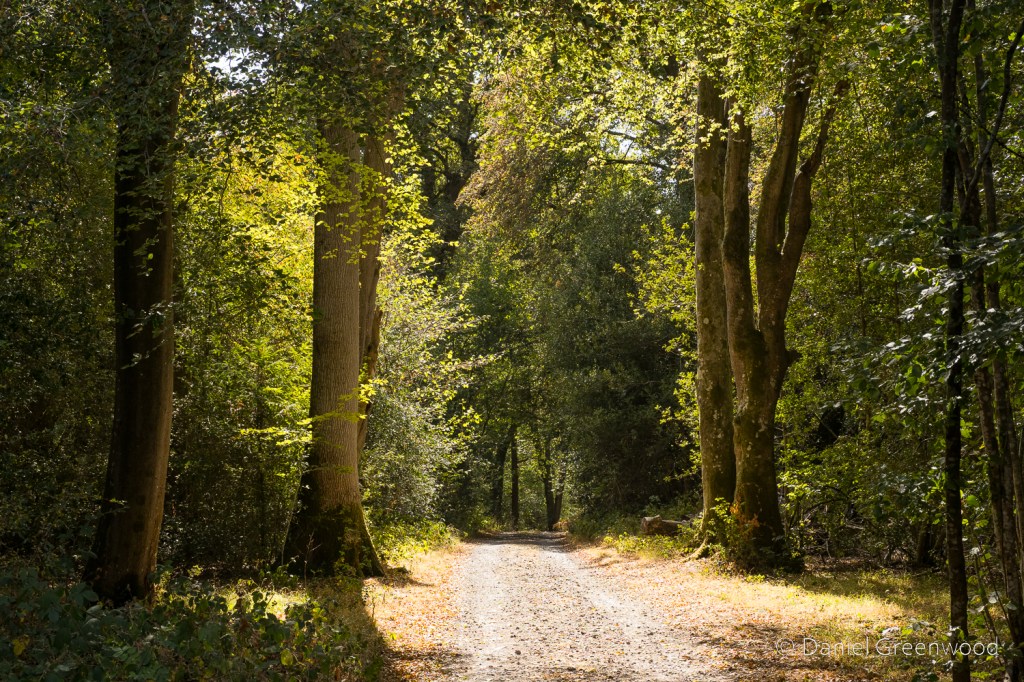
It was a lovely sunny day, and dry, of course. This light can be challenging for woodland photography because the light is so harsh and contrast with shade is intensified.
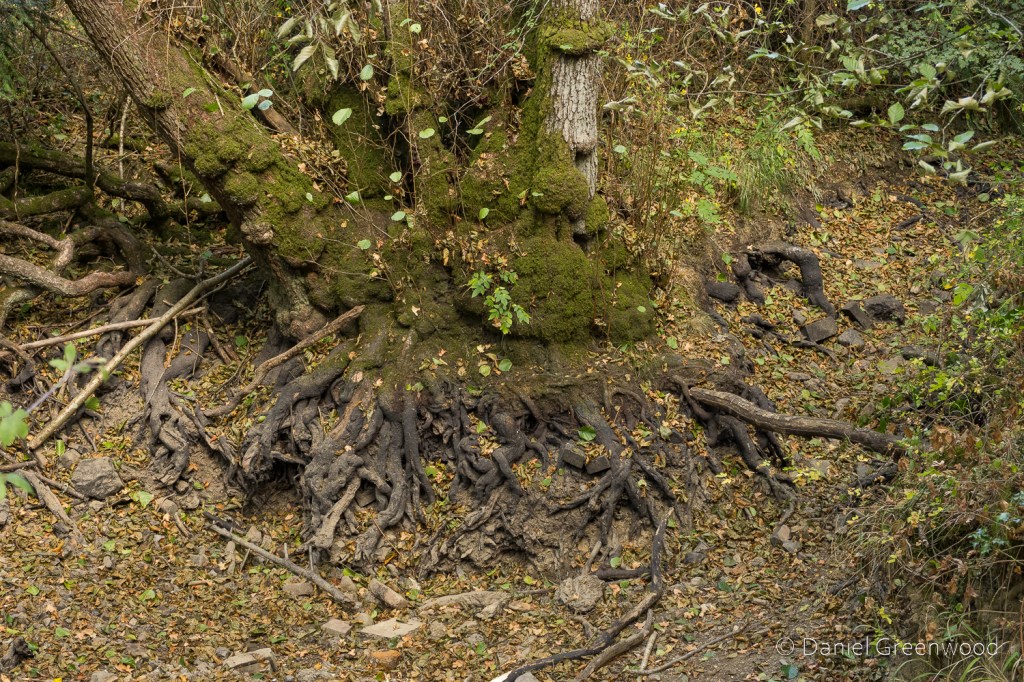
This stream had completely dried up. These are the roots of an alder.
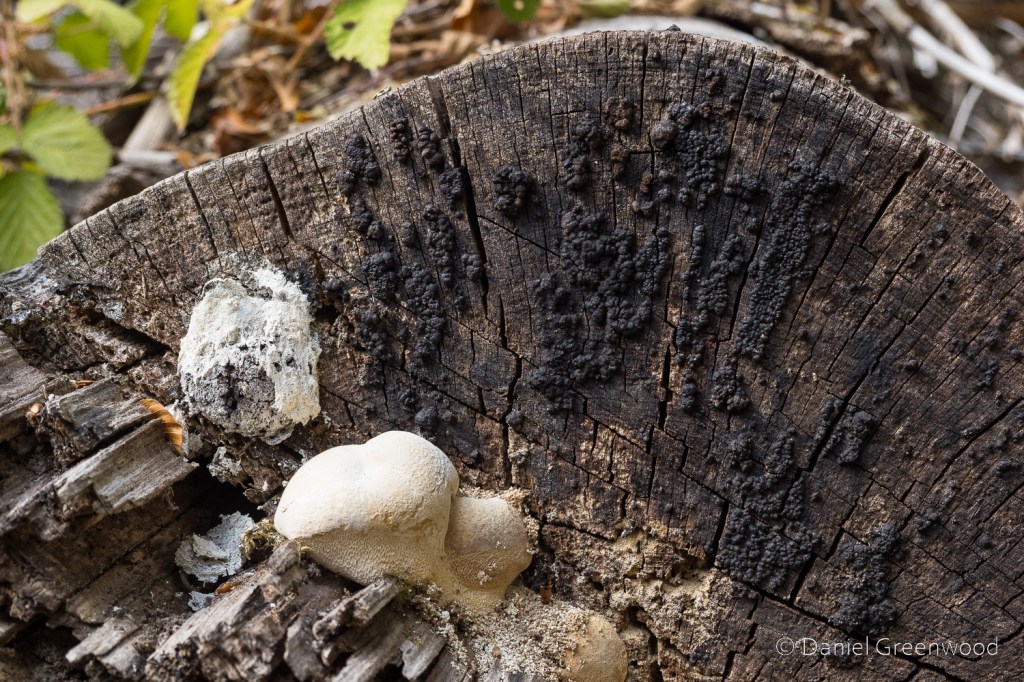
As there were no mushrooms on the ground I had to look at fallen trees for evidence of fungi. The black stuff is a woodwart, probably beech, of which more later.
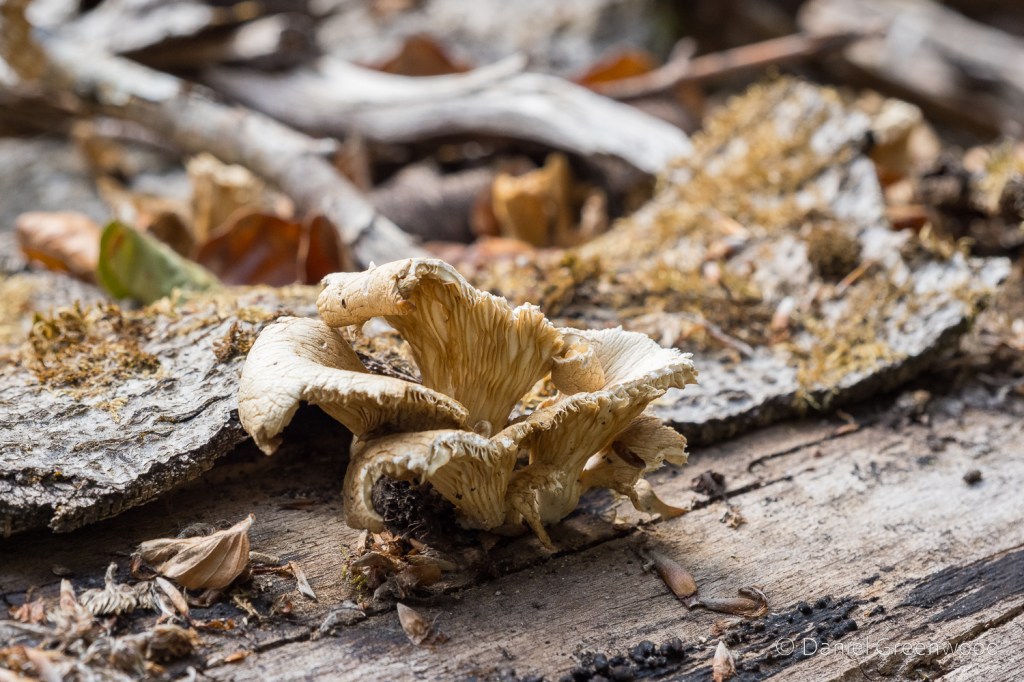
On the same tree were some desiccated oyster mushrooms.
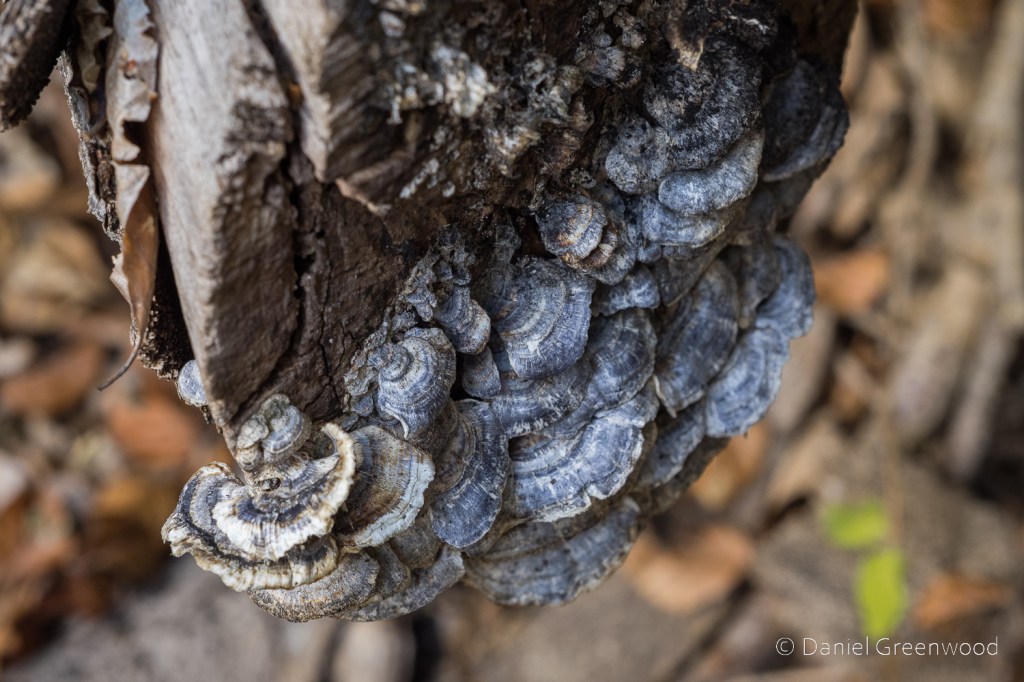
Turkeytail with a hint of midnight blue.
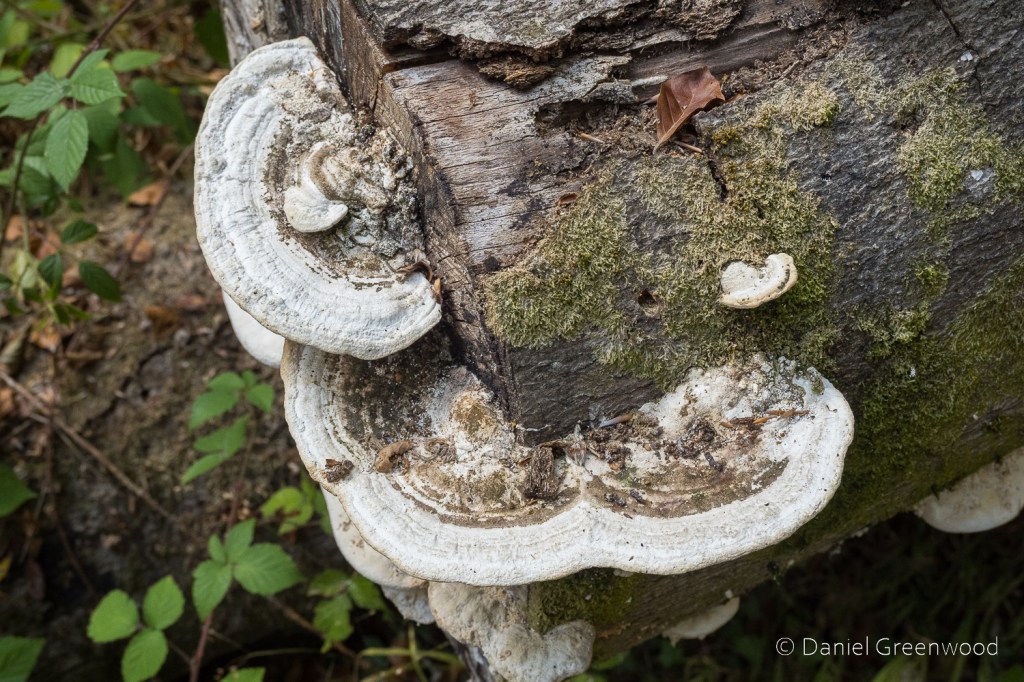
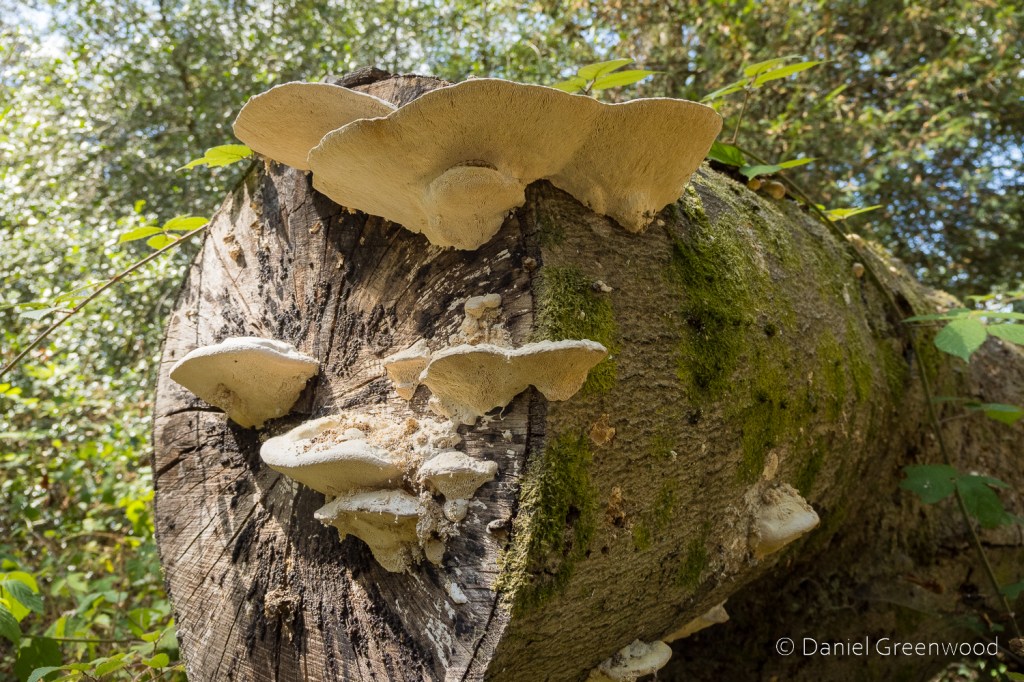
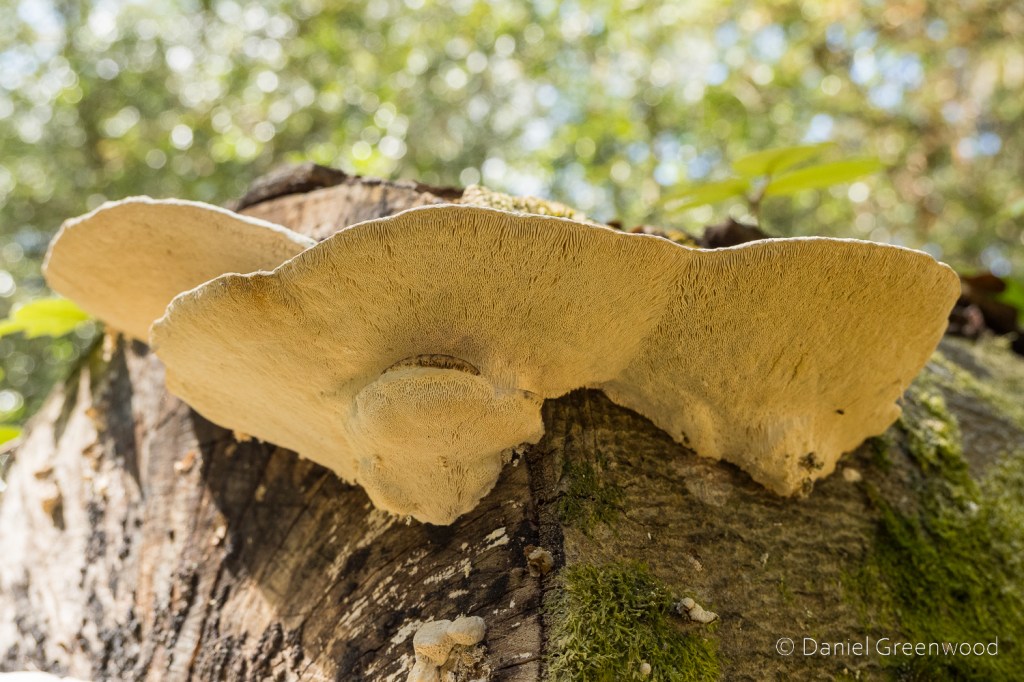
A much happier fungus, probably blushing bracket.
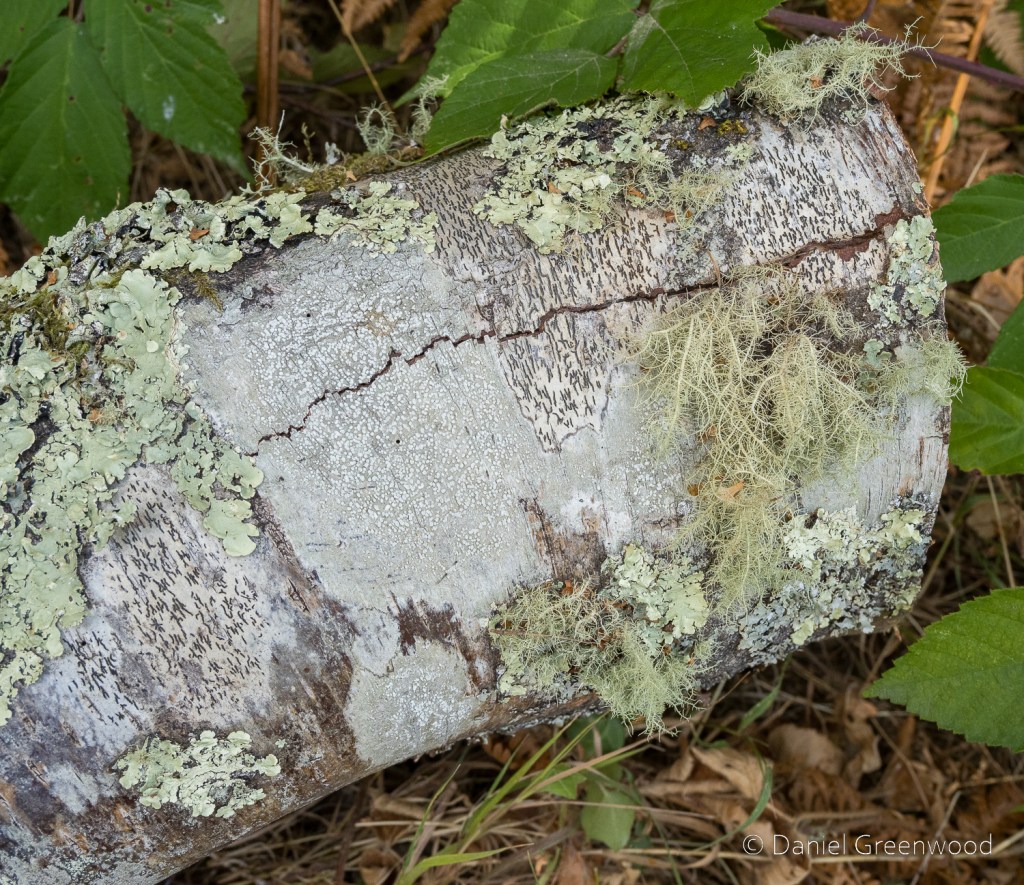
Some branches had fallen and been logged at the edge of the woodland and were rich in lichens, which is nice to see.
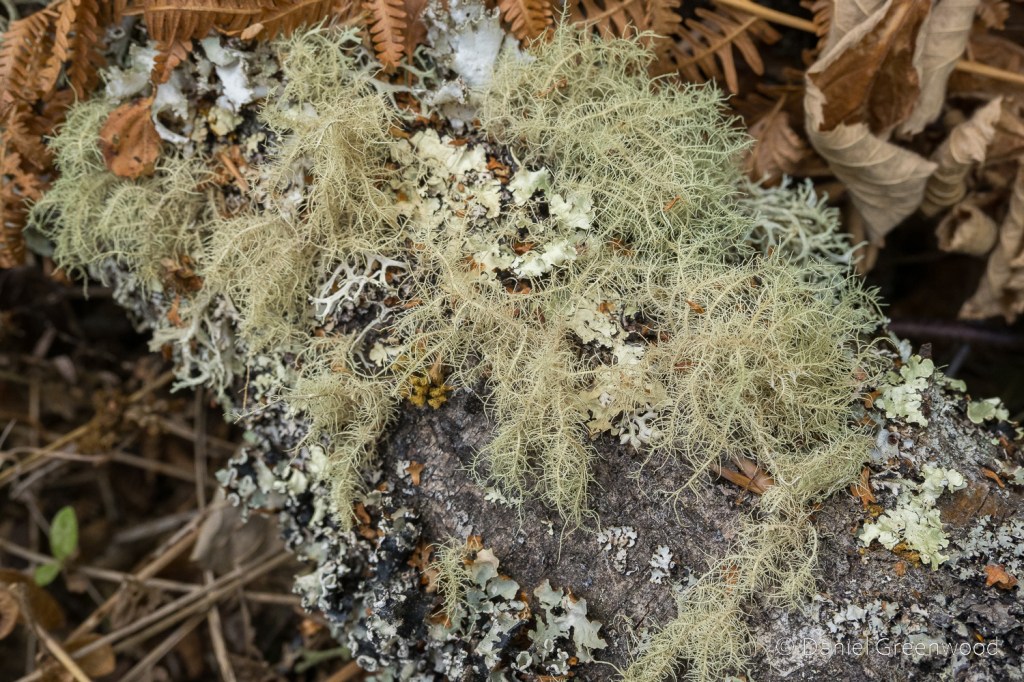
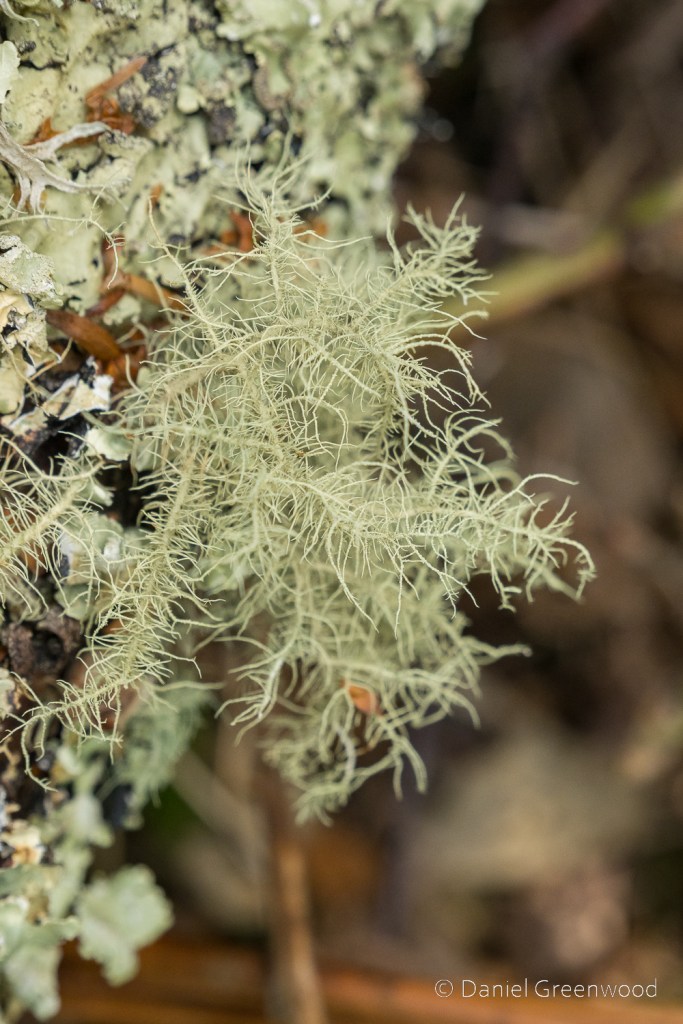
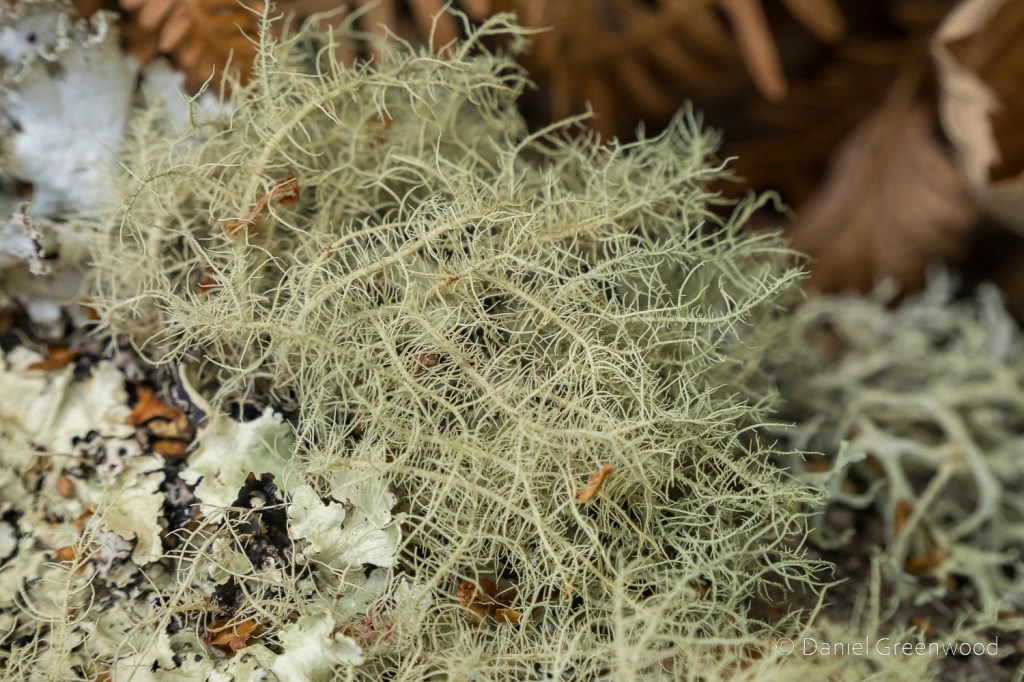
This is a beard lichen, probably Usnea cornuta (inflated beard according to iNaturalist). I love this family of lichens. They look like pale green lightning forks.
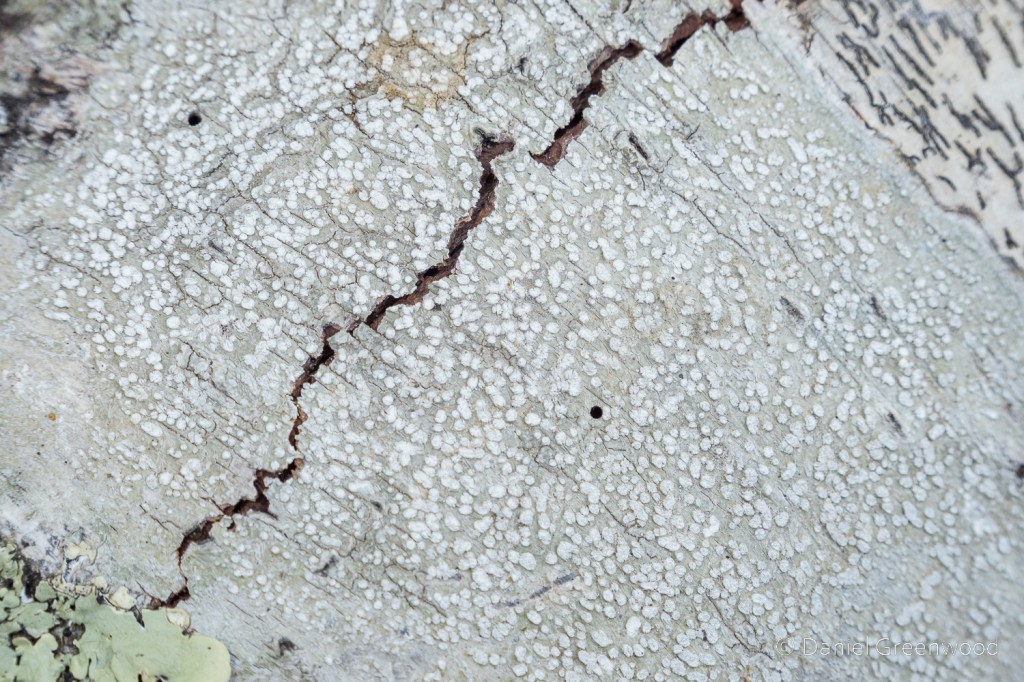
This is a Lepra lichen, what the Americans appear to call ‘fluff-warts’. Definitely get that seen to!
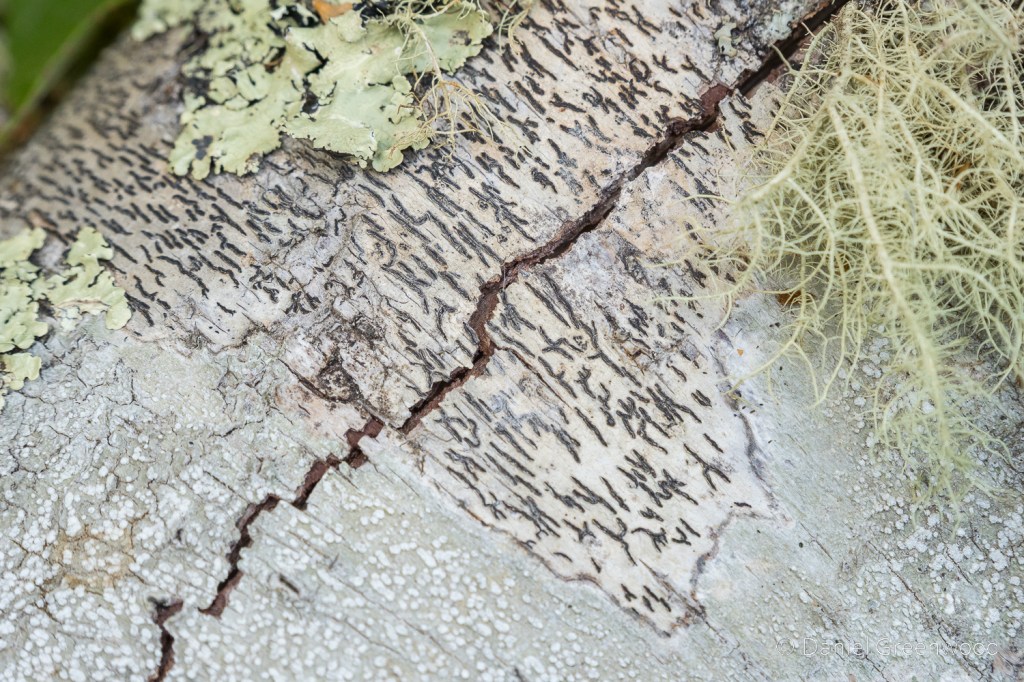
This is probably common script lichen, which I am particularly partial to.
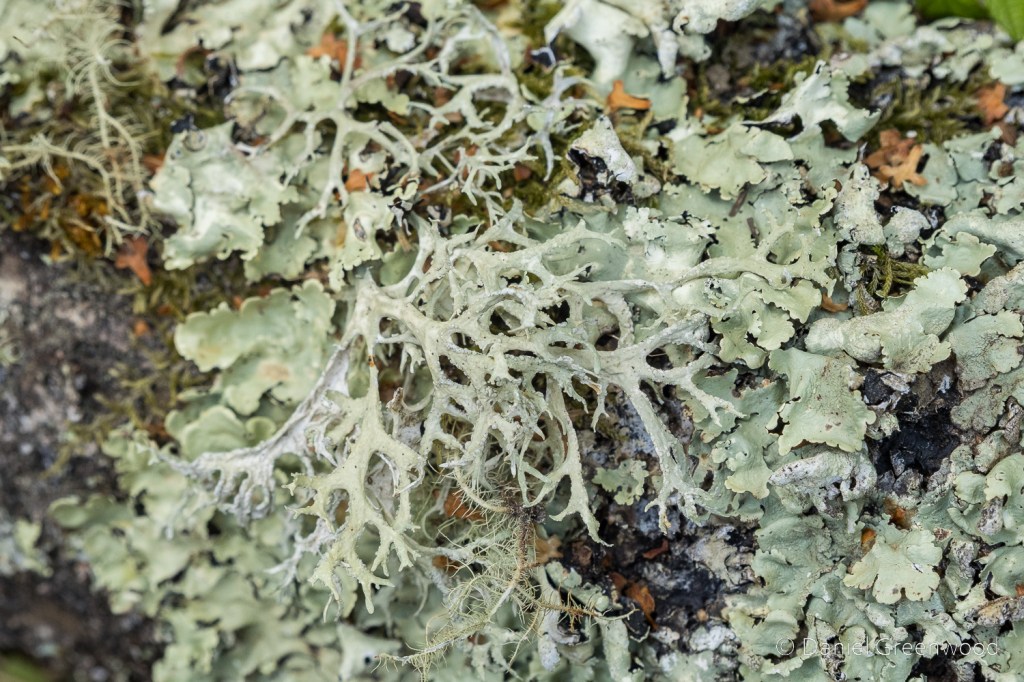
Oakmoss (Evernia prunastri): a common lichen in oaky parts of Sussex.
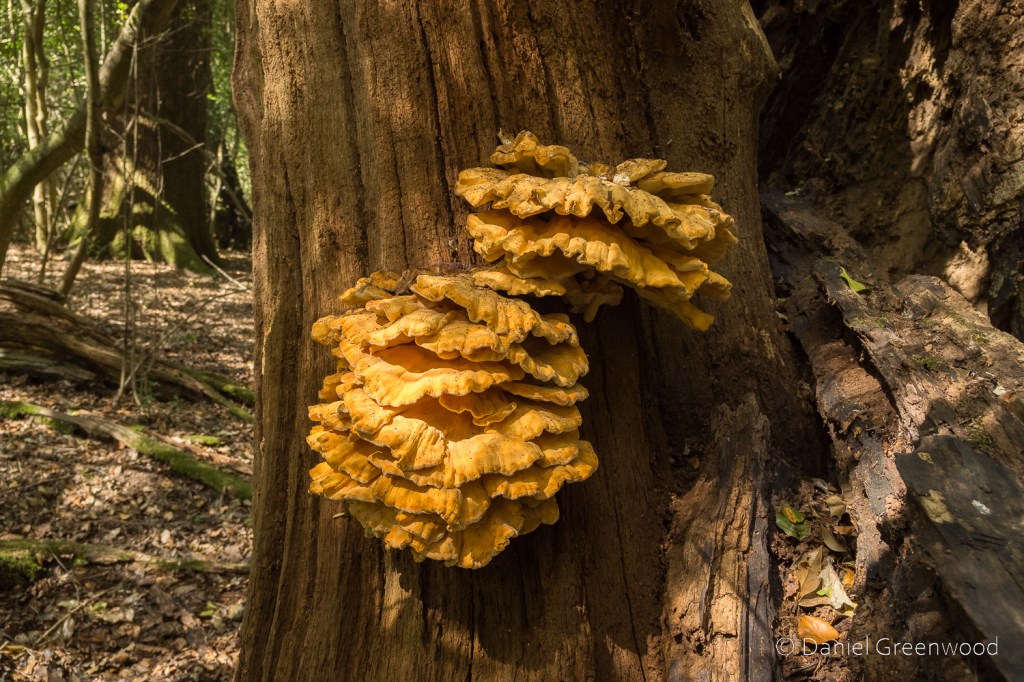
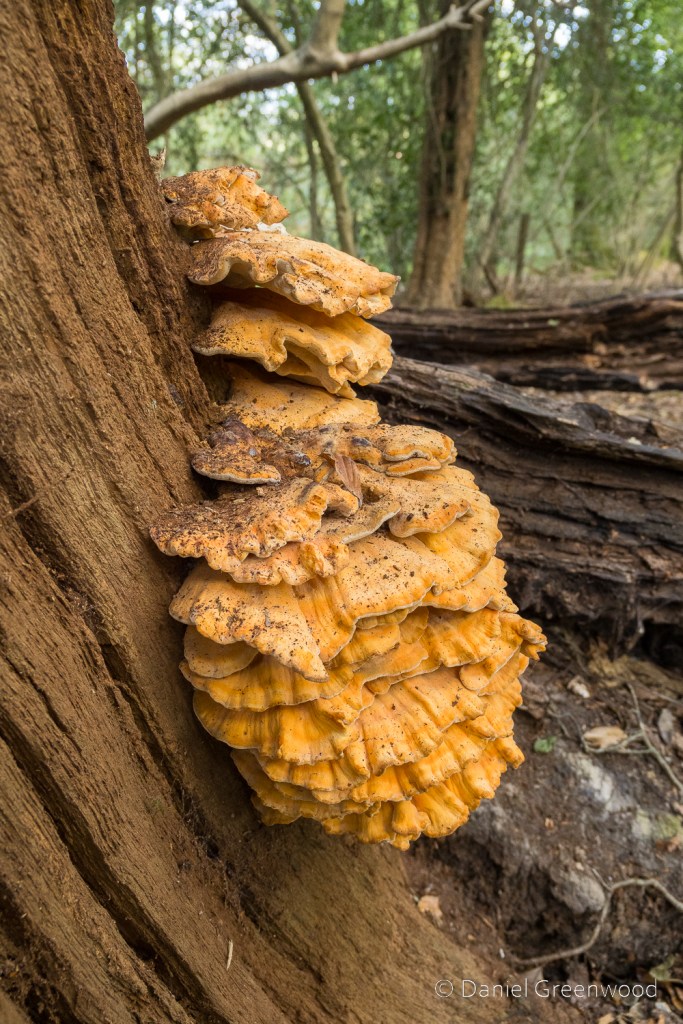
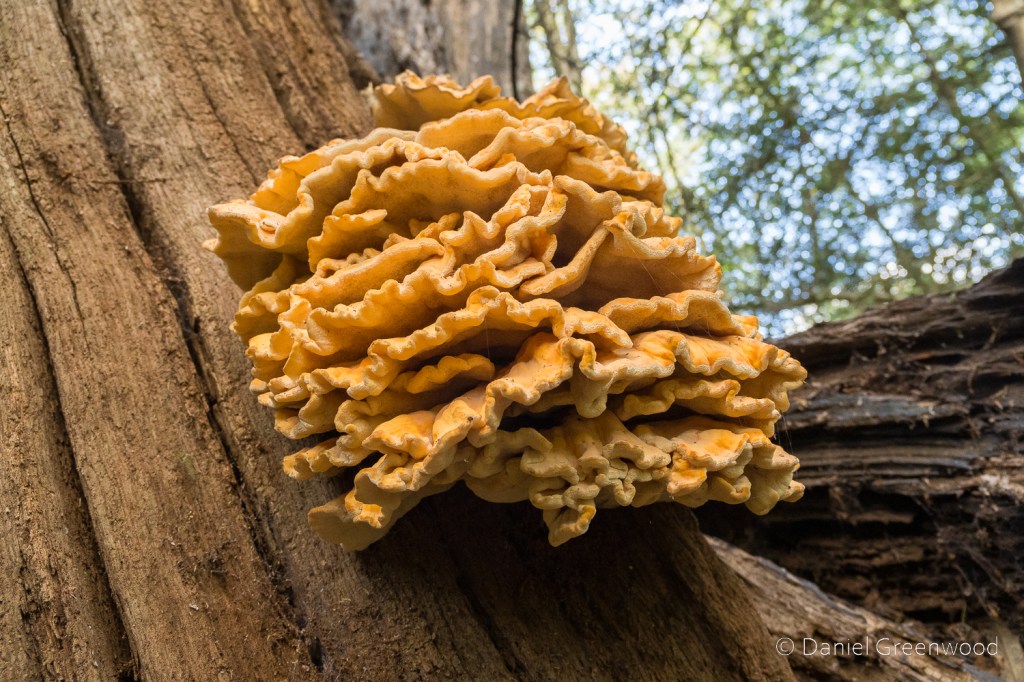
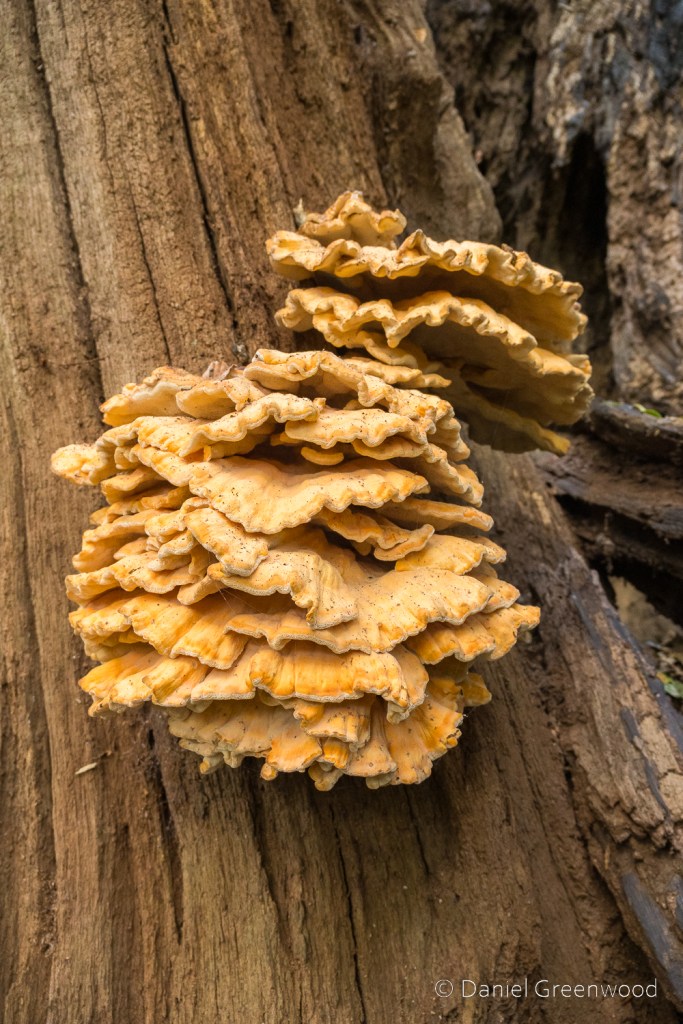
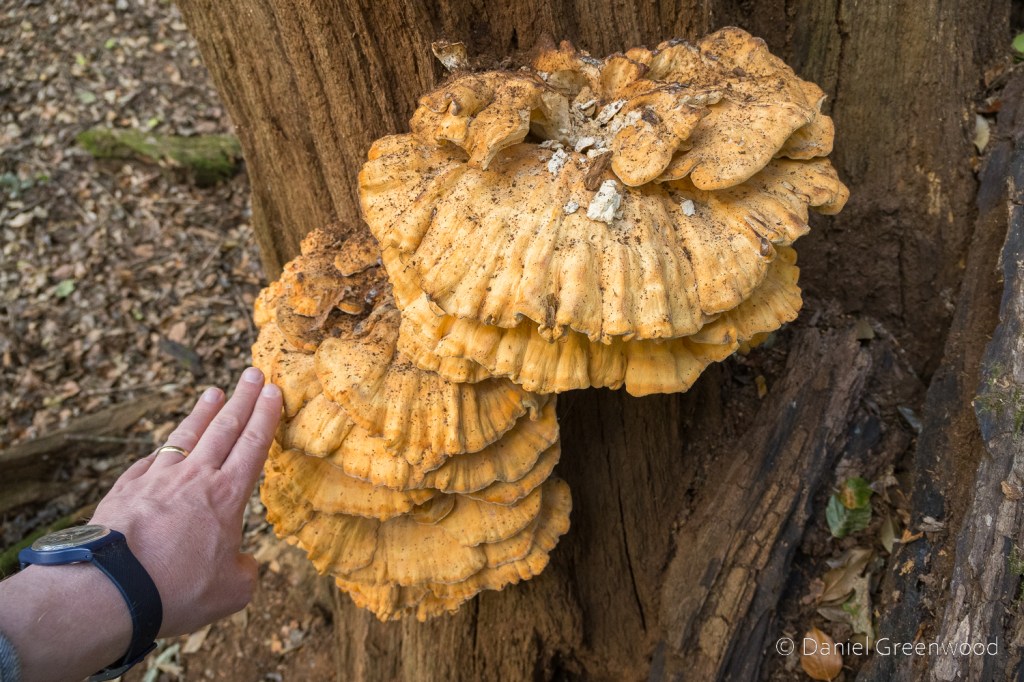
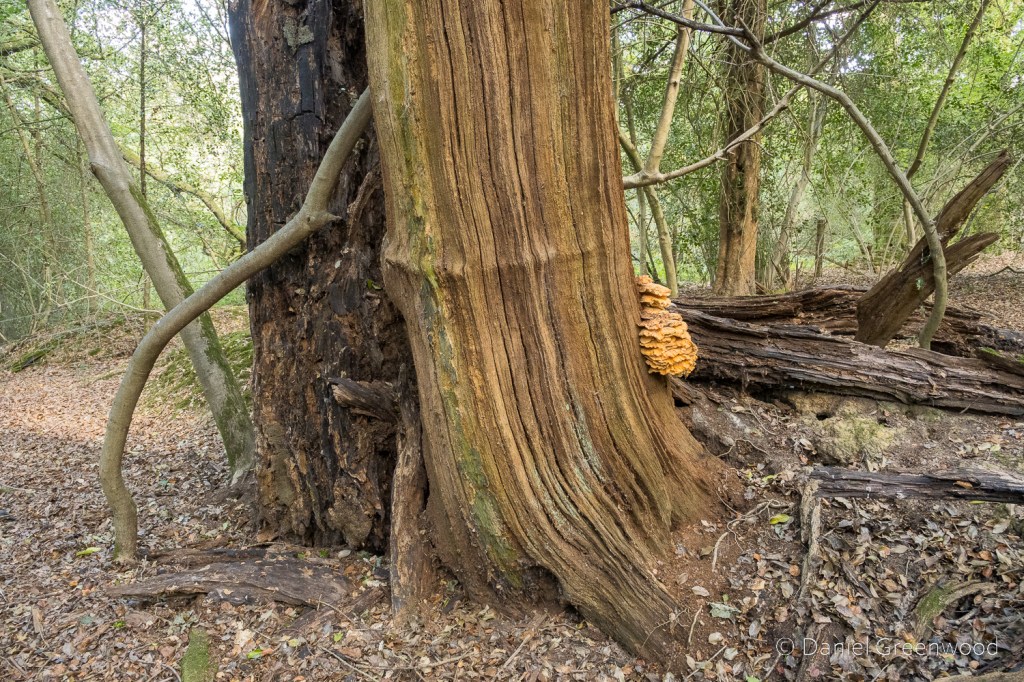
Chicken of the woods! This is a tree I have been visiting at this time of year since about 2022. It always has a chicken growing on it in August.
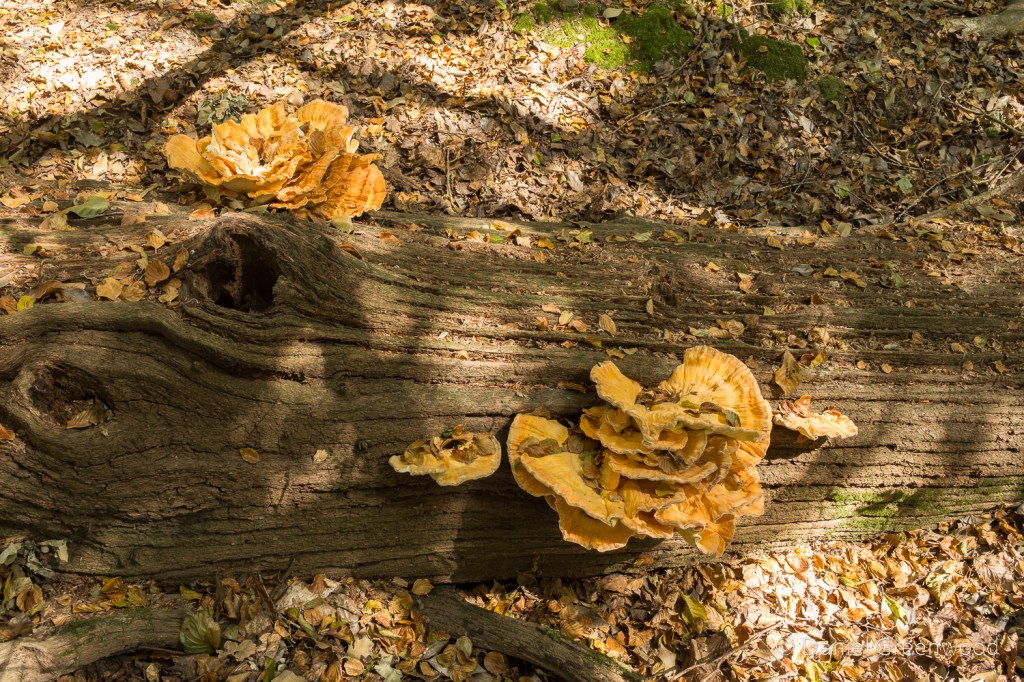
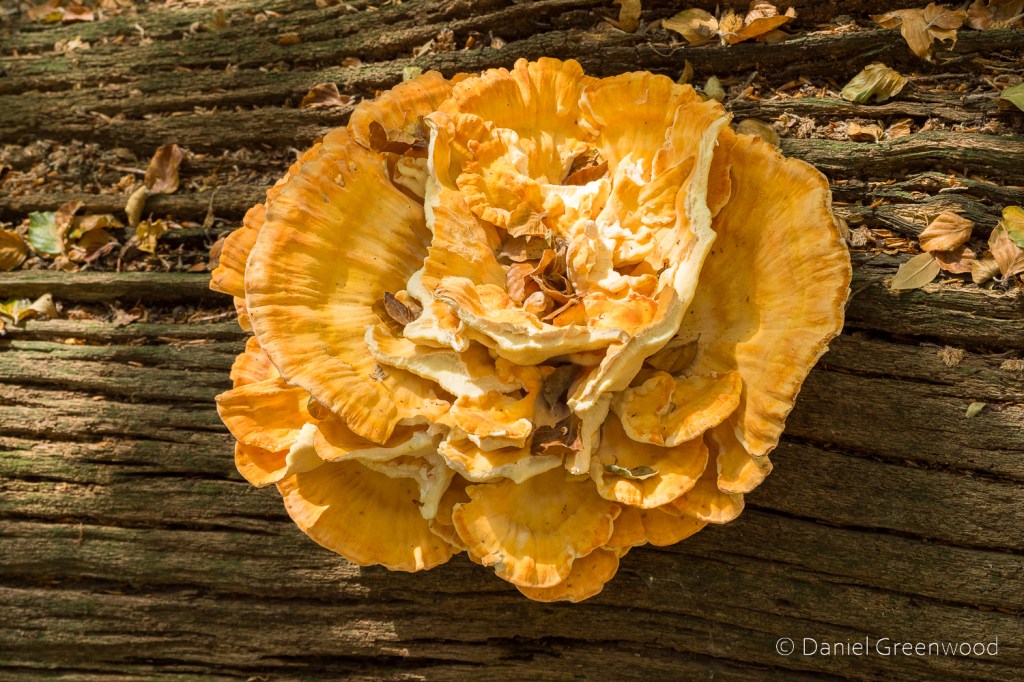
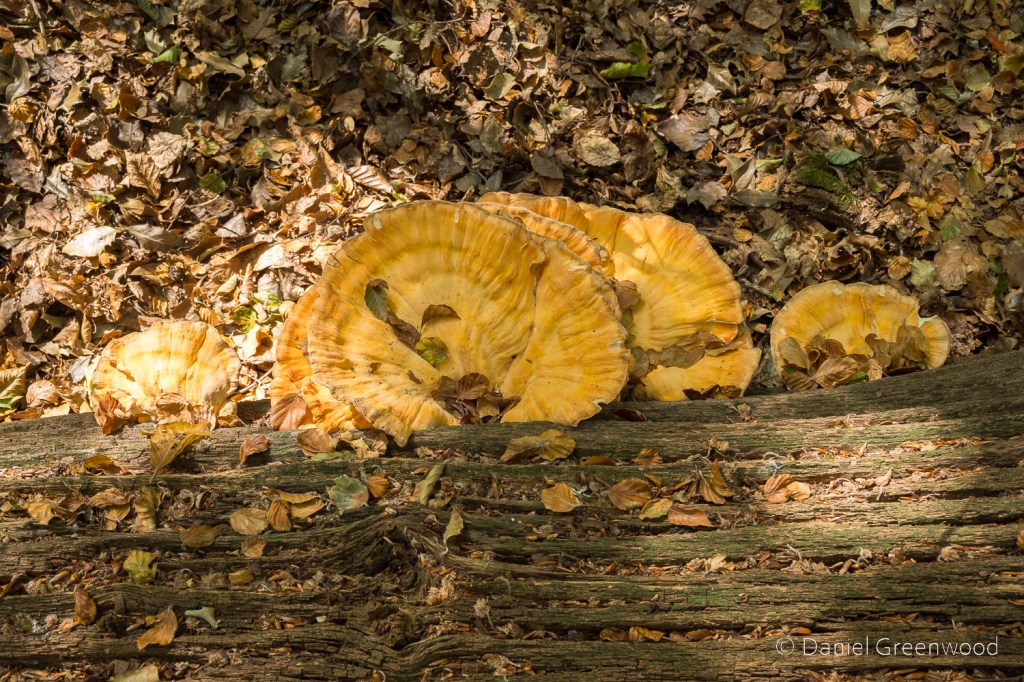
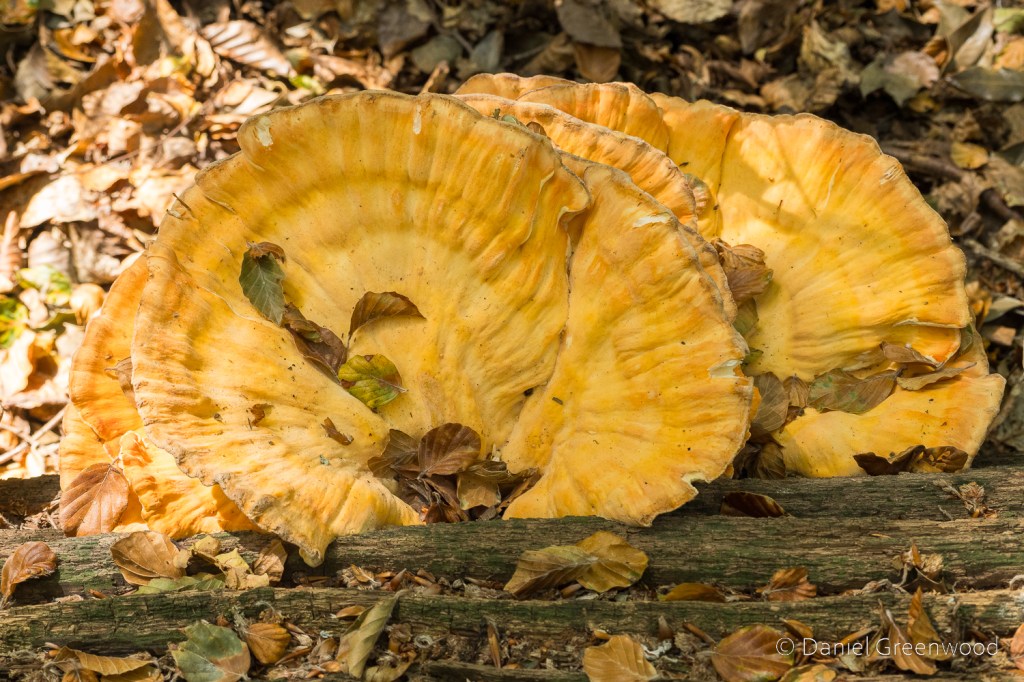
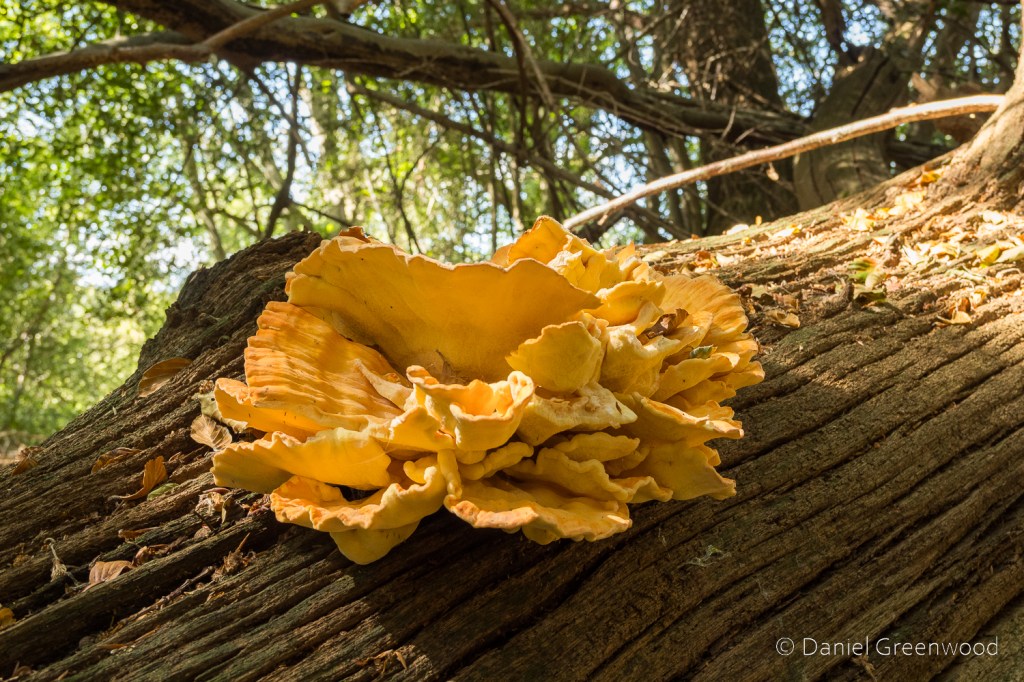
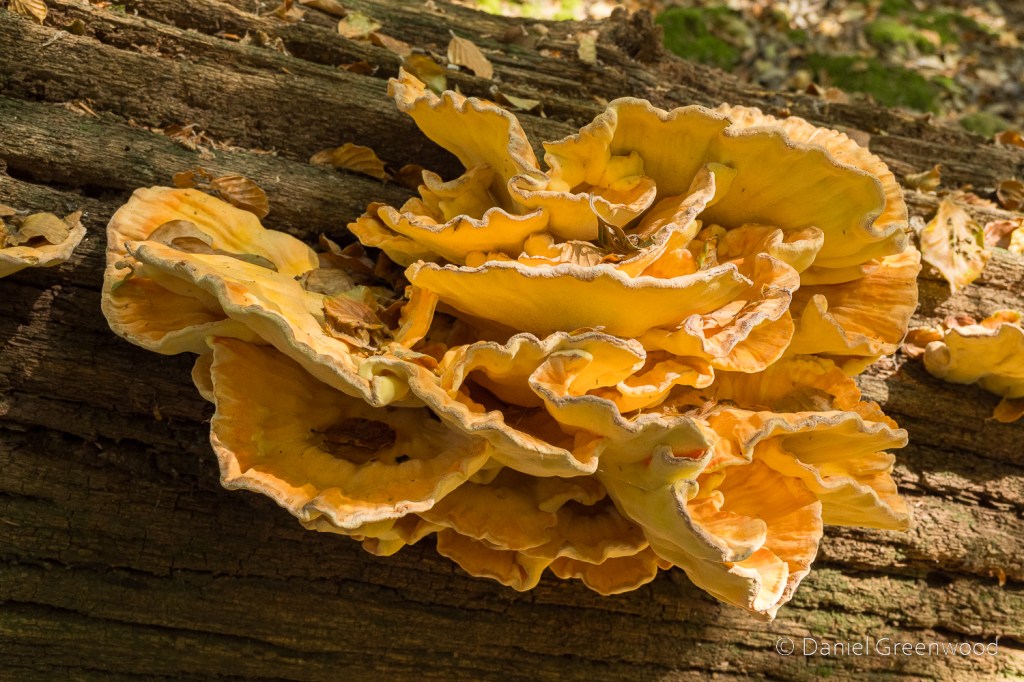
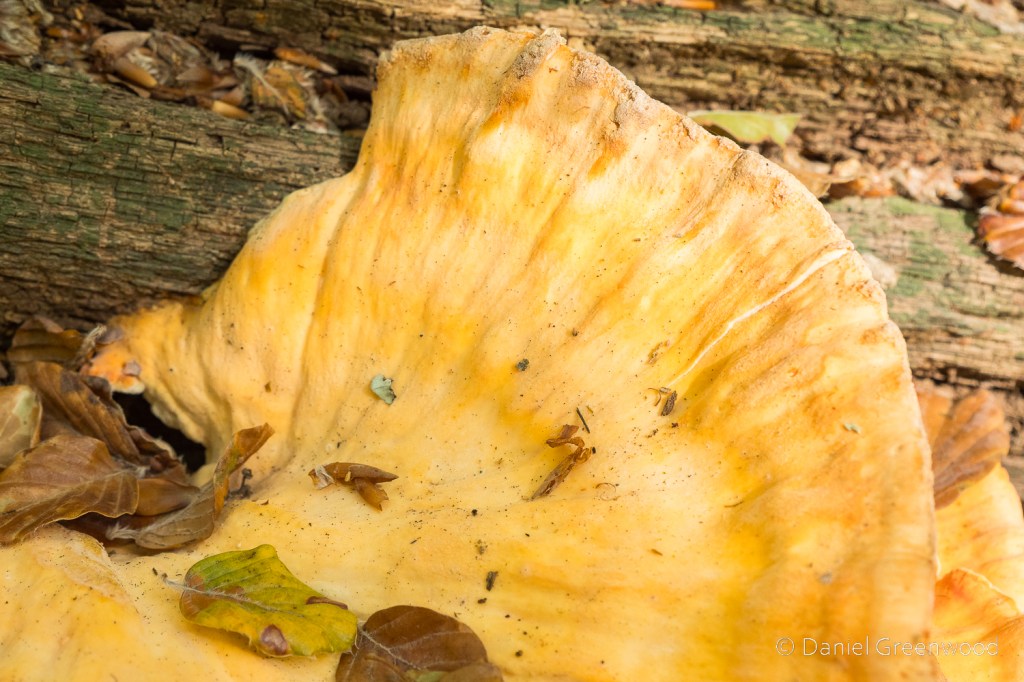
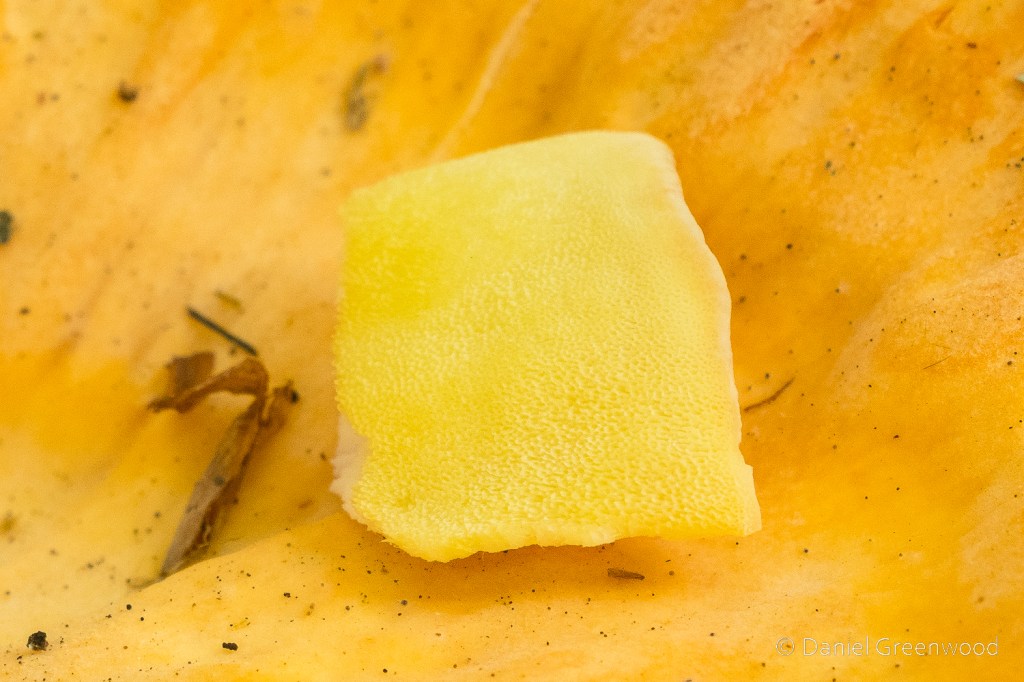
A short walk sway was more chicken growing on a prostrate oak. I picked off some of the fungus to have a look at the yellow pores. You can see where the fungus gets the scientific name Laetiporus sulphureus from.
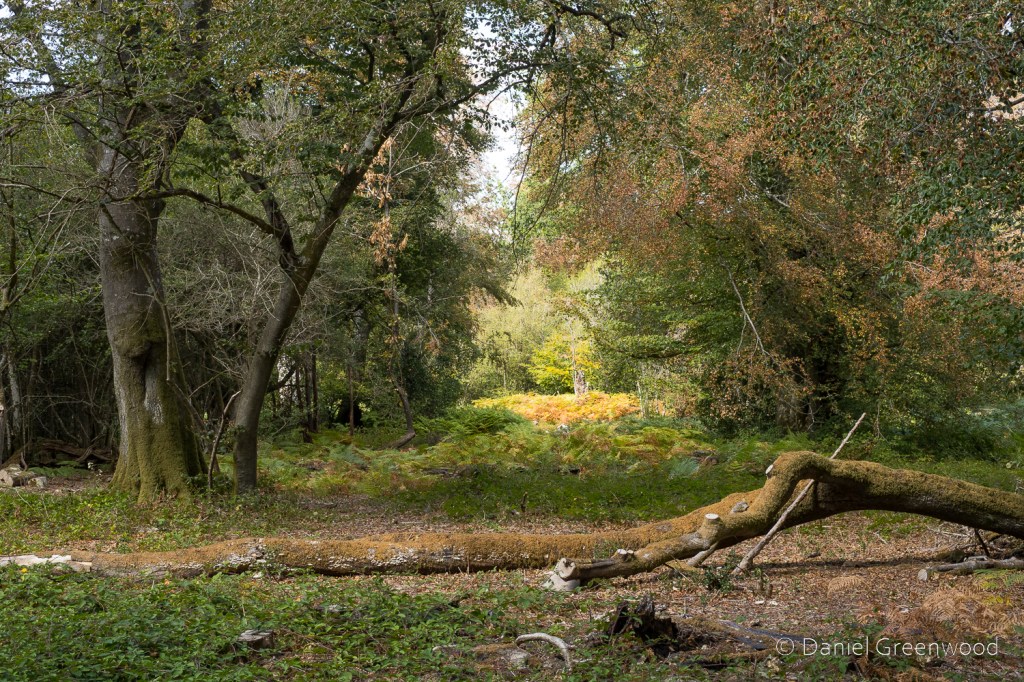
Though there was plenty of green, everything looked sunburnt. Beech is suffering particularly badly in this extreme heat and many are dying off. If beech declines in Sussex the fungi will also change.
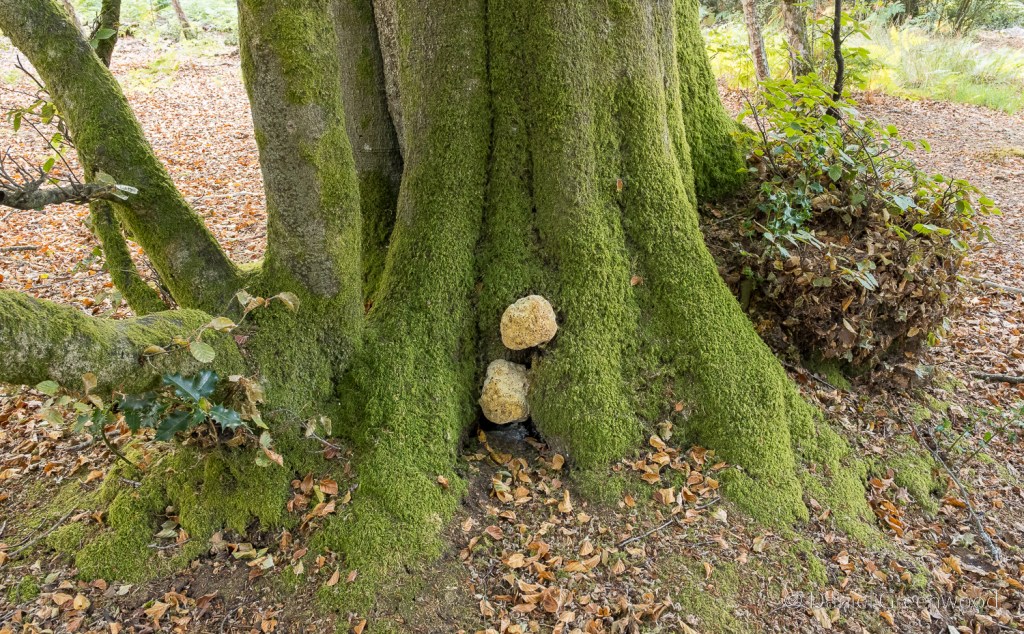
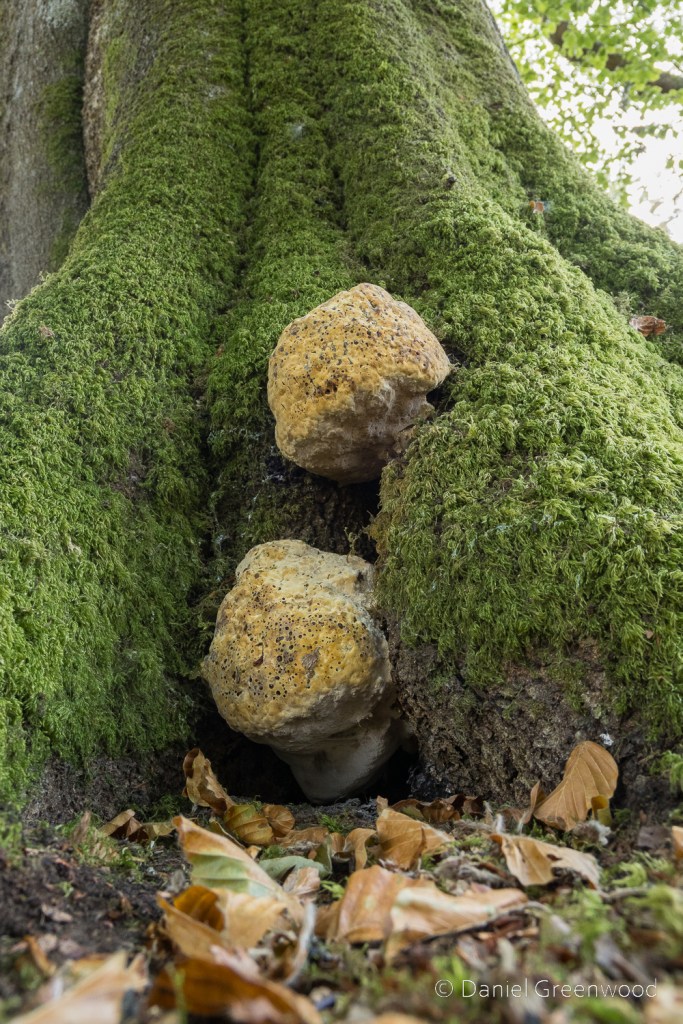
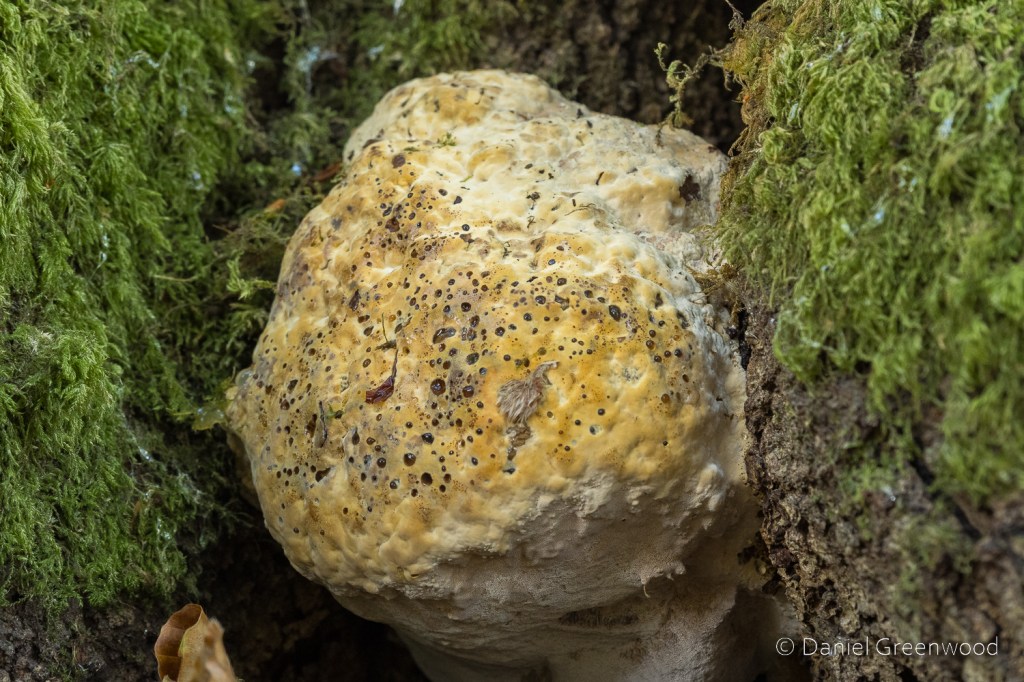
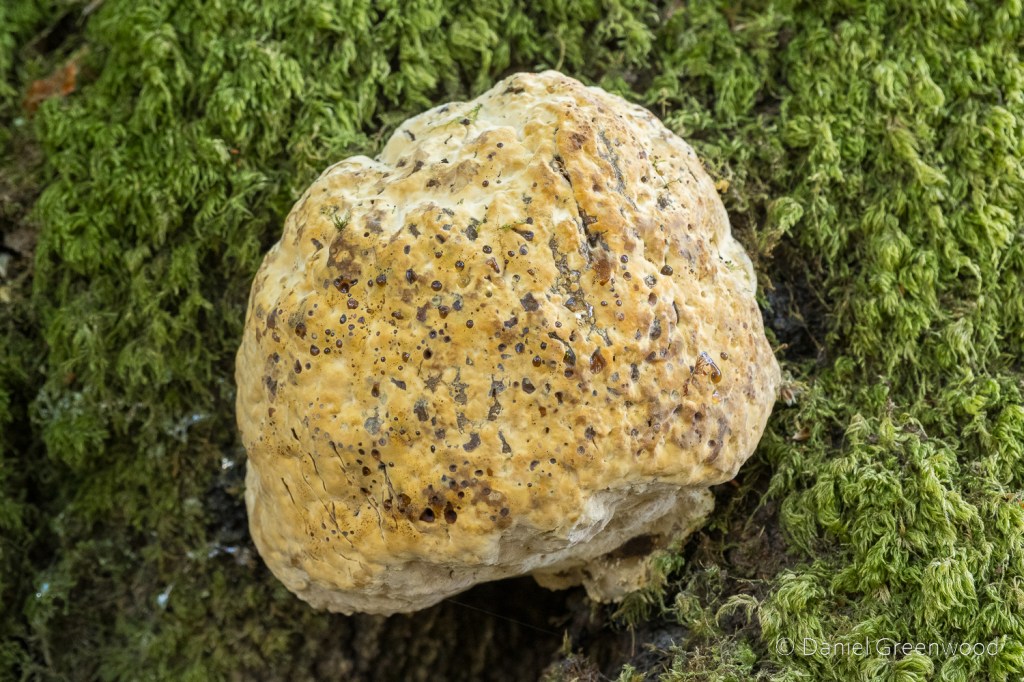
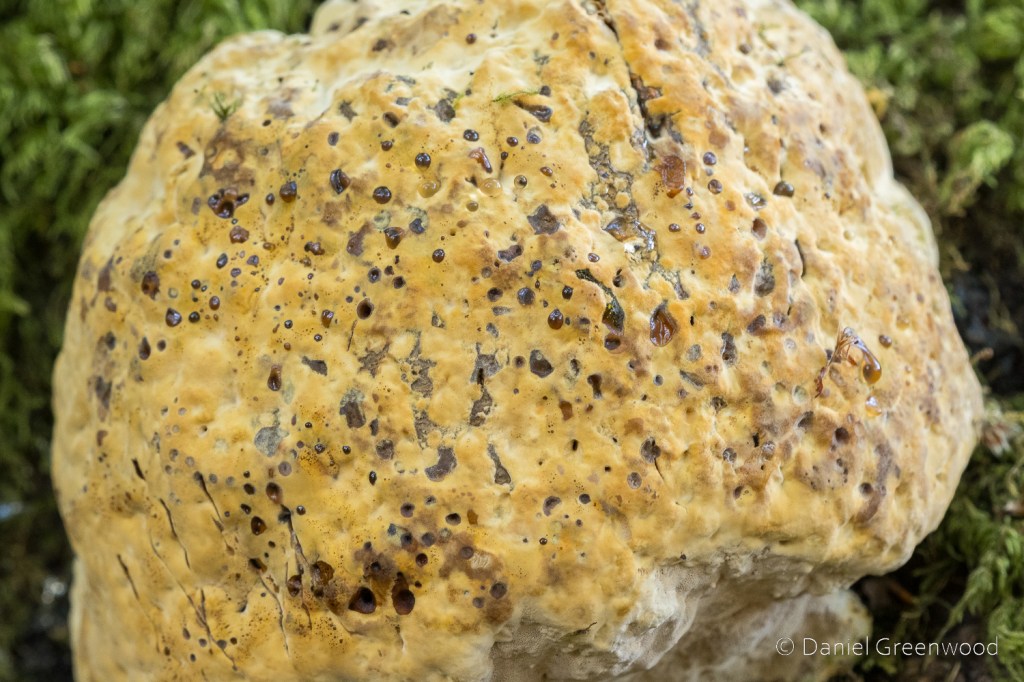
Weeping conk (but on beech here): this is the thirstiest I’ve seen this fungus, which often weeps because it draws too much moisture from its host tree. It’s quite a rotter, and can open up the base of a tree with its powers of decay. I have found this on nearby trees here since 2018 but not every year.
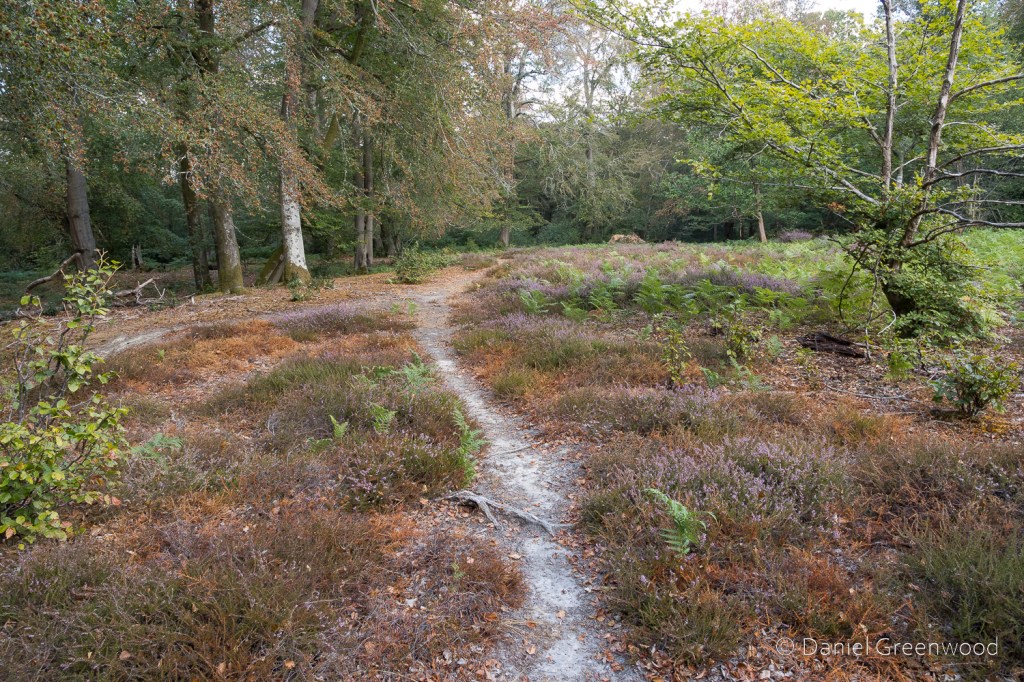
A slice of heathland that is dying back in places, never seen it so parched.
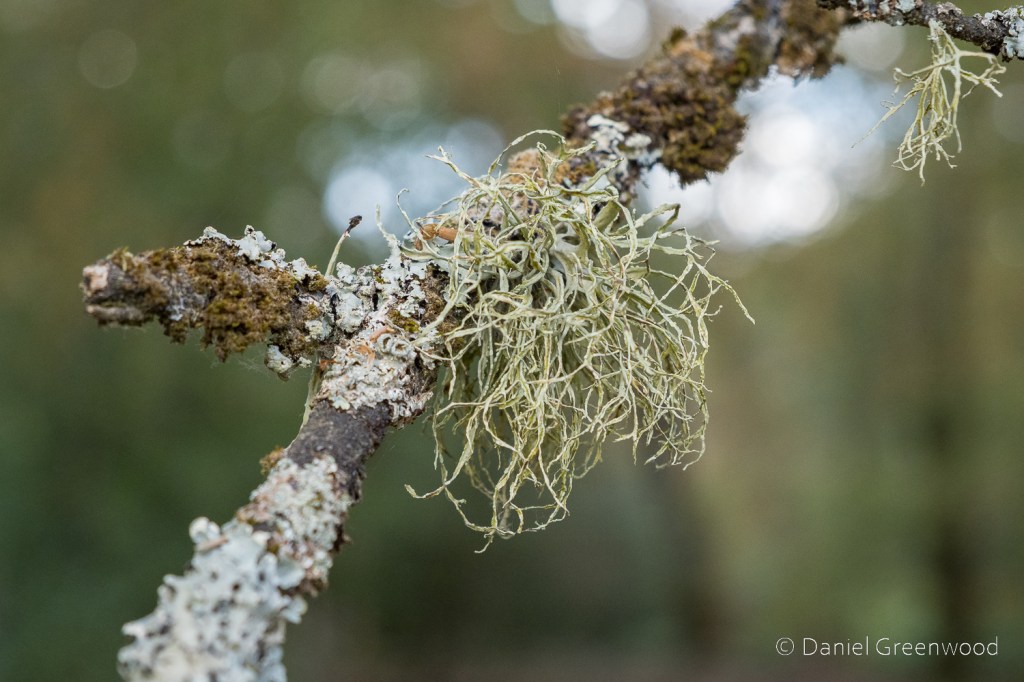
Farinose cartilage lichen (Ramalina farinacea): straggly but still going. This is a fairly common species in the Sussex Weald.
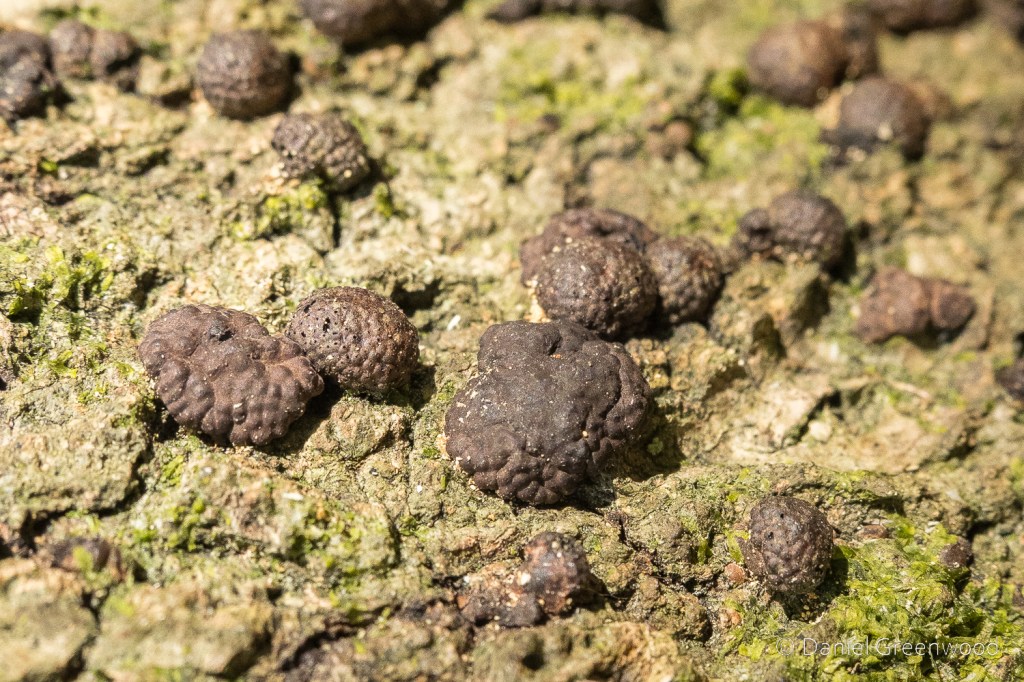
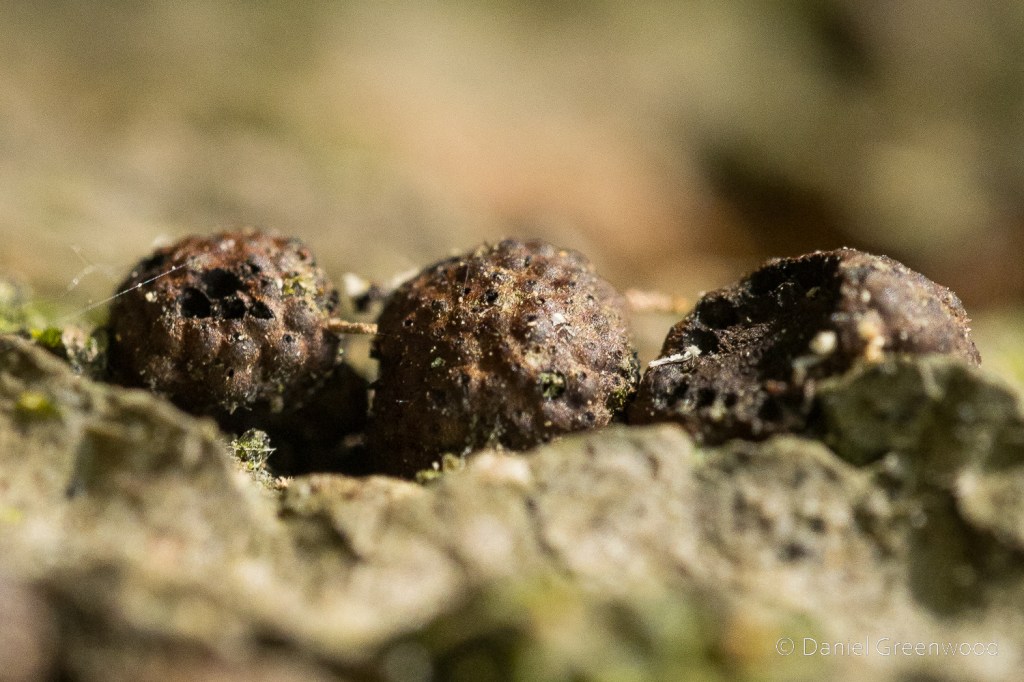
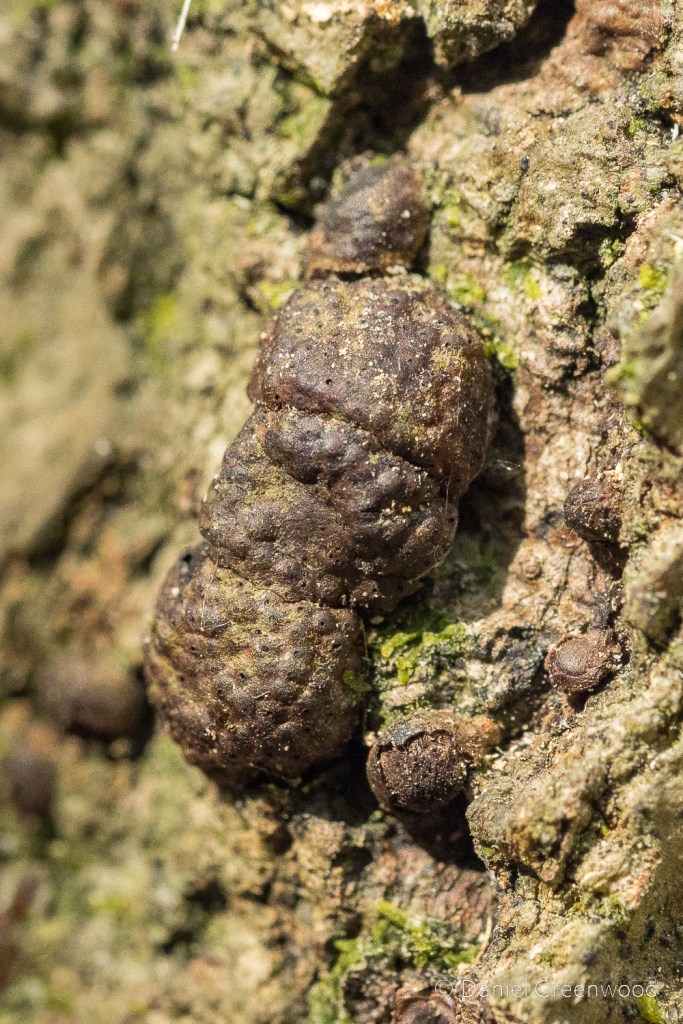
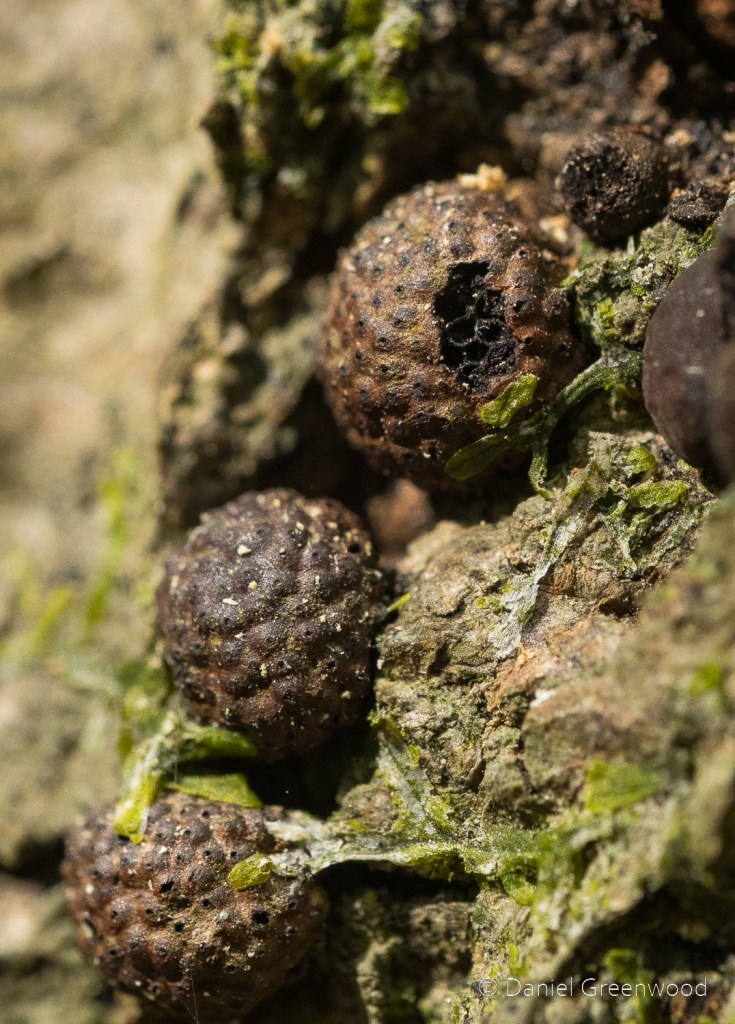
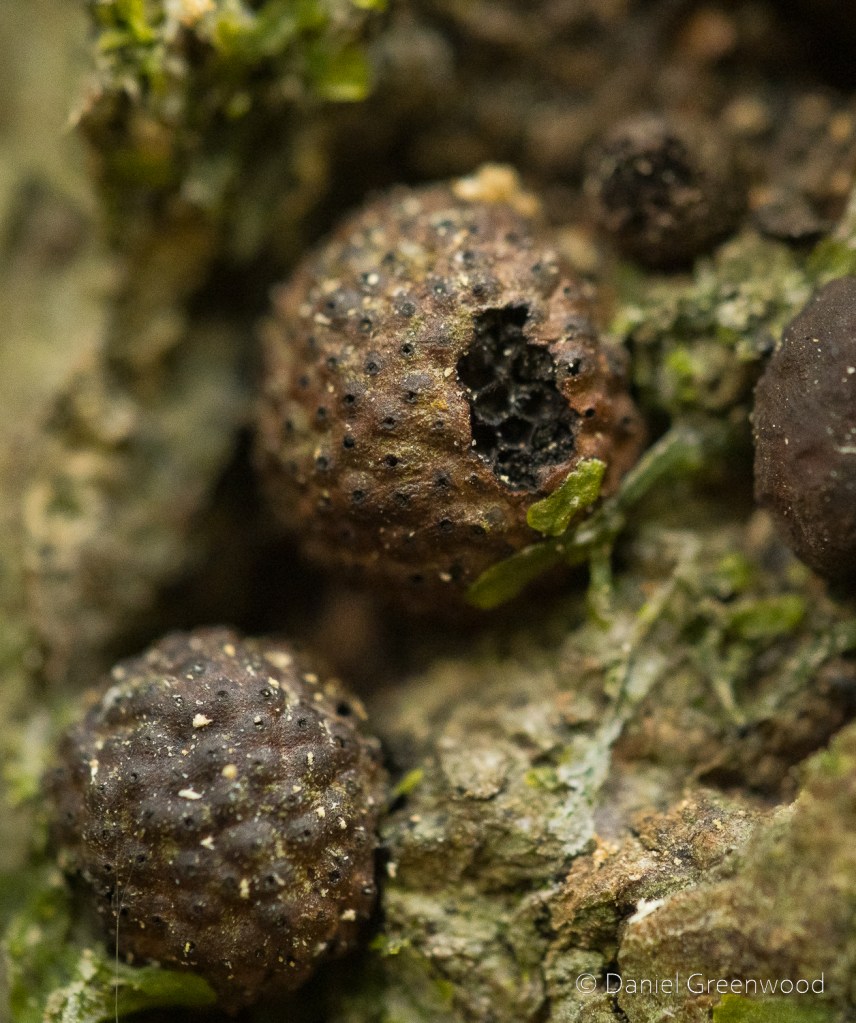
Beech woodwart: the woodwarts are a group I would like to do some more close up photos of, particularly after seeing what some of the field guides have produced. They don’t look like much with the naked eye but if you look more closely there is more to see.
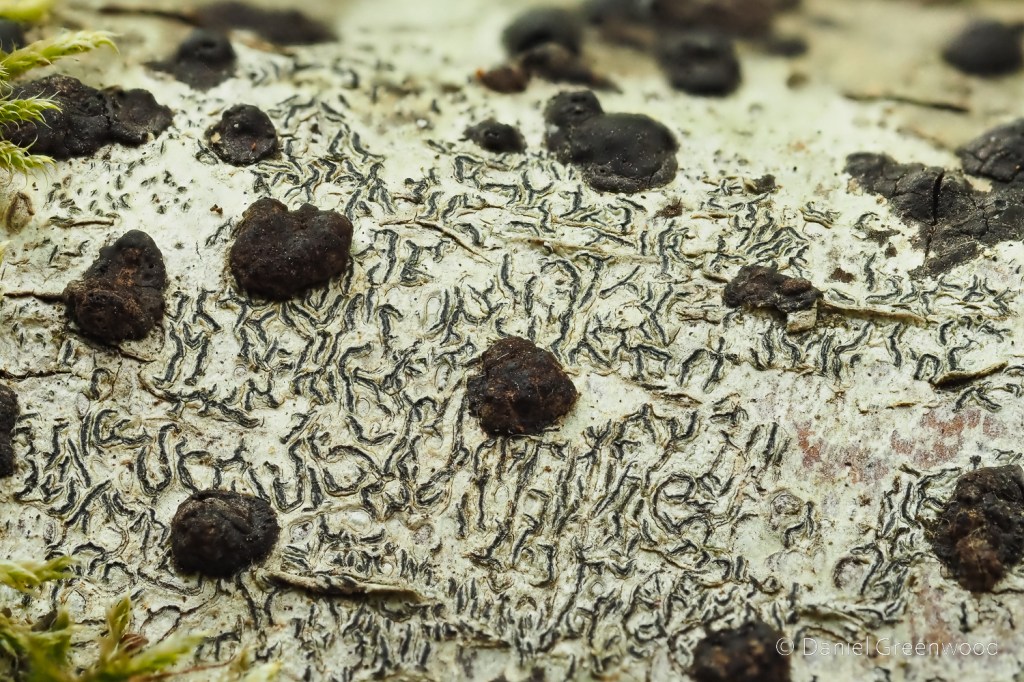
Hazel woodwart with a bit of script lichen: I’m fairly sure this is hazel woodwart because I think that’s what the wood is. It is more truffly in texture than the waspnest-esque beech relative above. The photo is a stack of several images done automatically by the camera (Olympus EM-1 MIII).
So in conclusion, two years of drought with an unusually dry spring have resulted in a reduced summer crop of mushrooms. The climate crisis is not just about us it affects fungi equally, which of course has knock on effects for us eventually.
Thanks for reading.


Leave a comment