Horsham, West Sussex, 27th October 2025
This is my final post from Sussex in the autumn of 2025. It was a reminder that a certain woodland I used to visit is really good for fungi, and that I should go there every autumn to record some species. There are a few common Wealden species here and one that has be absolutely baffled.
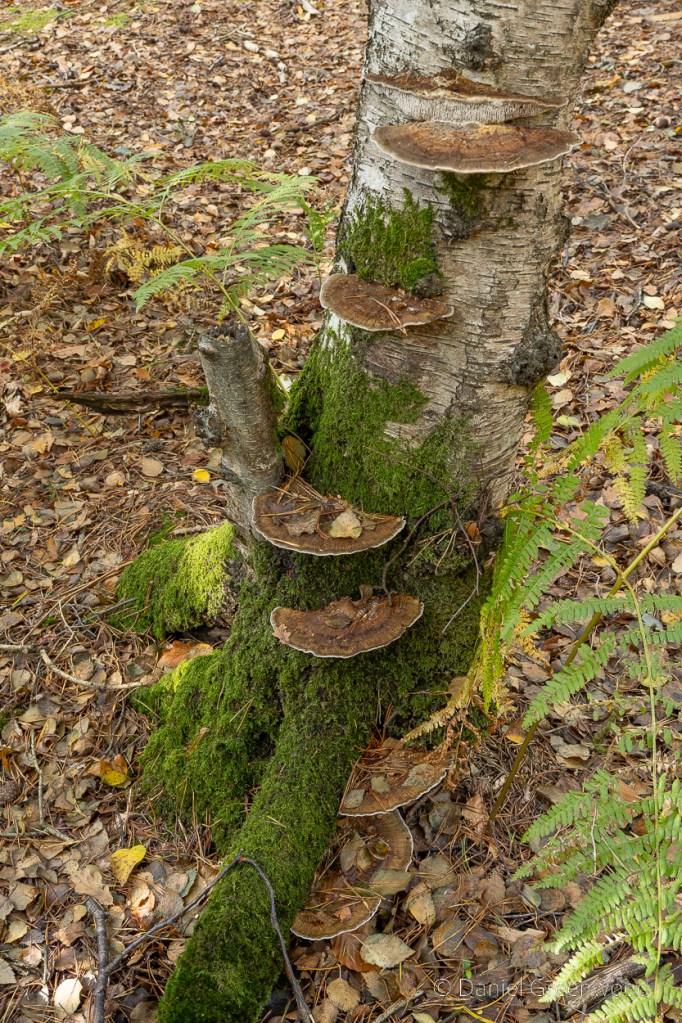
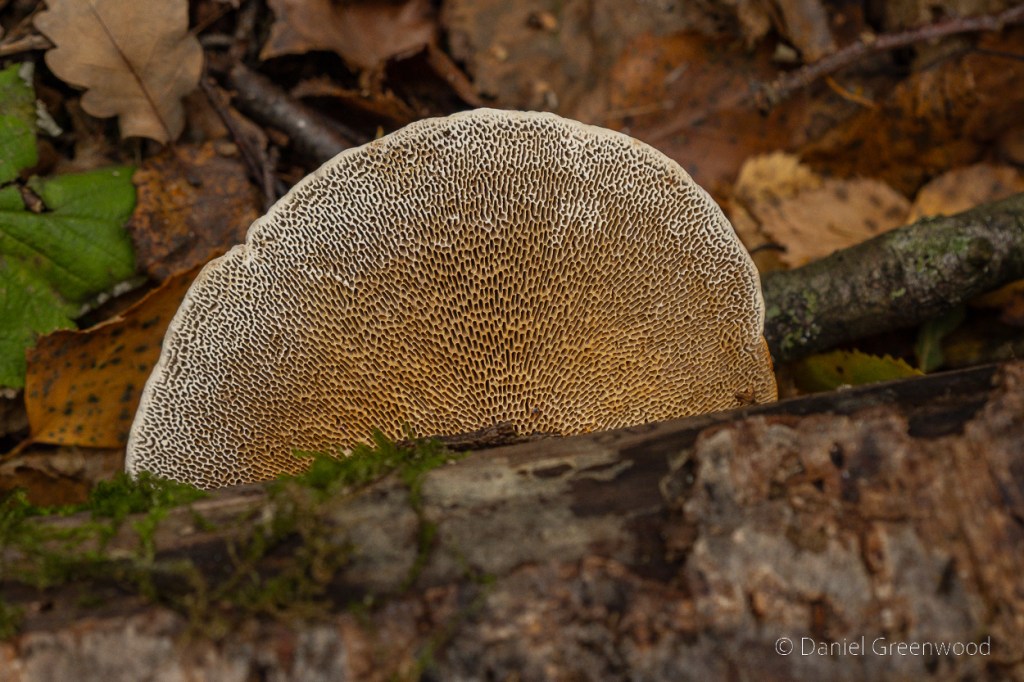
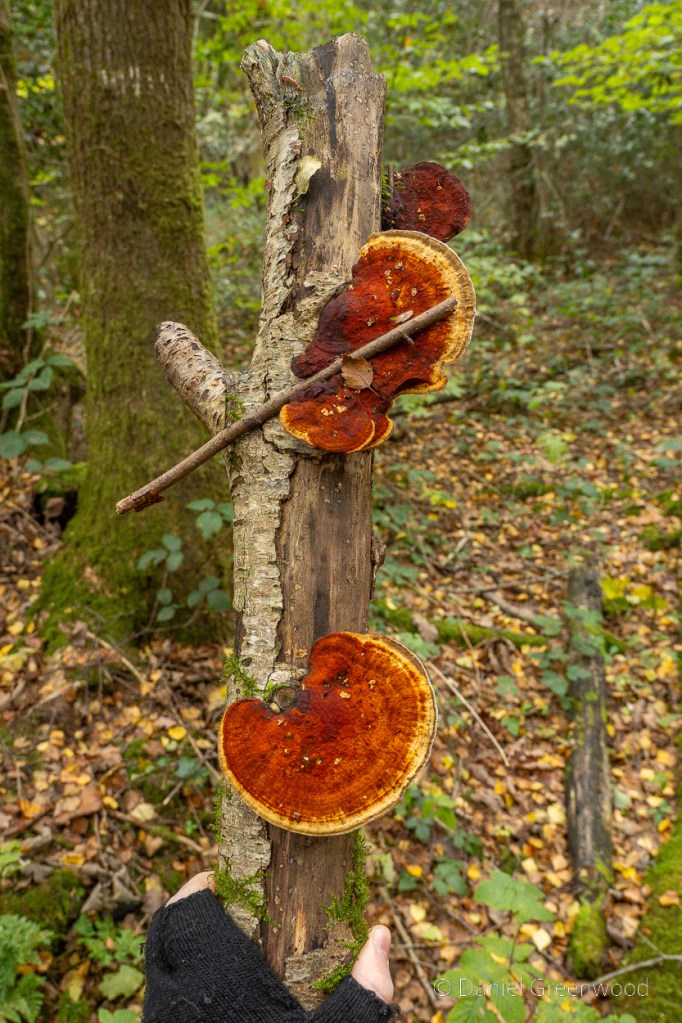
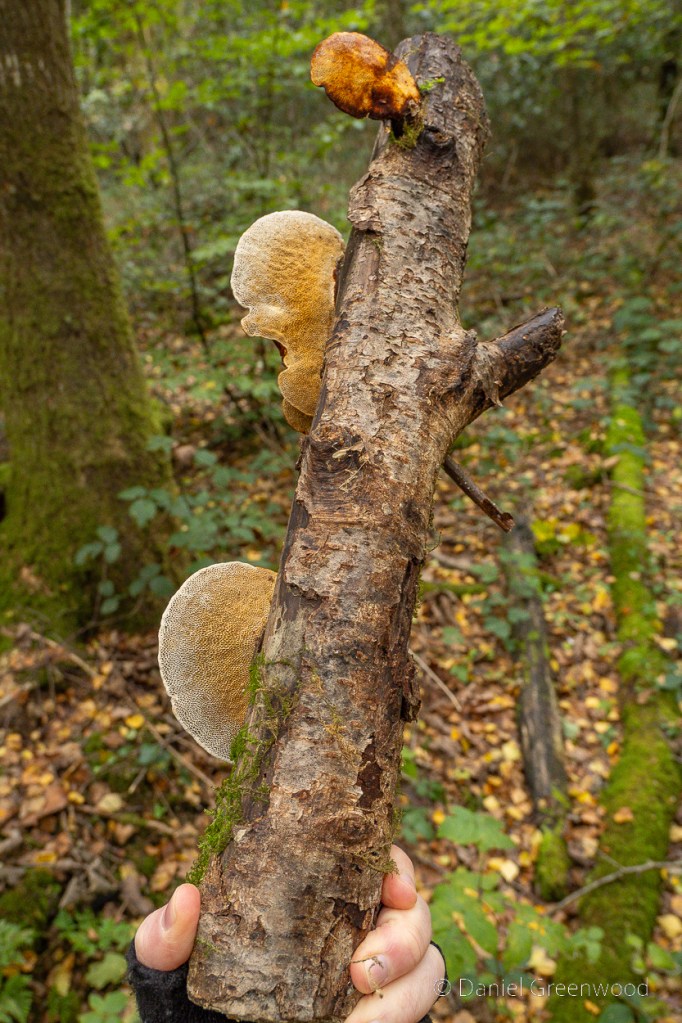
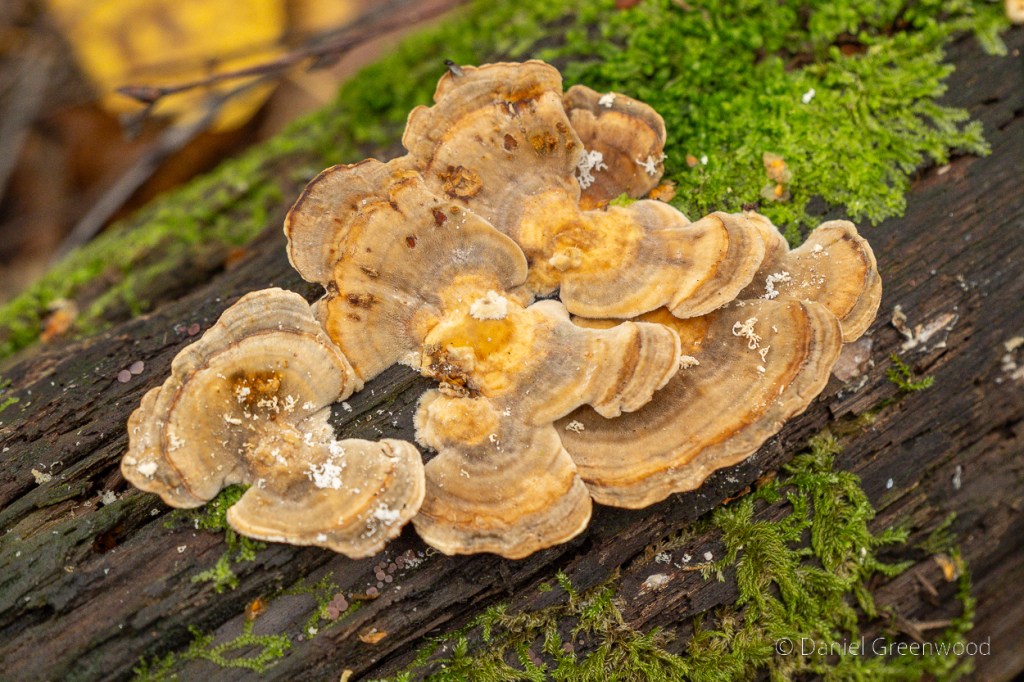
A Trametes, relative of turkey tail.
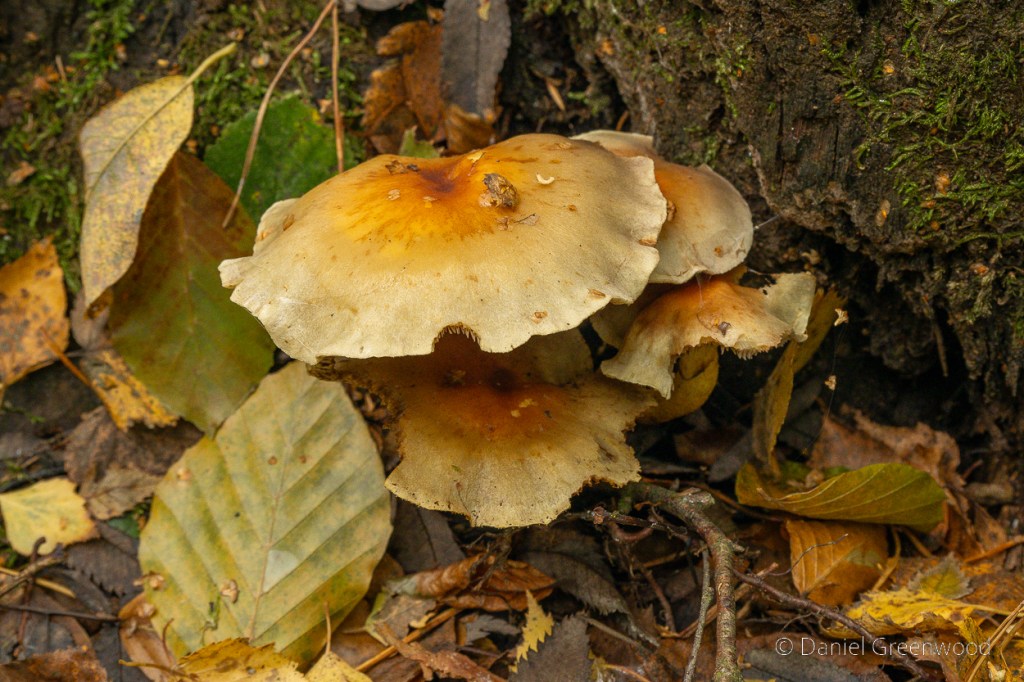
Sulphur tuft, or perhaps brick tuft? Probably not.
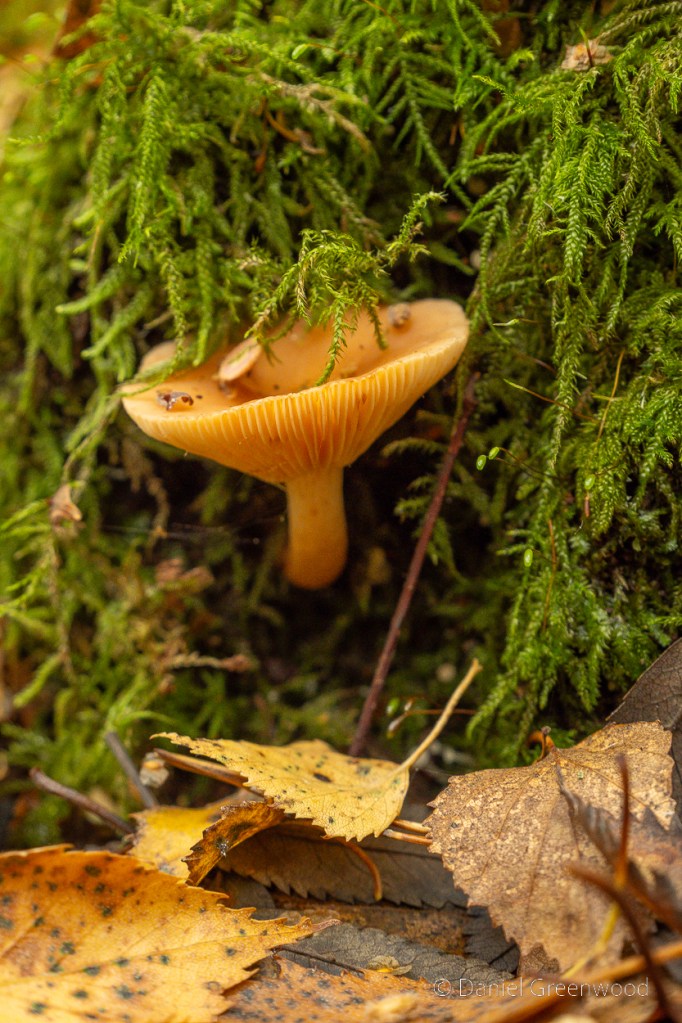
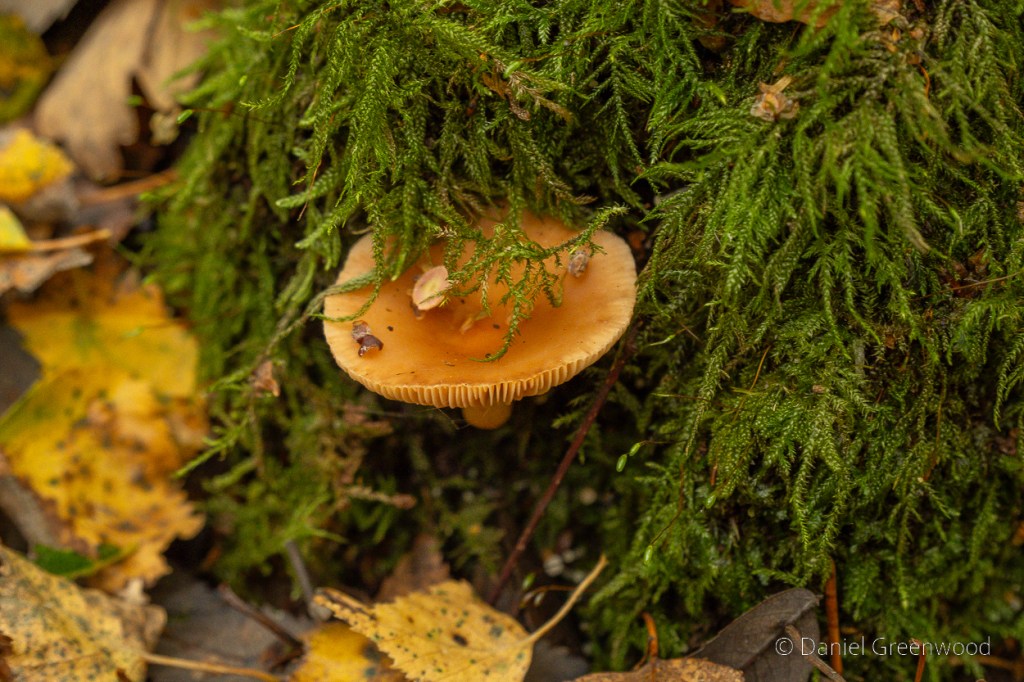
Probably a milkcap.
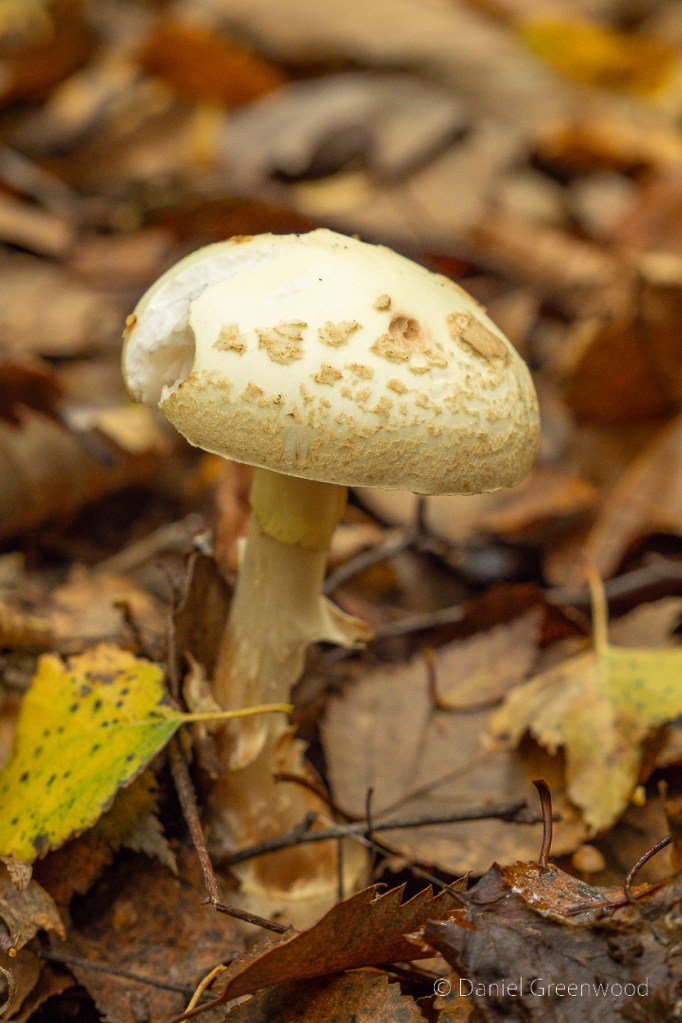
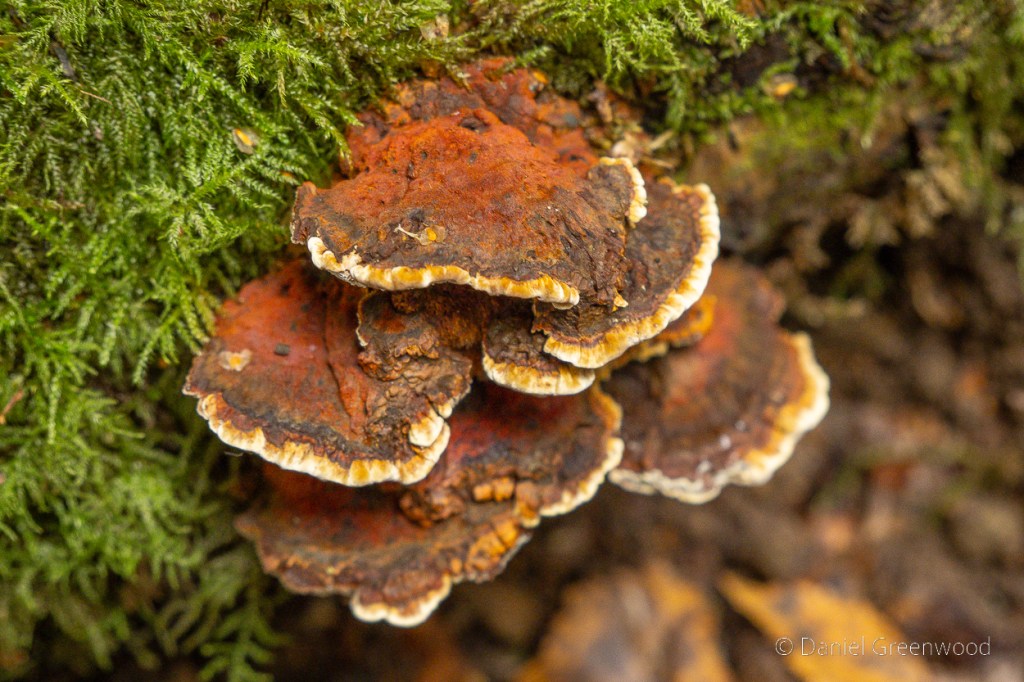
This is probably alder bracket, but I can’t remember the tree species it was growing on.
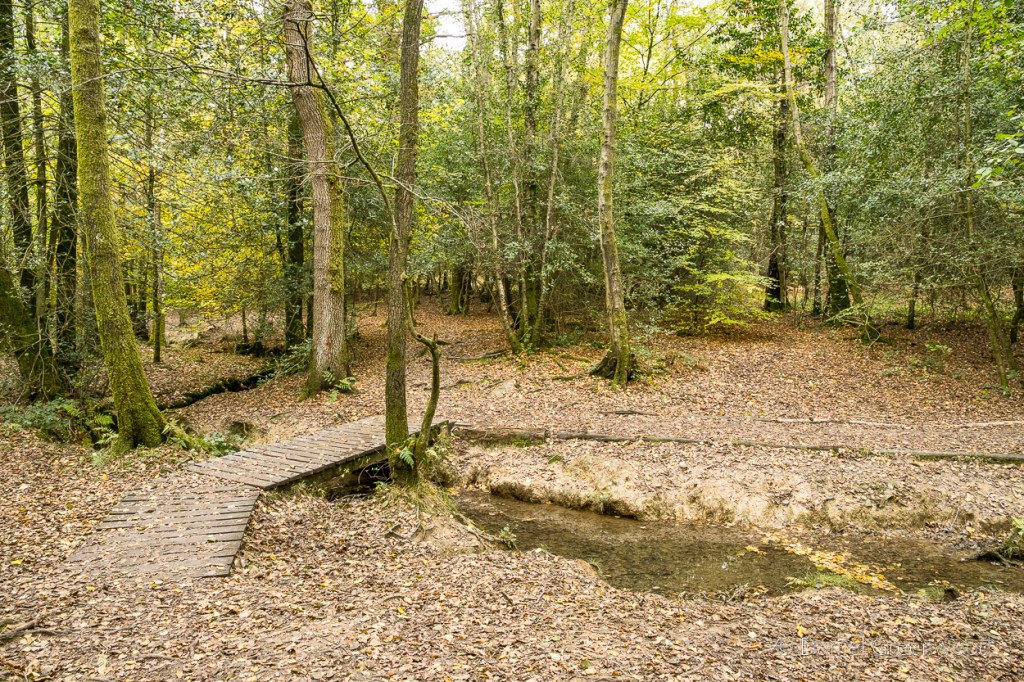
A Sussex ghyll (stream) looking dry and far more eroded than in past years. I wonder if this is a worry for land managers? It’s both human and canine feet causing the damage.
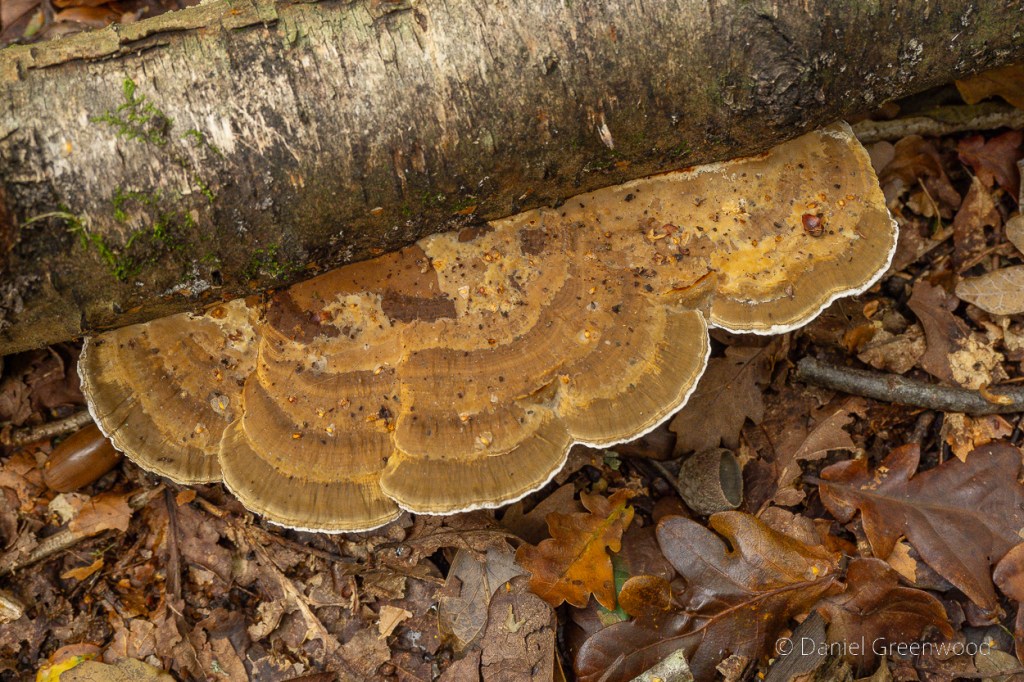
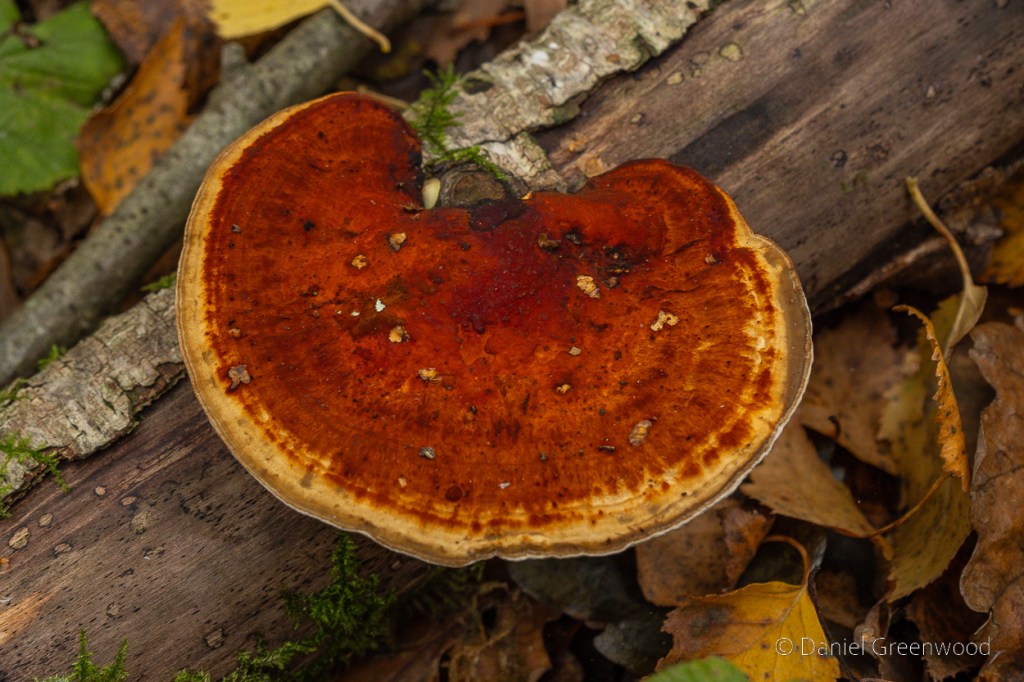
Really not sure about this polypore, growing on fallen birch.
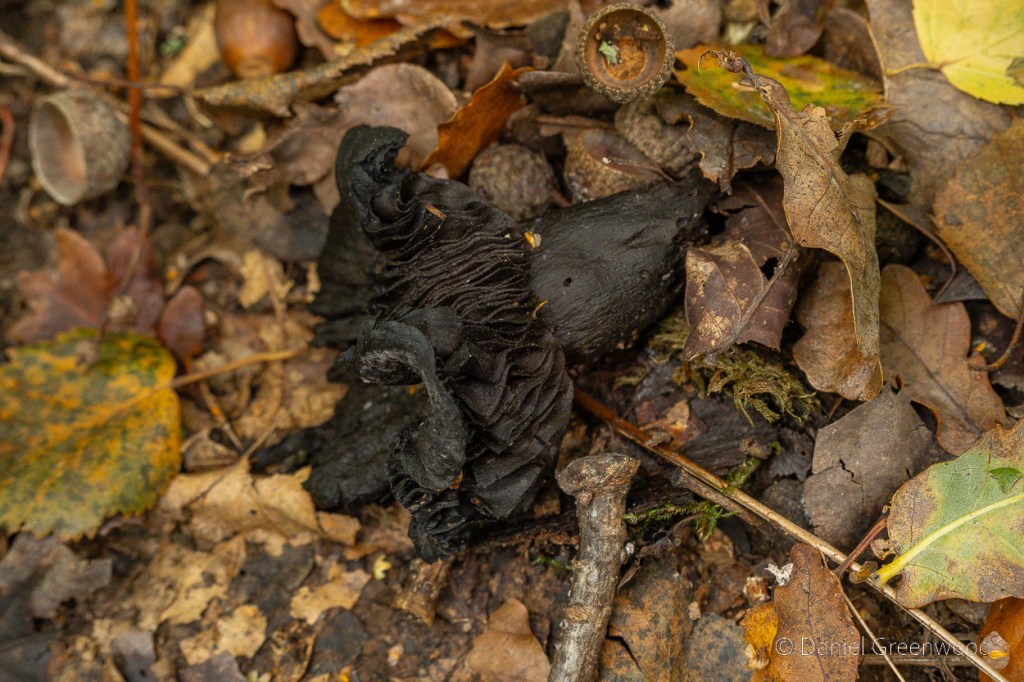
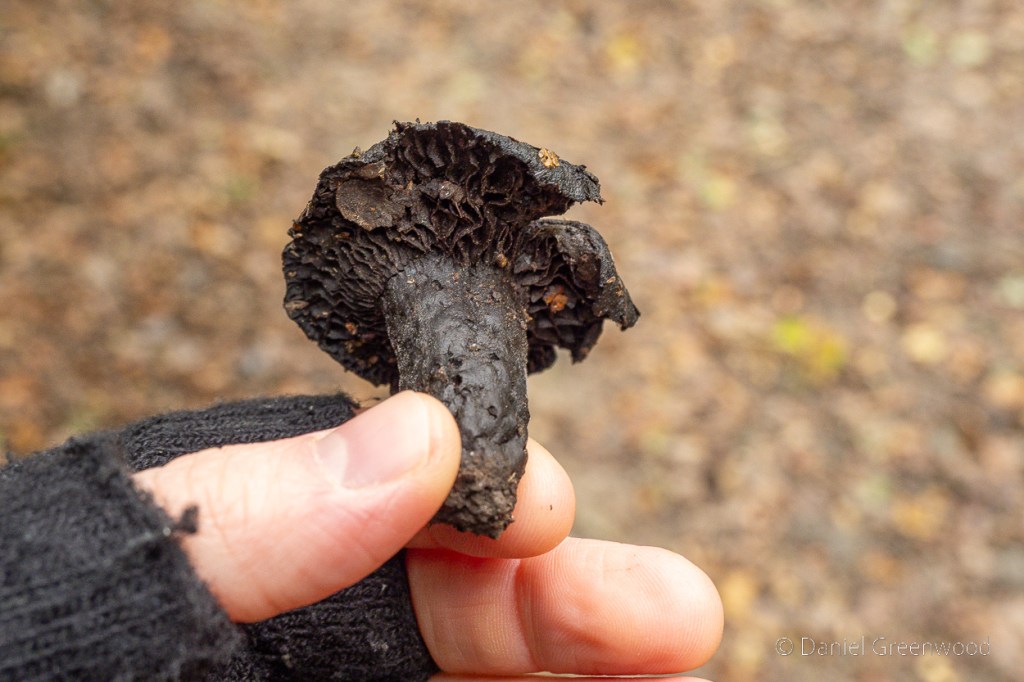
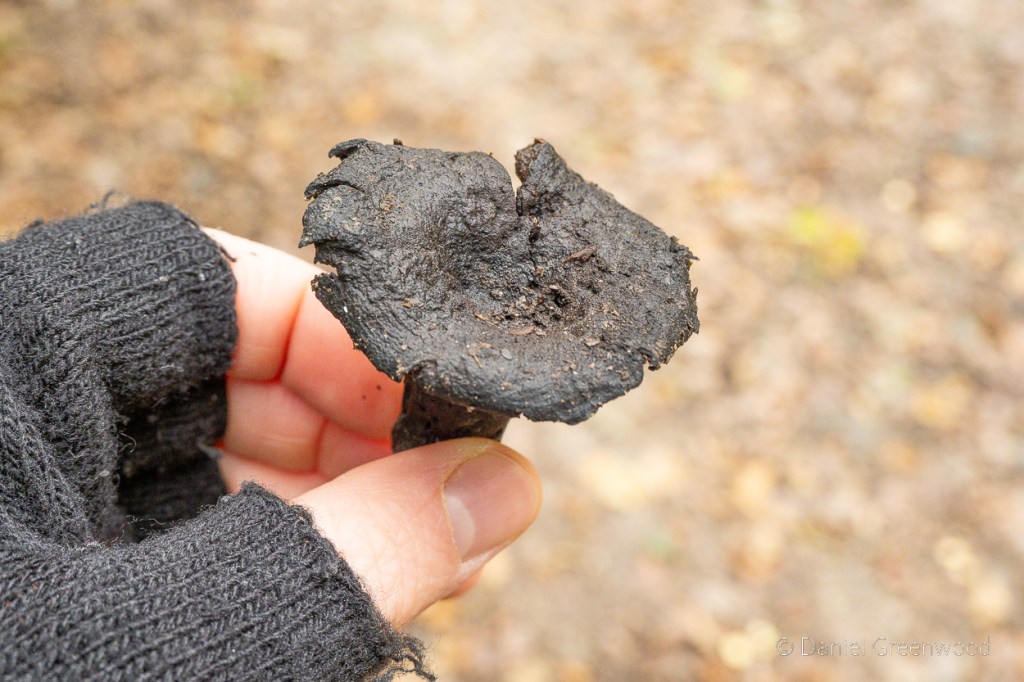
Blackening brittlegill, which does what the name suggests. Fairly common in the oak woods of the Weald in October.
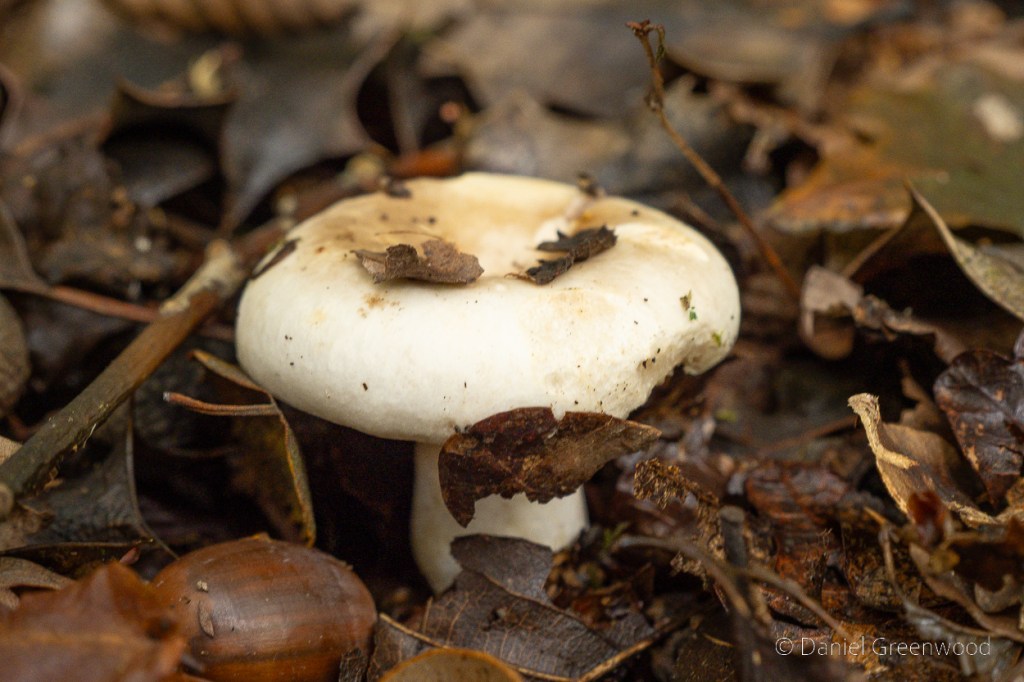
Unsure what this one is.
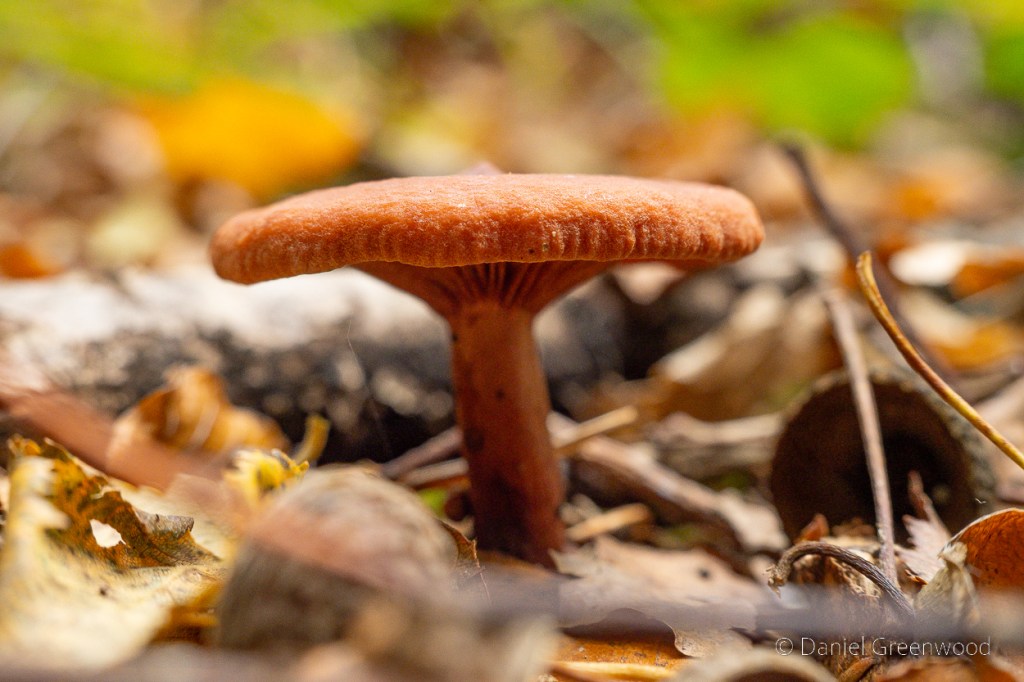
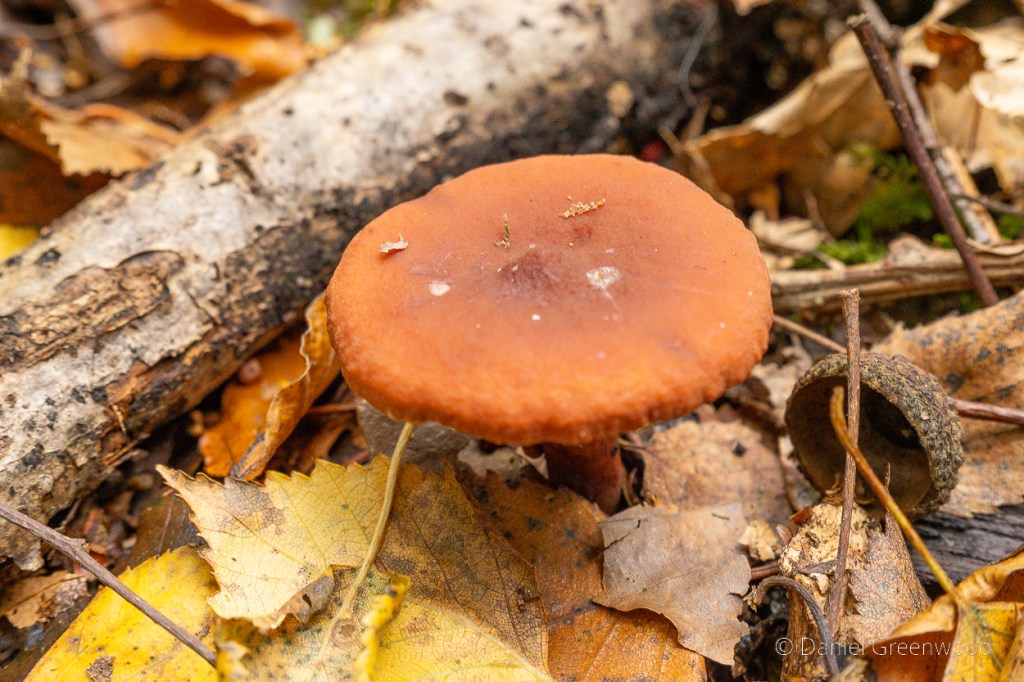
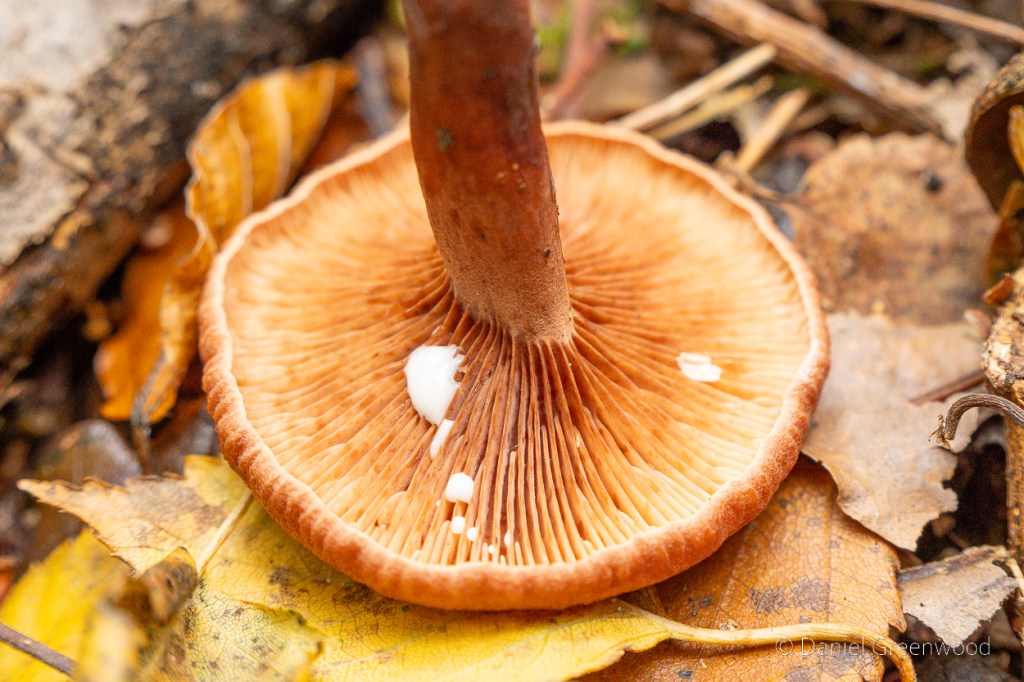
My guess would be that this is curry milkcap, but I’m still learning about this family.
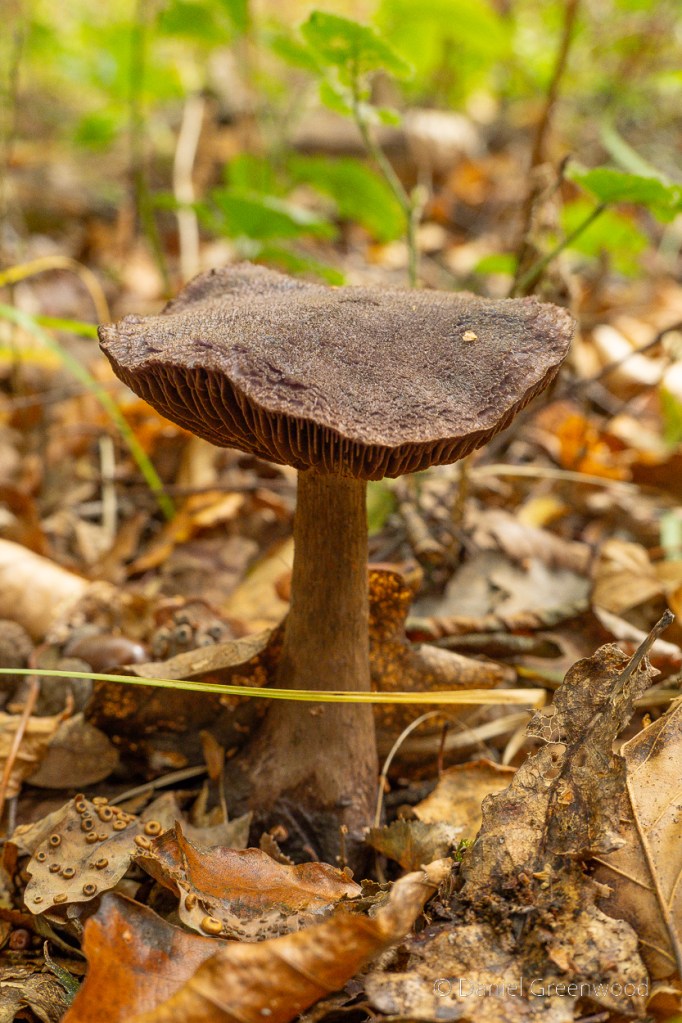
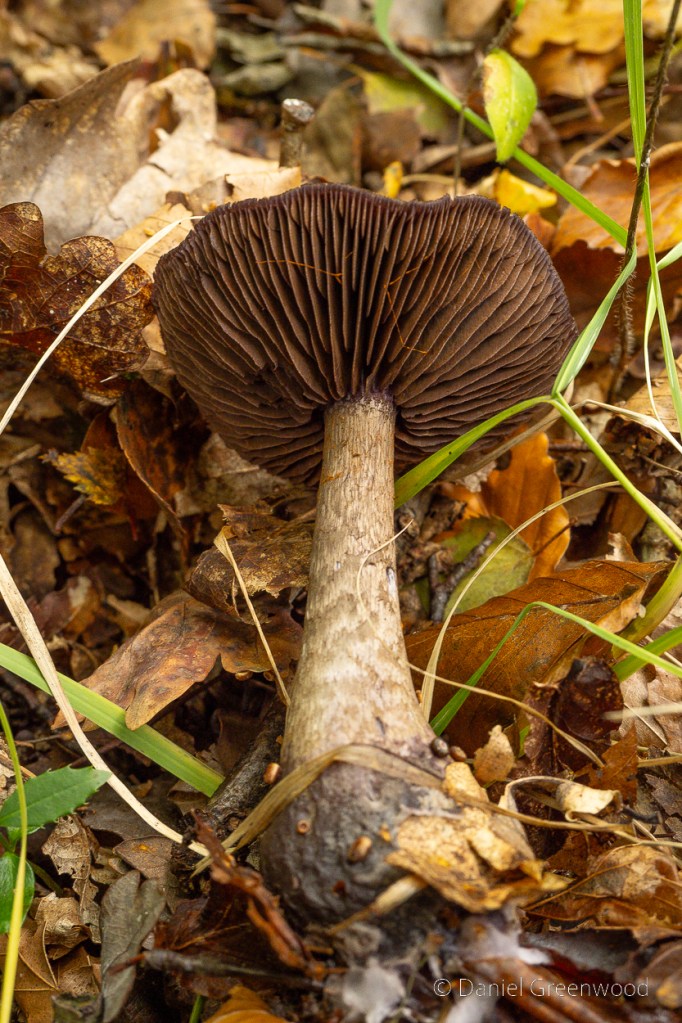
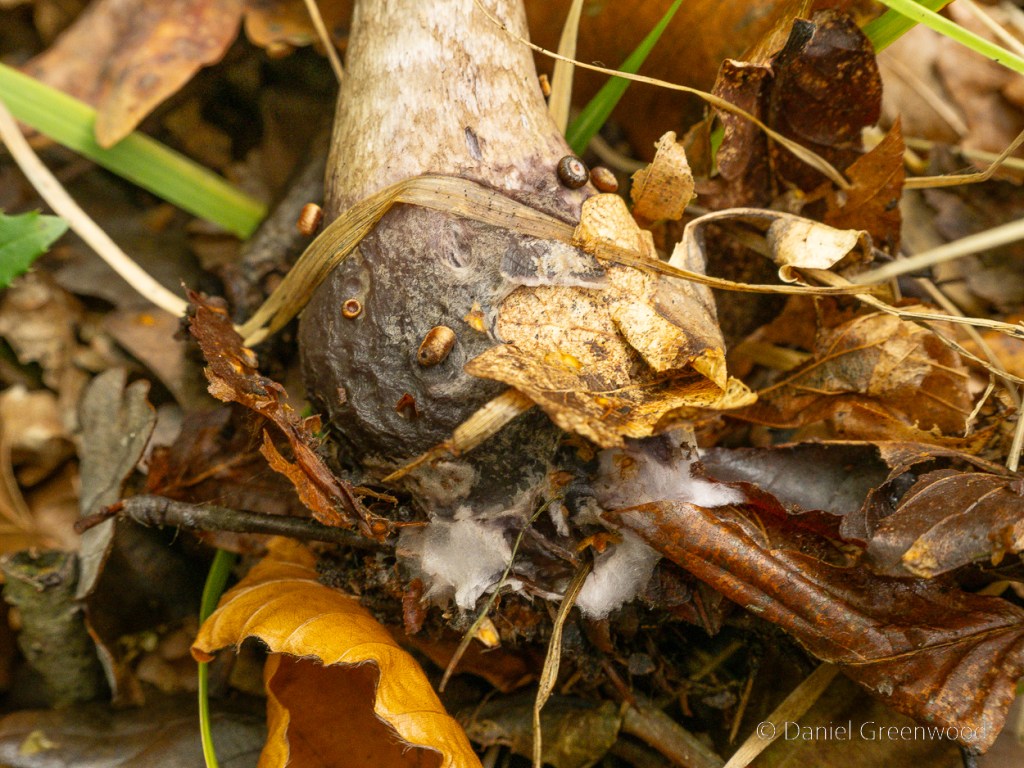
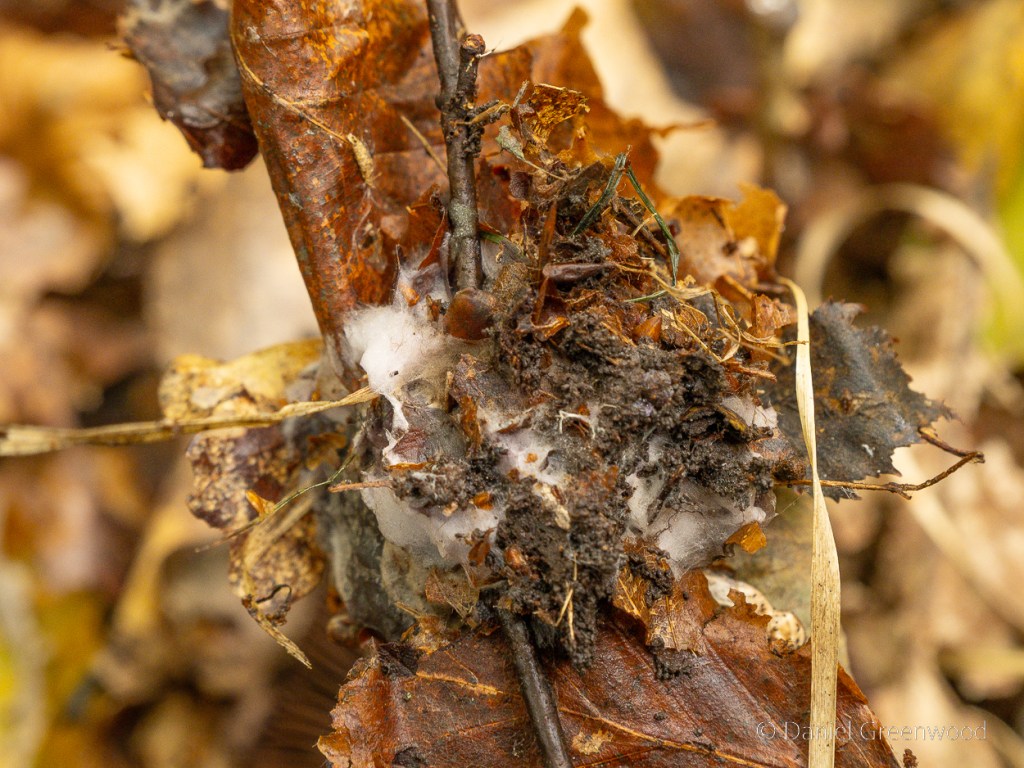
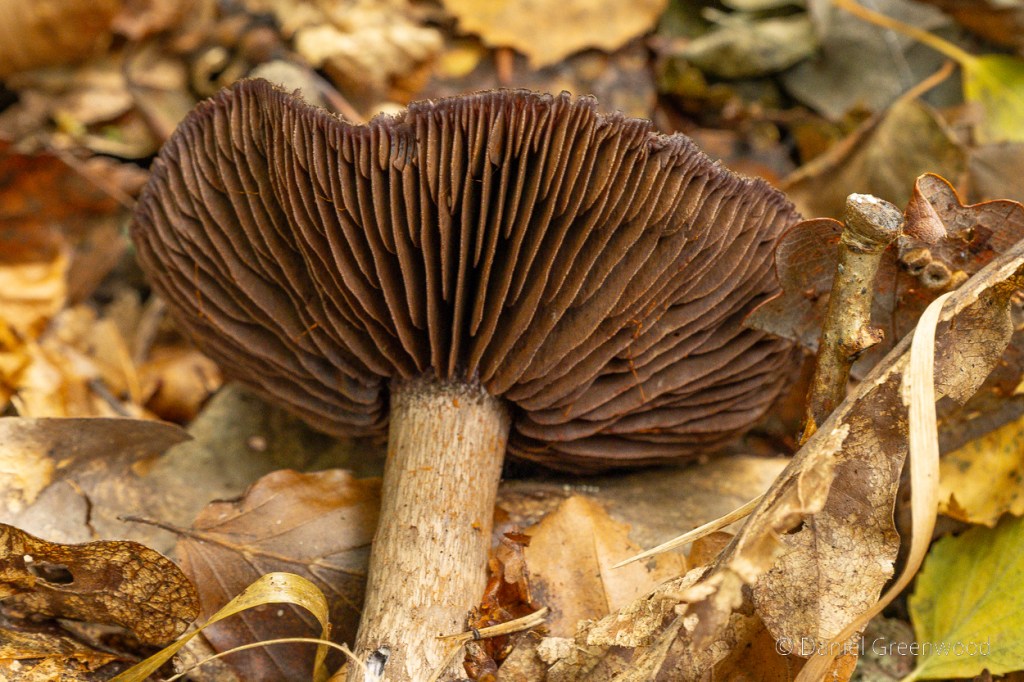
A pinkgill perhaps, but I’m not sure
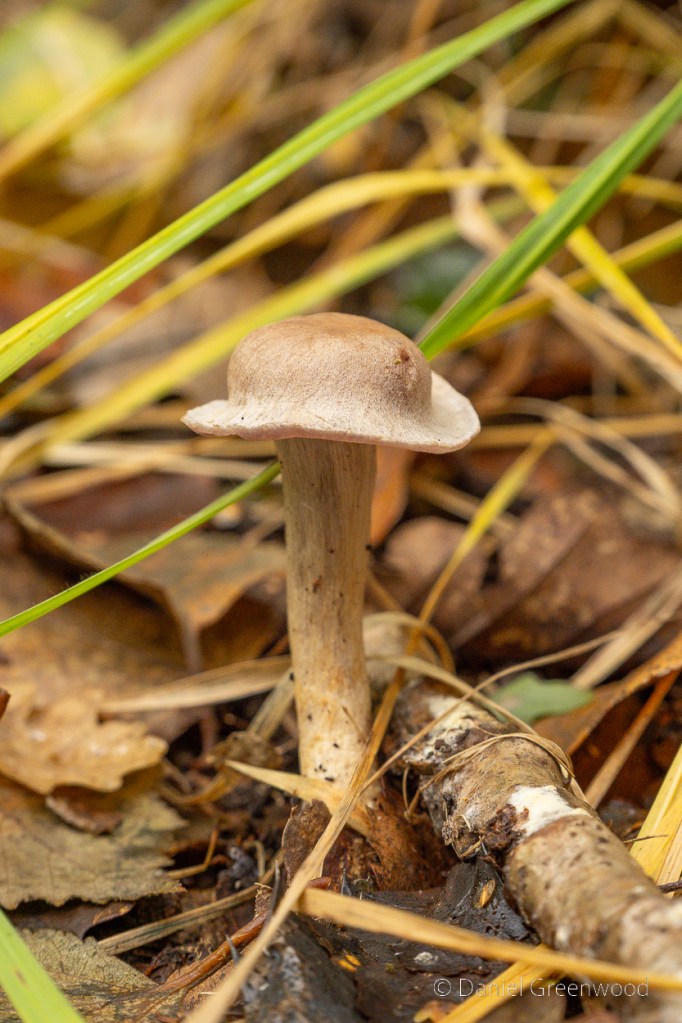
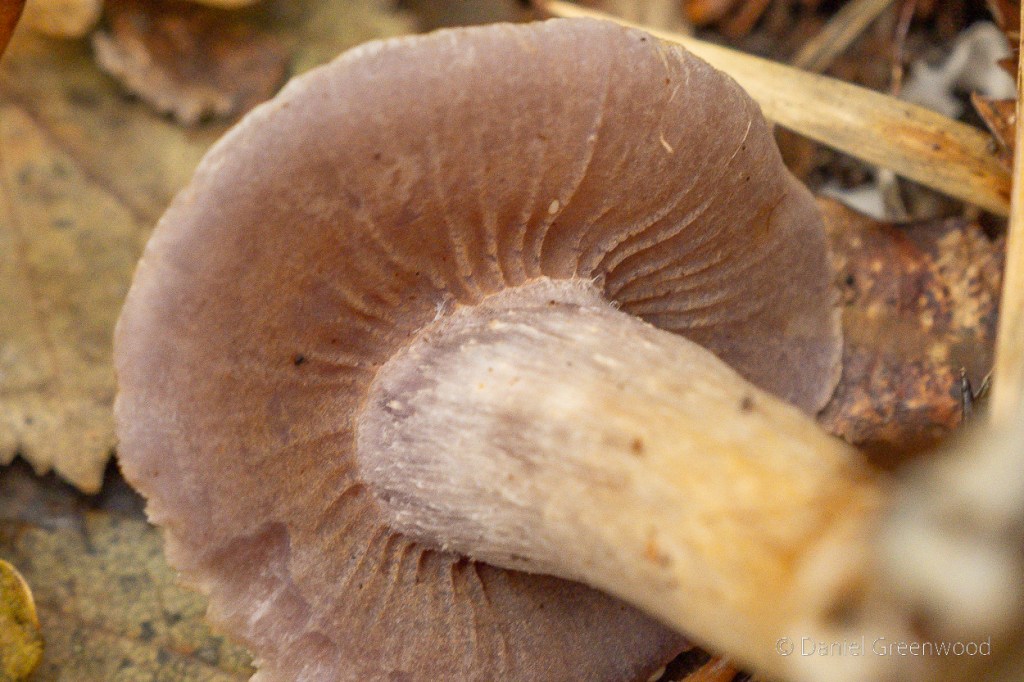
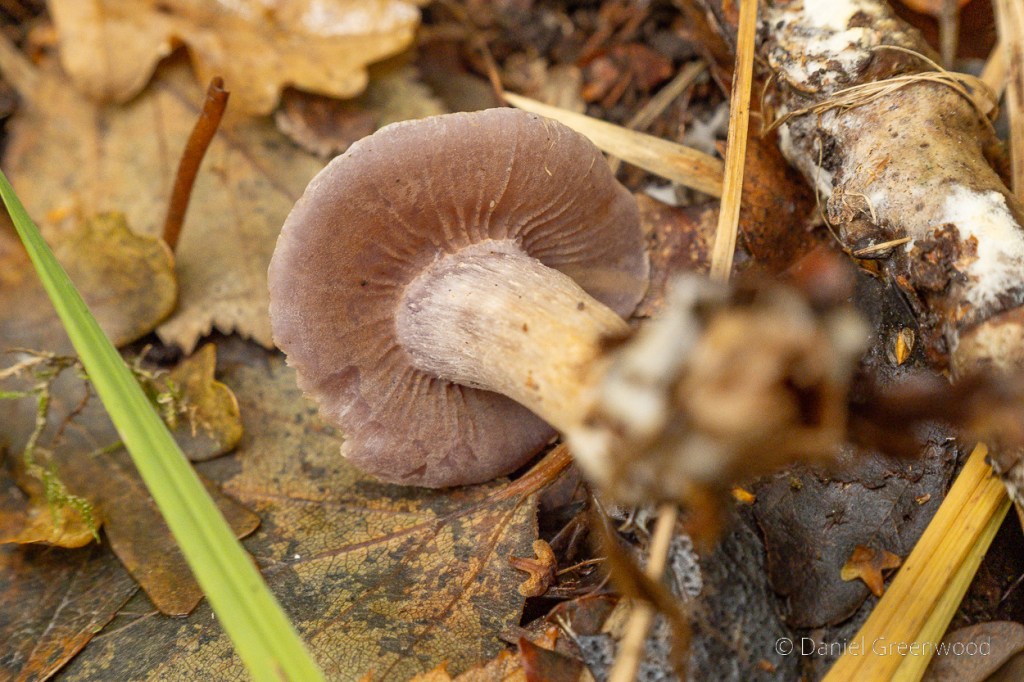
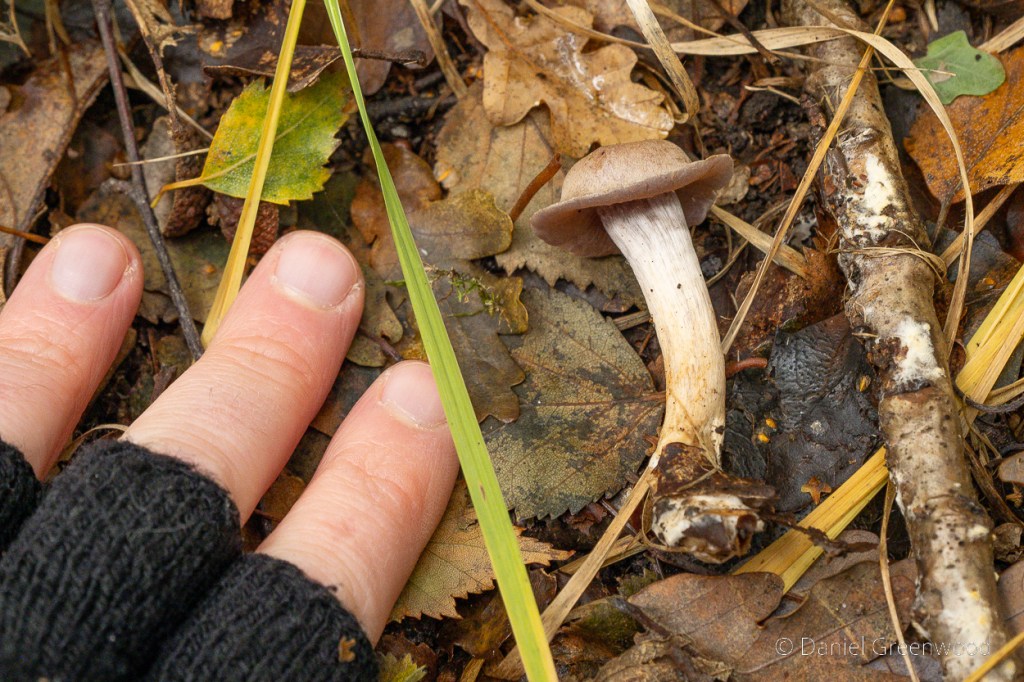
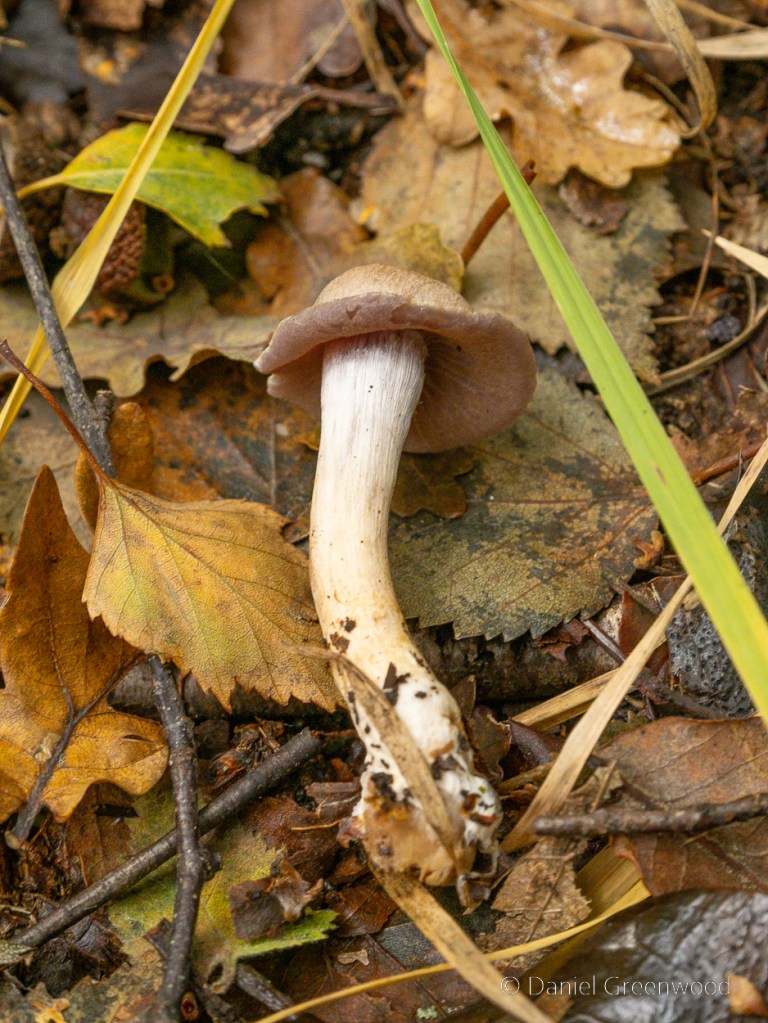
This is a mystery to me. The gills appear false as on chanterelles, but I can’t find anything similar on iNaturalist or in trawling through my books. I will update the post if or when I find out. Comments below are welcome!
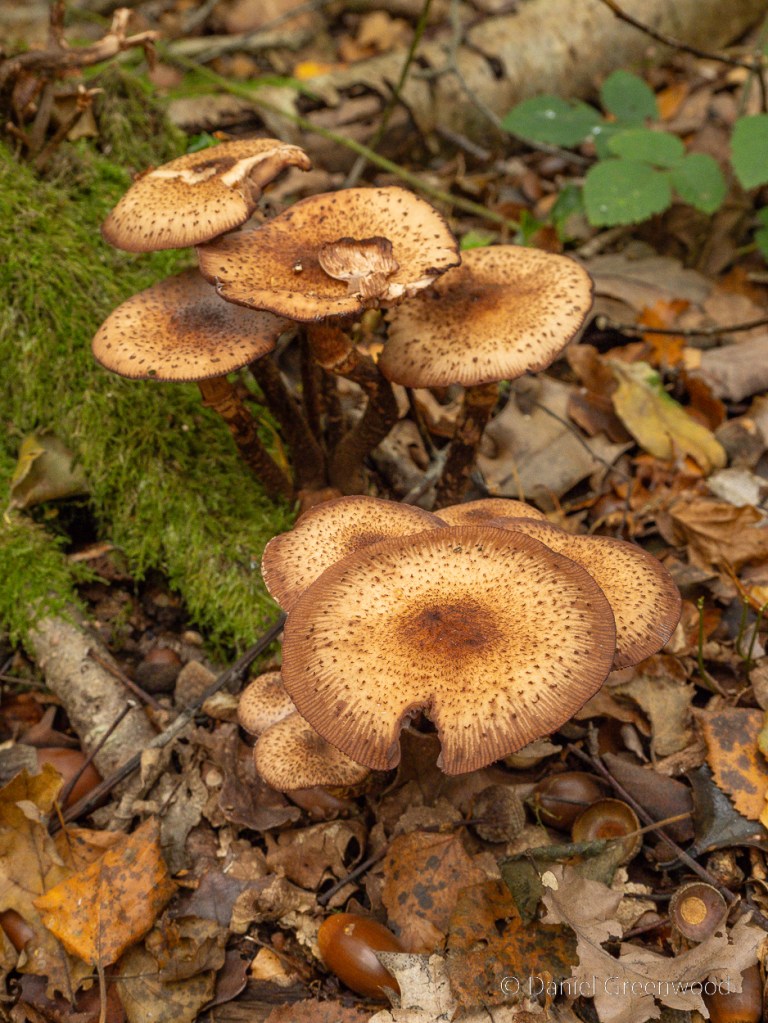
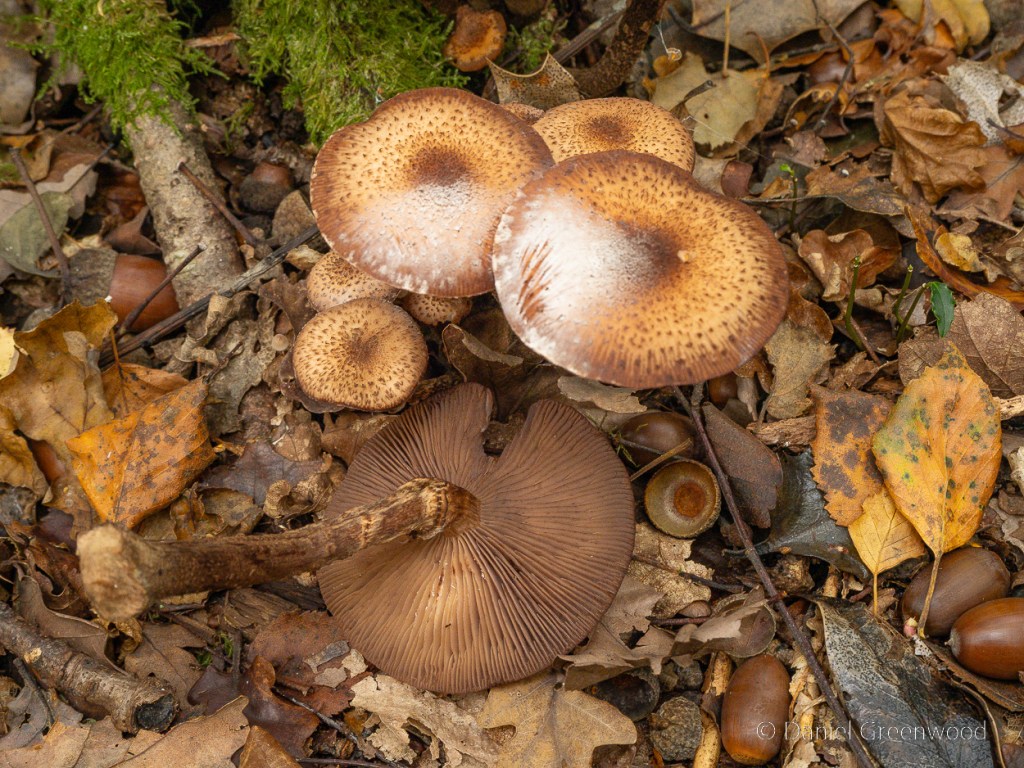
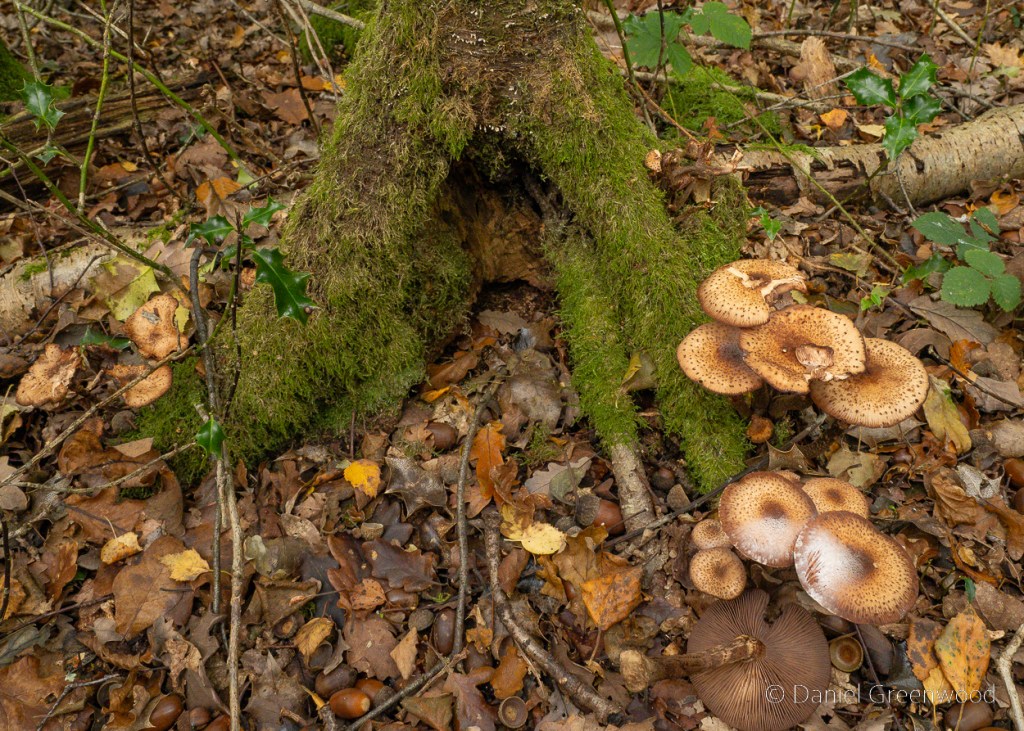
A honey fungus with its white spores. I wrote a blog about trying to understand honey fungus in 2025. I think this is dark honey fungus.
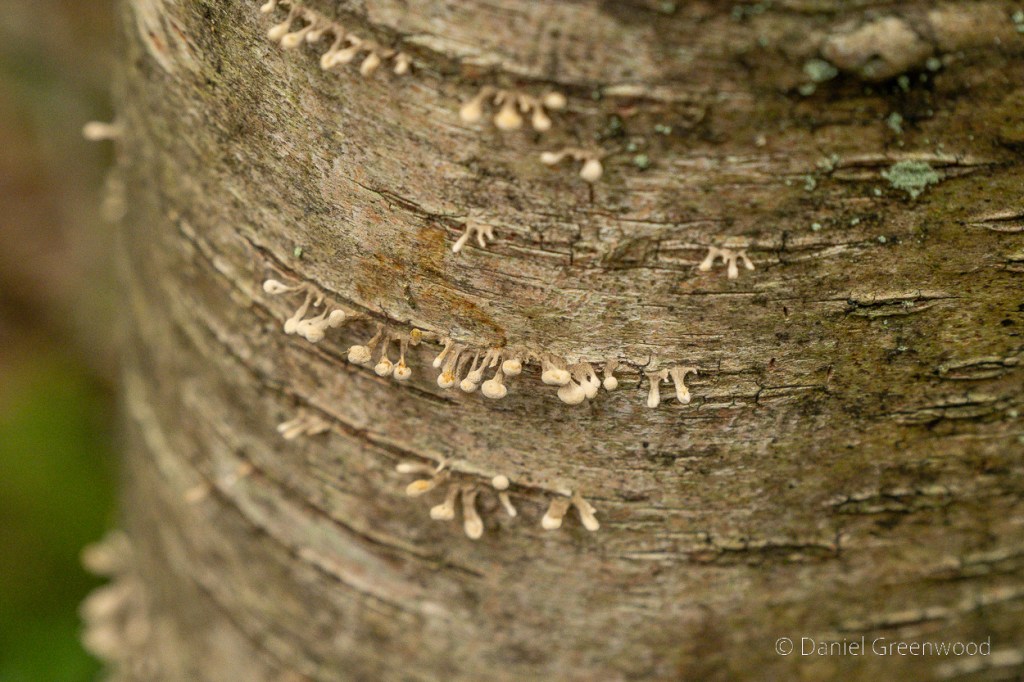
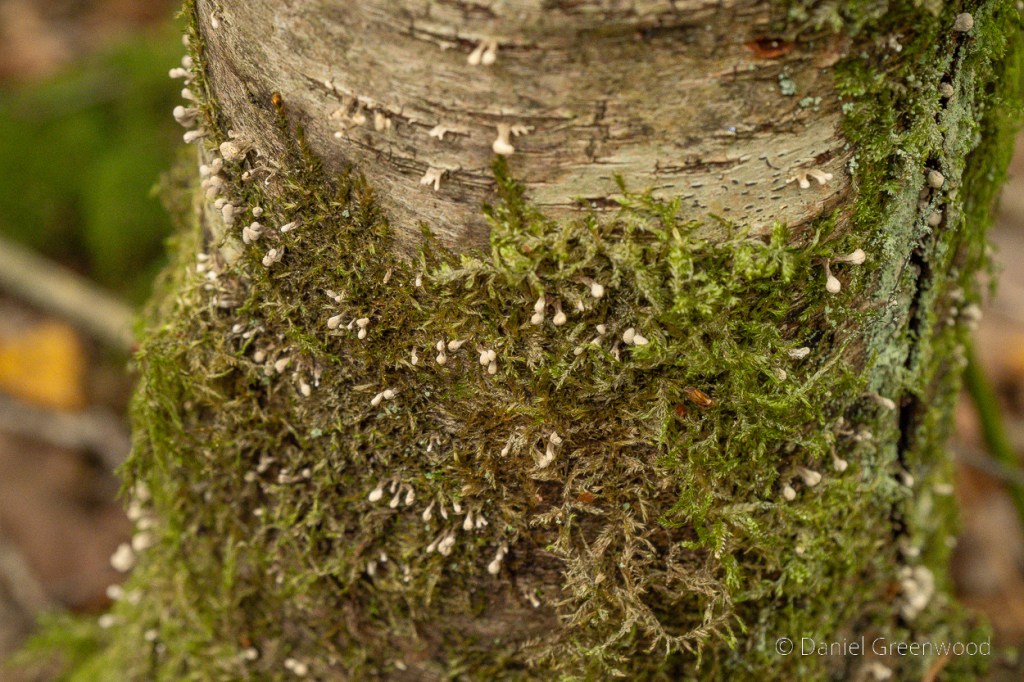
A slime mould on the dead bark of a birch. iNaturalist users are suggesting this is Phleogena faginea, Fenugreek Stalkball.
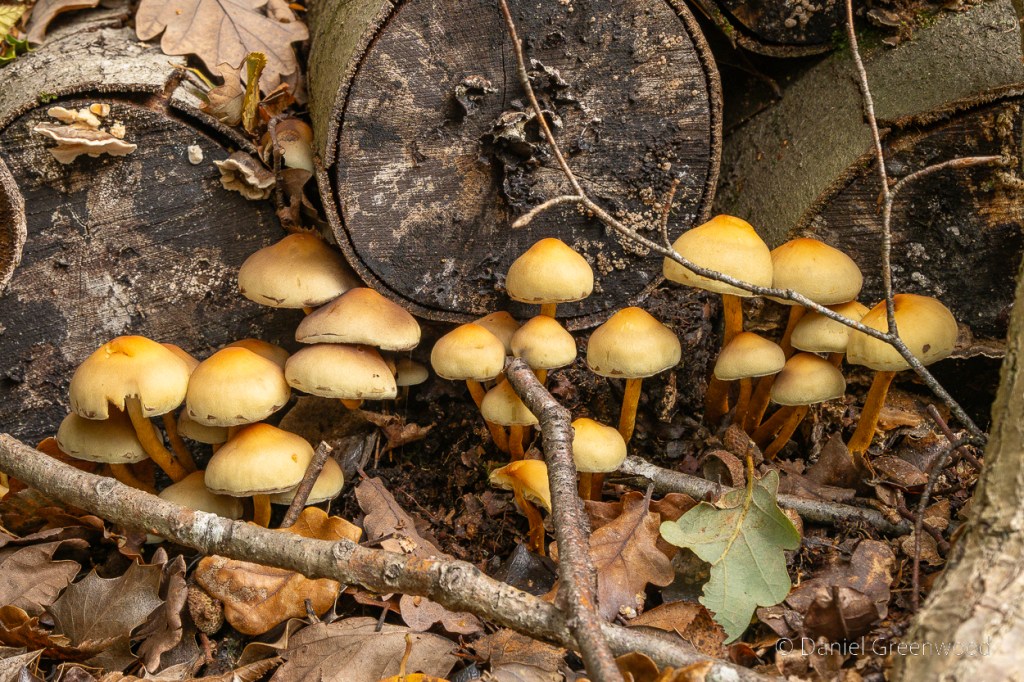
Sulphur tuft looking familial.
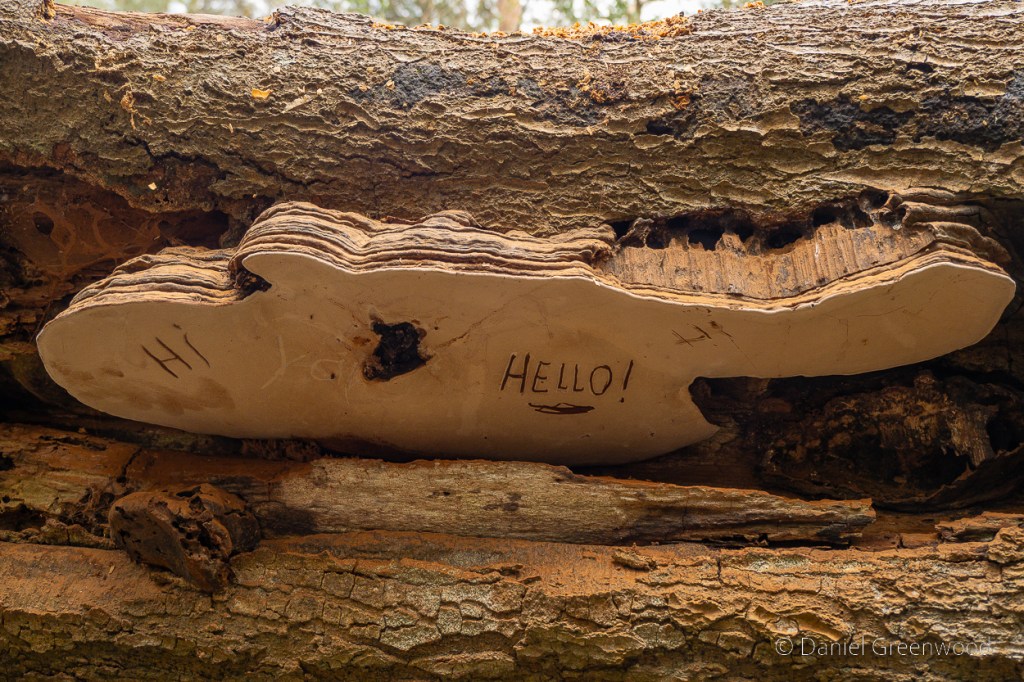
I read recently Tom Holland’s Pax, and was intrigued to learn that the Romans thought the Dacians (Romanians in modern terms) were weird for writing messages on large mushrooms. Did they mean artists bracket?!
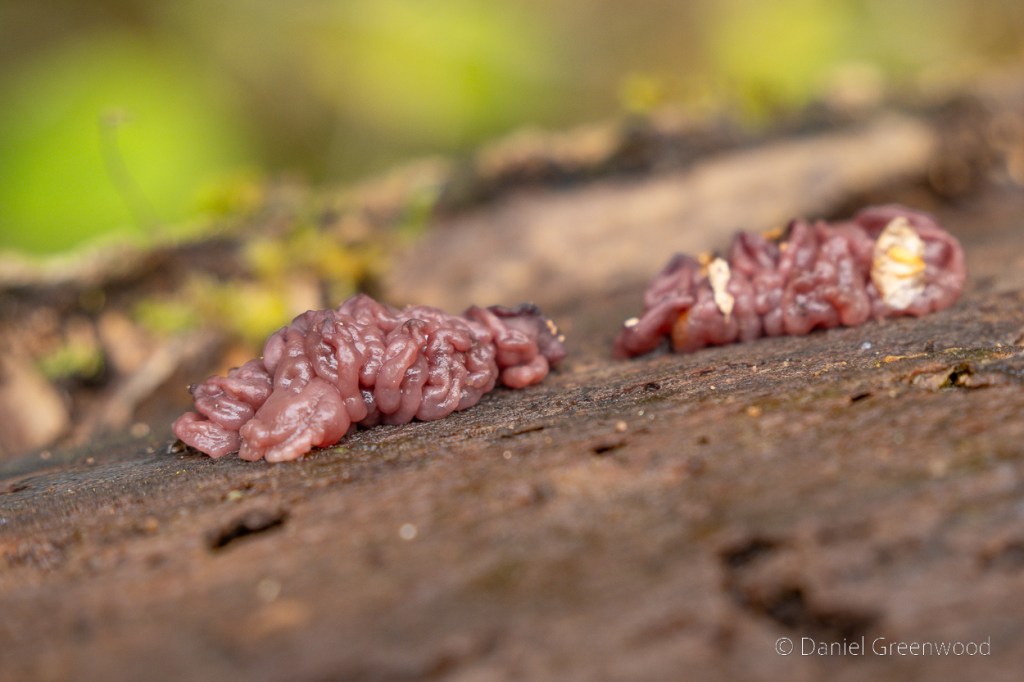
Purple jellydisc, denizen of damp fallen trees
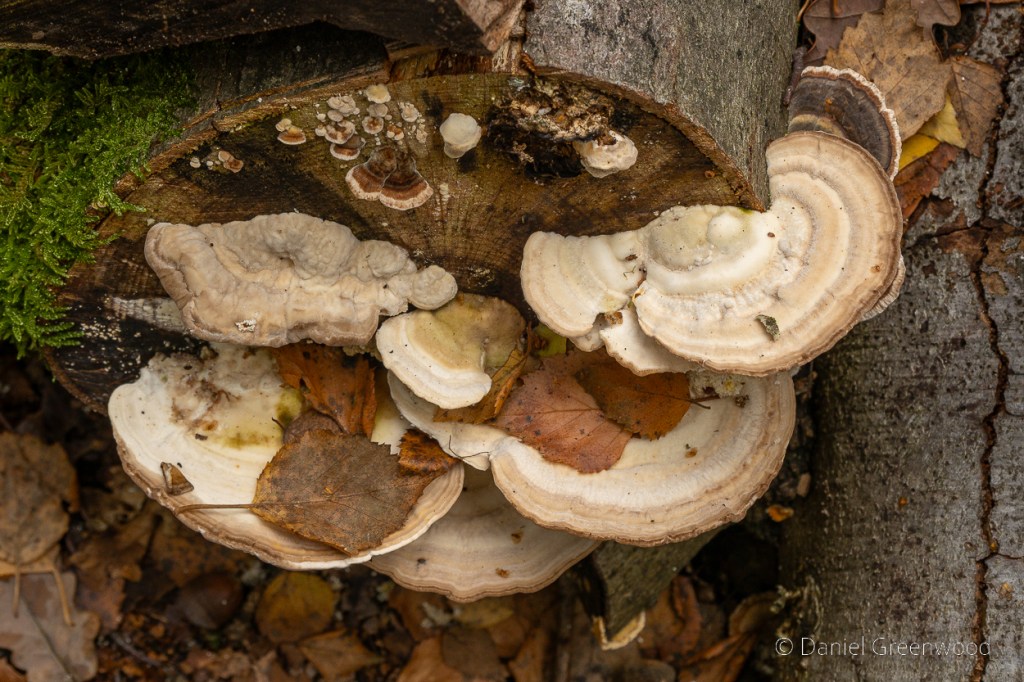
Lumpy bracket, perhaps.
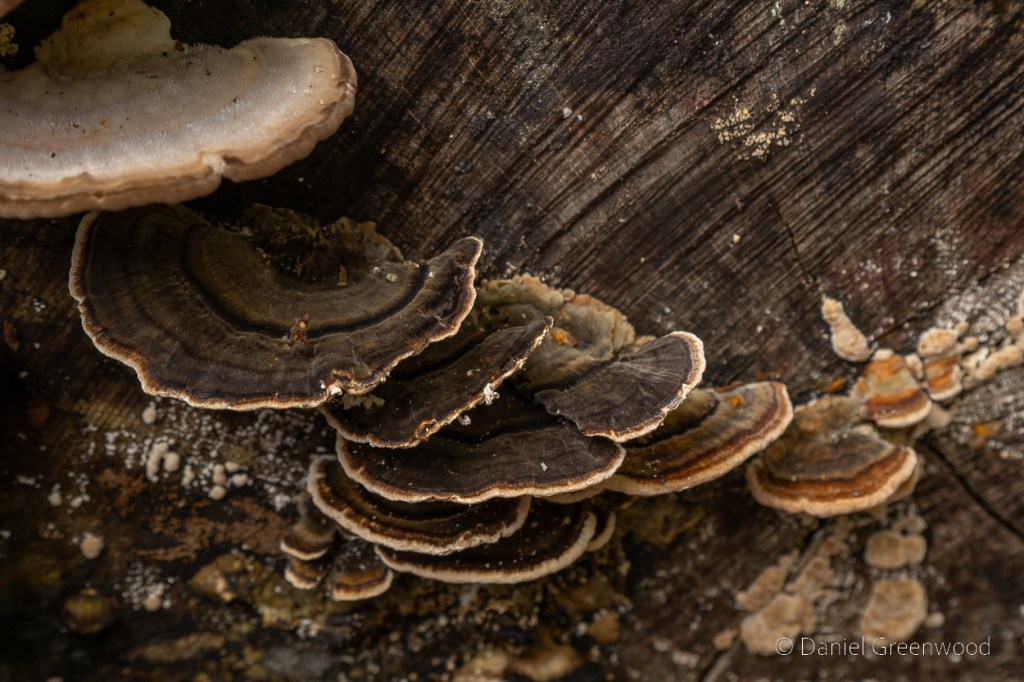
A Trametes, similar to turkey tail, if not that.
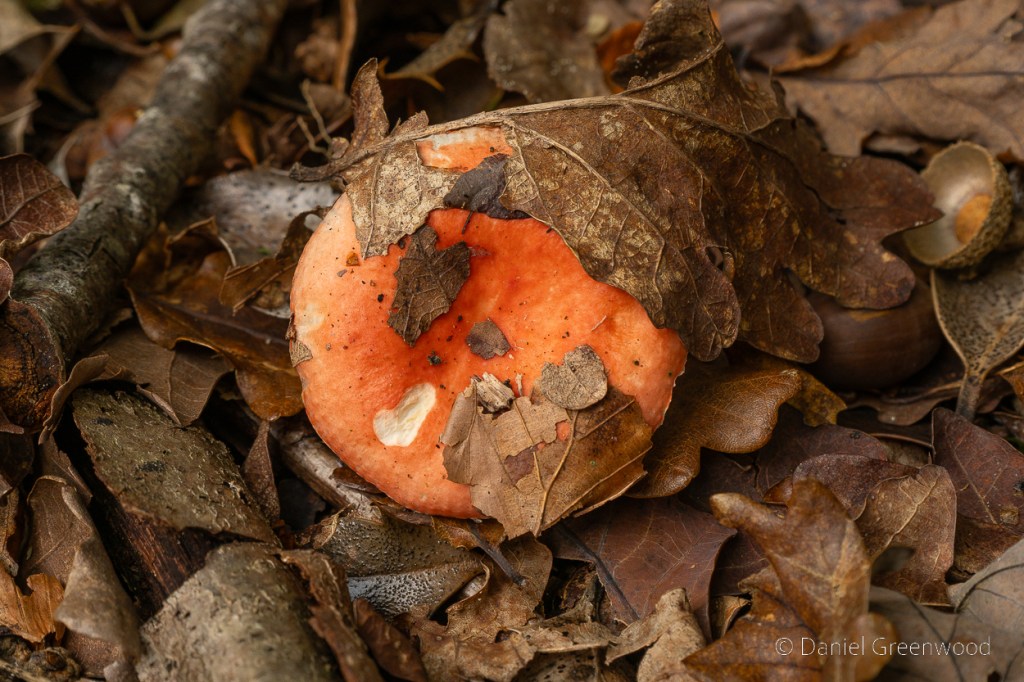
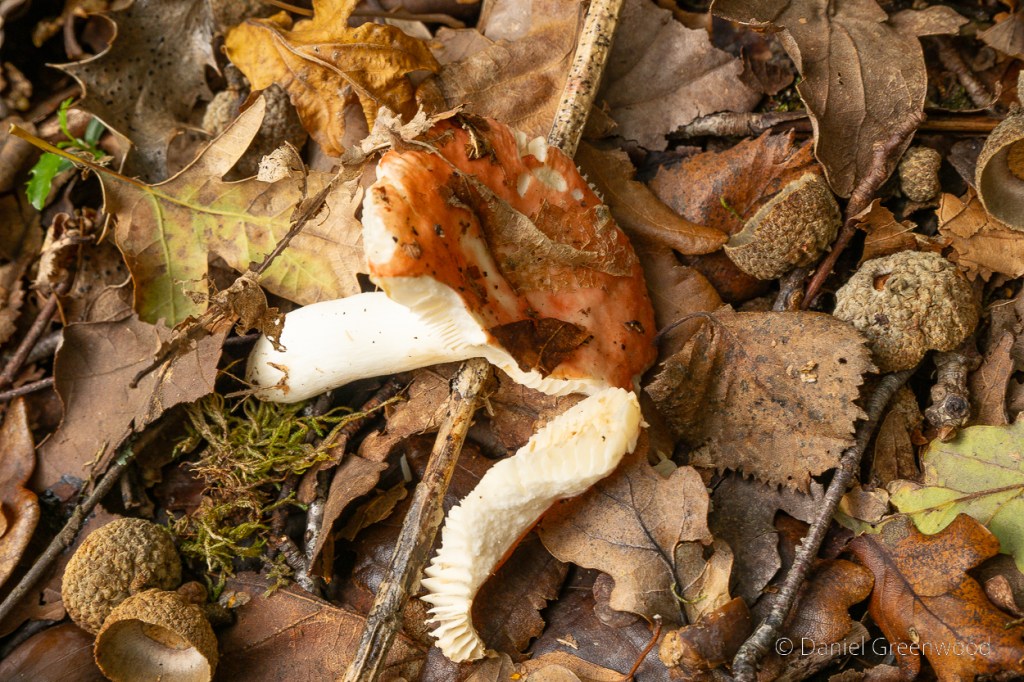
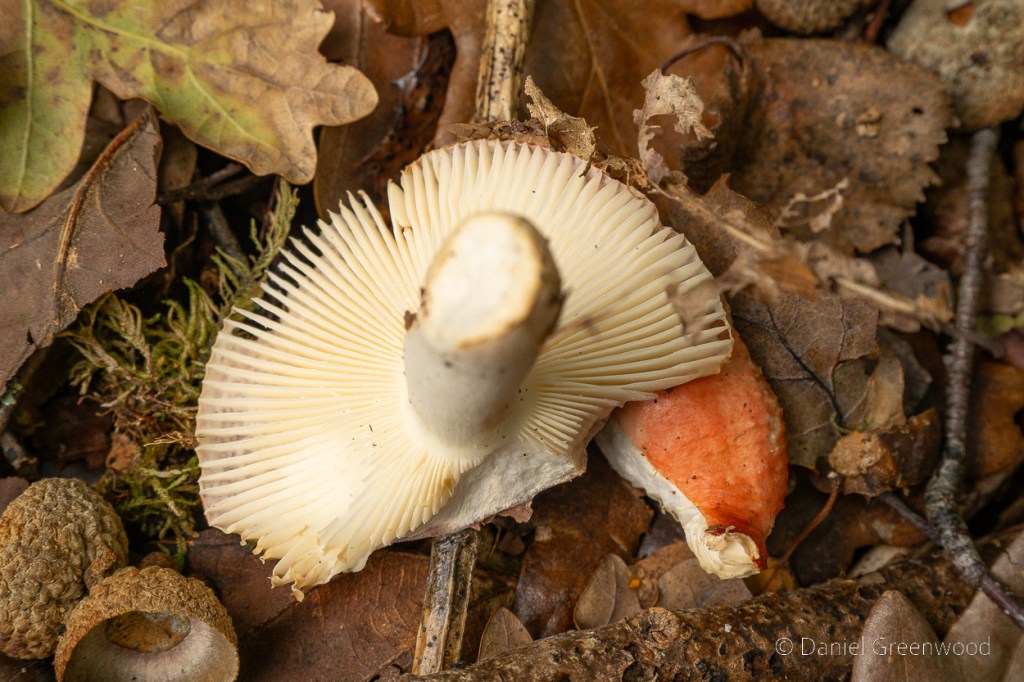
A nibbled russula.
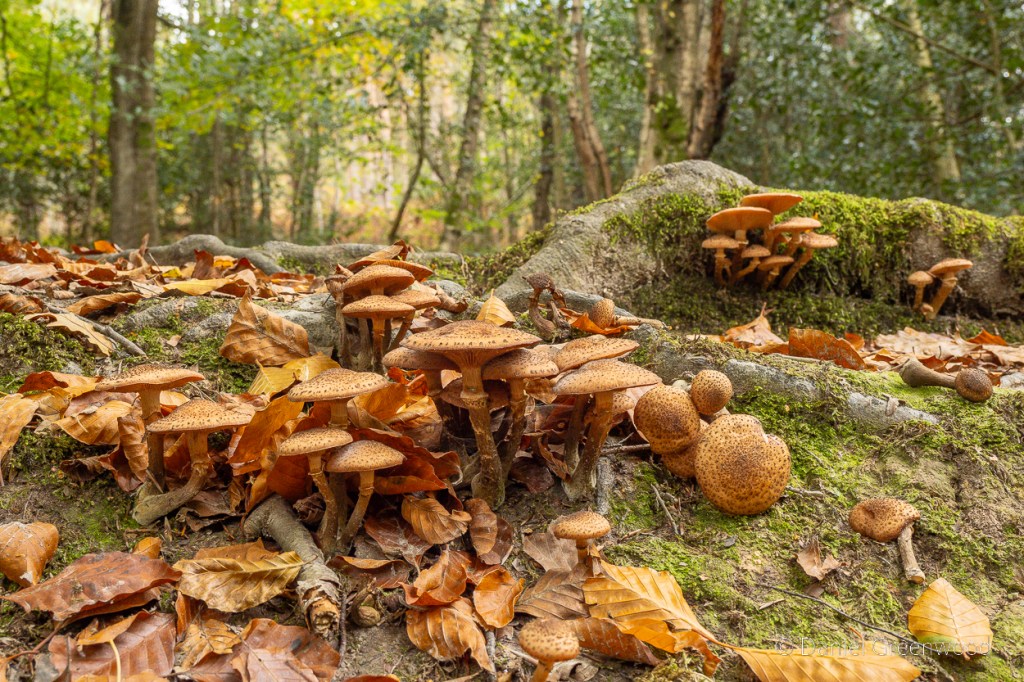
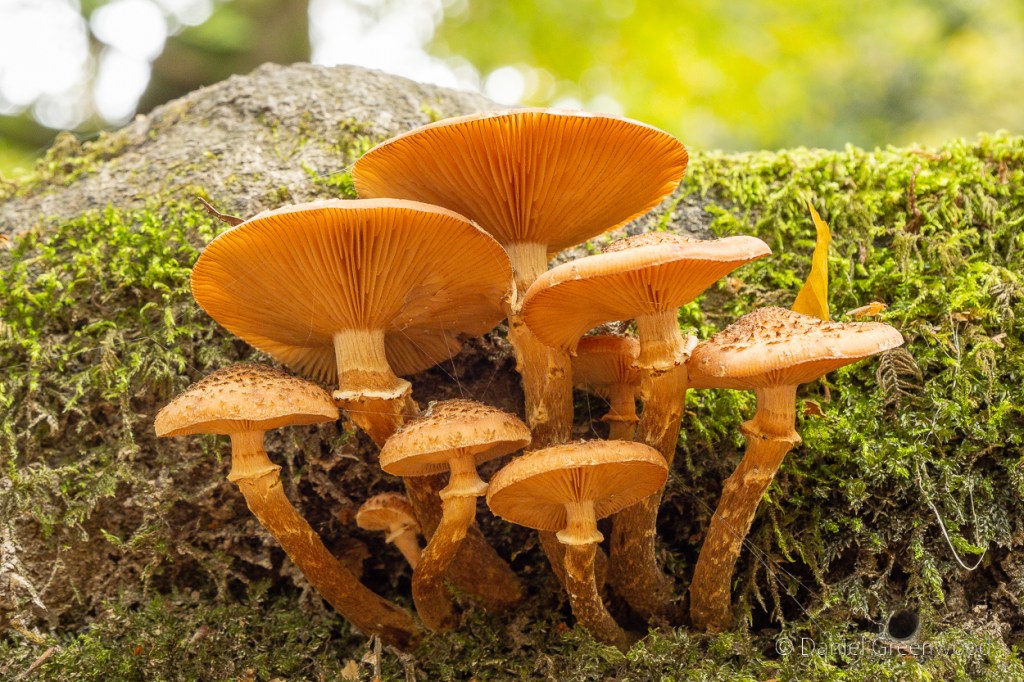
The second honey fungus of the walk, a different species to the other.
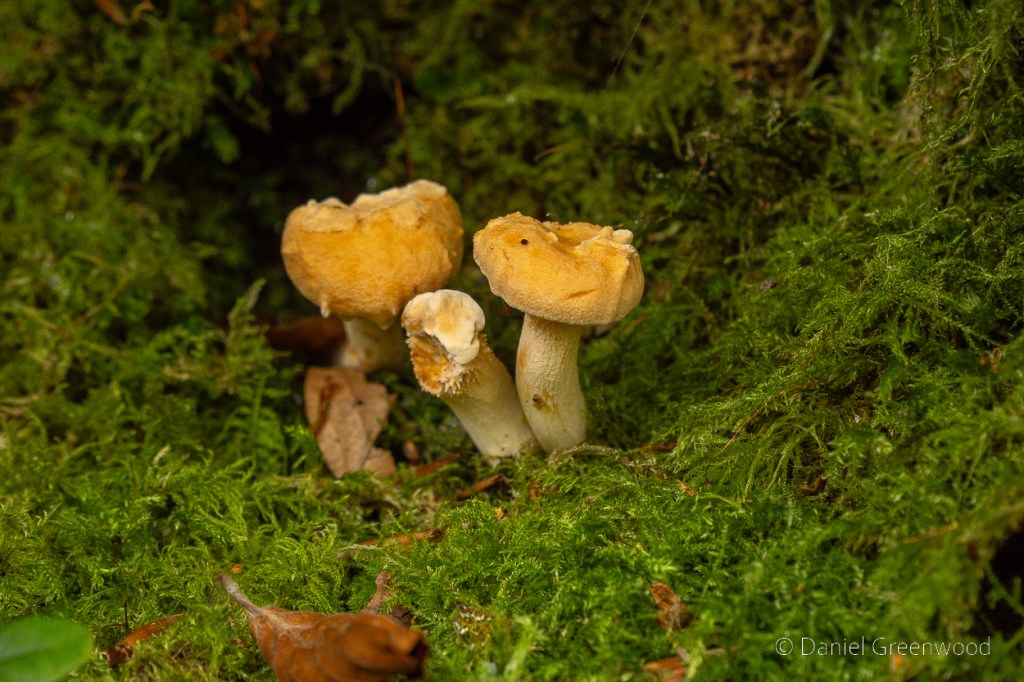
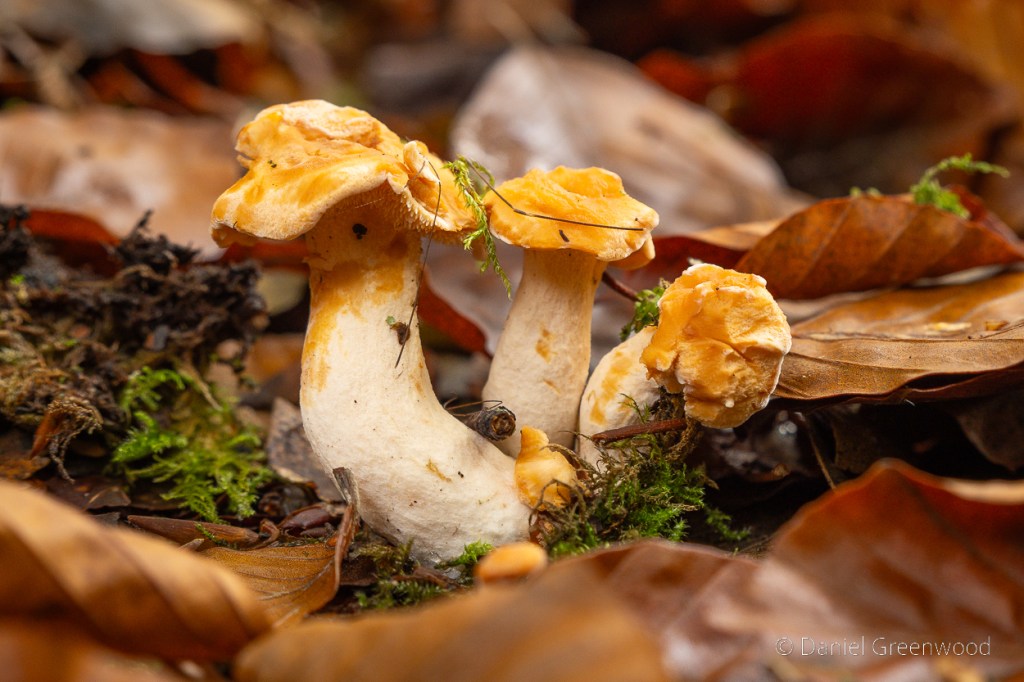
Terracotta hedgehogs! They are generally smaller than the normal hedgehog mushrooms and have the terracotta coloured caps.
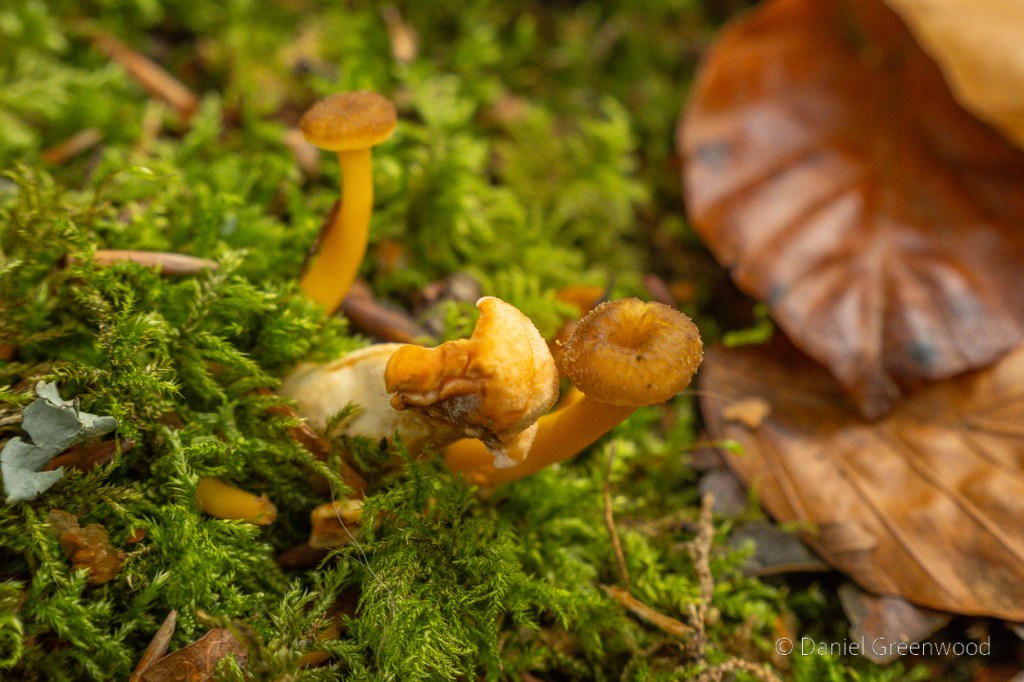
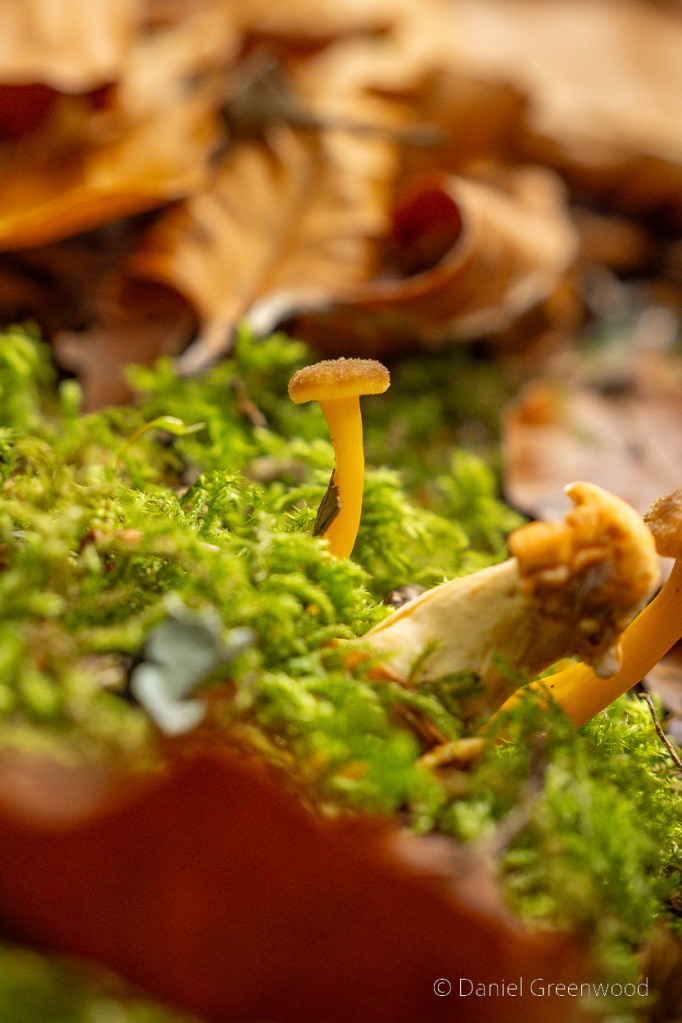
Chanterelles.
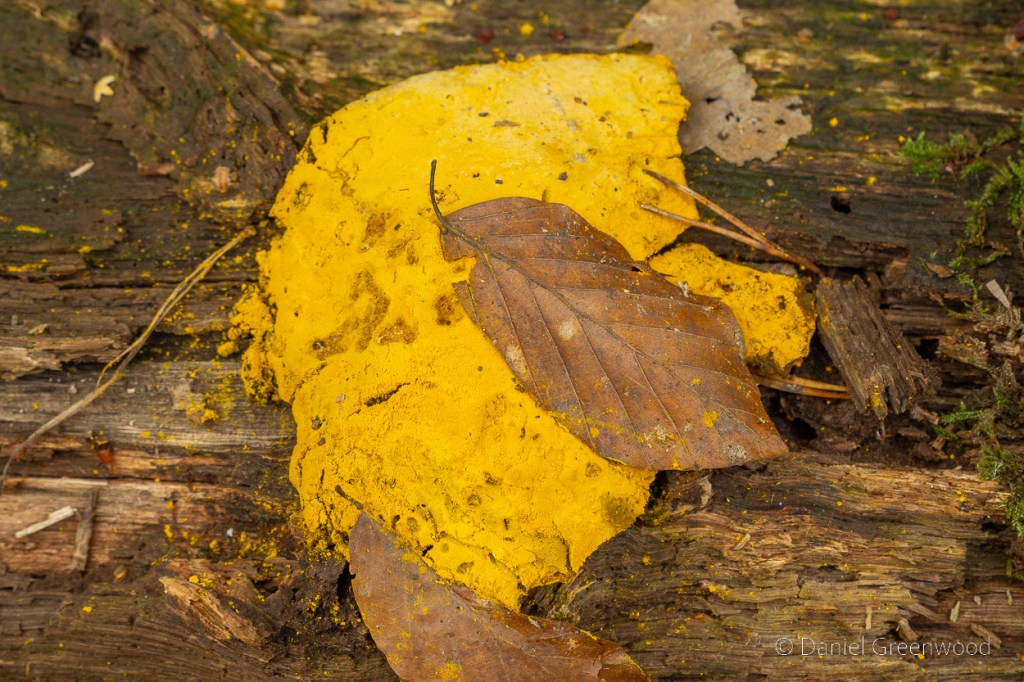
Heaven knows…
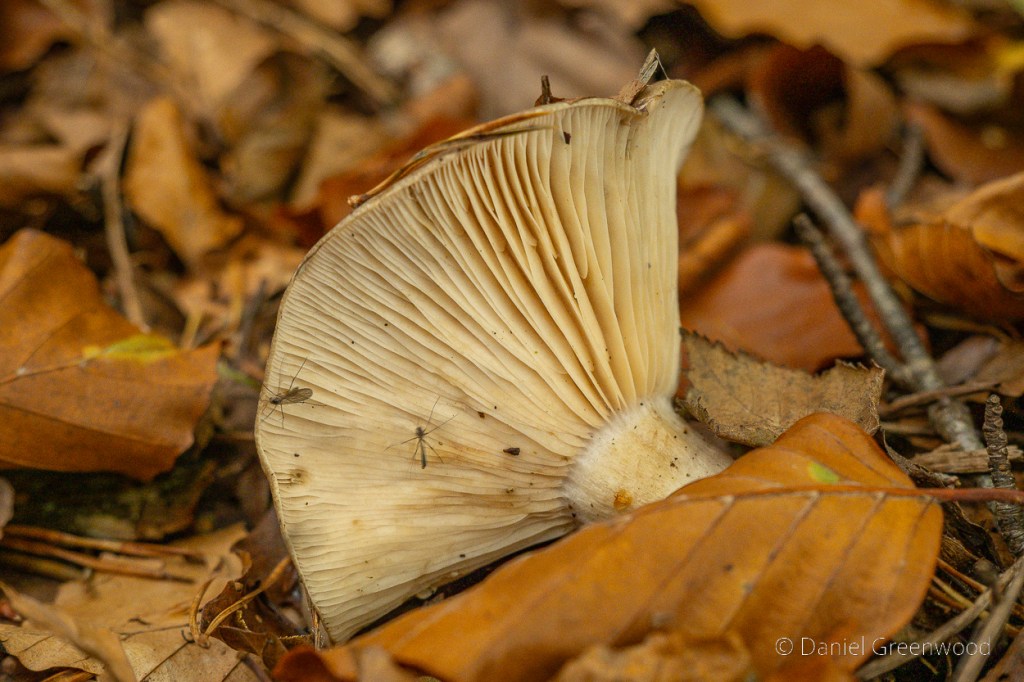
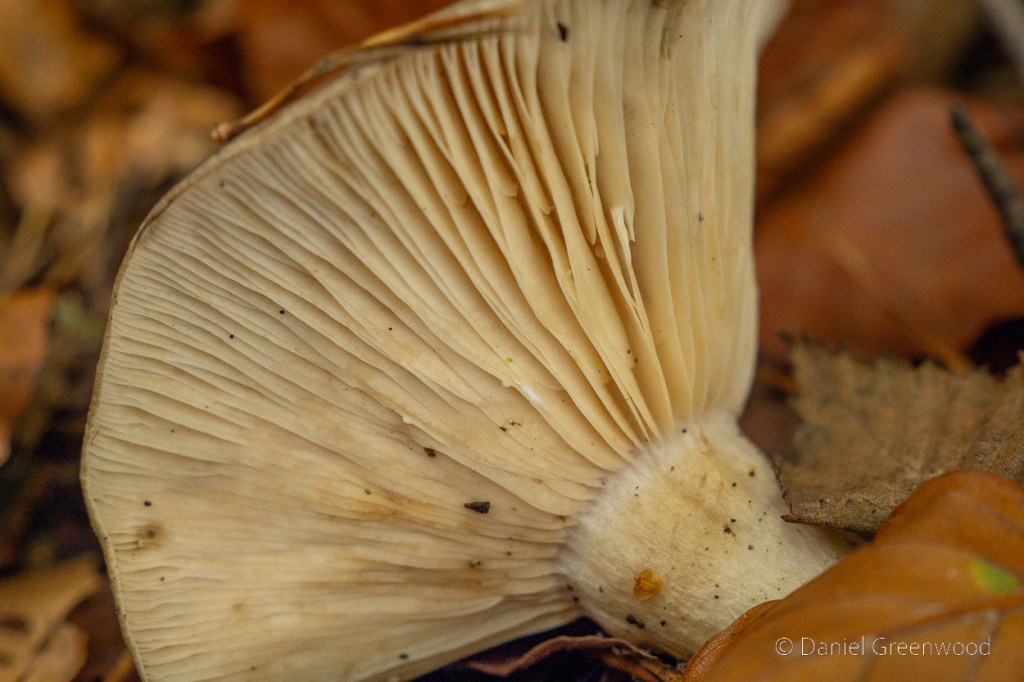
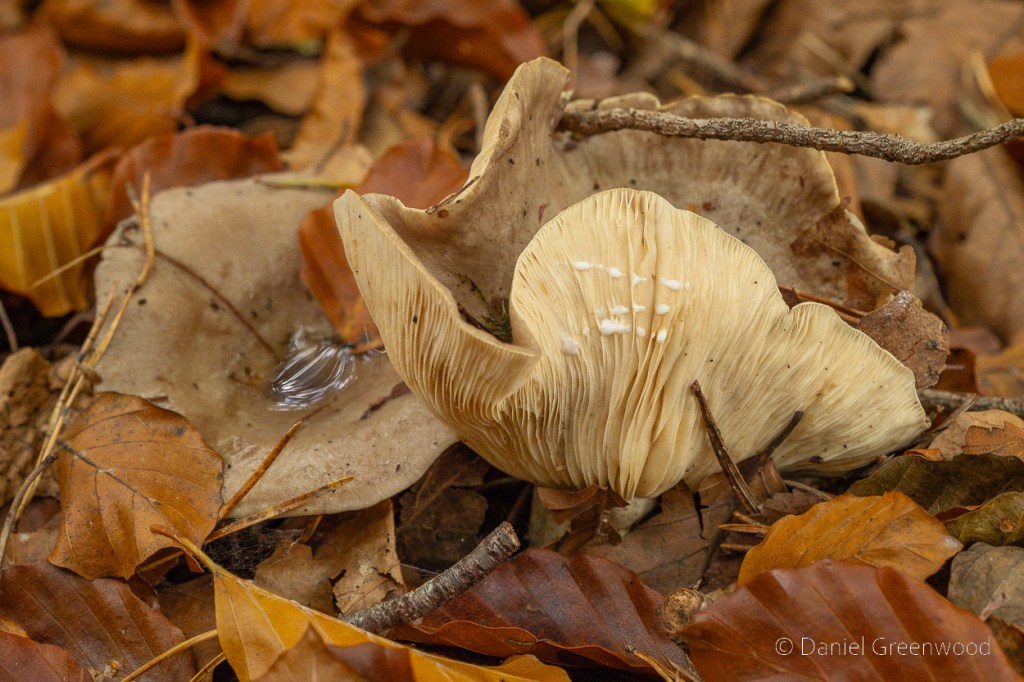
A milkcap with white milk (latex).
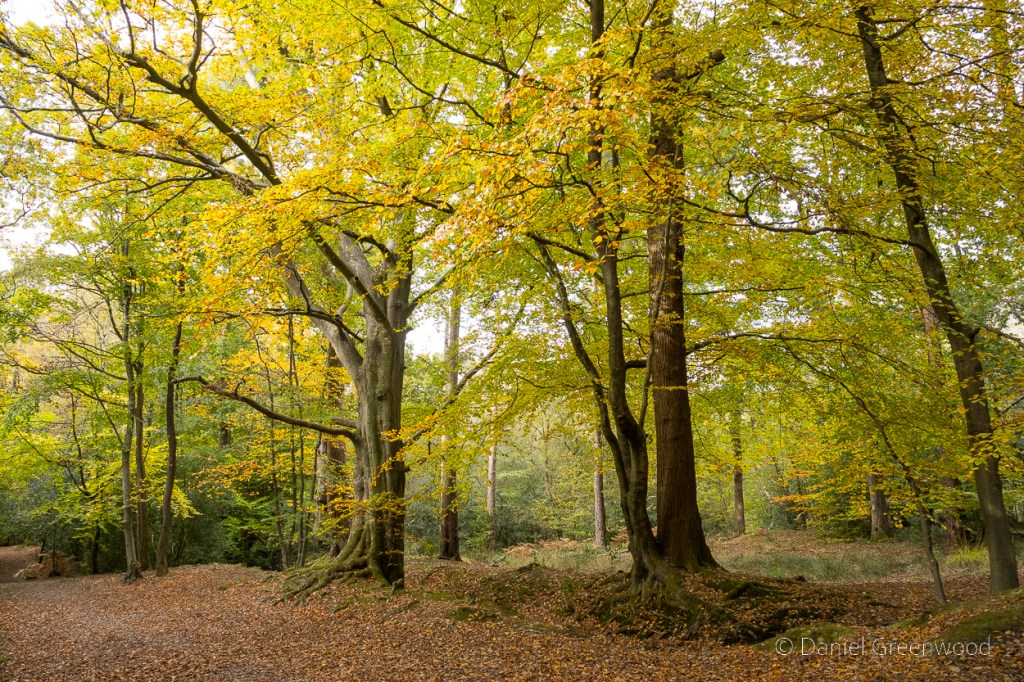
Sneaky bit of autumn beech colour.
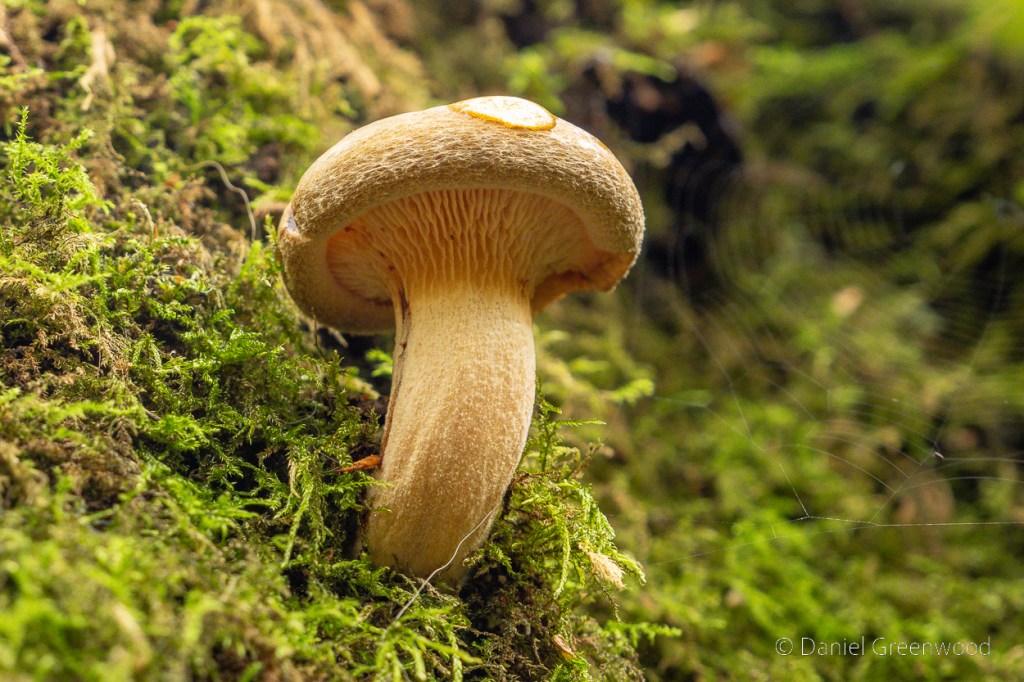
A rather proud looking rollrim.
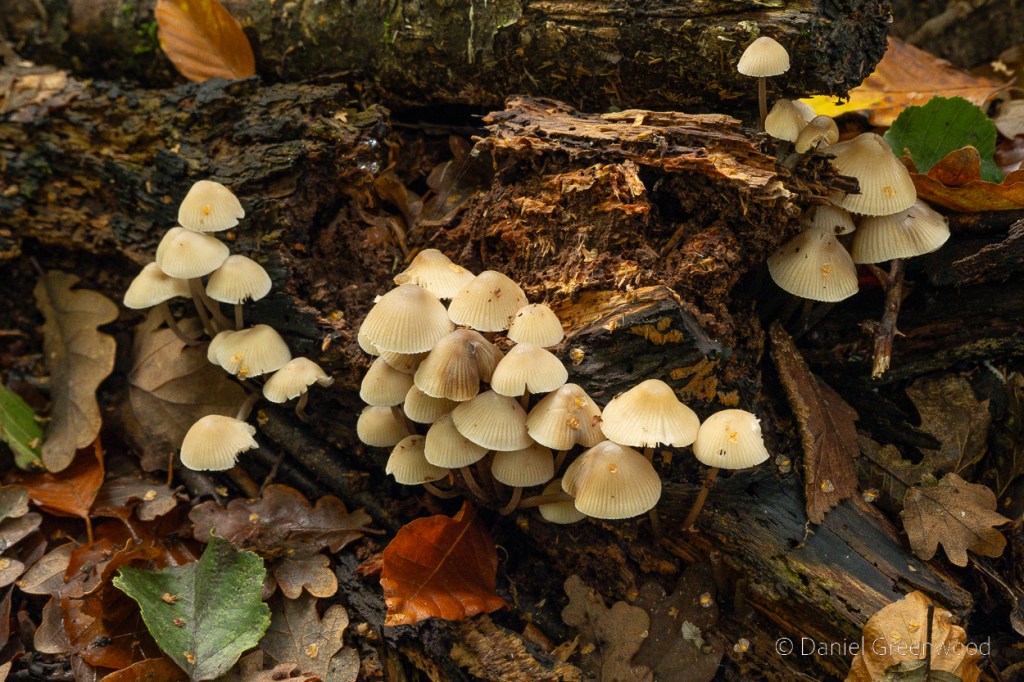
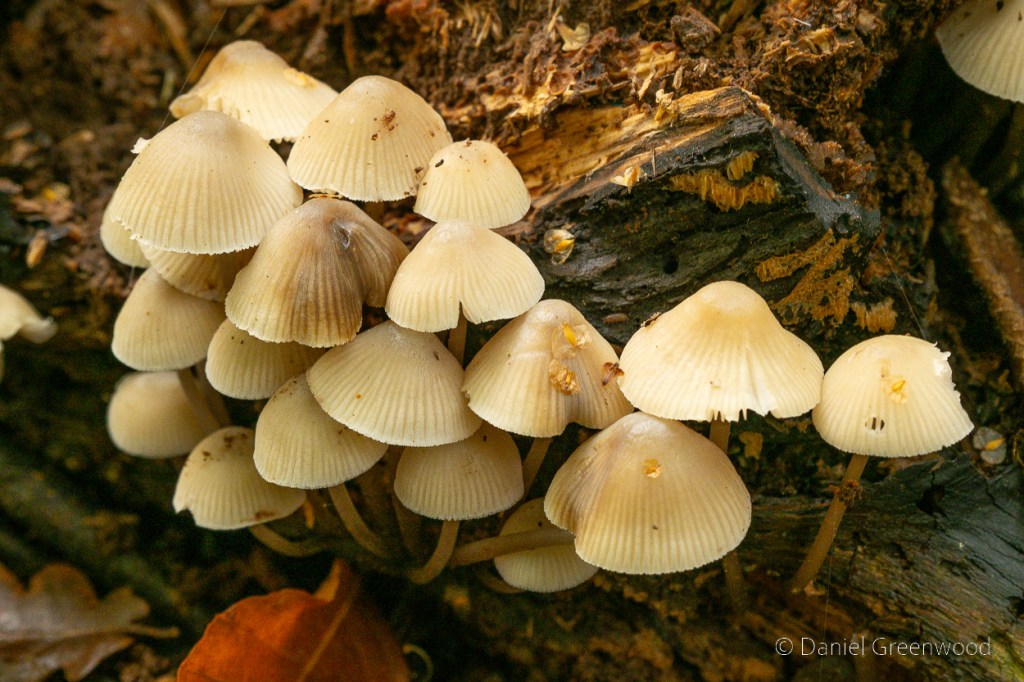
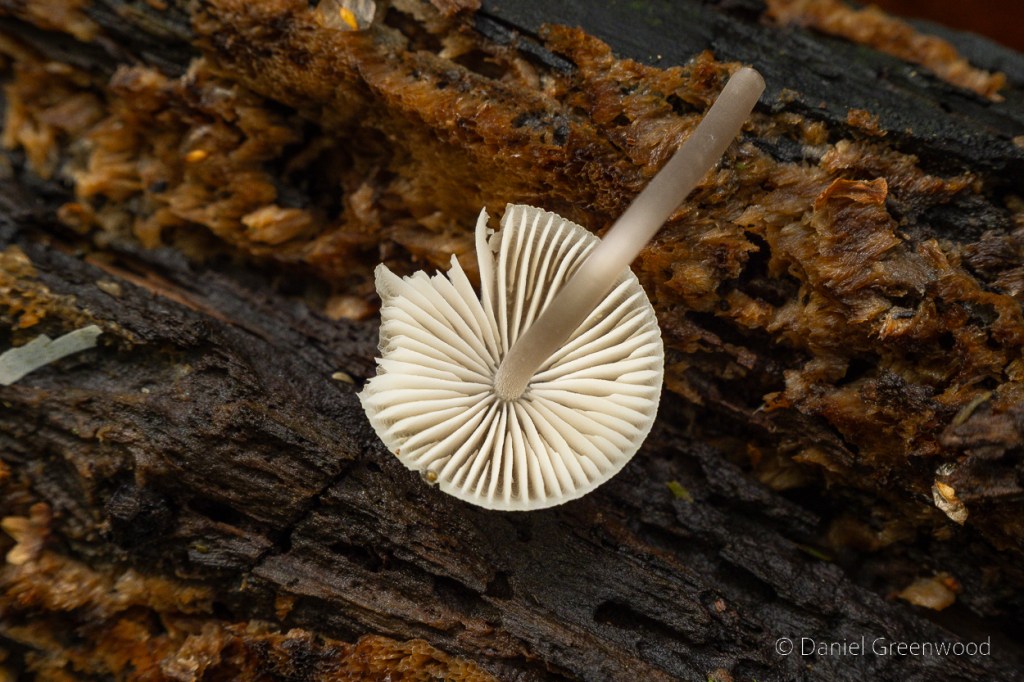
These are bonnets, possibly angel’s bonnet.
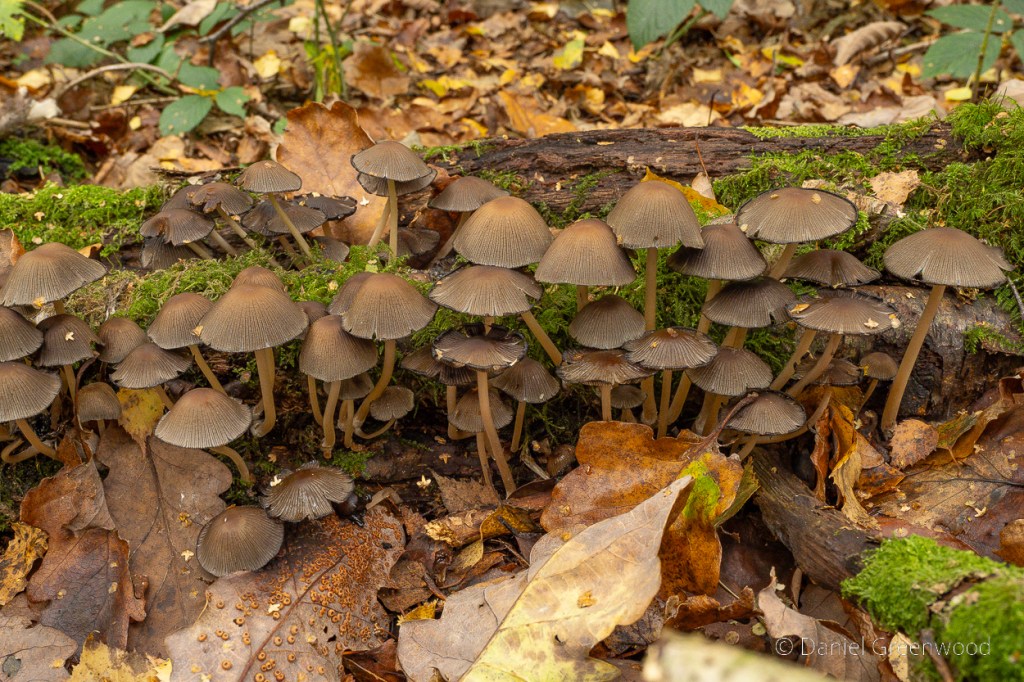
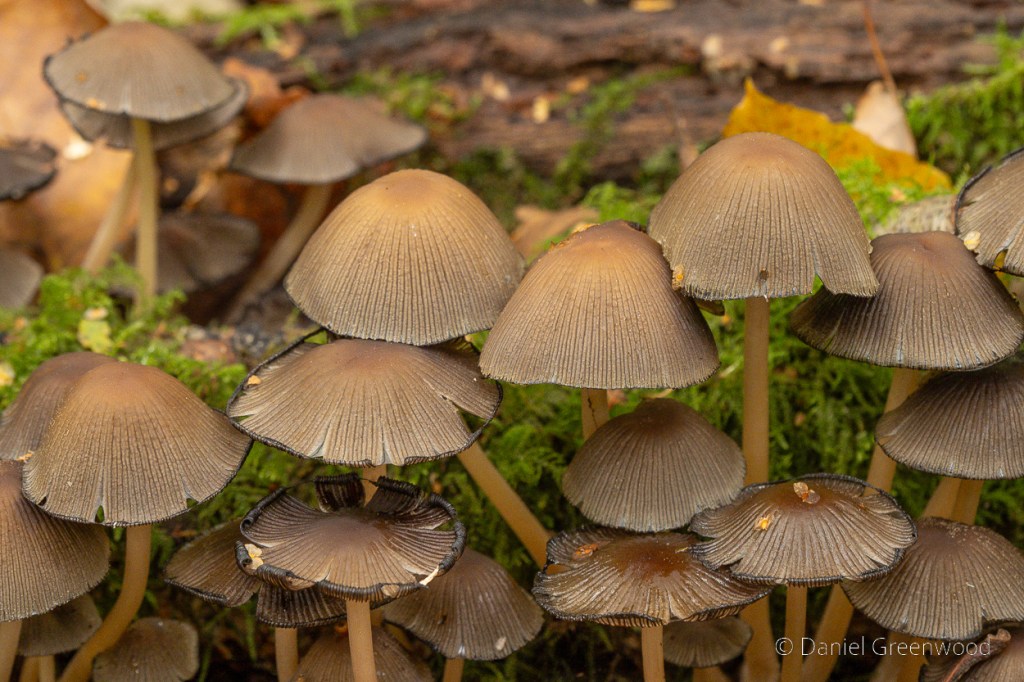
And let’s finish with these difficult to identify psathyrellaceae, which could be brittlestems but may also be inkcaps.
Thanks for reading.


 Fungi Friday 🍄
Leave a comment