Bramshott and Liphook, Hampshire, October 2025
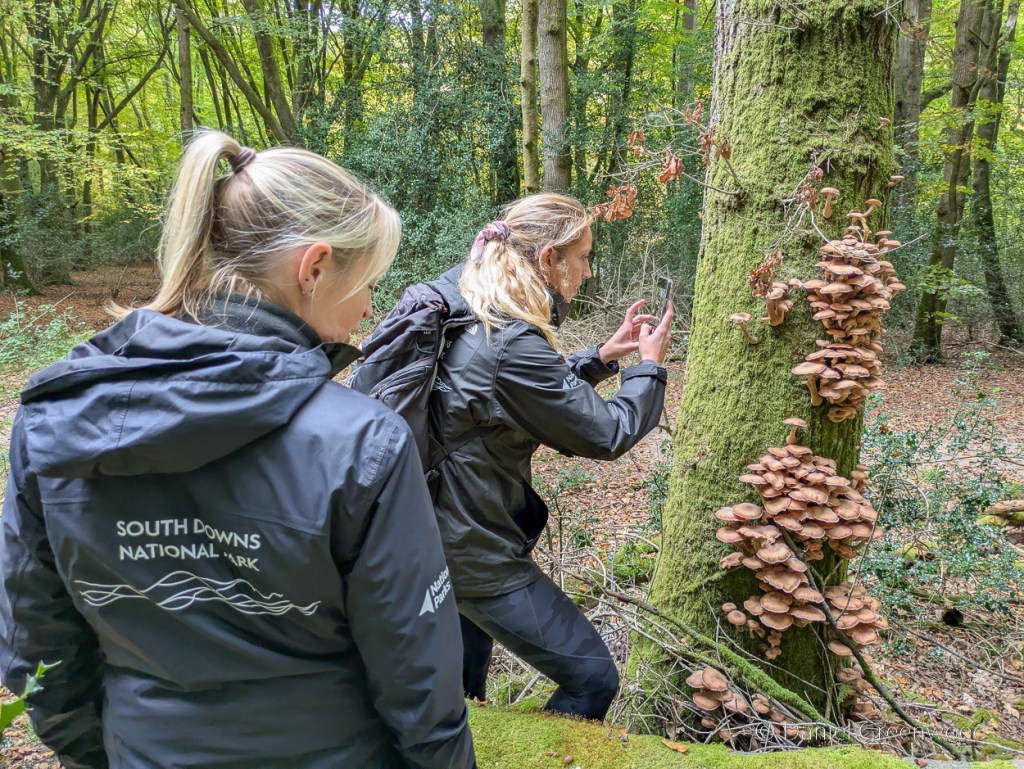
In mid-October I was invited to lead a public fungi walk for the Heathlands Reunited project which is managed by the South Downs National Park. Thanks to Olivia and Kirsty for backing me up on the day with their local knowledge and for all that they do in their varied but challenging work.
This was a sojourn outside the county boundary for me, out west into heathy Hampshire. It’s that part of the south-east where Surrey, Sussex and Hampshire meet in a tangle of heather and pine, plus a lot of fungi. Ludshott Common is part of the newly anointed Wealden Heath National Nature Reserve, with further Special Protection Area and Site of Special Scientific Interest designations (SSSI) in play, too. Large parts of the area are owned and managed by the National Trust. Please respect their access requirements and requests, people.
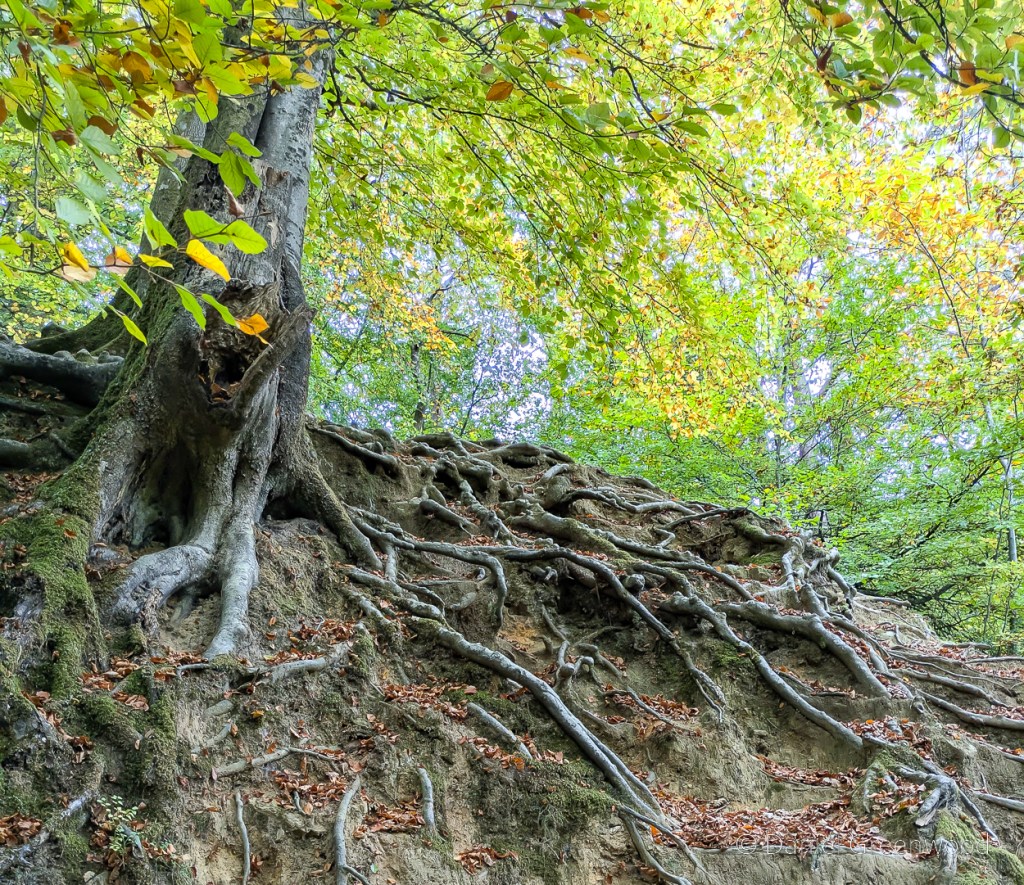
The SSSI designation makes it an offence to collect plants, animals or fungi, which obviously can make mushroom ID difficult. We had permission to look at a small number of samples, and for all to be left as found on site.
The photos were taken during the walk with my phone, so they’re not brilliant quality in places. But it’s hard to get away with taking photos while leading a group of people.
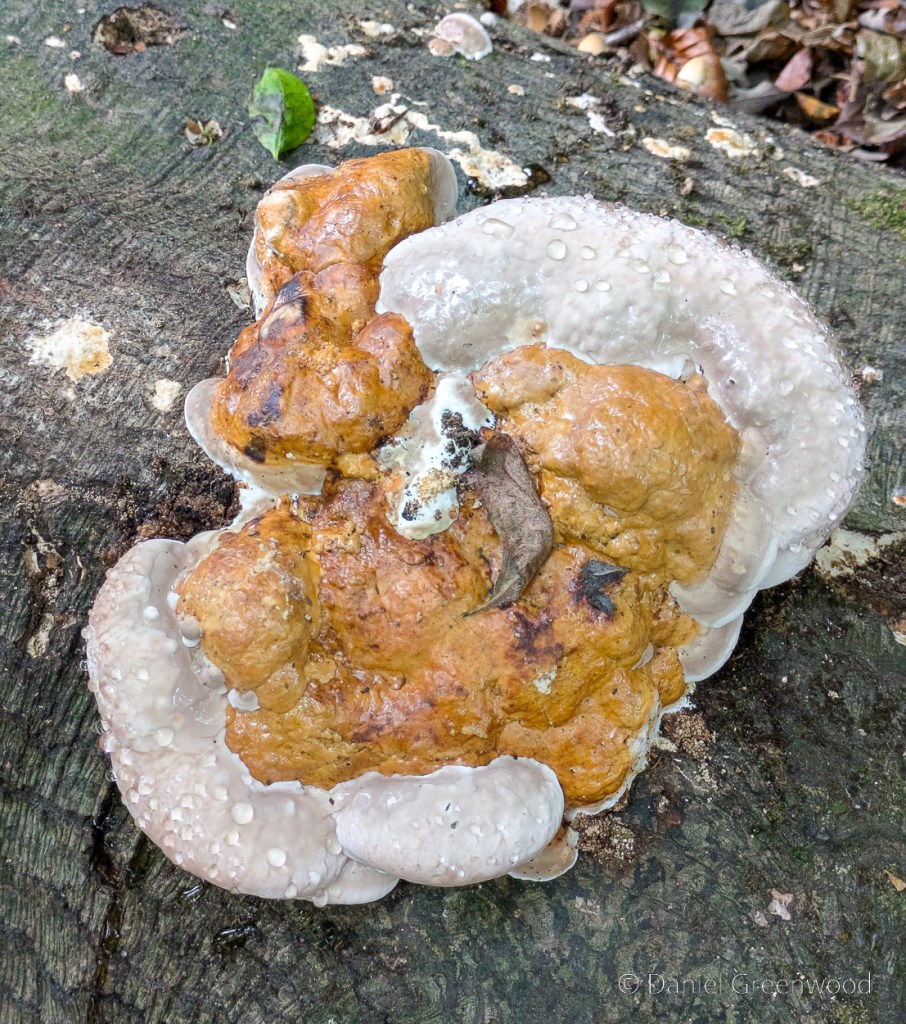
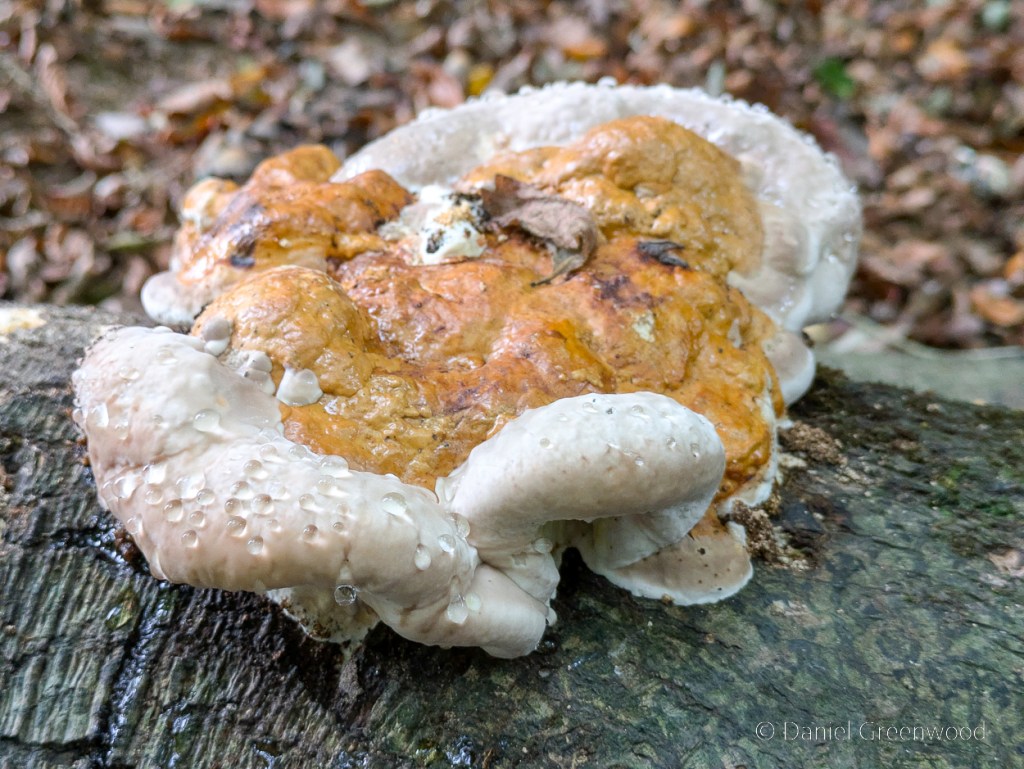
Olivia pointed out that this fungus on a log in the car park was red belted bracket in its early stages. This is a species I have only ever seen in Europe, particularly in Romania. Most recently I saw it in the Jungfrau Mountains in the Swiss Alps. It’s also known as red banded polypore, red banded bracket, and red belted conk. It looks different when mature, which is why I didn’t realise it was this (in my mind) common European species.
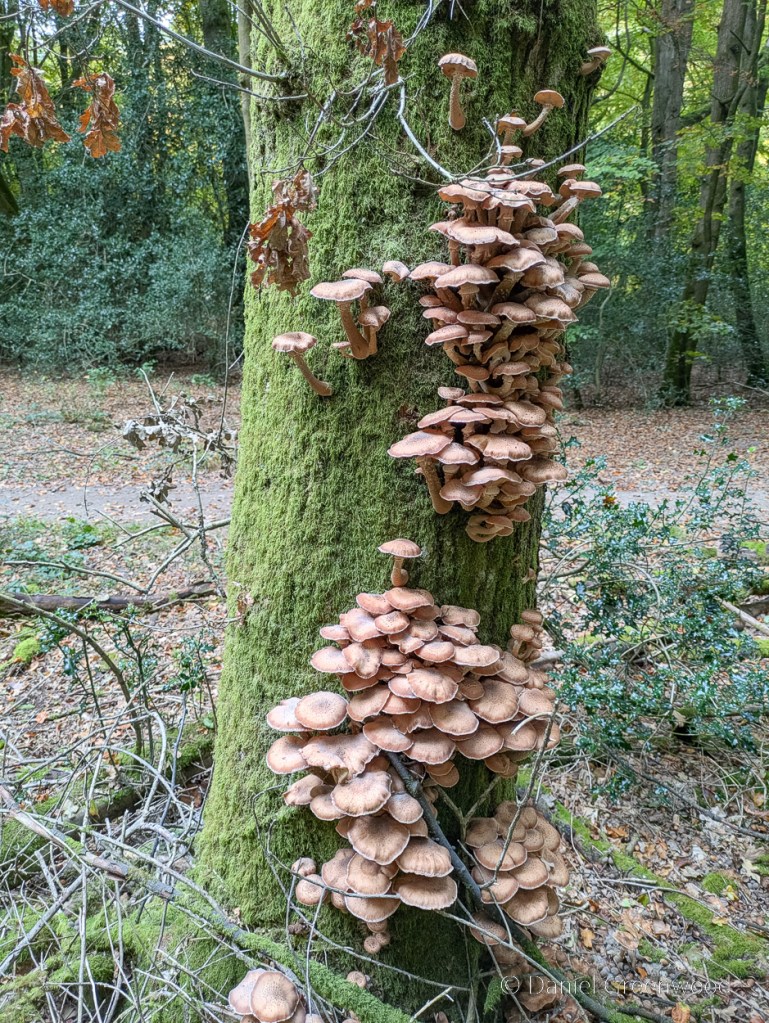
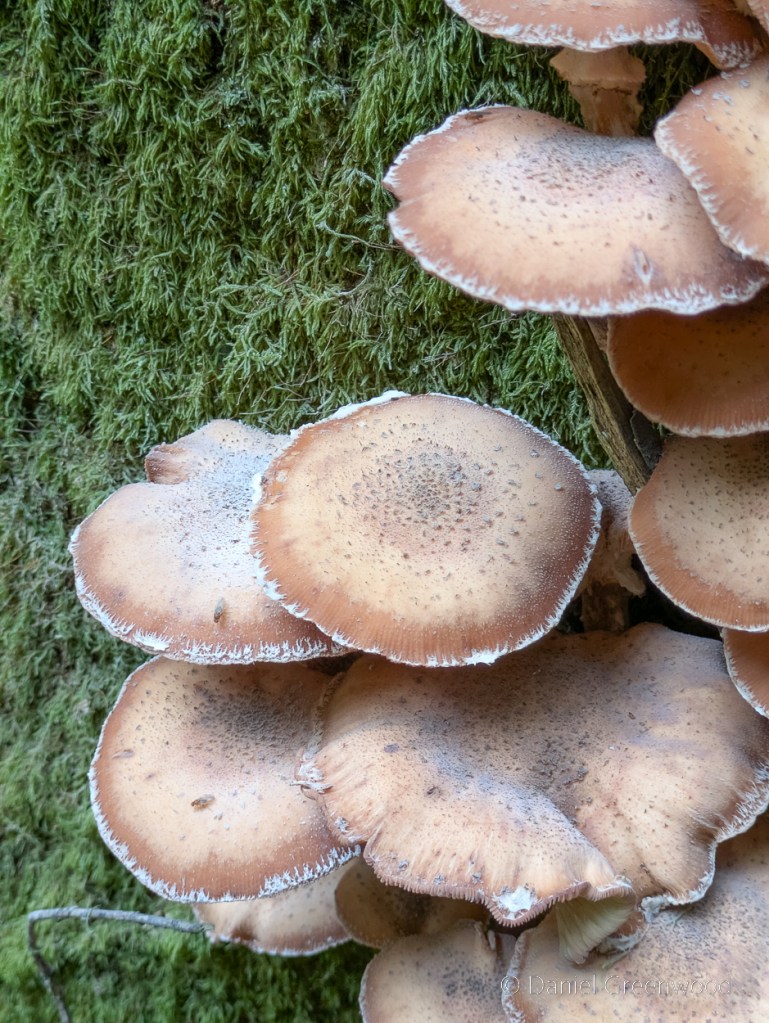
I posted about the challenge of identifying honey fungi in a recent post. This was a wonderful spread of what I would guess is bulbous honey fungus. The oak tree was in decline, from what I remember, if not dead. It’s likely the honey fungus has accelerated the decline, but trees along footpaths can be prone to damage when paths are being worked on, so honey fungus will find a niche in that regard.
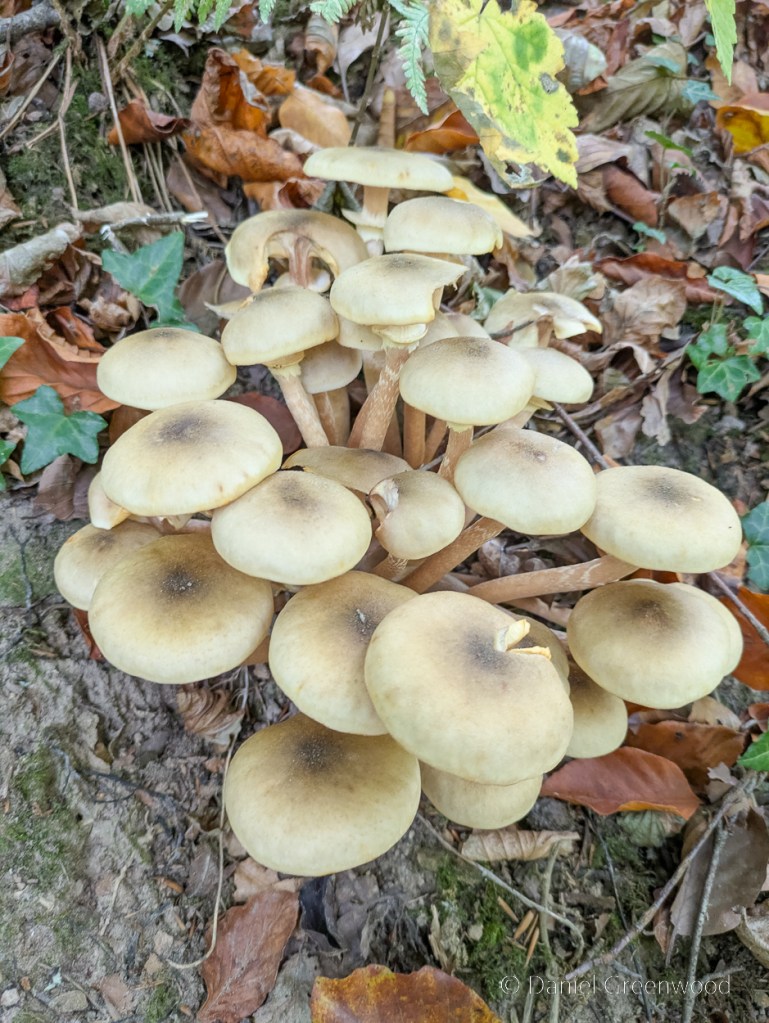
The only other species of honey fungus I snatched a photo of was the honey fungus itself. The stipes are long and sprawling, and the colouring is more honied.
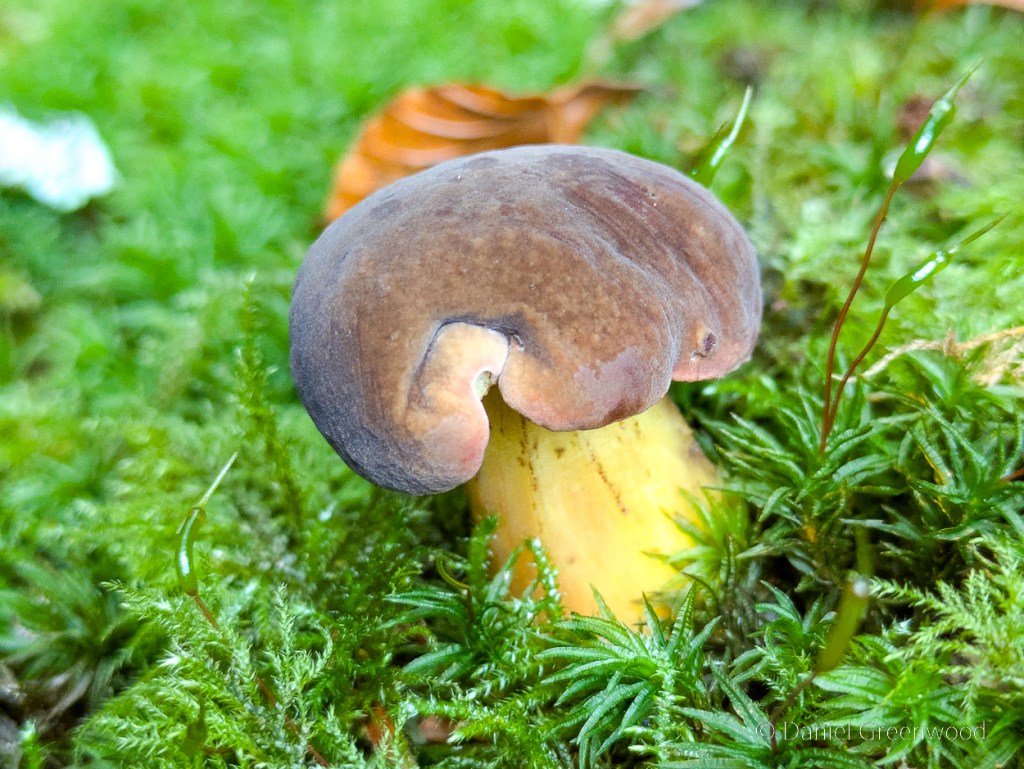
At the edge of the path this little bolete was growing. It’s a gorgeous little mushroom, what I am guessing is matt bolete. I only began to look for these in autumn 2025 after spotting this one.
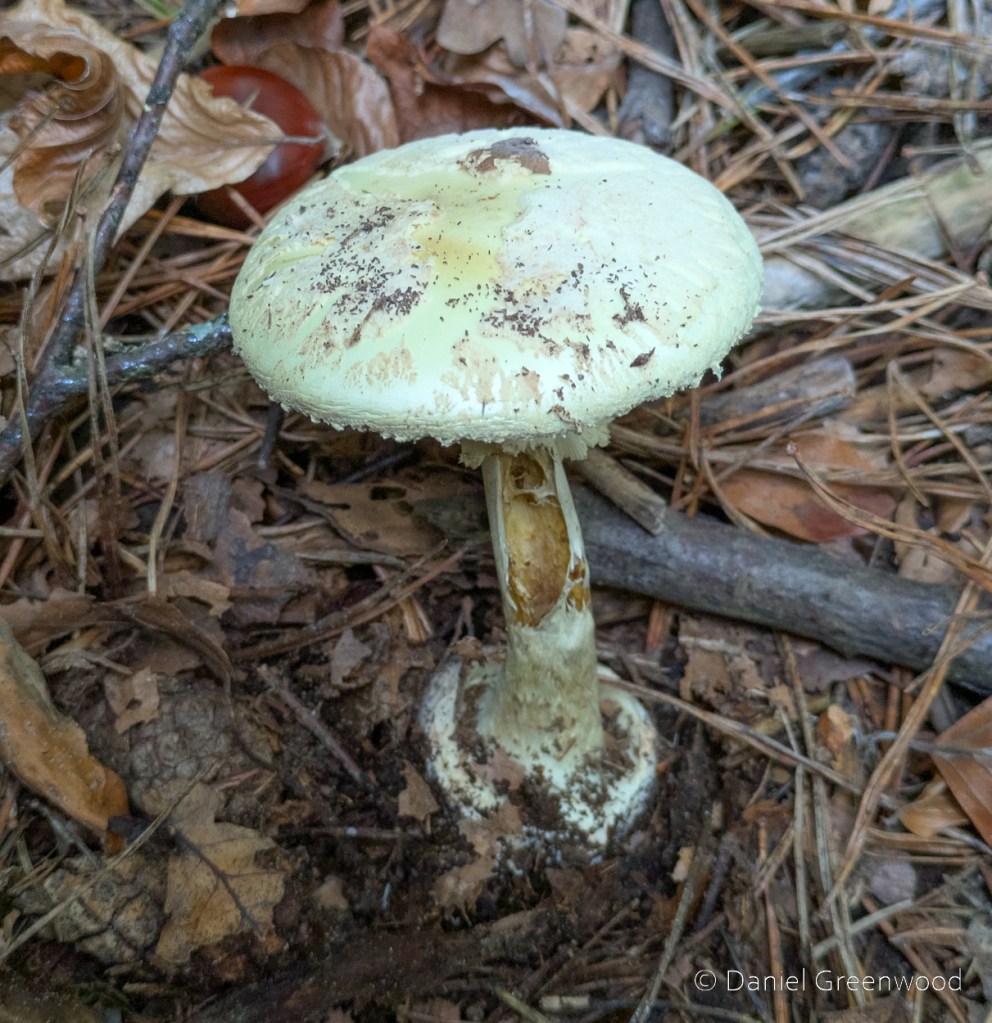
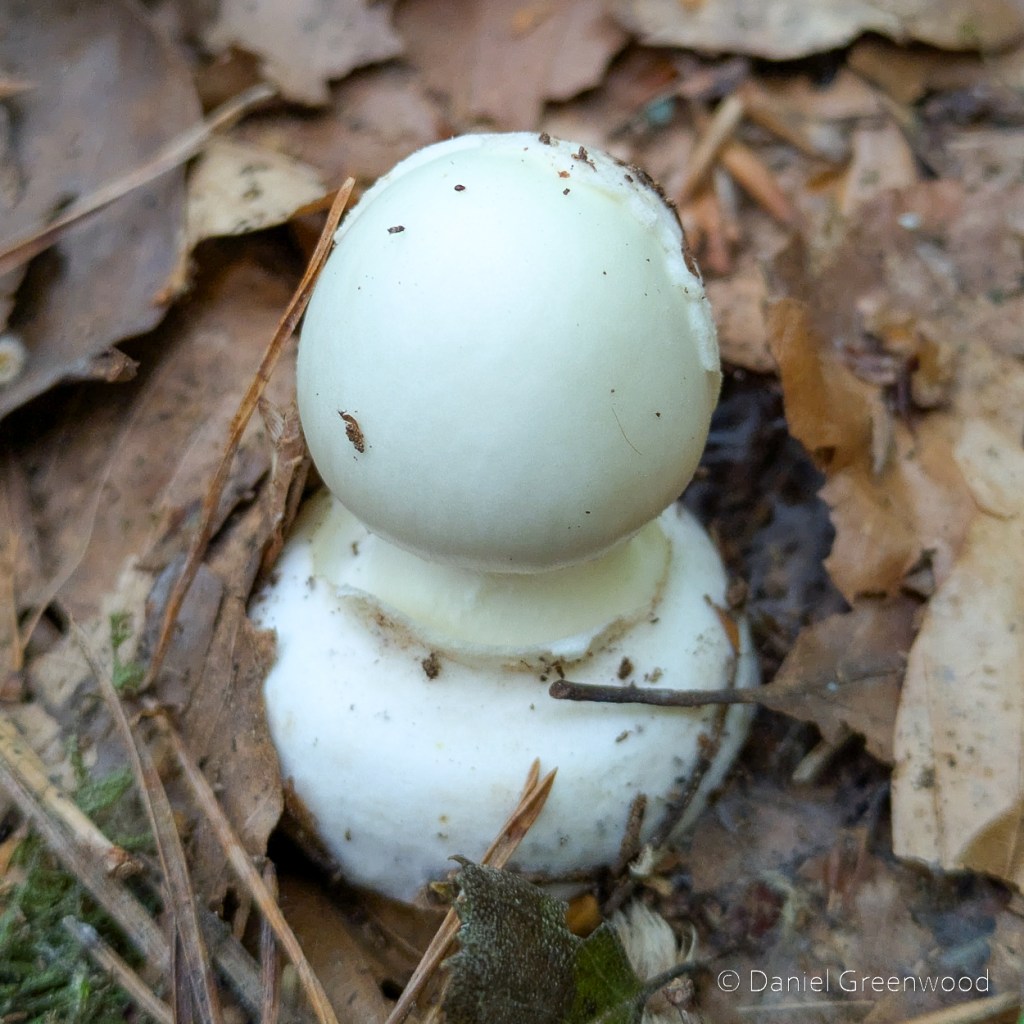
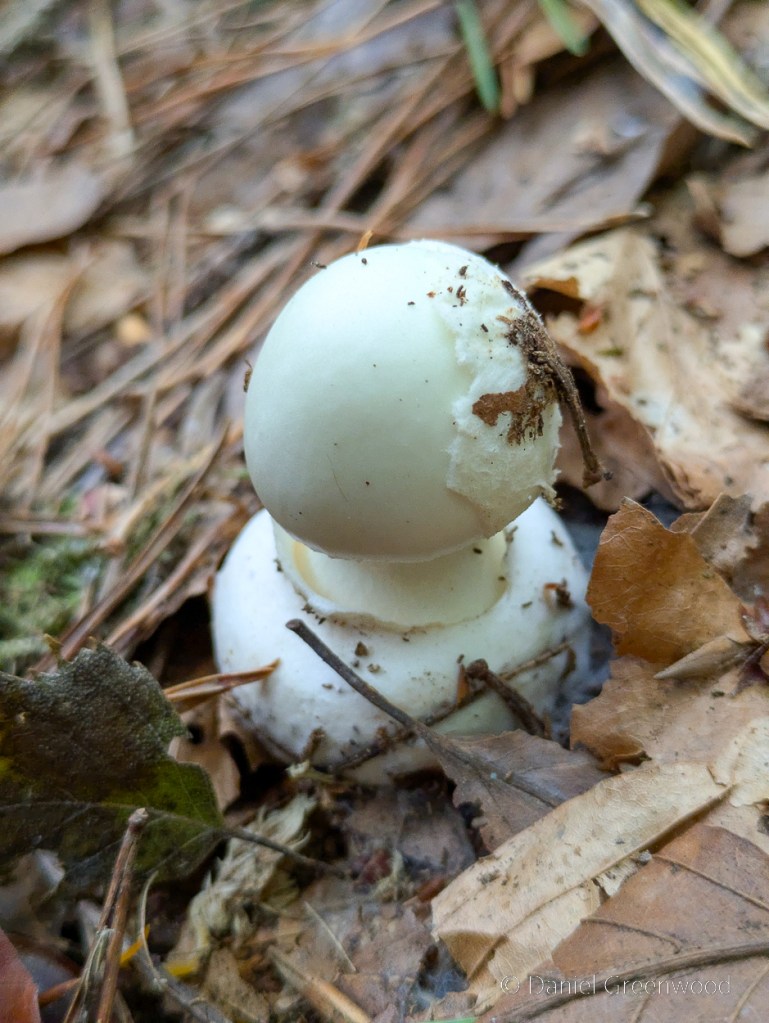
I was expecting to see some deathcaps during this walk, but we only encountered the false deathcap, which is not known to be deadly. My tip for identification would be the remnants of the universal veil which are seen here on one side of the egg-like cap as it emerged from the, well, egg-like volva in the ground. Without that, you could easily think the younger mushroom is potentially a deathcap.
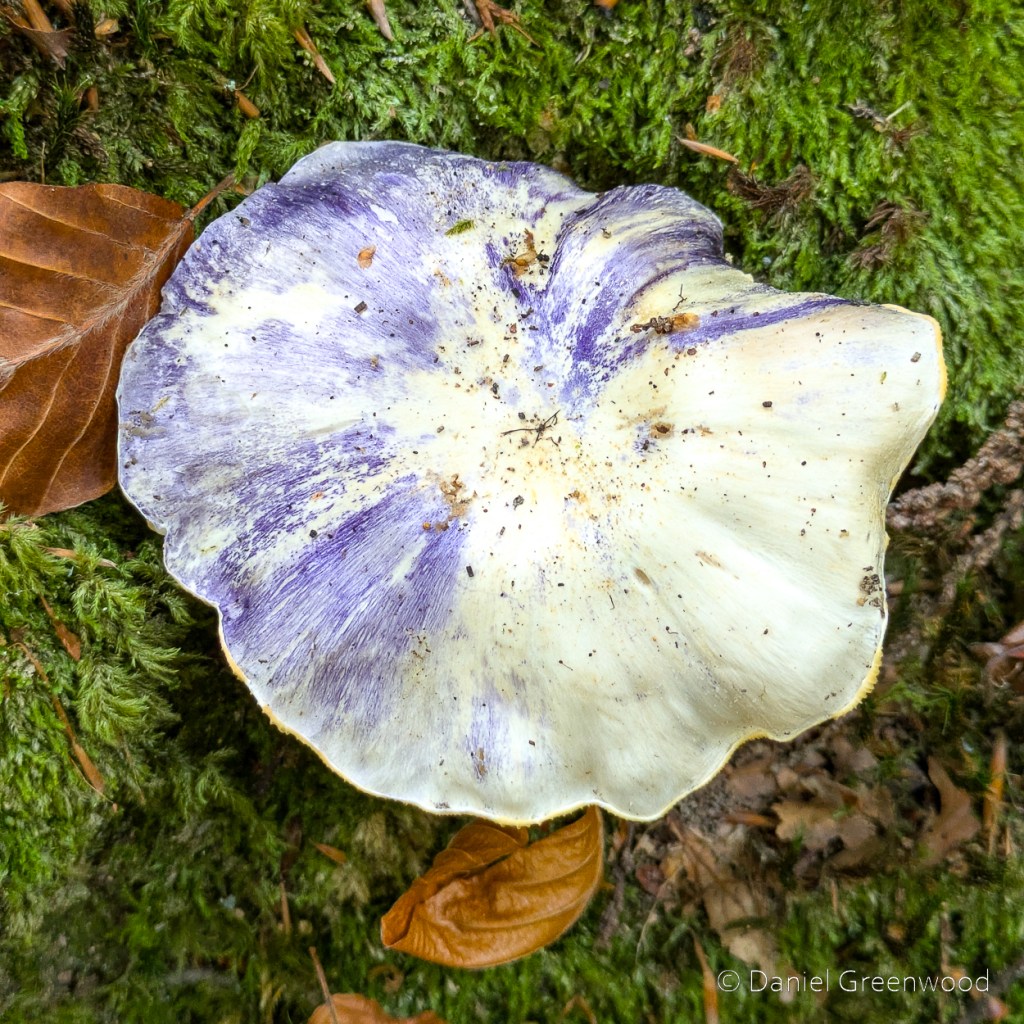
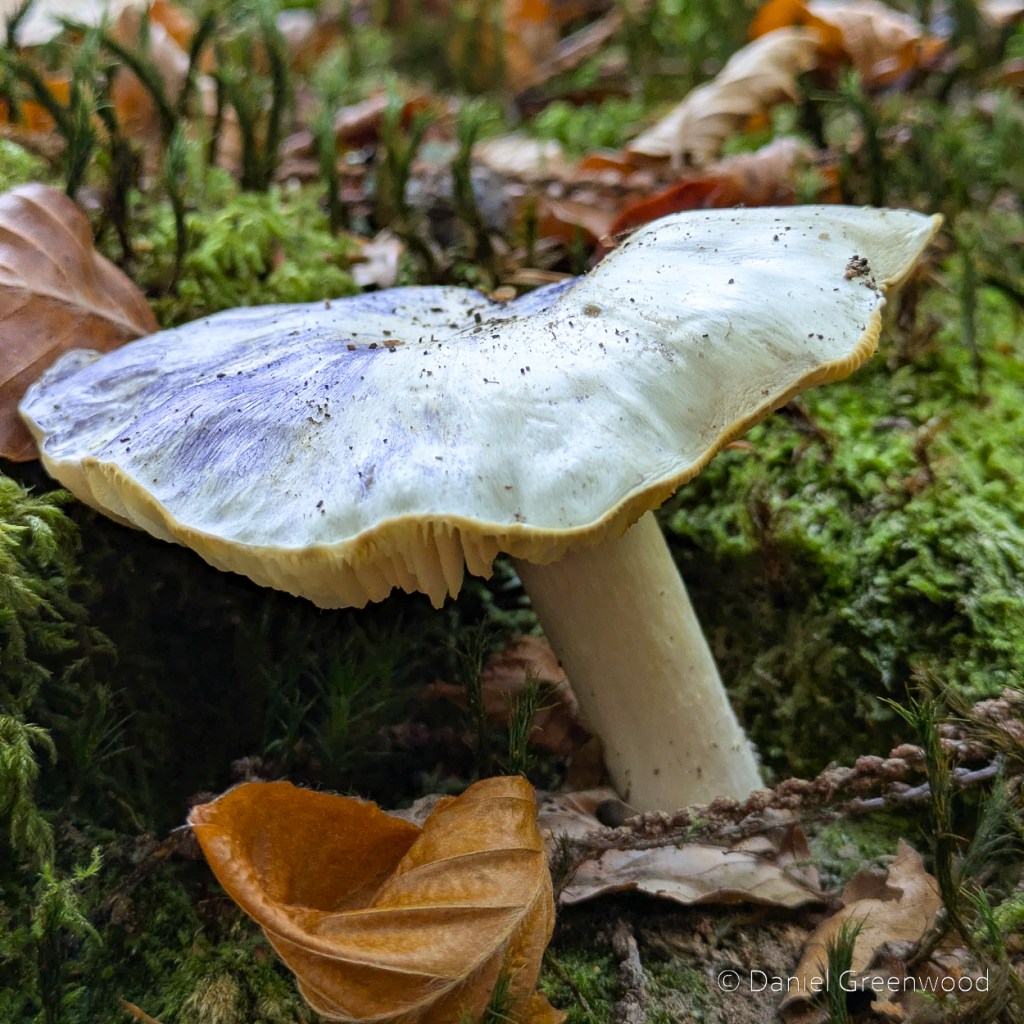
Now this one was very cool. I think Kirsty pointed out that there was a mushroom with a strange discolouration on the cap. I had never seen them before, but they turned out to be blue spot knight (iNat). I honestly thought someone could have painted them!
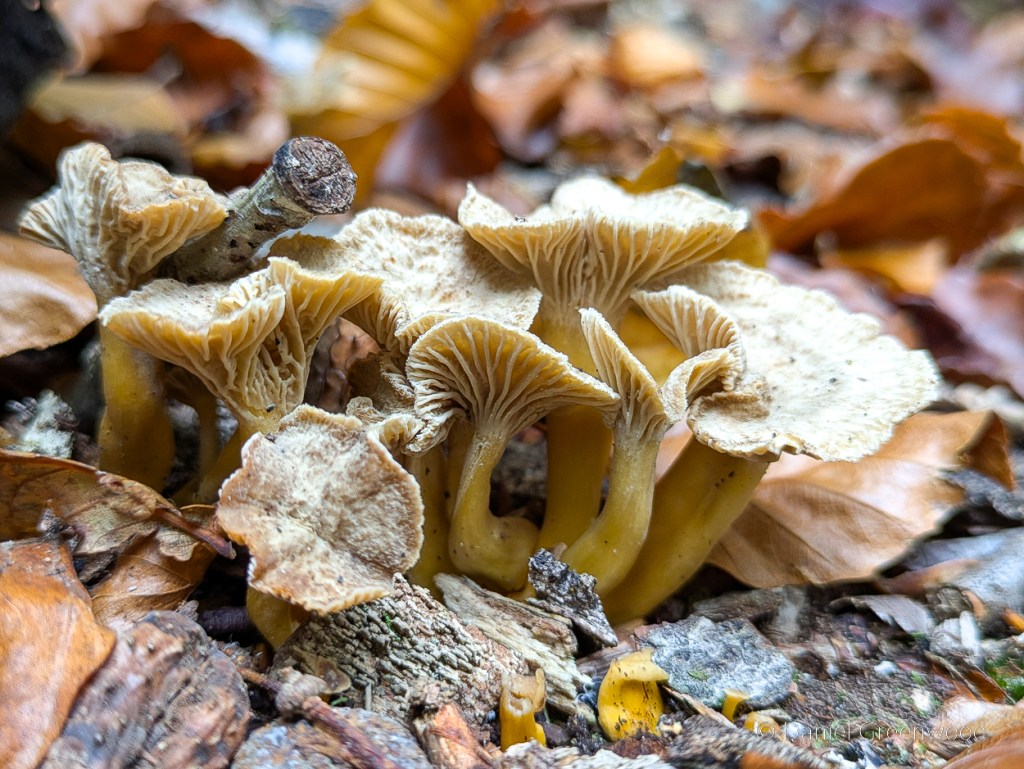
We found a couple of very small chanterelles but this was a larger patch of winter chanterelle. The phone hasn’t done too well with the exposure here.
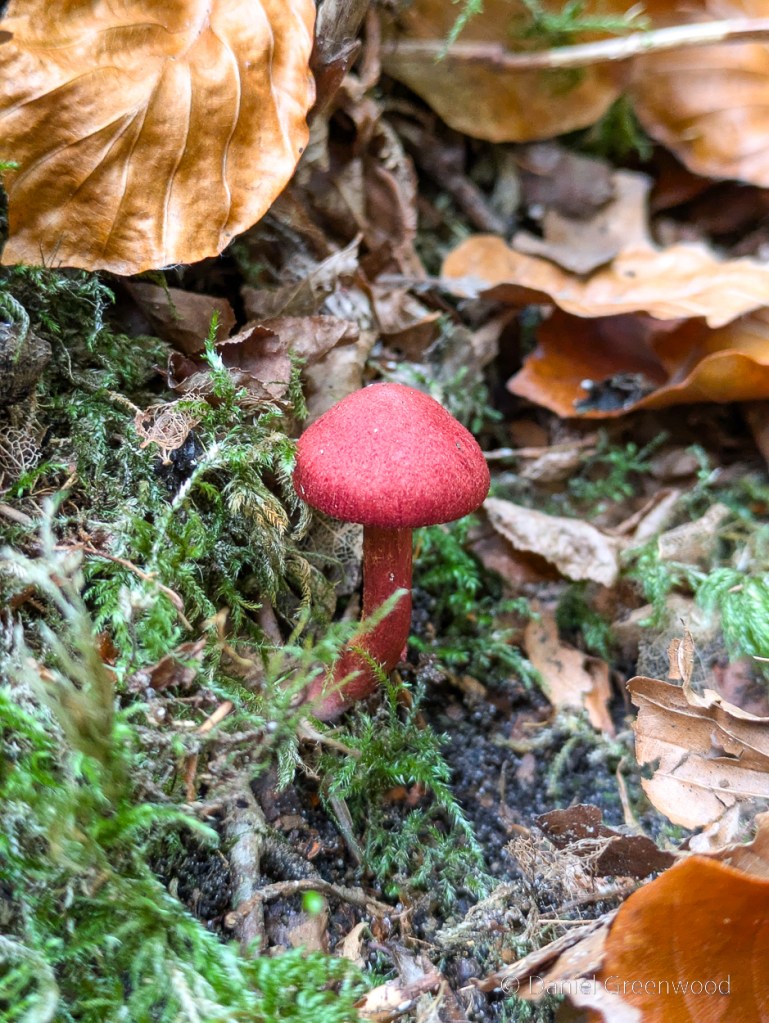
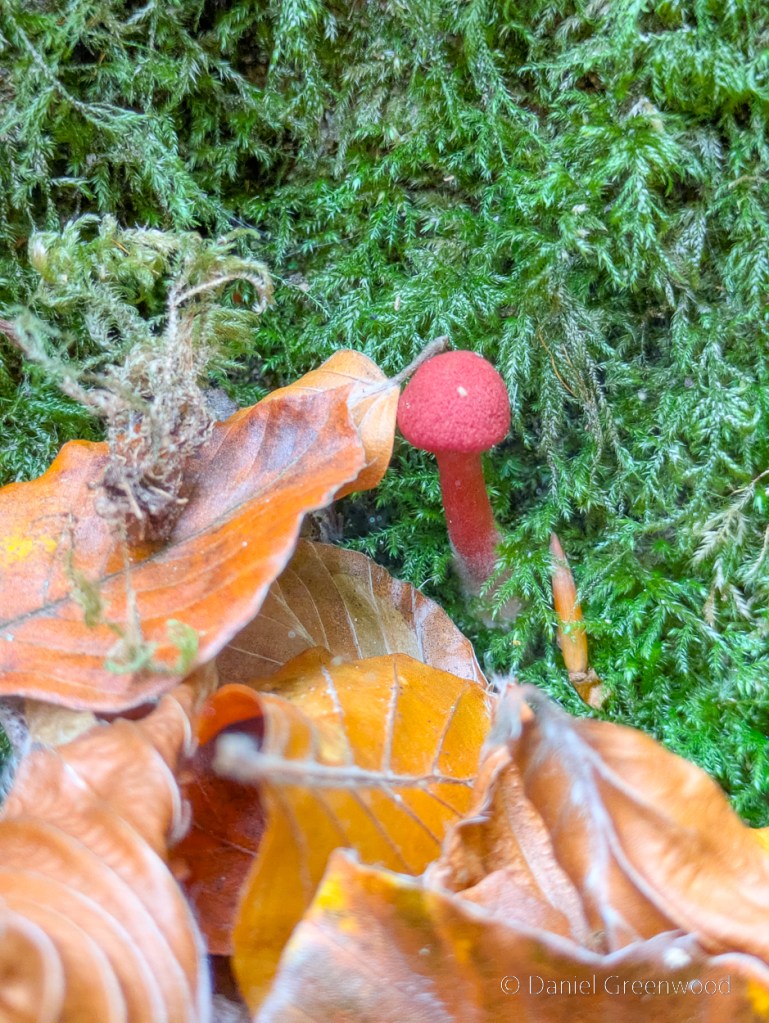
An attendee on the walk noticed this tiny red mushroom growing at the side of an old stump in moss. This appears to be blood red webcap (iNat), another new species for me if correct.
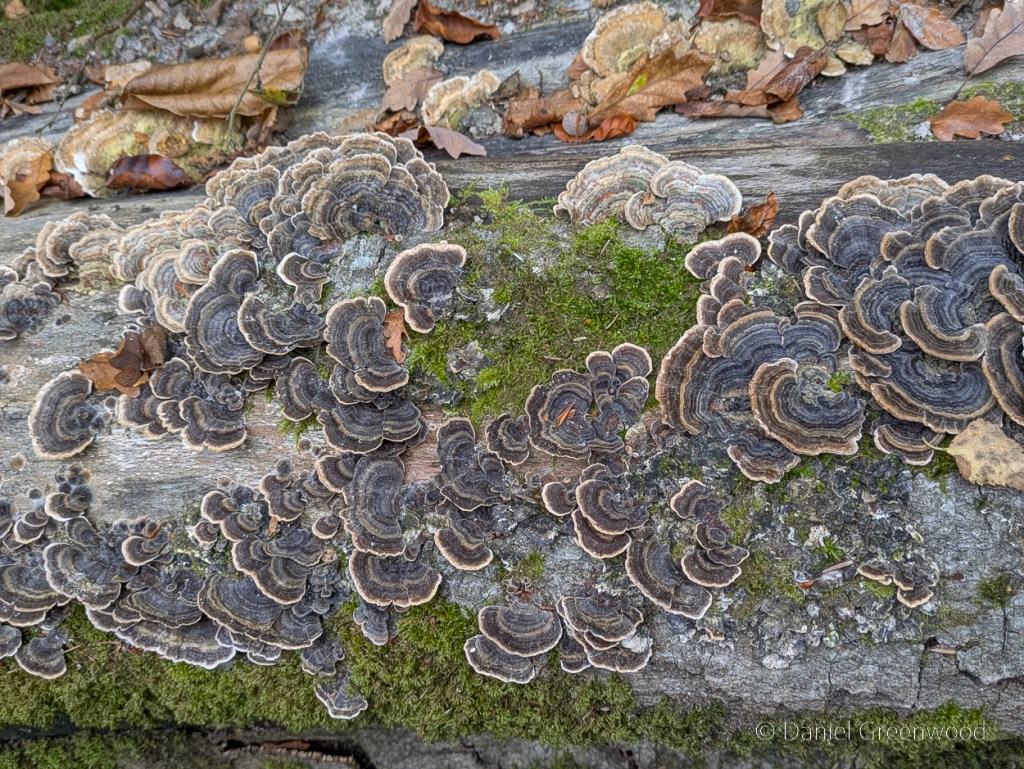
This is a gorgeous spread of turkeytail. If there had been some rain the colours would have been much more pronounced, but it was a very dry summer-autumn in 2025.
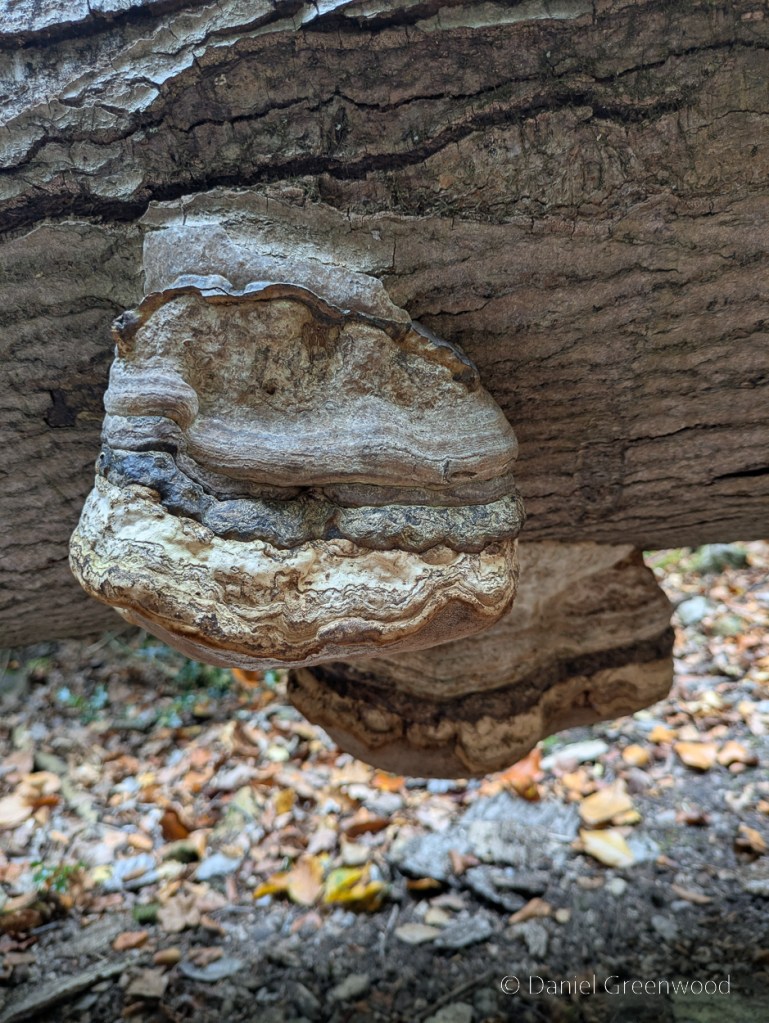
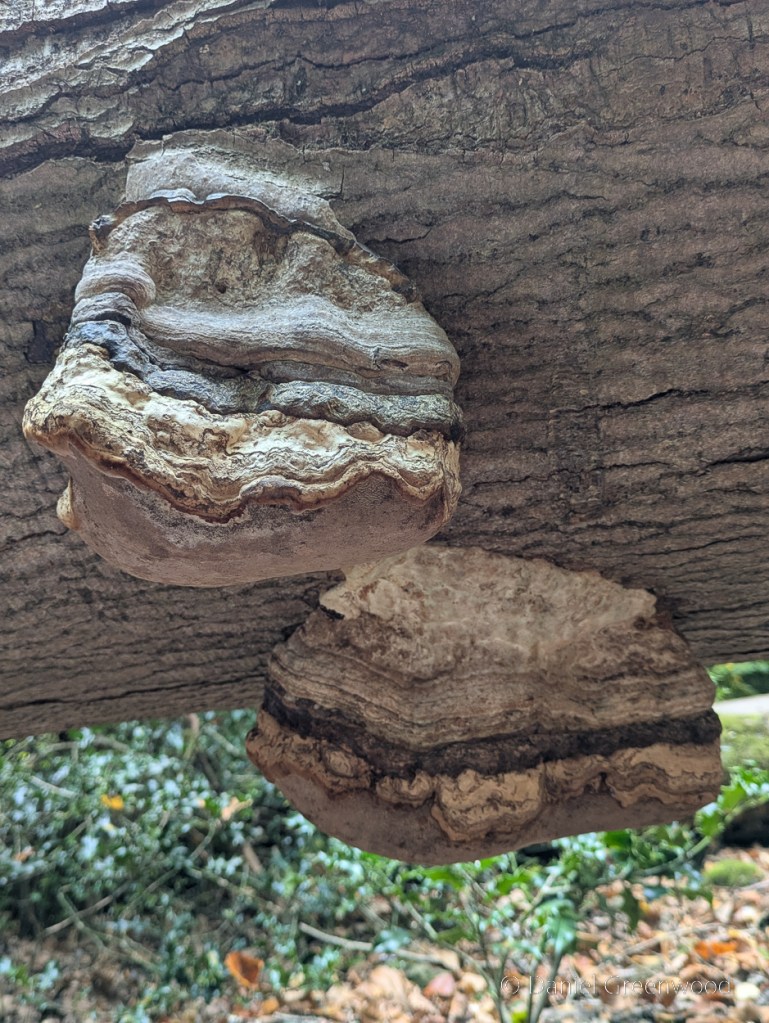
Nearby another attendee found this collection of hoof fungus. This isn’t a species I encounter too often, (and, out of interest, very rarely in London) so it’s always interesting to see. These two were rock solid, as ever, growing on the underside of a fallen beech. You can see they have grown after the tree fell, because they are not facing sideways.
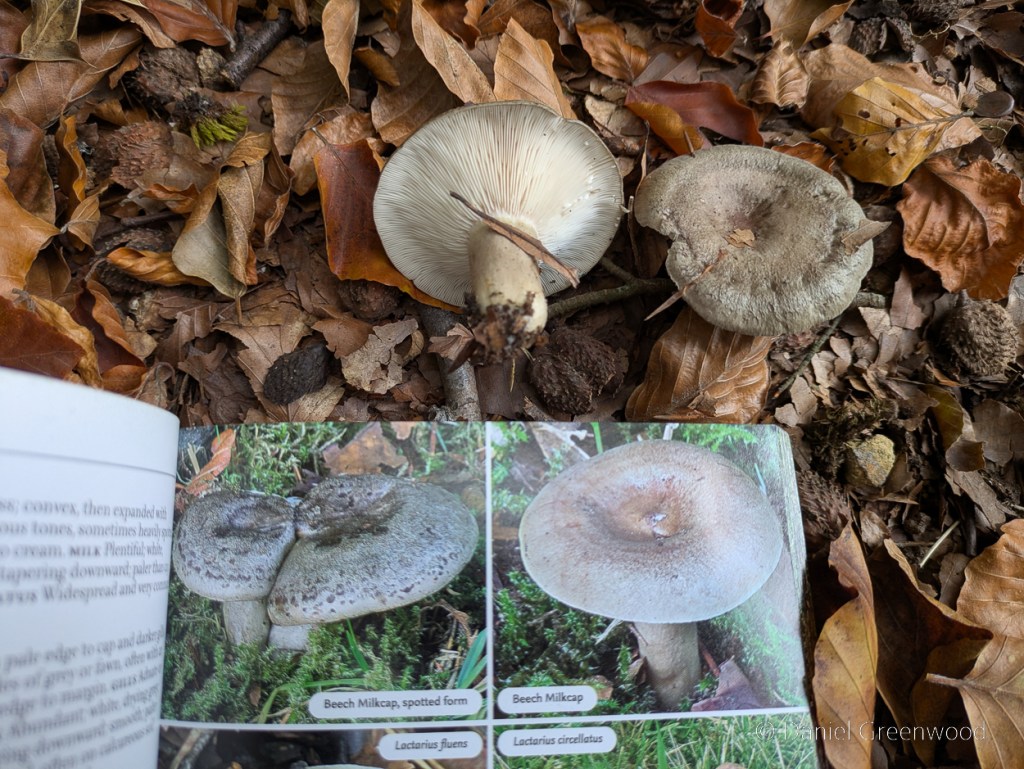
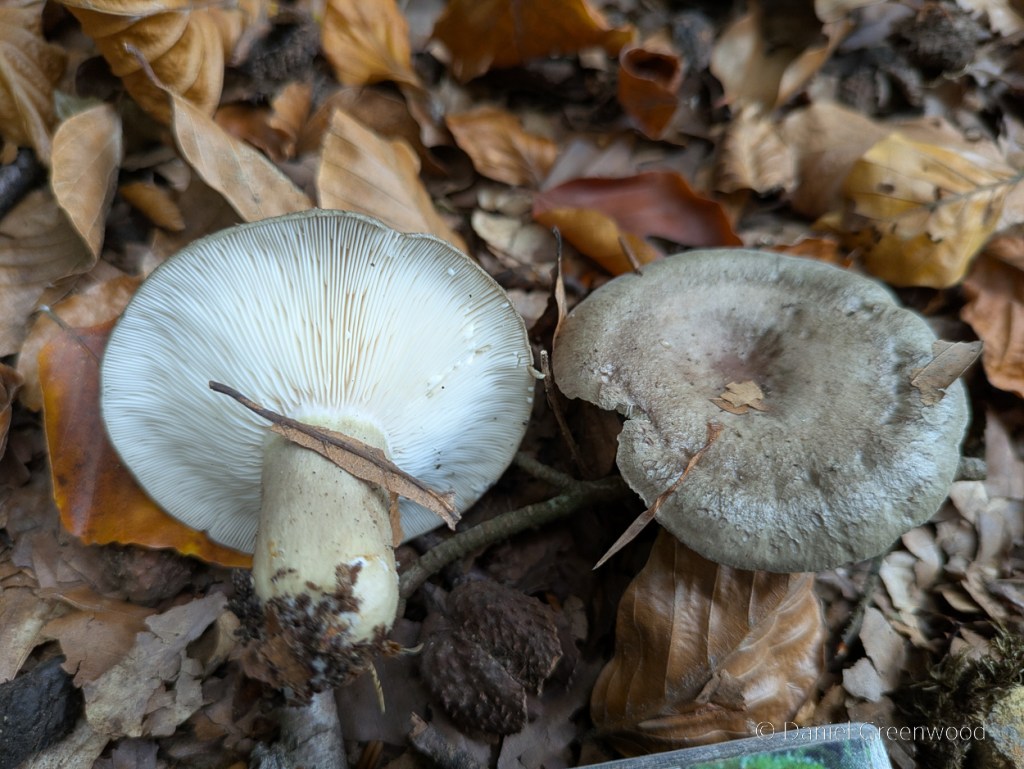
These milkcaps were very common. As you may appreciate from the image I’ve included from the field guide, I think these are beech milkcap. They were growing underneath beech trees and match the relevant diagnostics. The milk is white.
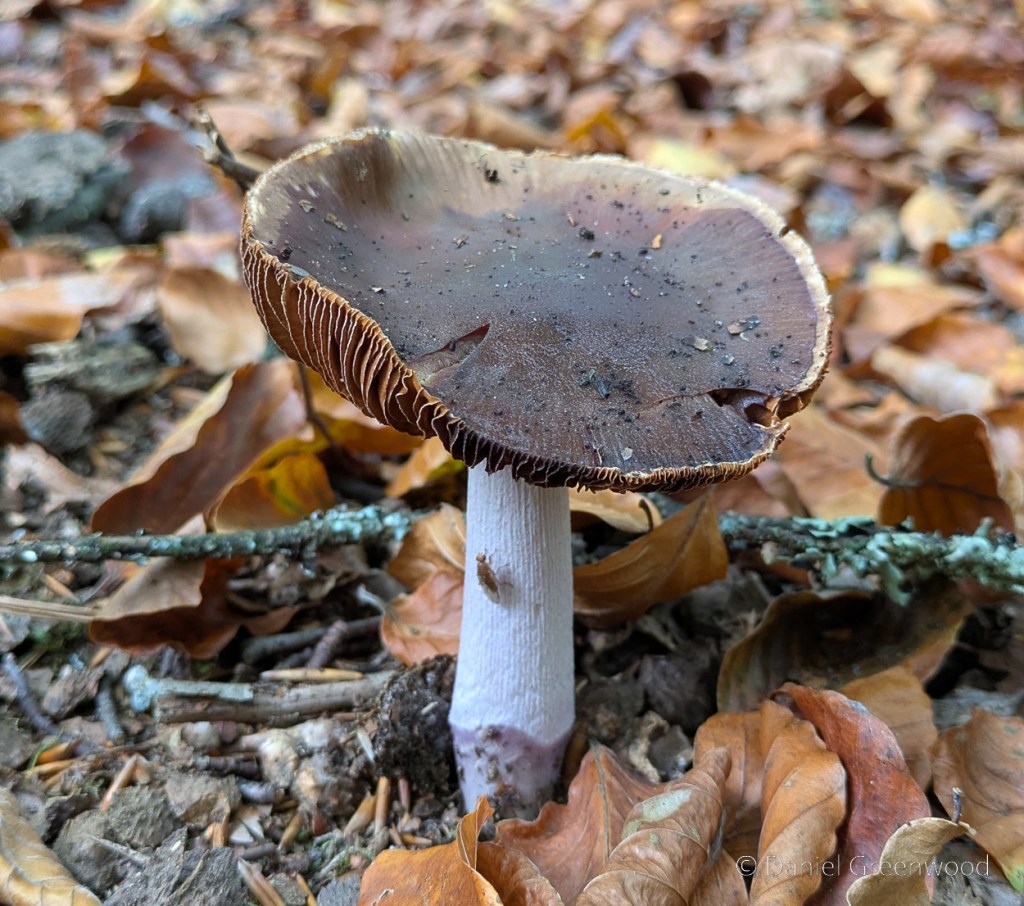
My guess is that this is a wrinkled webcap (iNat), another new sighting. Spot the fly on the stipe. The unusual kink and purplish blush to the base of the stipe may be indicative of the species.
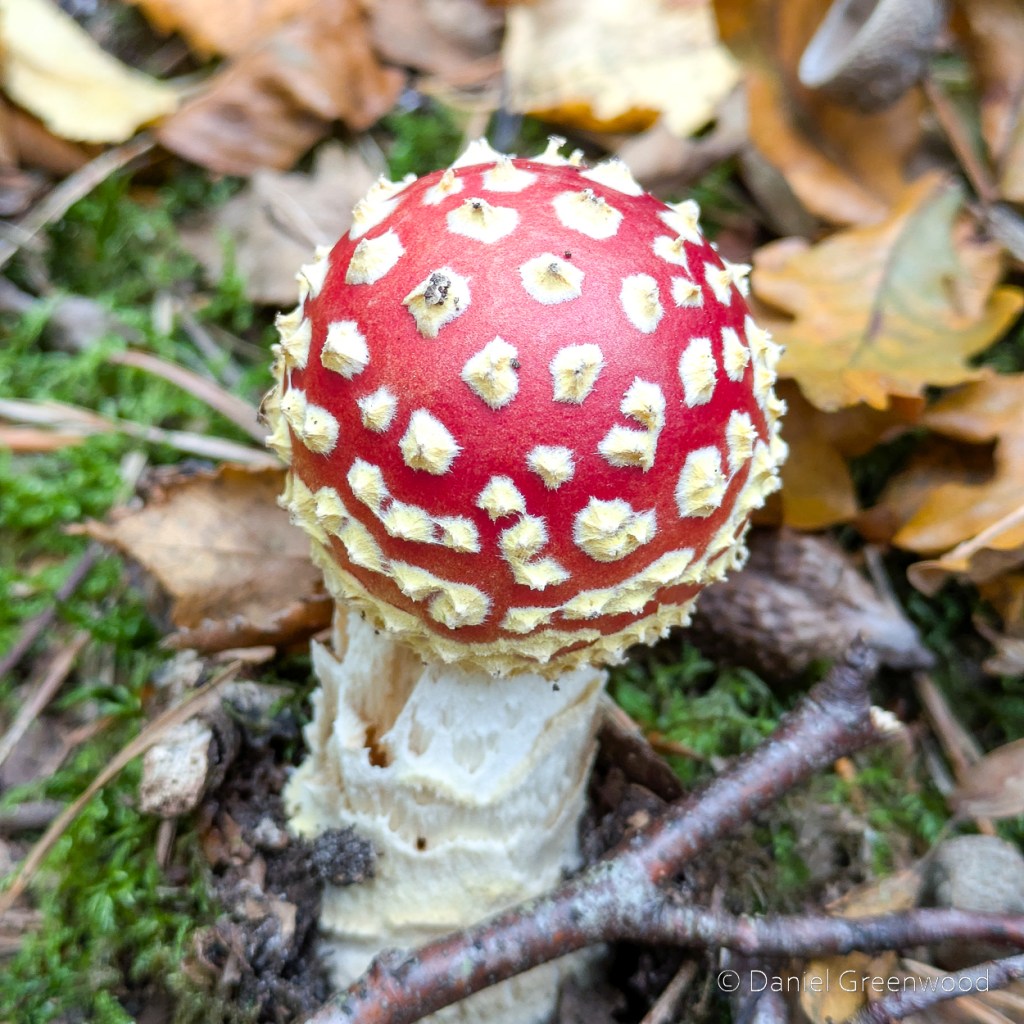
There was an older German woman on the walk and we had broken away from the group to talk about fly agaric. Then, boom, we saw one sitting right in front of us. This was the only one we saw during the walk.
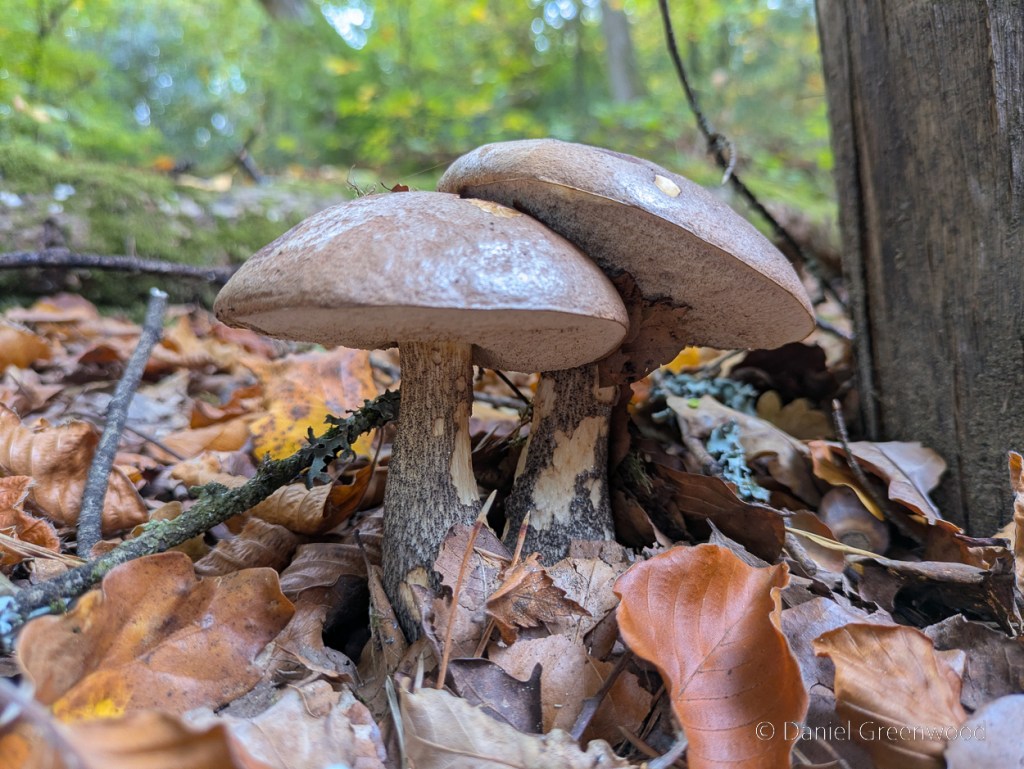
Finally, towards the end of the walk as we went out onto a lane, these leccinum boletes were growing near a fence post. My guess is that these are brown birch boletes.
Thanks for reading
 Fungi Friday 🍄
Leave a comment