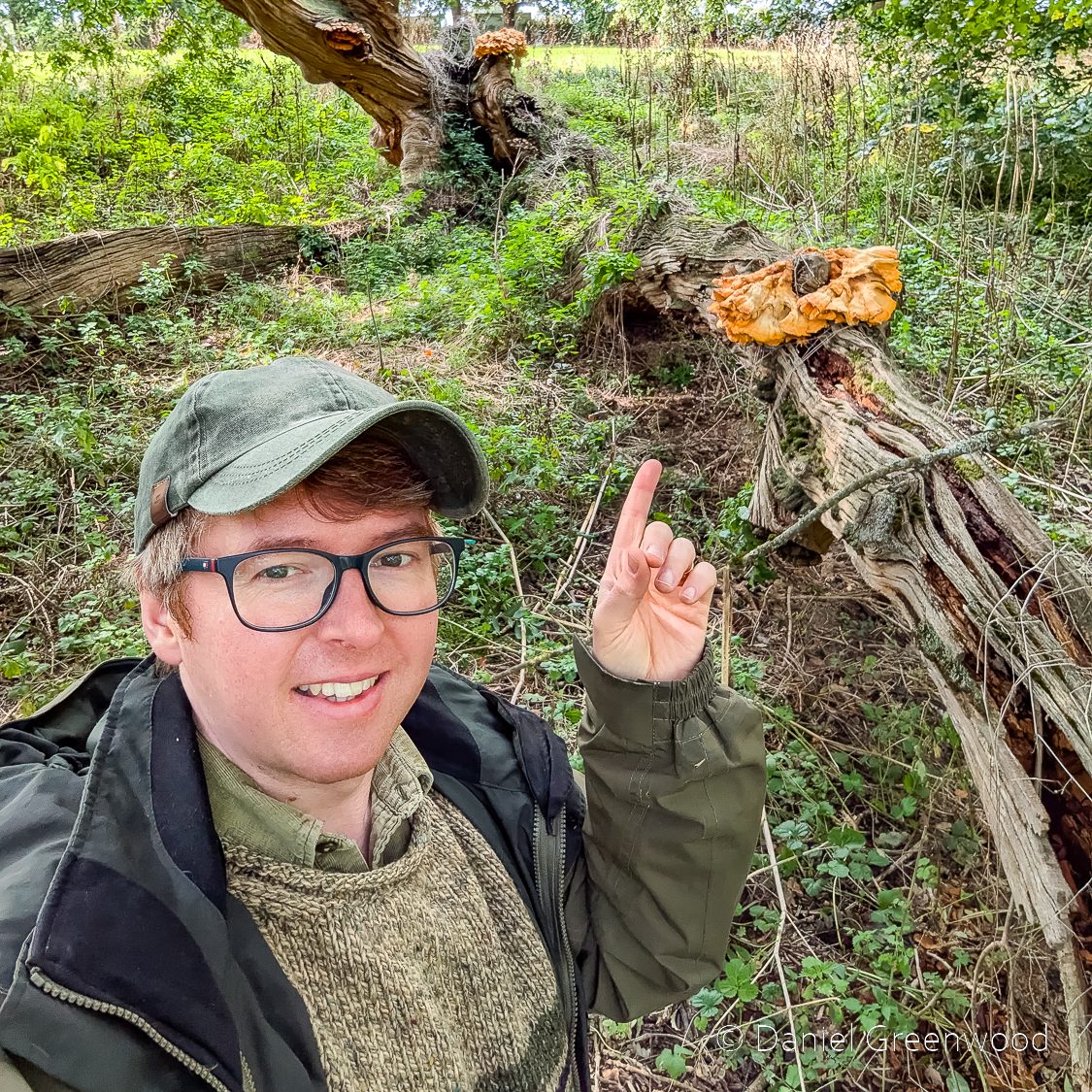
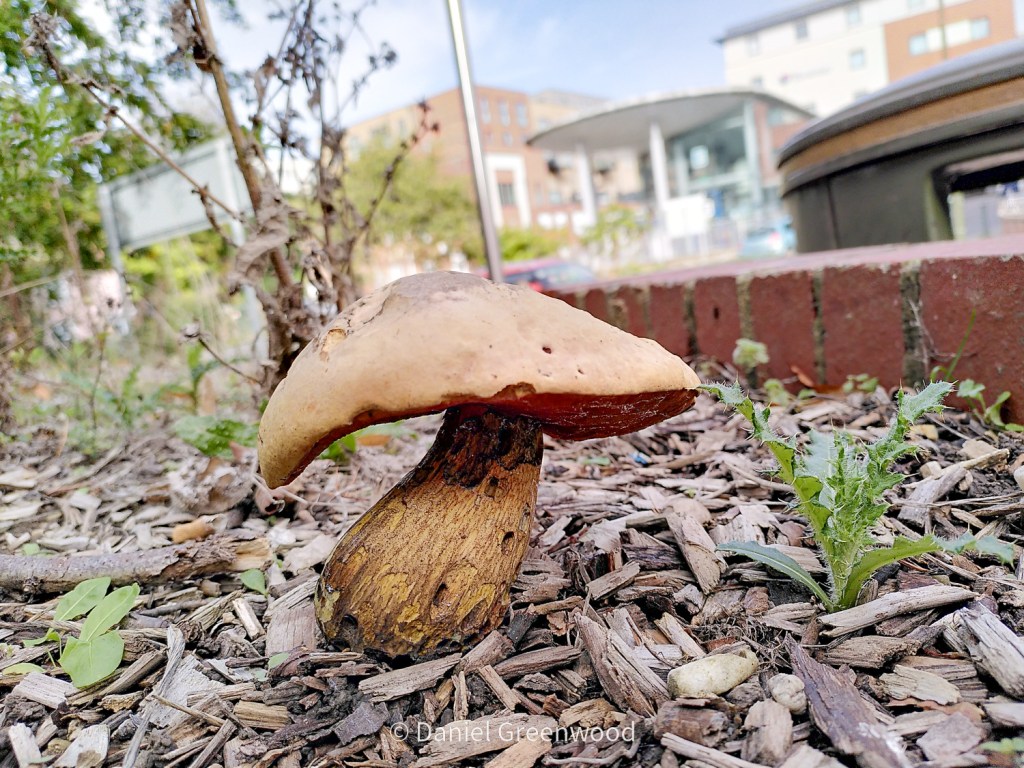
One of the things that made me love wild mushrooms is how they are not confined by human borders (that’ll be the spores). They’re not just in the woods or only in nature reserves. They push the boundaries of possibility and survival.
I learned about fungi in south London, and some of my favourite fungal encounters were in the built environment. I had another such encounter recently.
I have been keeping an eye on the woodchip outside my local library for a few months now. That focus has paid off handsomely.
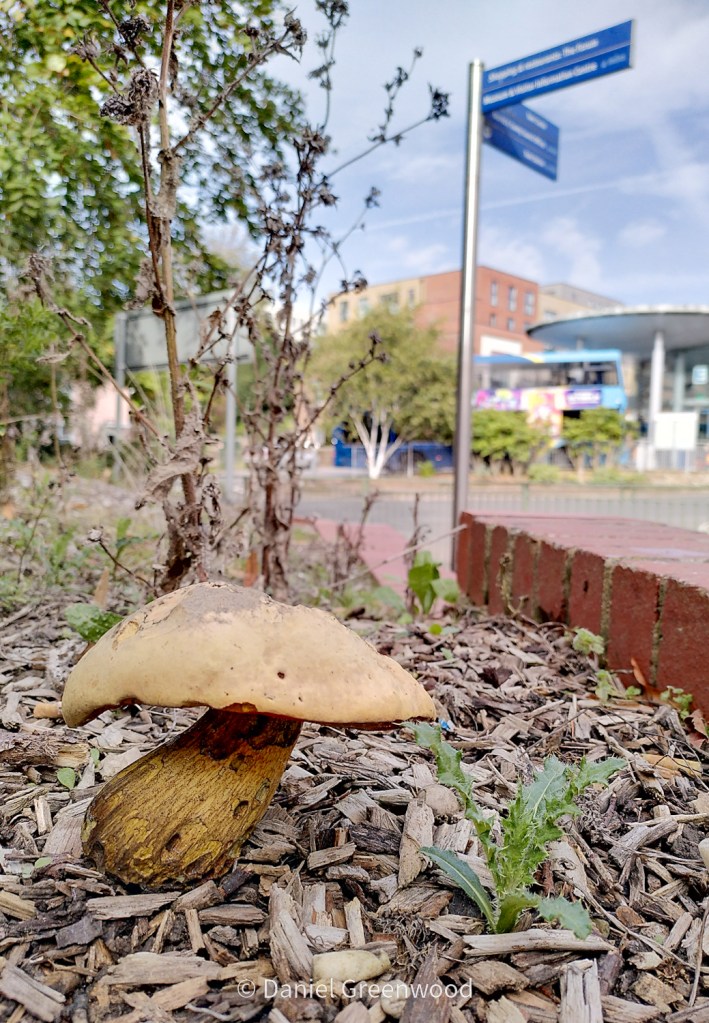
I knew instantly that these were boletes and shuffled round the wall to get these phone pics. How good are these pics by the way? You do you, Fairphone 3+!
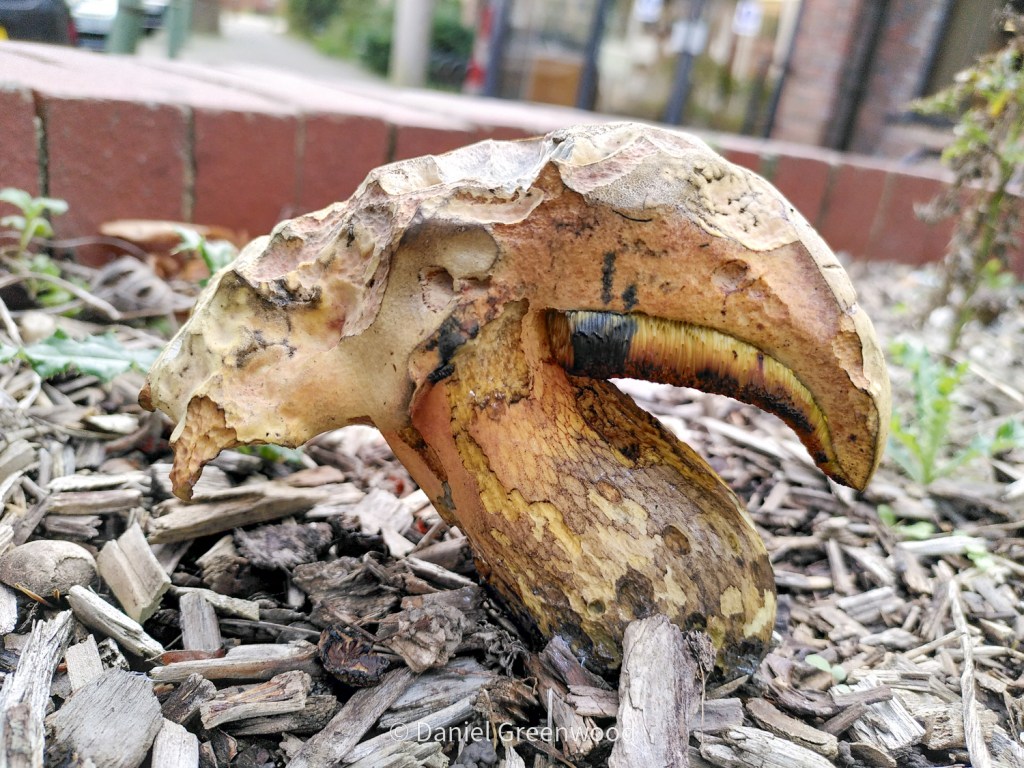
Boletes are a wonderful group of fungi but I feel like there is not enough time to really get to know them. Thankfully the photos here were interacted with on iNaturalist and I have a suggestion of lurid bolete!
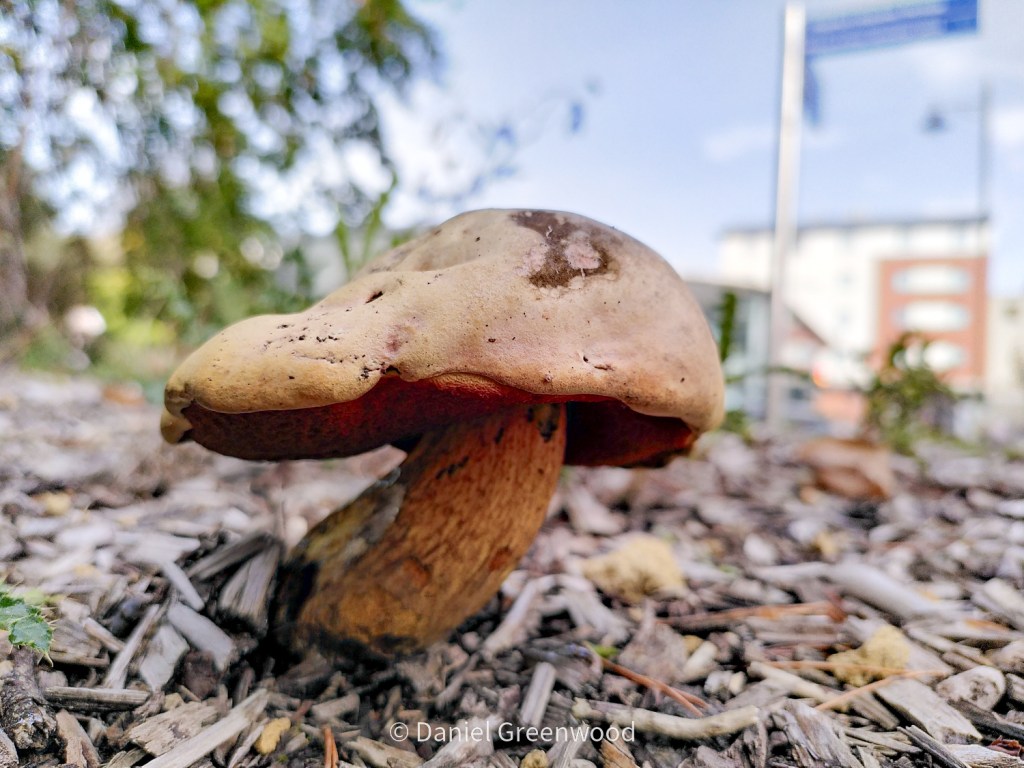
You can glimpse the red/orange pores here which help with the identification. These Suillellus boletes are very much the tie-dye fungi of this part of the world. Red, orange, yellow, blue, you name it.
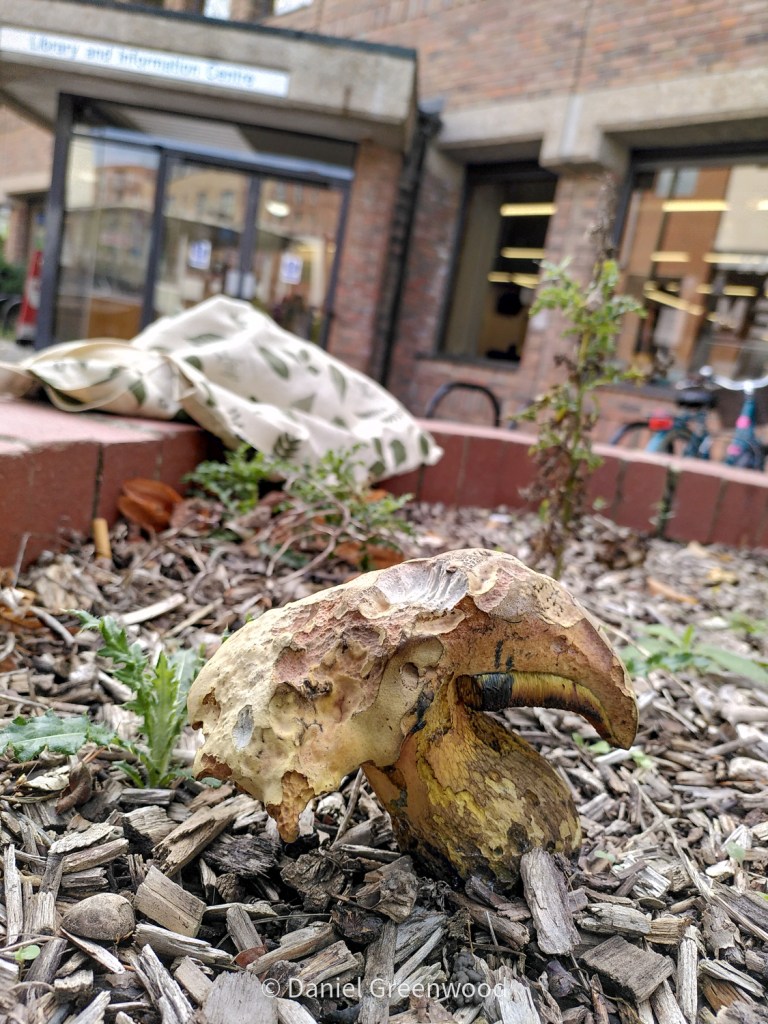
This nicely expresses just how bold this mushroom’s placing was.

I hope a lot of people saw these mushrooms and felt inspired by nature’s resilience.

There were a couple of smaller ones that passersby had picked, probably out of curiosity.

Meanwhile, not far away from here in another municipal planting area, there was a brown birch bolete.

Here you can see the pores, but it’s in pretty poor(!) condition otherwise.

Another reason I think it’s a brown birch bolete is that it’s growing under a birch. I’m not sure if this is the native silver birch (Betula pendula) but it would be interesting if it isn’t. I say that because it could mean other non-native birches can maintain symbiotic relationships with native mushrooms.
Thanks for reading.


 Fungi Friday 🍄
Leave a reply to sporesmouldsandfungi Cancel reply