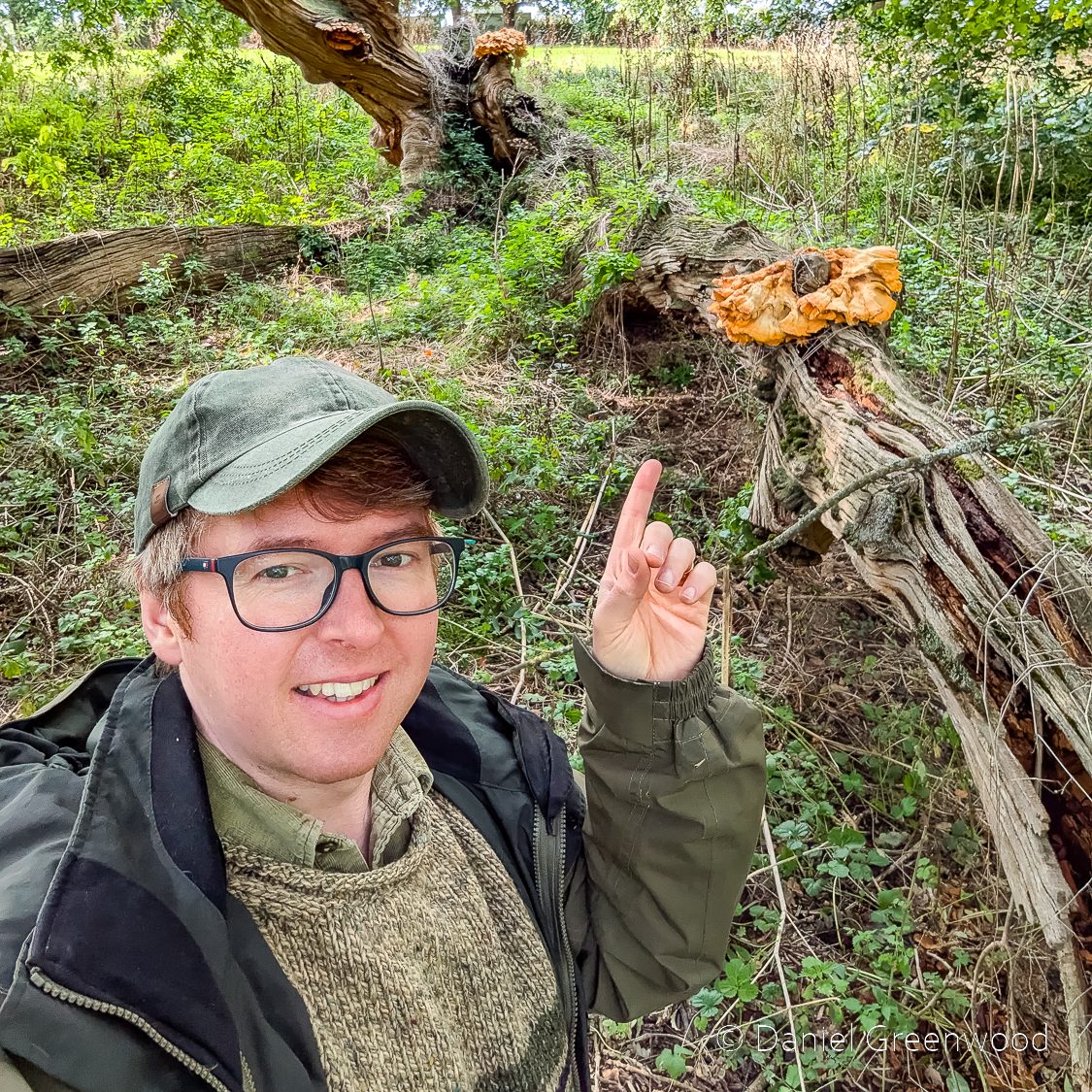
Near Petworth, West Sussex, October 2025
In the peak mushroom season I made a visit (on my way back from Ludshott Common) to the woods outside Petworth in West Sussex. This is an area rich in ancient woodland and farmland, within the Low Weald areas of the South Downs National Park.
The most significant tract for woodland here is Ebernoe Common National Nature Reserve which is owned and managed by Sussex Wildlife Trust. It’s an extremely sensitive woodland and foraging is prohibited. If you go there treat it with the utmost respect whether you are a mushroom enthusiast or a dog walker.
There’s some controversy in the area at the moment because of a planning application to expand shooting activities, and the potential impact on ancient woodland and its wildlife in the area.
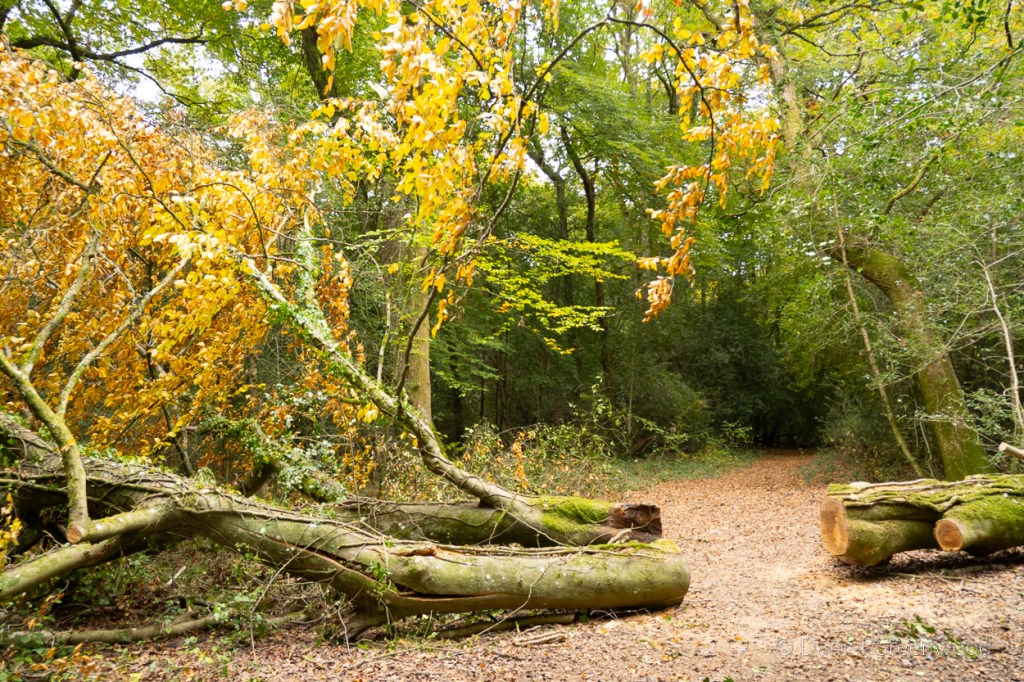
There has been a lot of windblow in recent years, a natural part of how a woodland ‘manages itself’. We have had a lot of heat, drought and then the now normalised winter deluges of rainfall. This results in new habitat for fungi and the rare insects that live inside decaying wood.
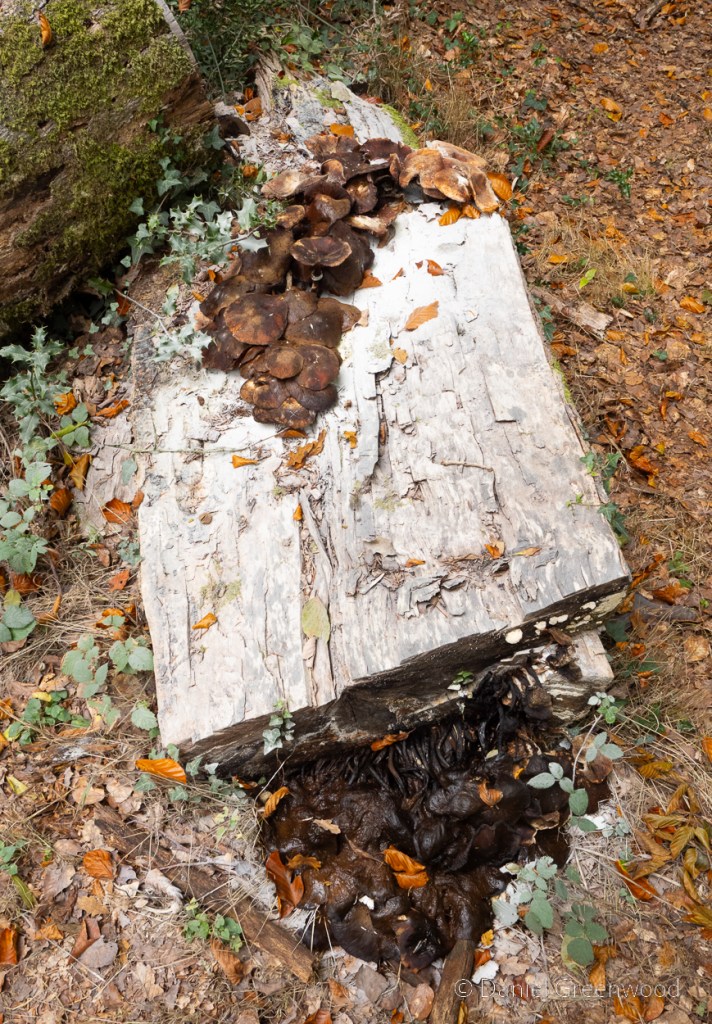
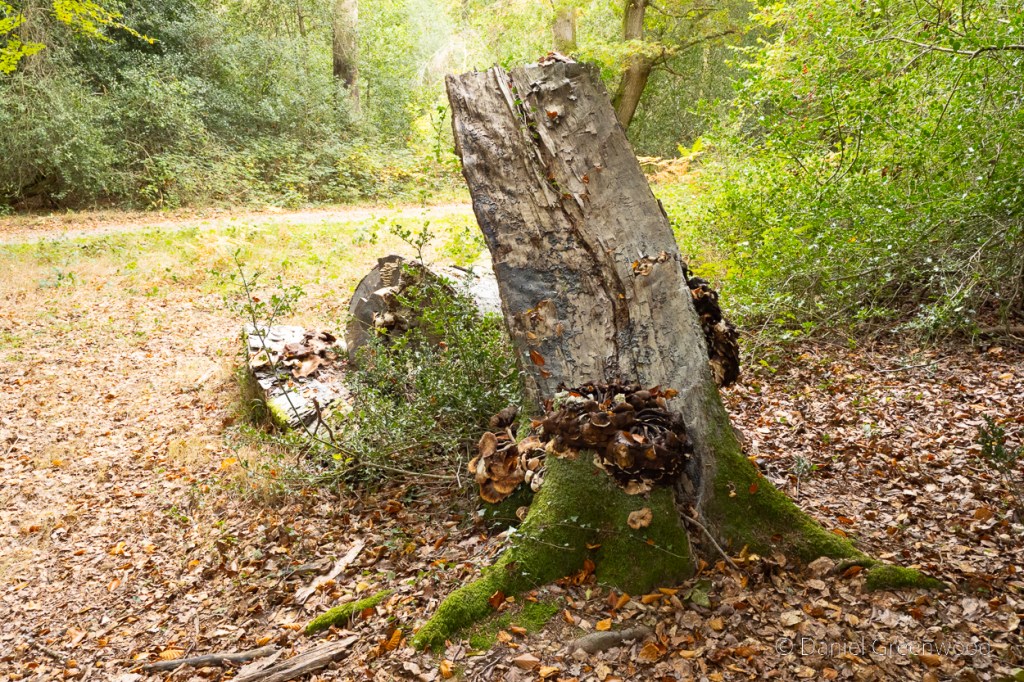
One of the great lessons of the last few decades in woodland management has been the need for dead and decaying wood to remain, whether standing or fallen. This was an interesting monument to that knowledge, which had been plastered white with the spores of honey fungus.
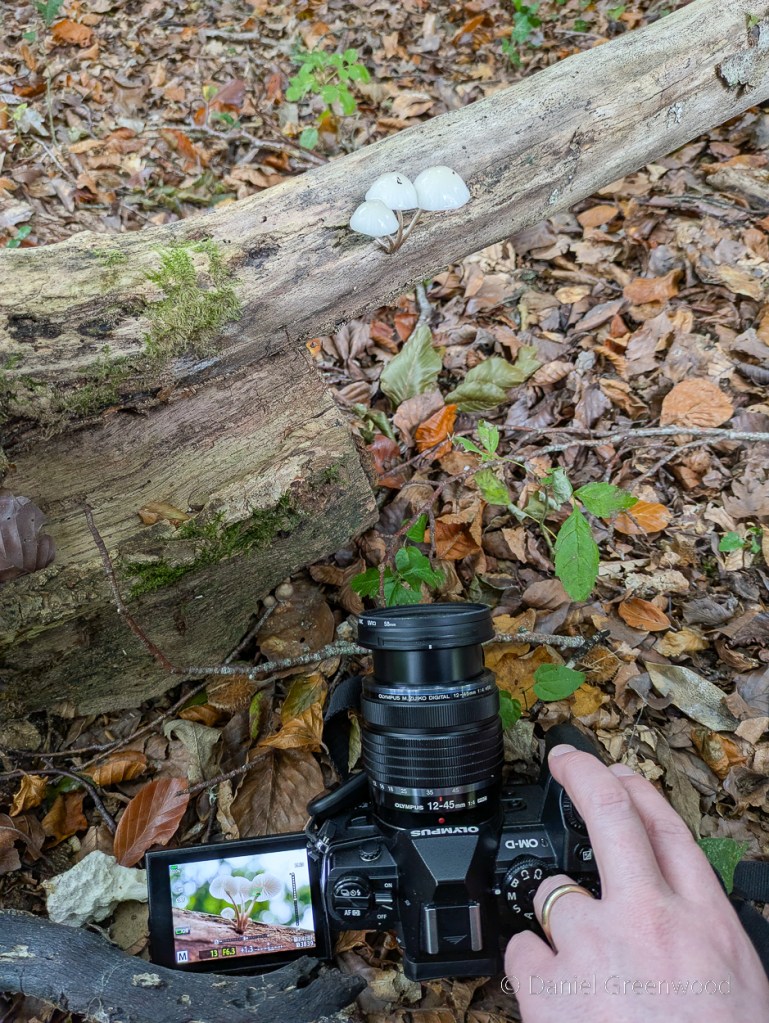
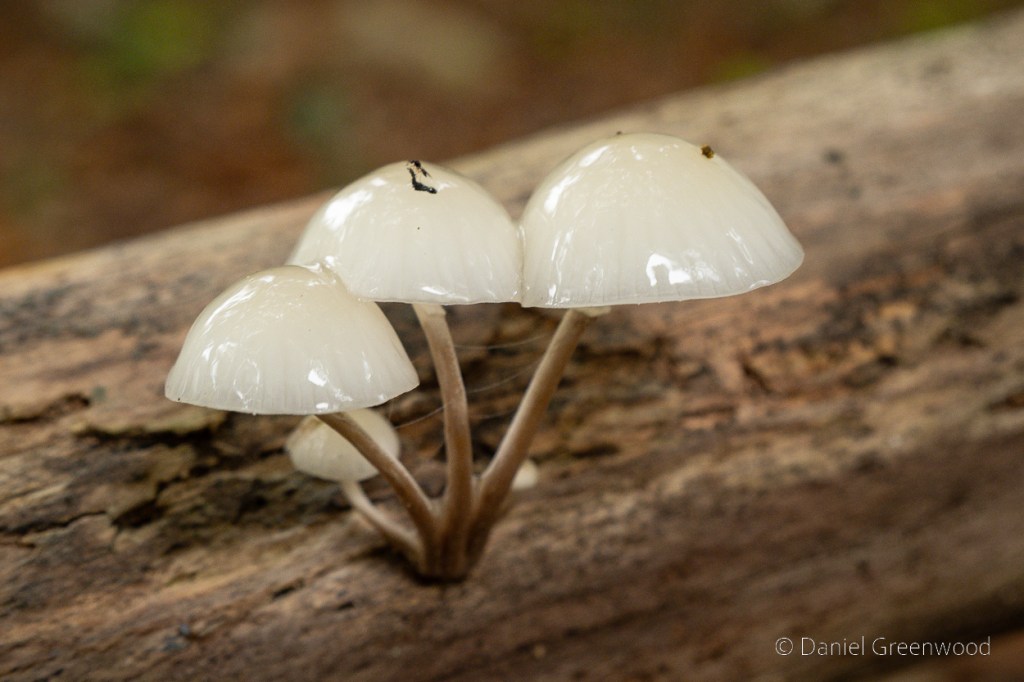
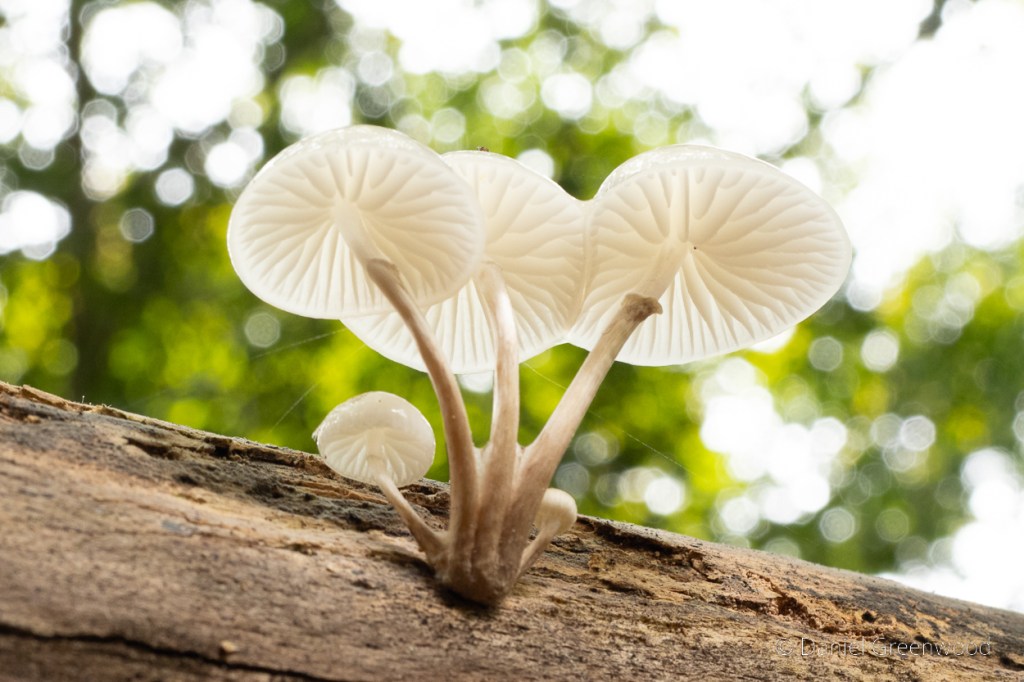
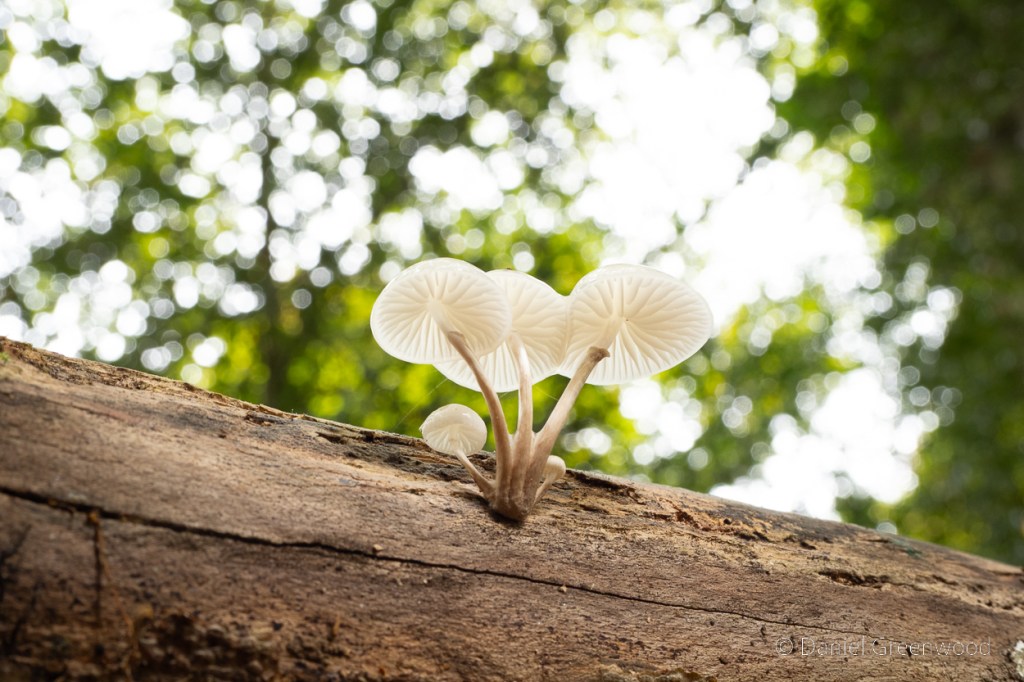
Fallen trees, especially beech, provide excellent perspectives on porcelain fungus. Embarrassingly I didn’t manage to get this in focus, probably because I was too busy doing a behind h scenes phone pic.
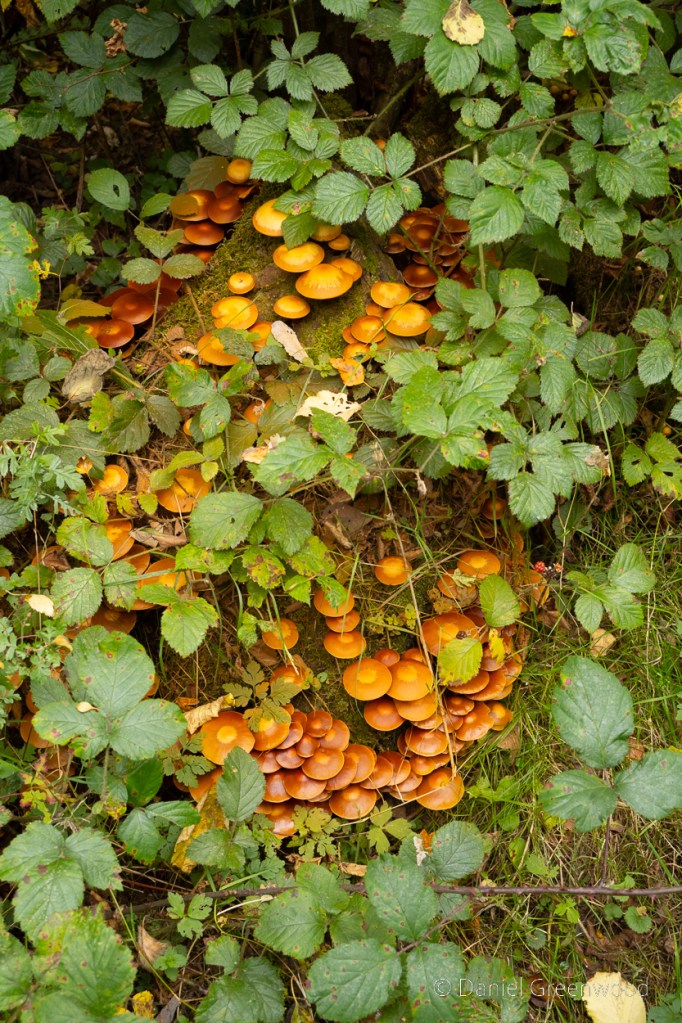
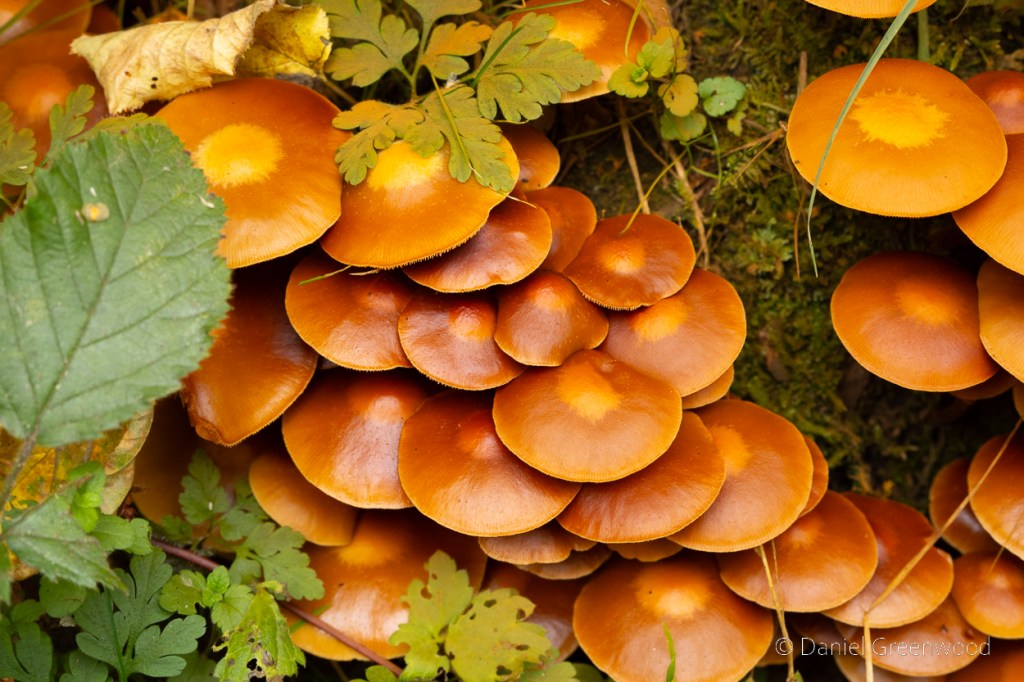
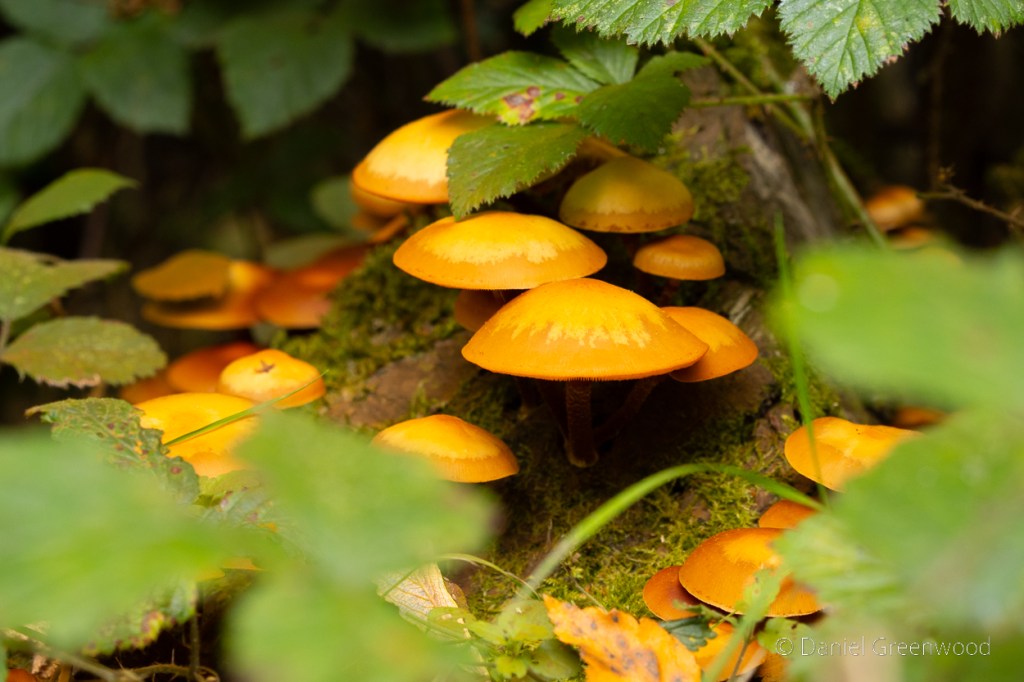
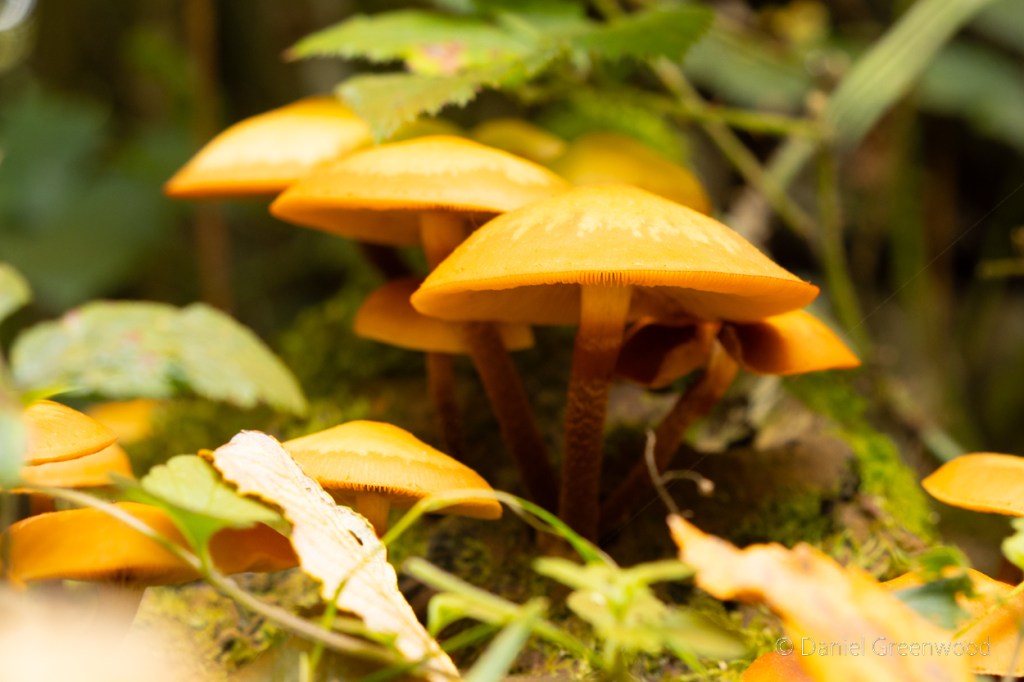
Sheathed woodtuft is another deadwood mushroom to be found in October, but often in very large numbers. It can be mistaken for funeral bell which is deadly, but the latter is usually found in smaller numbers.
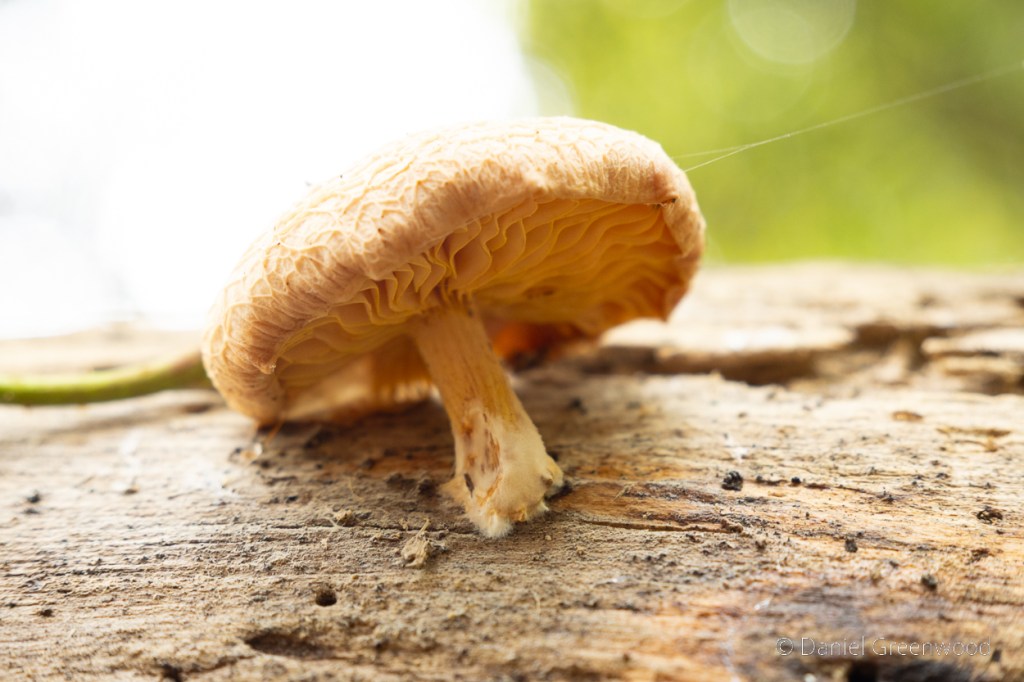
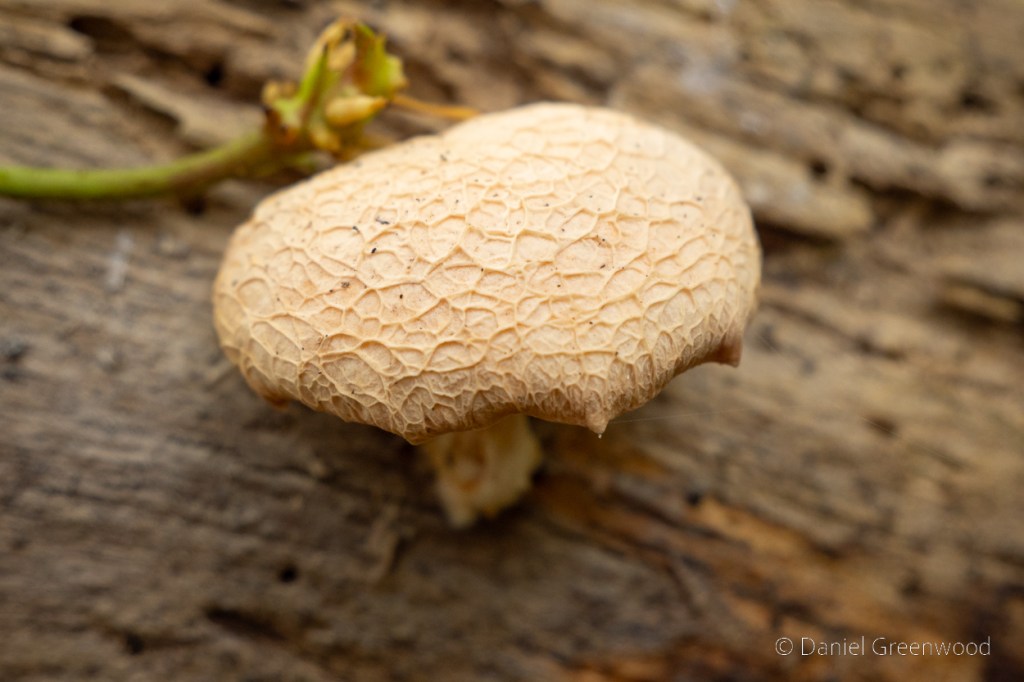
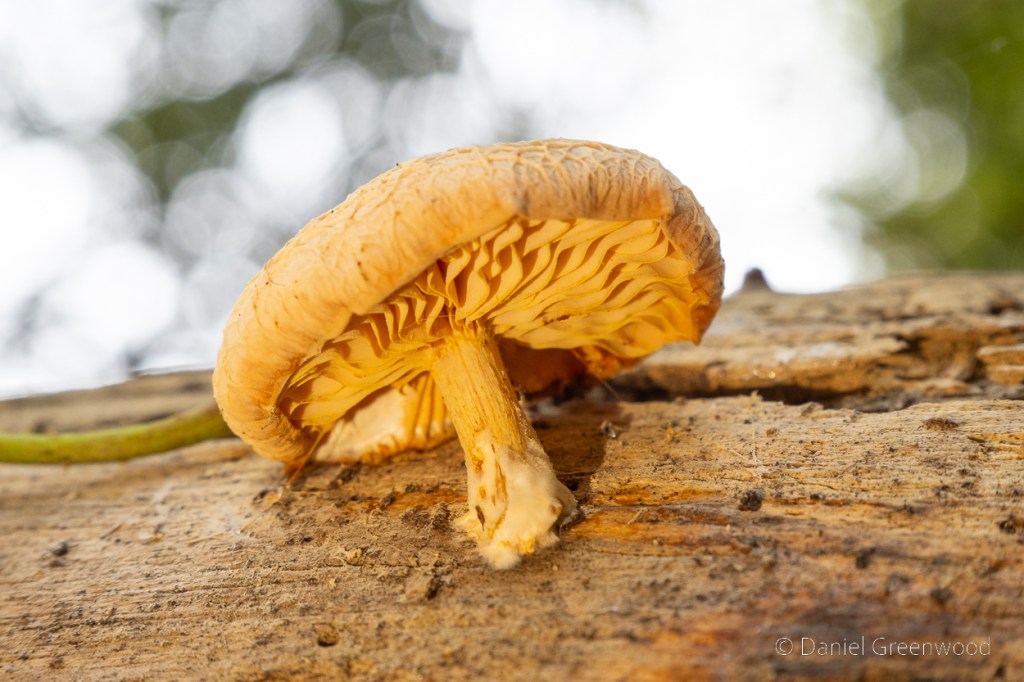
You can find some spectacular images of wrinkled peach online with the globules of water escaping from the gills. I do wonder if people are spraying them with water to exaggerate the effect, though this very wrinkled peach indeed could have done with a drink.
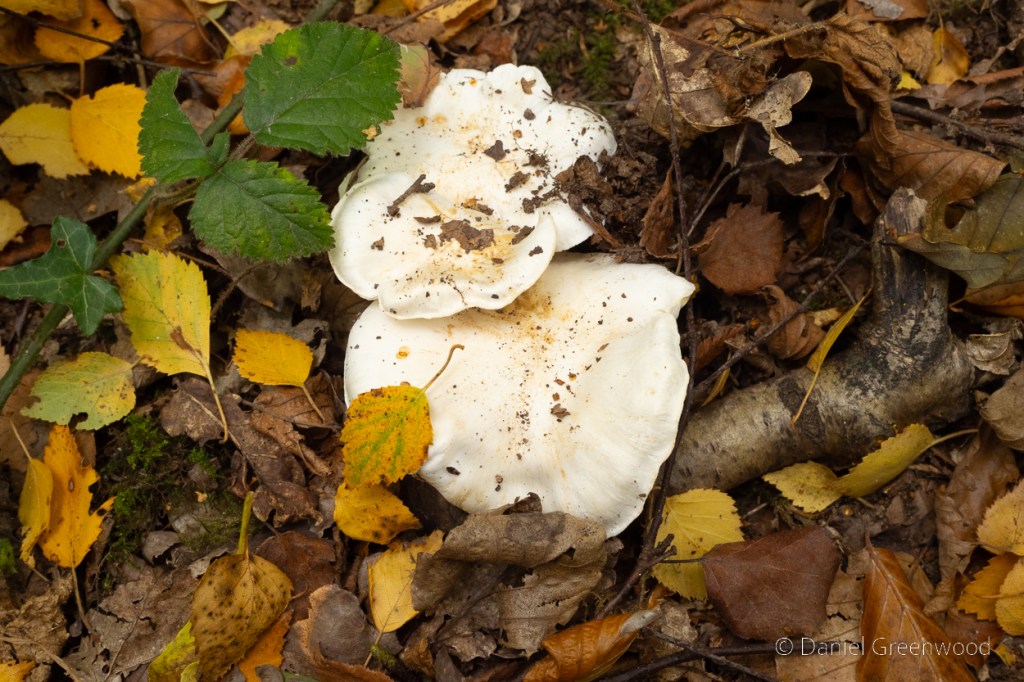
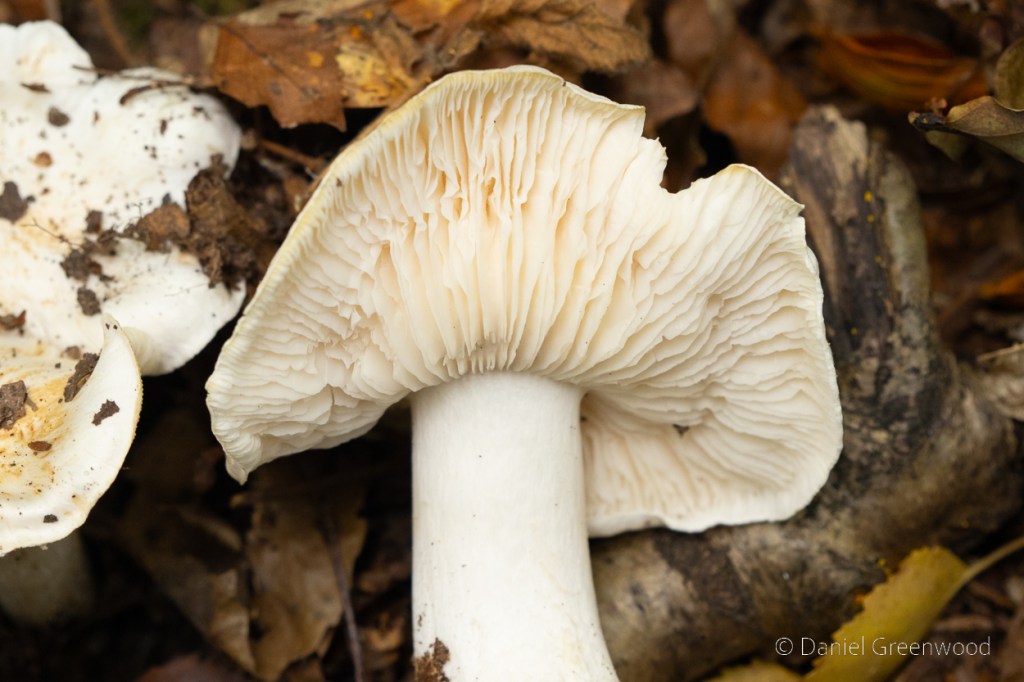
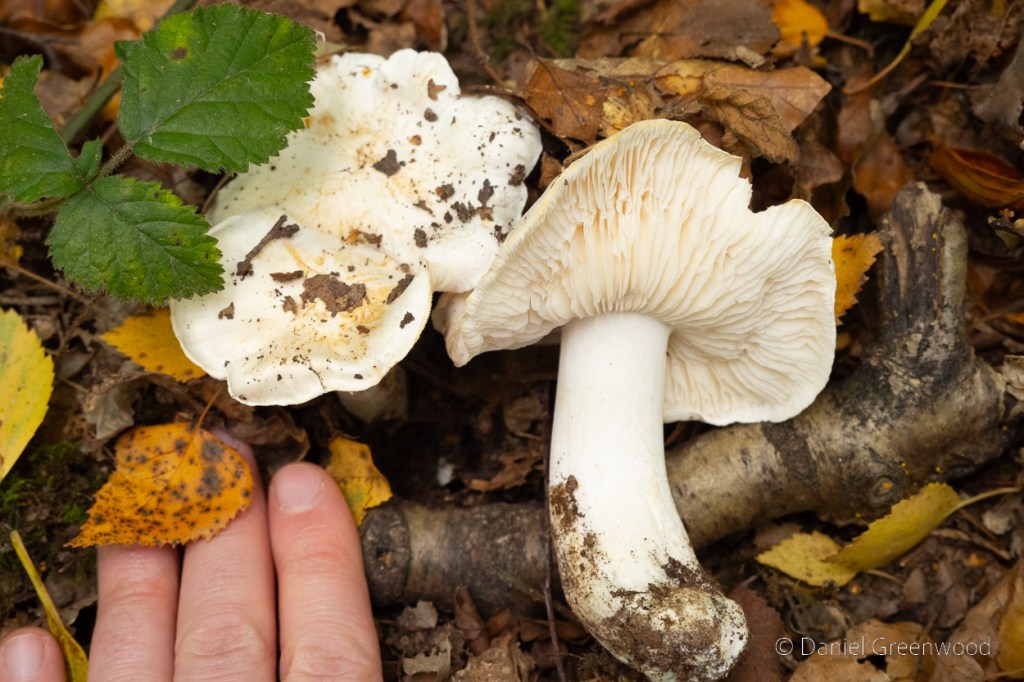
Knights are a group I struggle with as they appear quite subtle to me, and I don’t see a lot of them other than sulphur knight. This could possibly be blue spot knight, which I saw on the same day at Ludshott Common in nearby Hampshire.
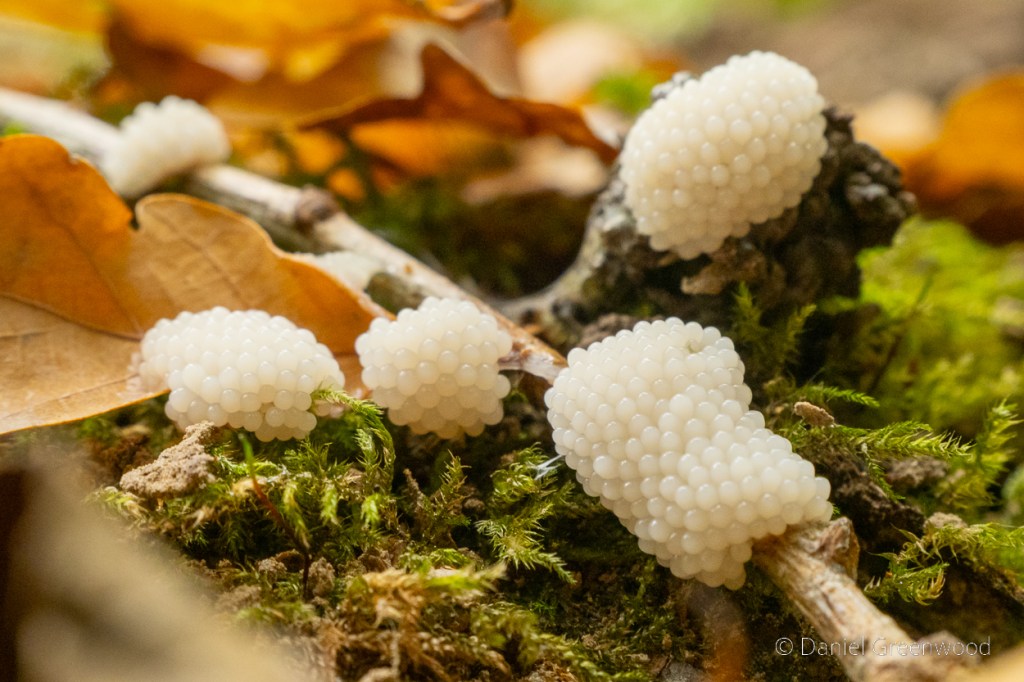
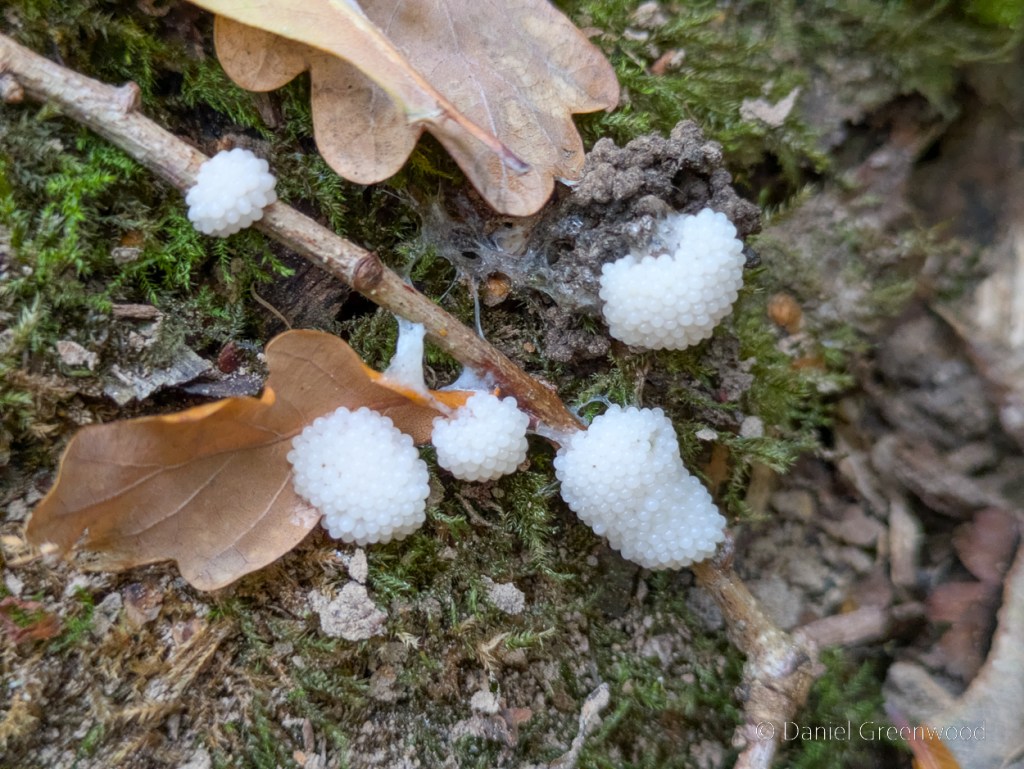
While this is not a fungus but instead a slime mould, I thought I’d include it. It’s one of the stemonitis slime moulds (iNat).
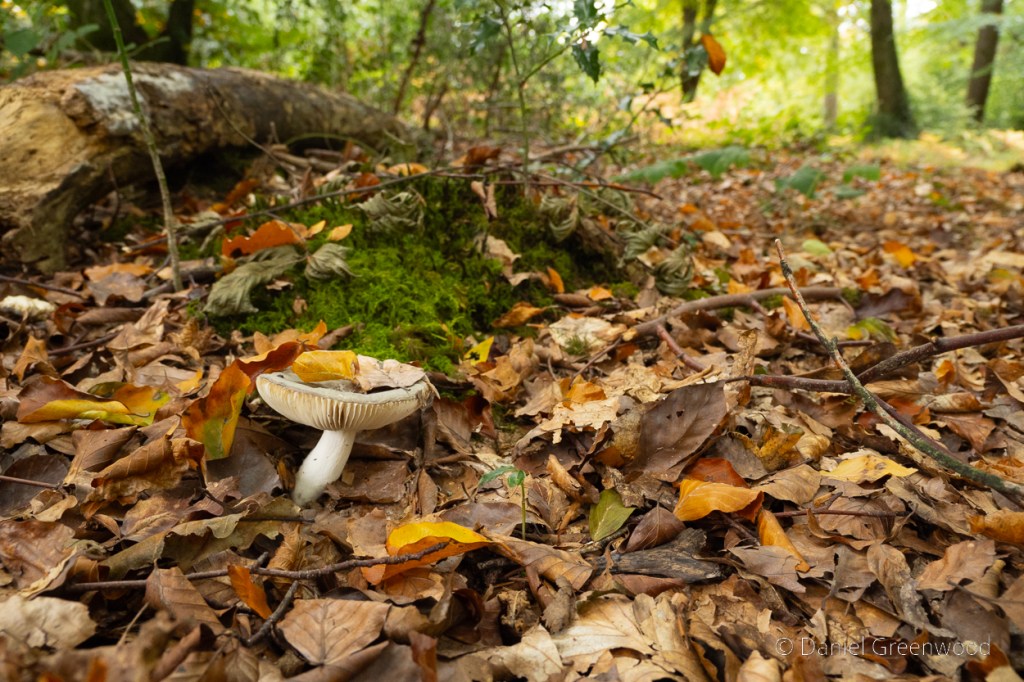
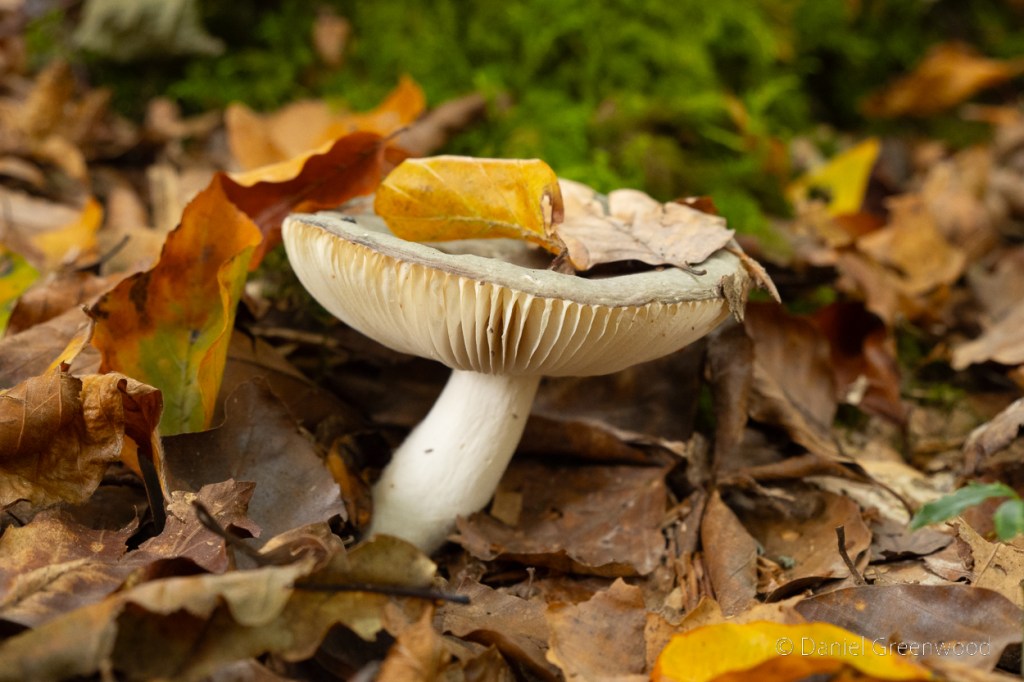
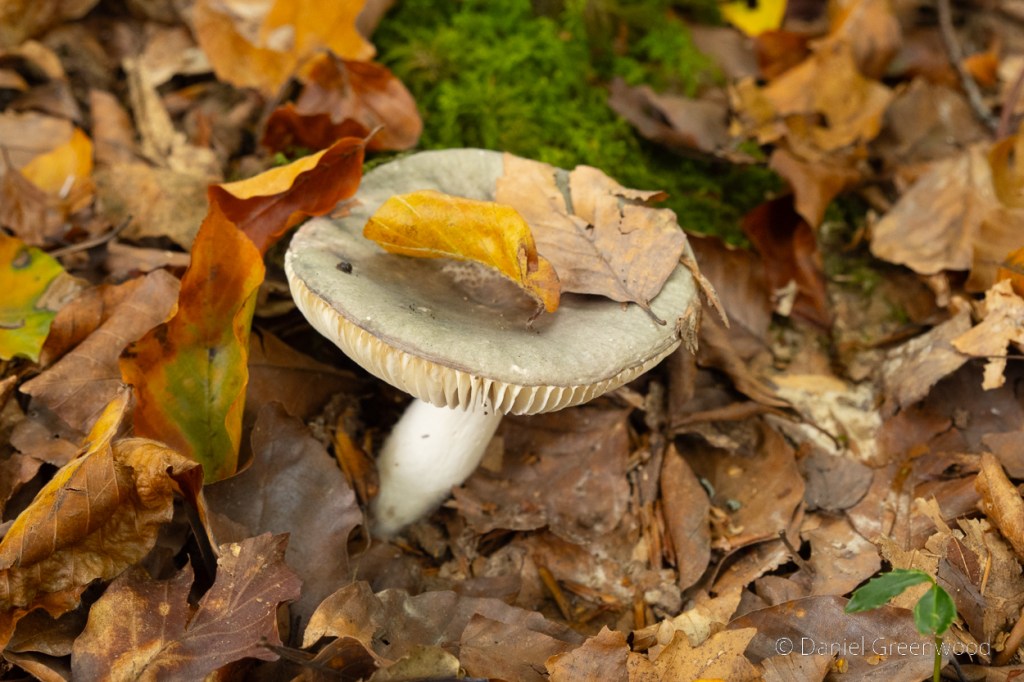
Now for some russula action. I think this could be one of the ‘jade russulas’, but as ever I don’t know.
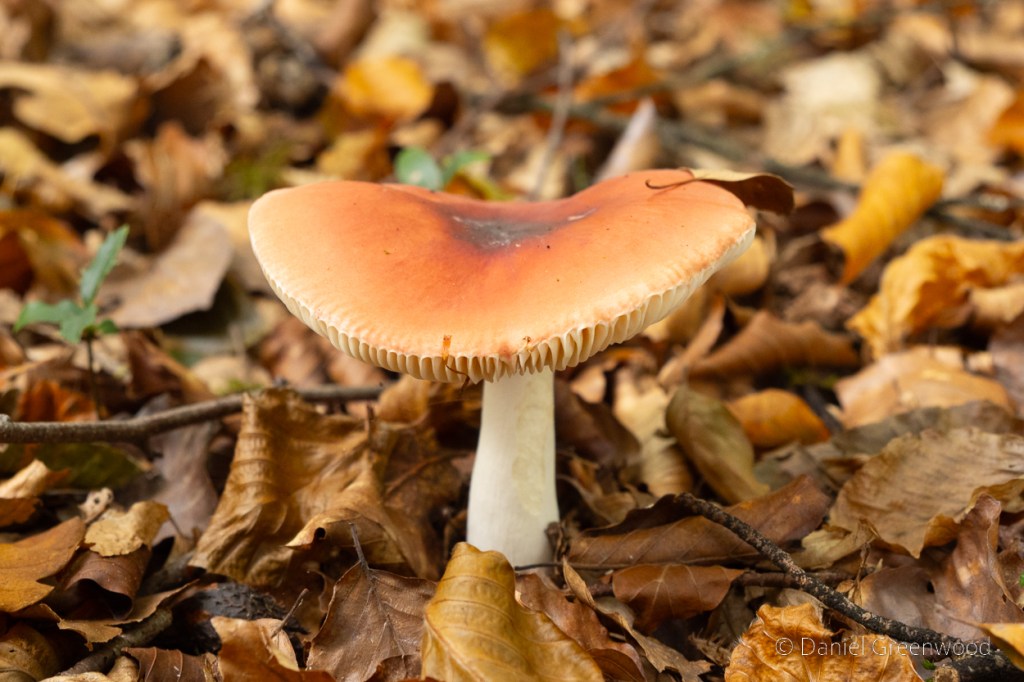
This russula is a bit different because it has a dark blush to the centre of the cap. Many of them do, looking through the field guides.
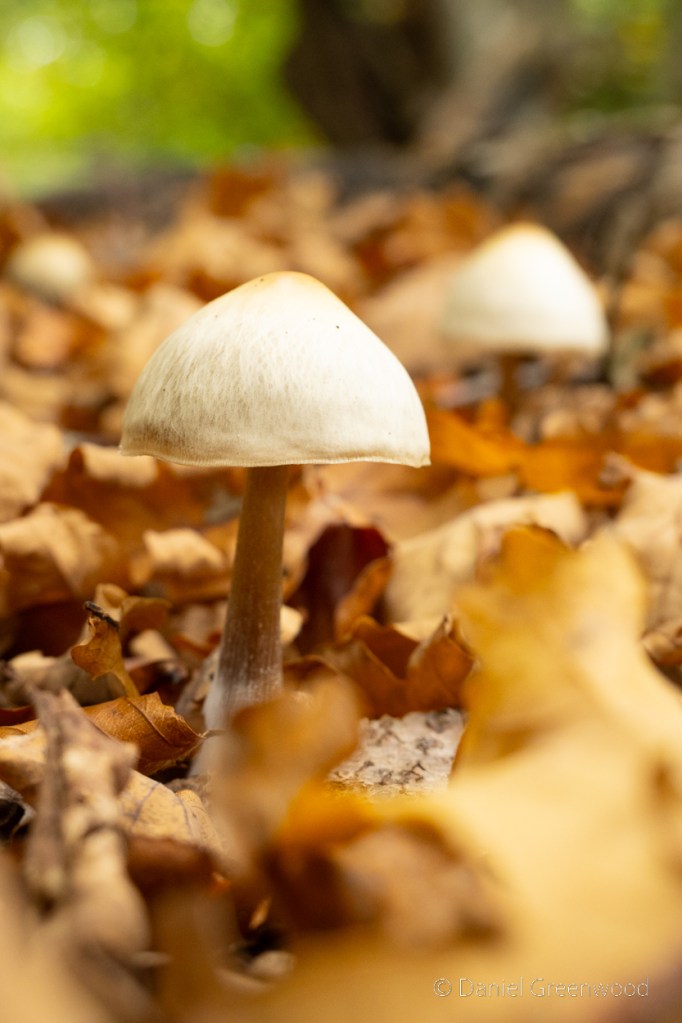
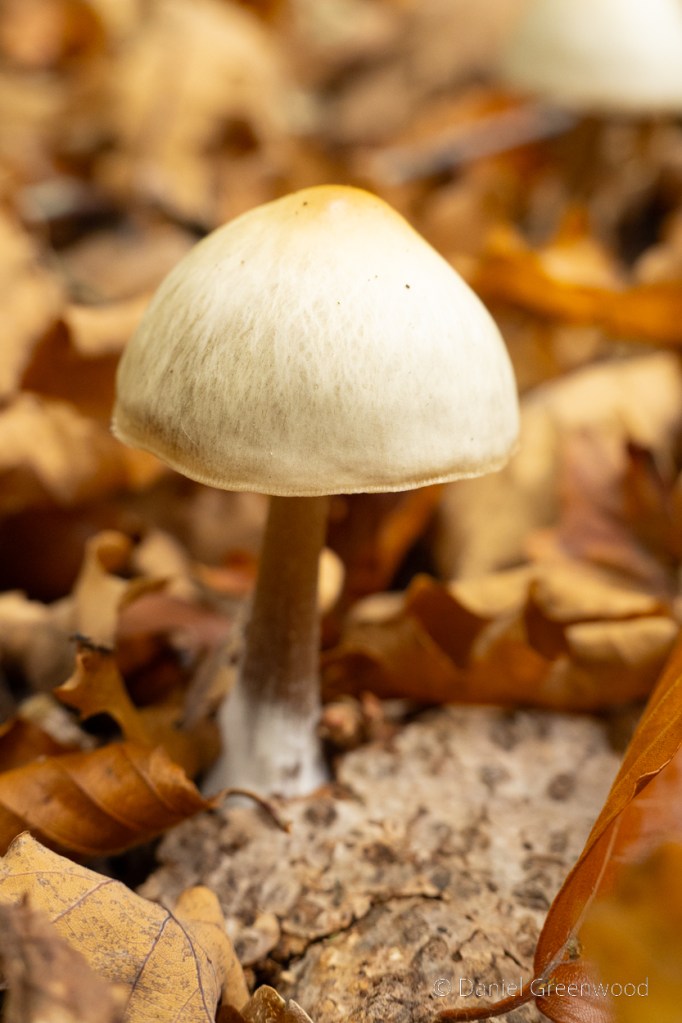
I don’t know what this one is.
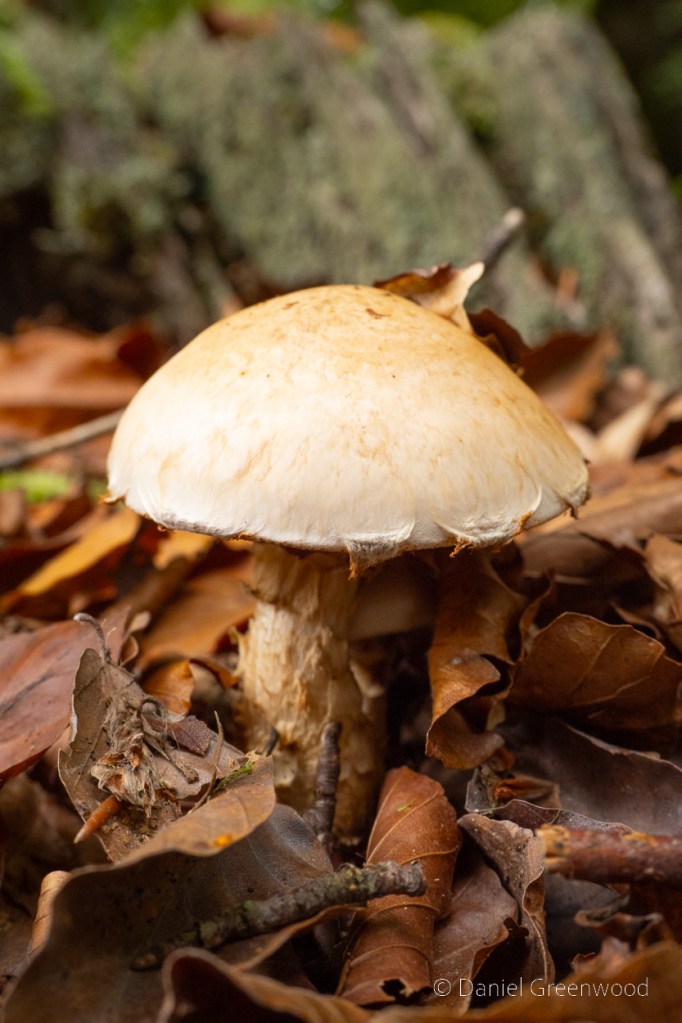
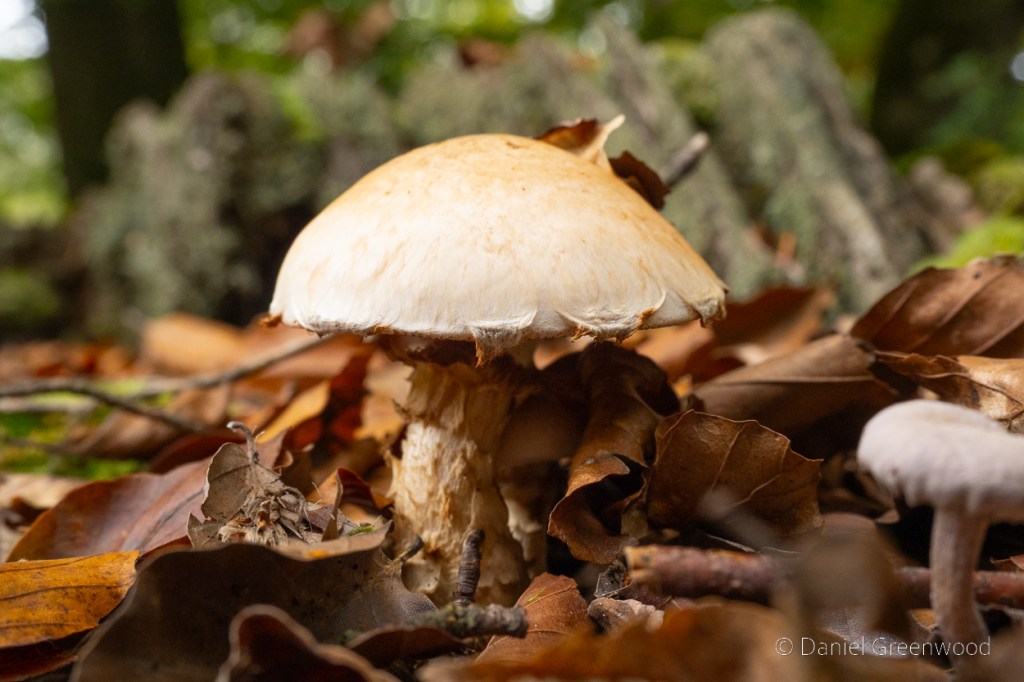
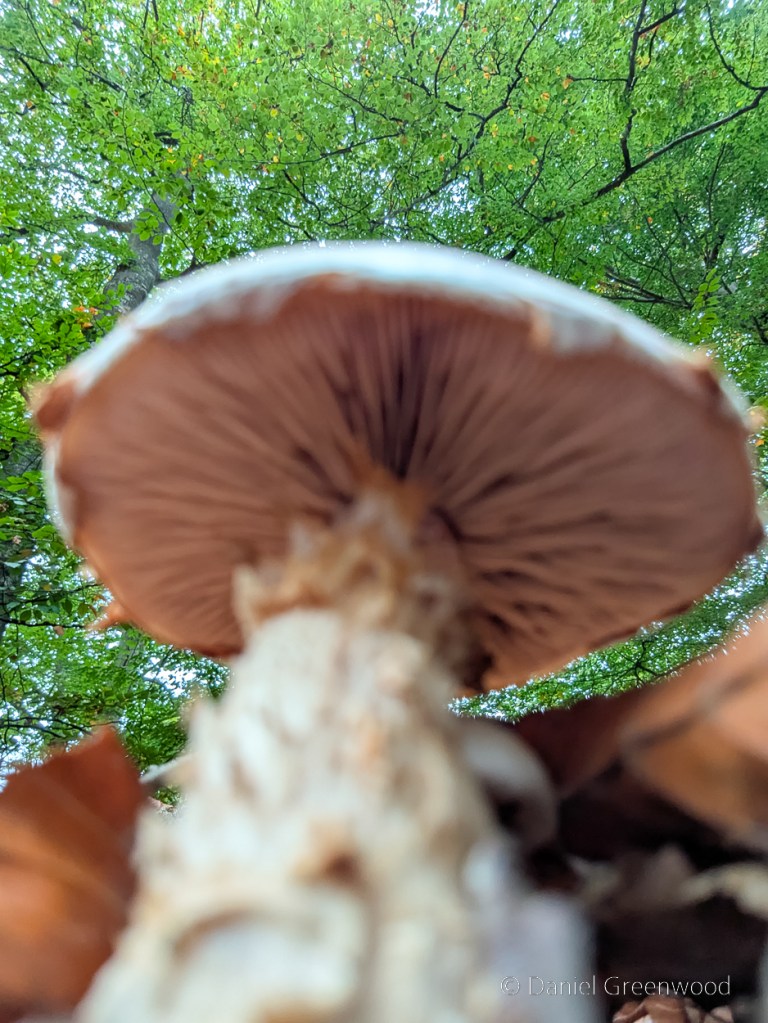
Another unknown, with an attempt at using my selfie-camera to take a gill photo. I will have to resort to a small mirror in future. This has the appearance of a pholiota (scalycaps, etc.) but I really don’t know.
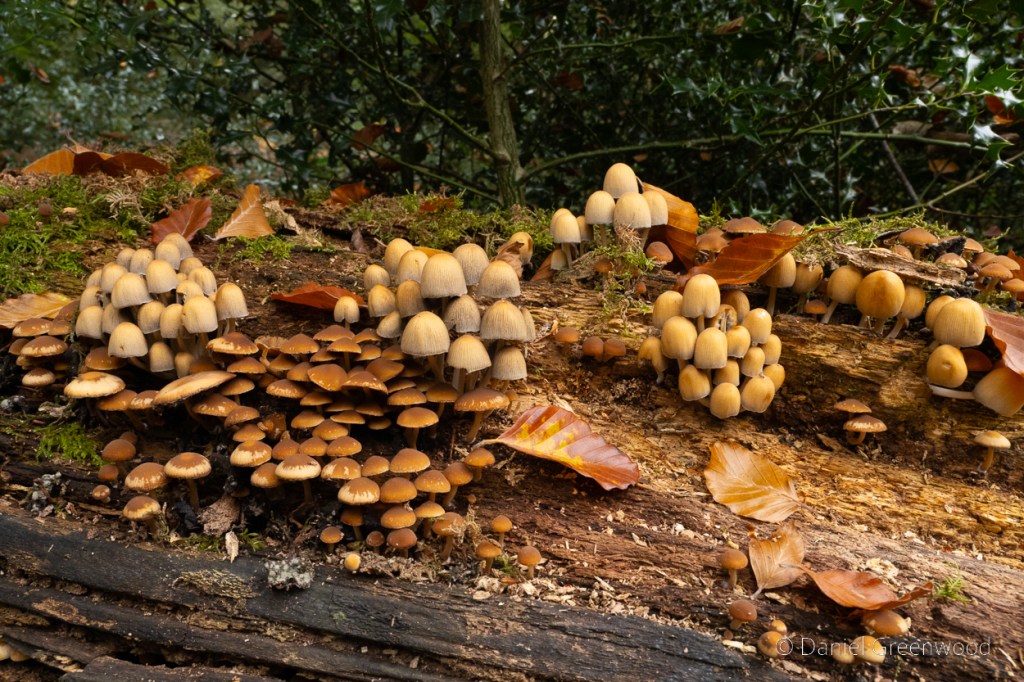
This was a lovely scene of inkcaps and brittlestems, two groups of related mushrooms. I think the larger paler caps are glistening inkcap. The smaller, browner ones are probably brittlestems.
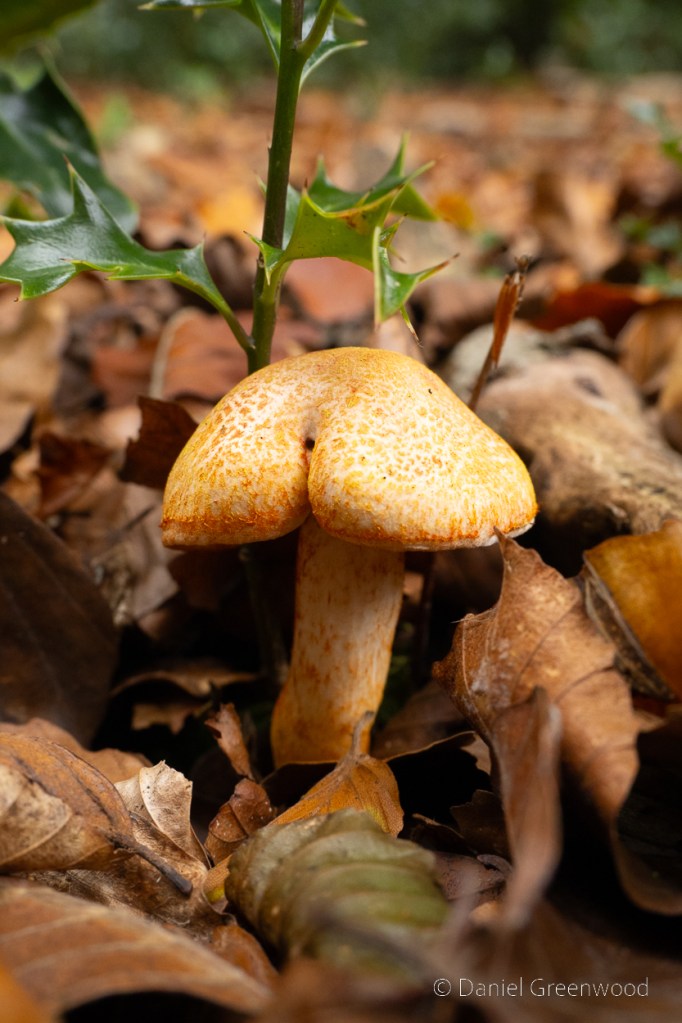
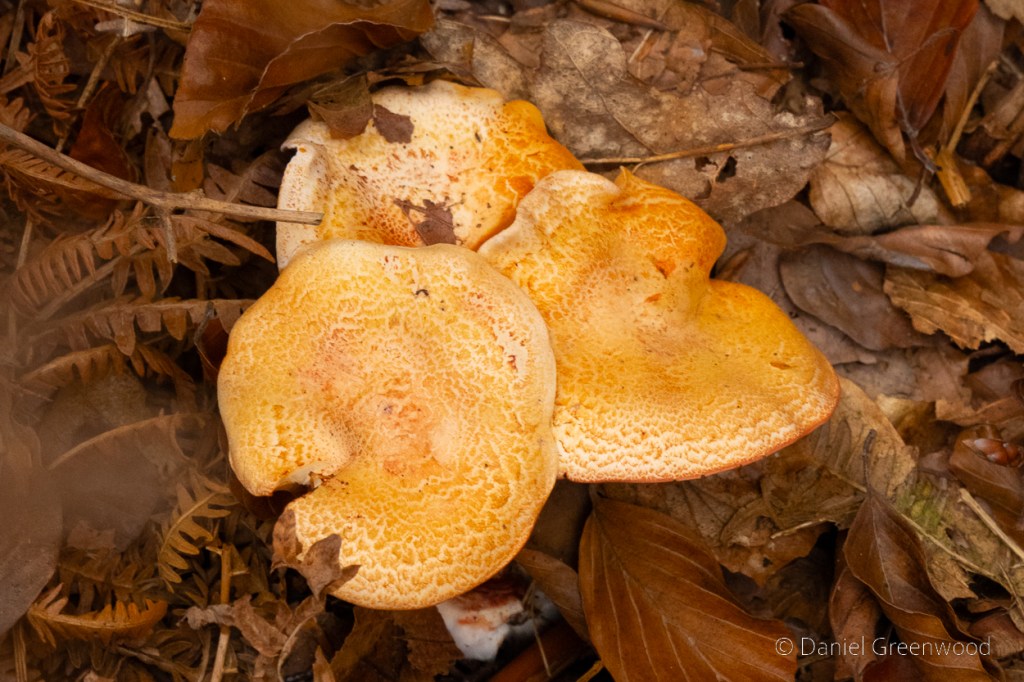
I’m confident this is dappled webcap, a mushroom I’ve only seen in Scotland before. It shows how diverse this area of West Sussex is ecologically. Let’s keep it that way, and allow it to recover even more.
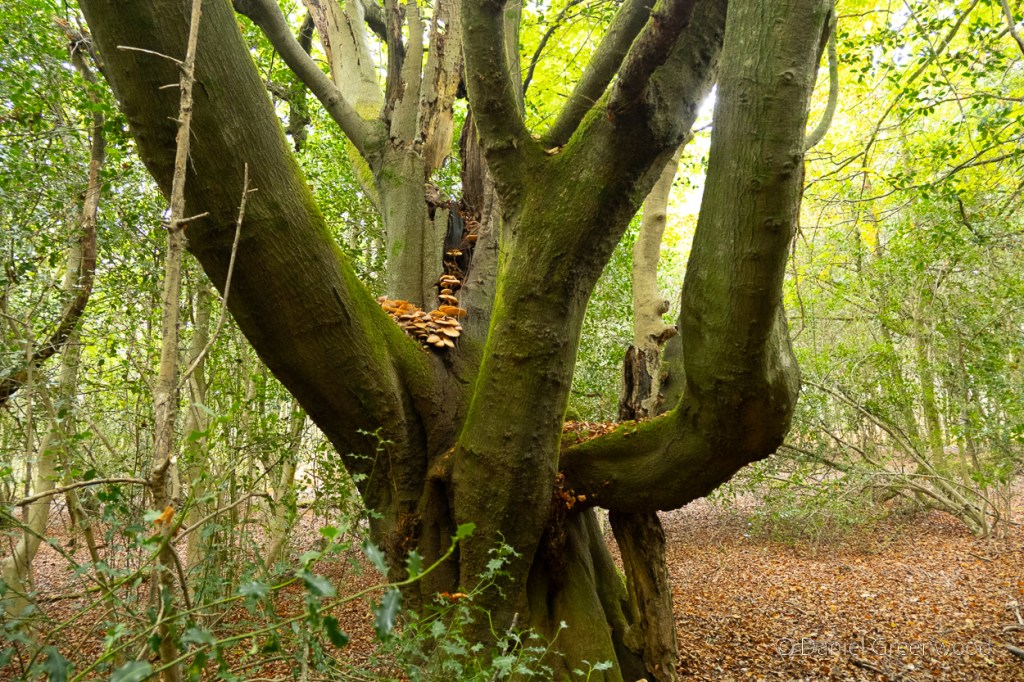
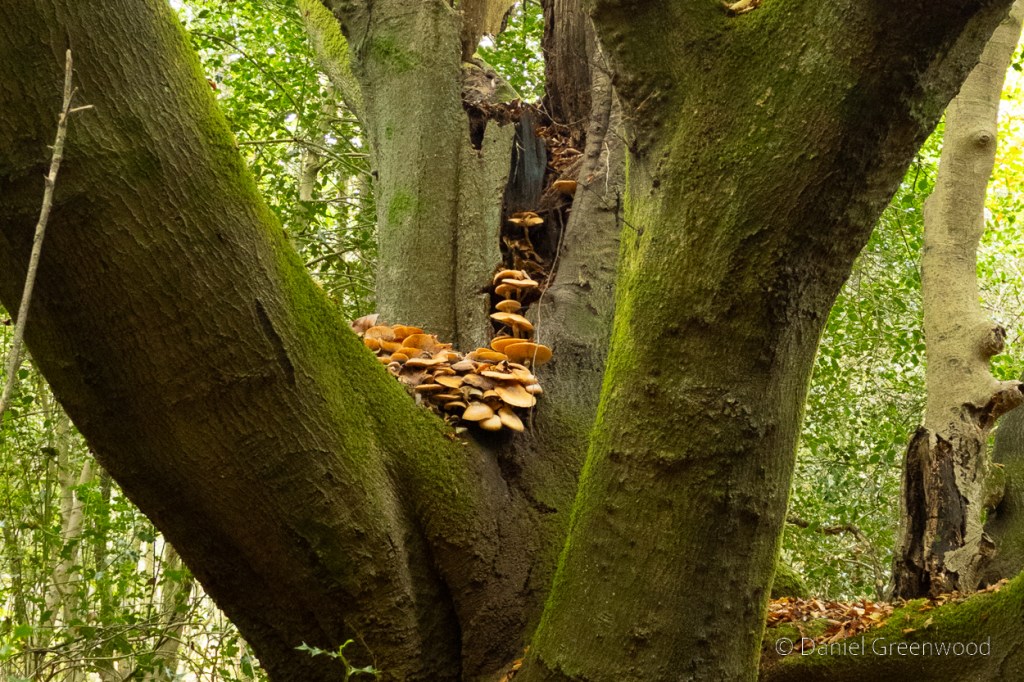
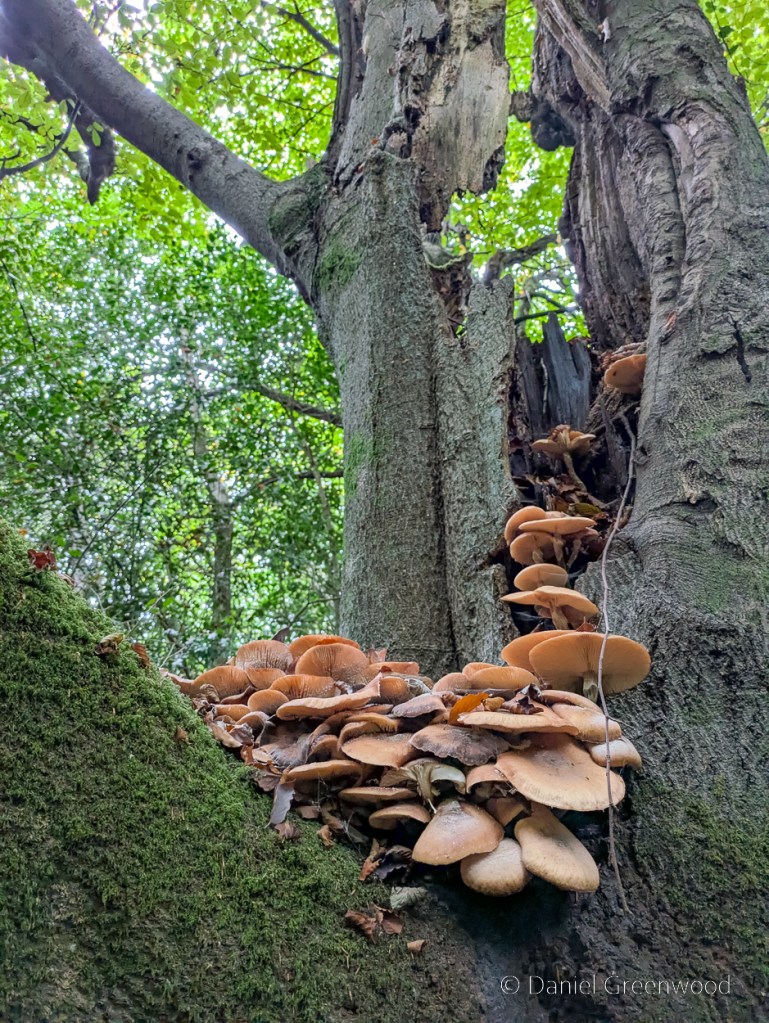
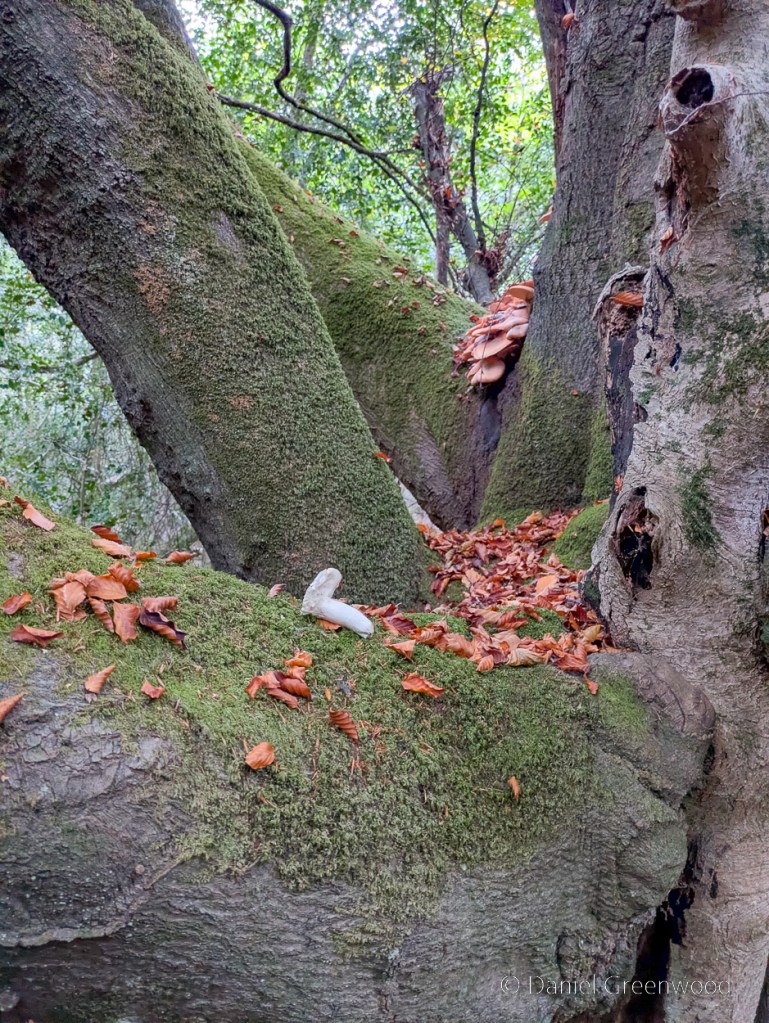
This was an interesting scene. The main lure here was seeing honey fungus so high up in this beech tree. What made me laugh was this little russula sitting half-eaten on the tree limb. This is almost certainly the work of a squirrel. In London and Sussex I’ve seen grey squirrels picking mushrooms and then nibbling the the gills, rotating the mushroom in their paws by turning the stipe. Not dissimilar to a person eating corn on the cob, maybe.
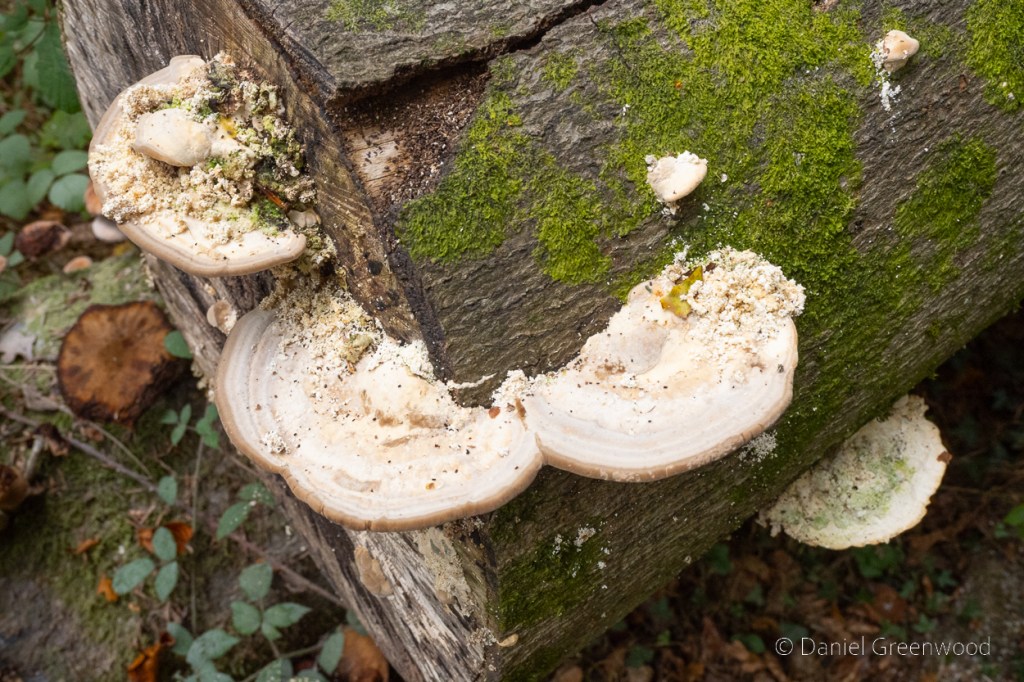
This is probably lumpy bracket, which is commonly found on fallen trees and limbs in the Sussex Weald.
Thanks for reading.
 Fungi Friday 🍄
Leave a comment