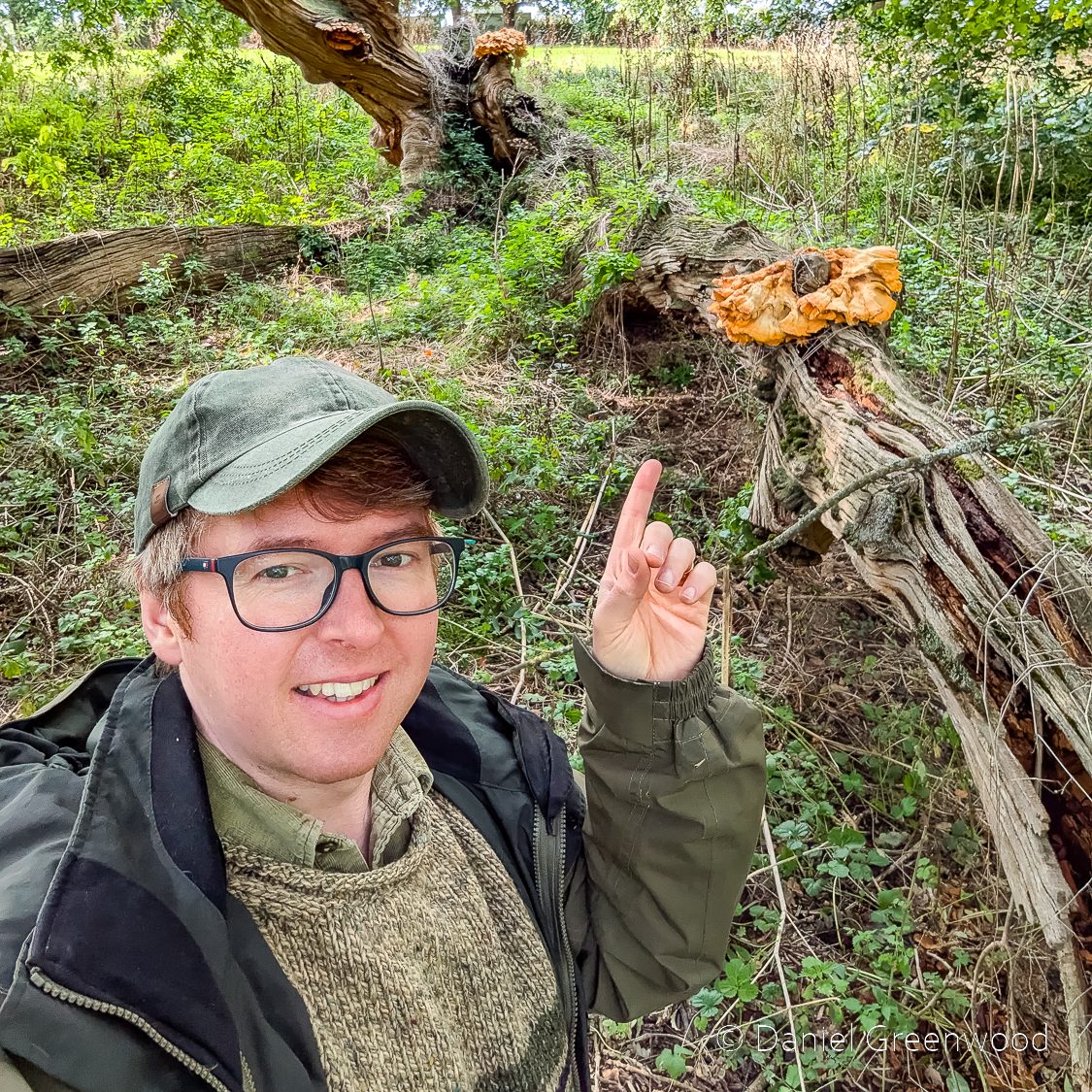
Blunts Wood, Cuckfield Parish, West Sussex, October 2025
Blunts Wood is a publicly-owned woodland close to Haywards Heath which acts as a gateway to rural Mid Sussex. This was the second time I’d visited the place, and the first time in the autumn. It’s an ancient woodland with surrounding meadowland and is a classic Wealden ghyll (stream) woodland in places. It appears to be rich in fungi, especially honey fungus.
These photos were all taken with my phone camera. The results are generally good, while the flexibility of using a phone is an advantage. But some real issues still remain with phone cameras, compared with dedicated cameras.
From my experience phone cameras still do not focus easily and are quite unreliable. Also, without having control of the aperture, it means you end up with photos taken at f1.9, a very wide aperture, resulting in quite blurry images that lack detail. A real camera with a dedicated macro-capable lens is not going to be overcome anytime soon, and no, artificial intelligence does not look likely to be any advantage. I know you can take raw images on your phone but who can really be bothered with that? You’re using a screen for settings that should be in 3D on a camera body.
Most of the identification work for this post is through Fungi of Temperate Europe, Vol. 1 by Thomas Læssøe & Jens H. Petersen.
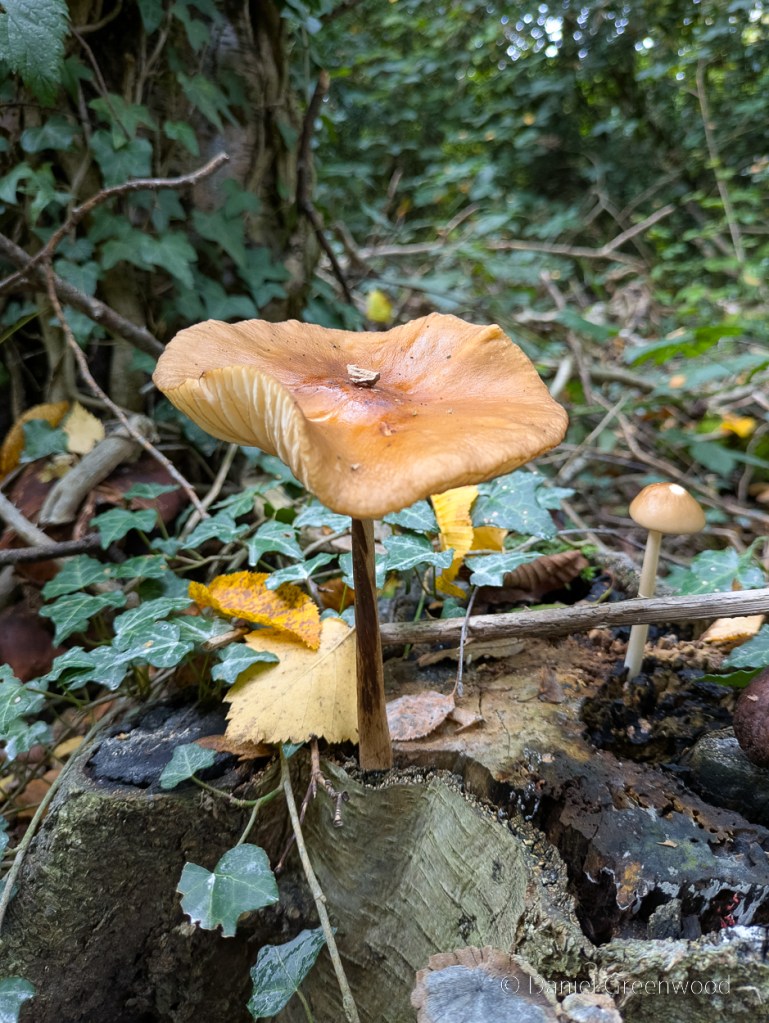
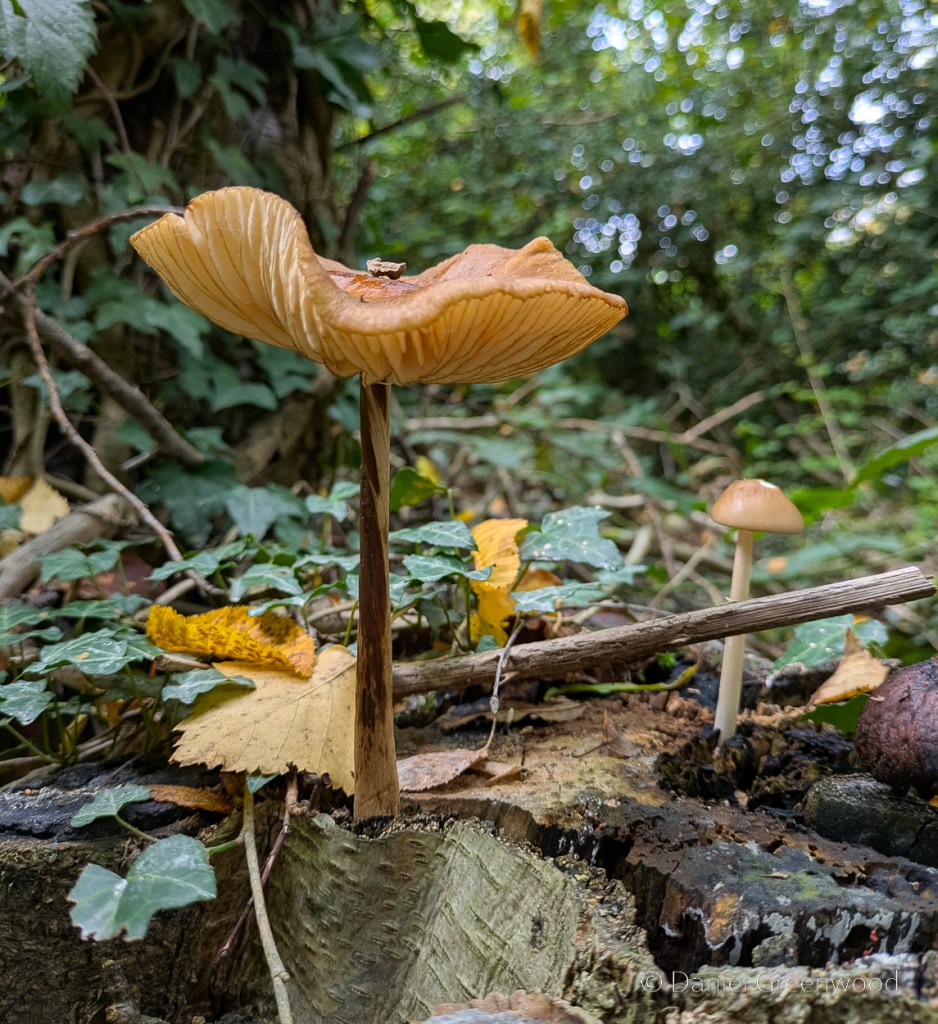
Rooting shank was the first mushroom I encountered, growing from what looks like an old birch stump. This bolshy fungus is more of a summer-early autumn species.
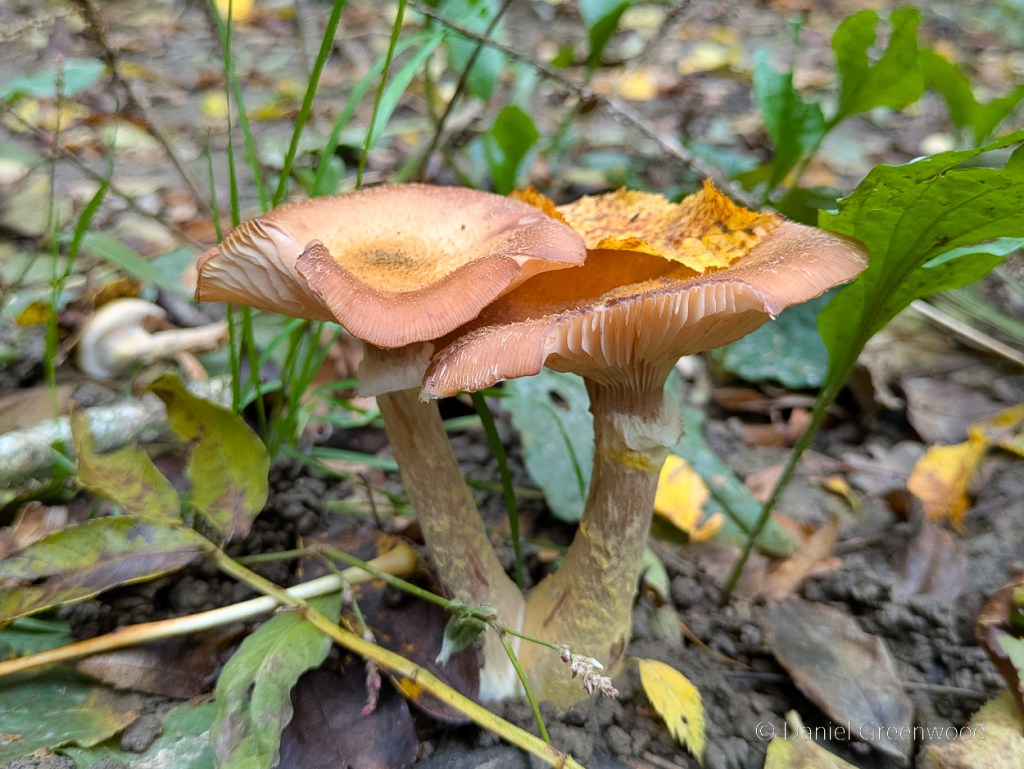
As the title suggests, this blogpost is consumed by honey fungus (hopefully not in the literal sense) and to be honest I find this species group quite baffling. Looking at the images on each iNaturalist page, they seem to contain incorrectly identified or confused species, or maybe it’s just me.
Generally I think it’s possible to encounter 3-4 species in West Sussex, as in this post. The species above is likely to be bulbous honey fungus (Armillaria gallica on iNat, previously A. lutea).
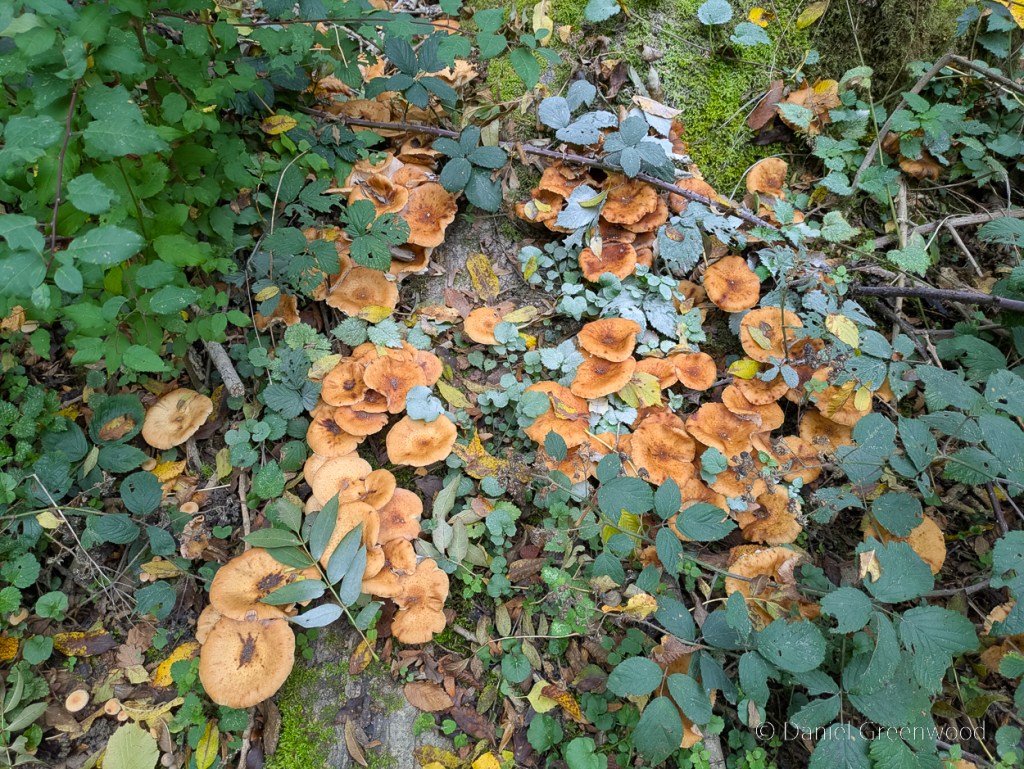
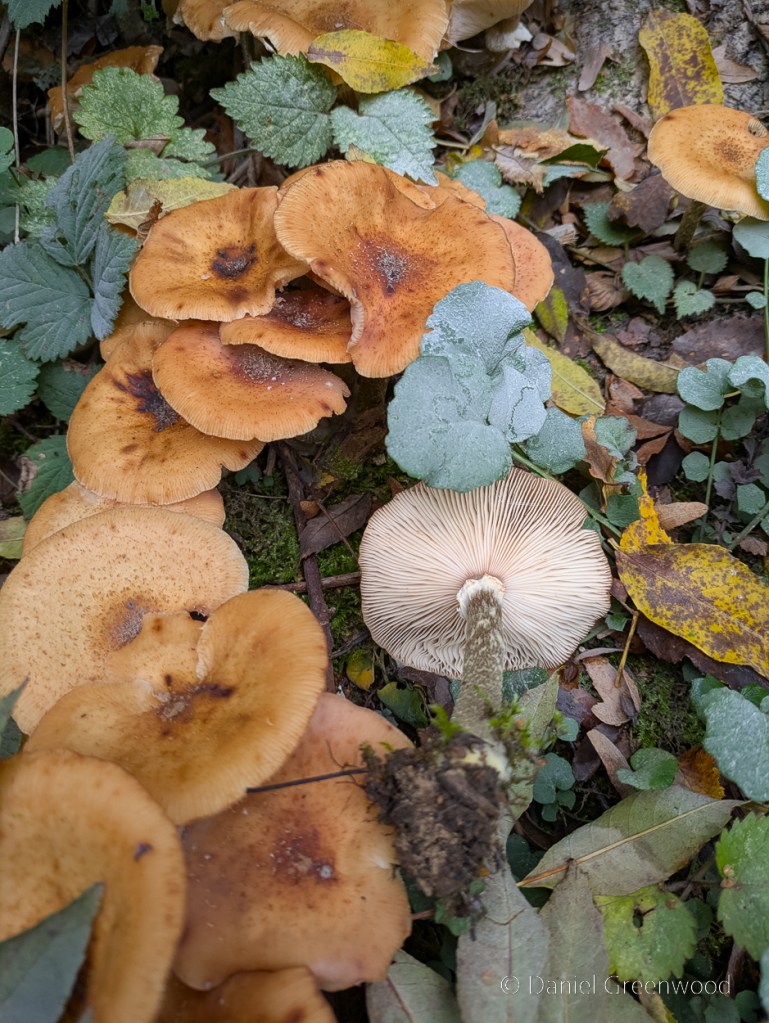
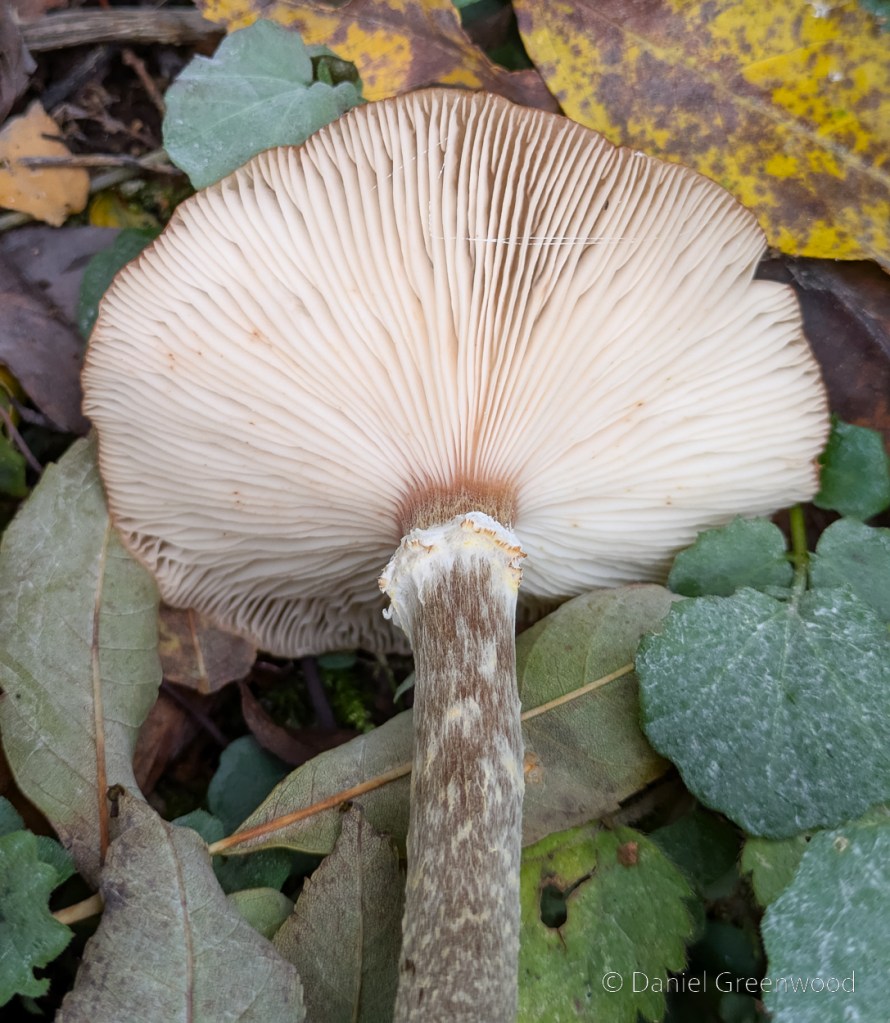
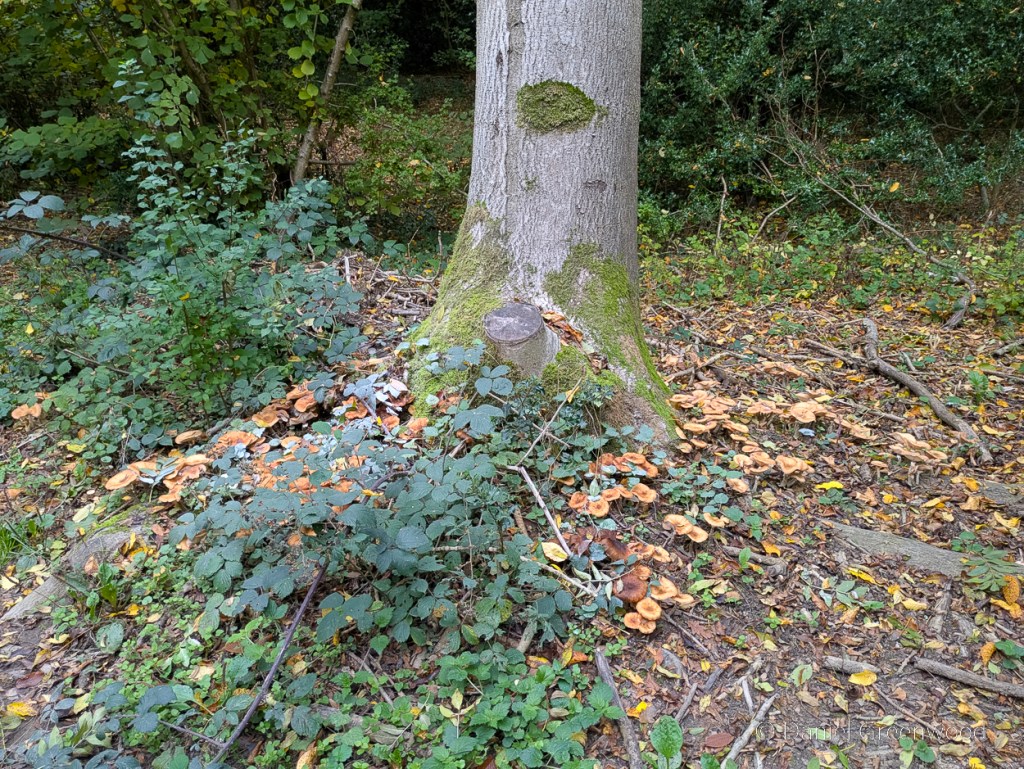
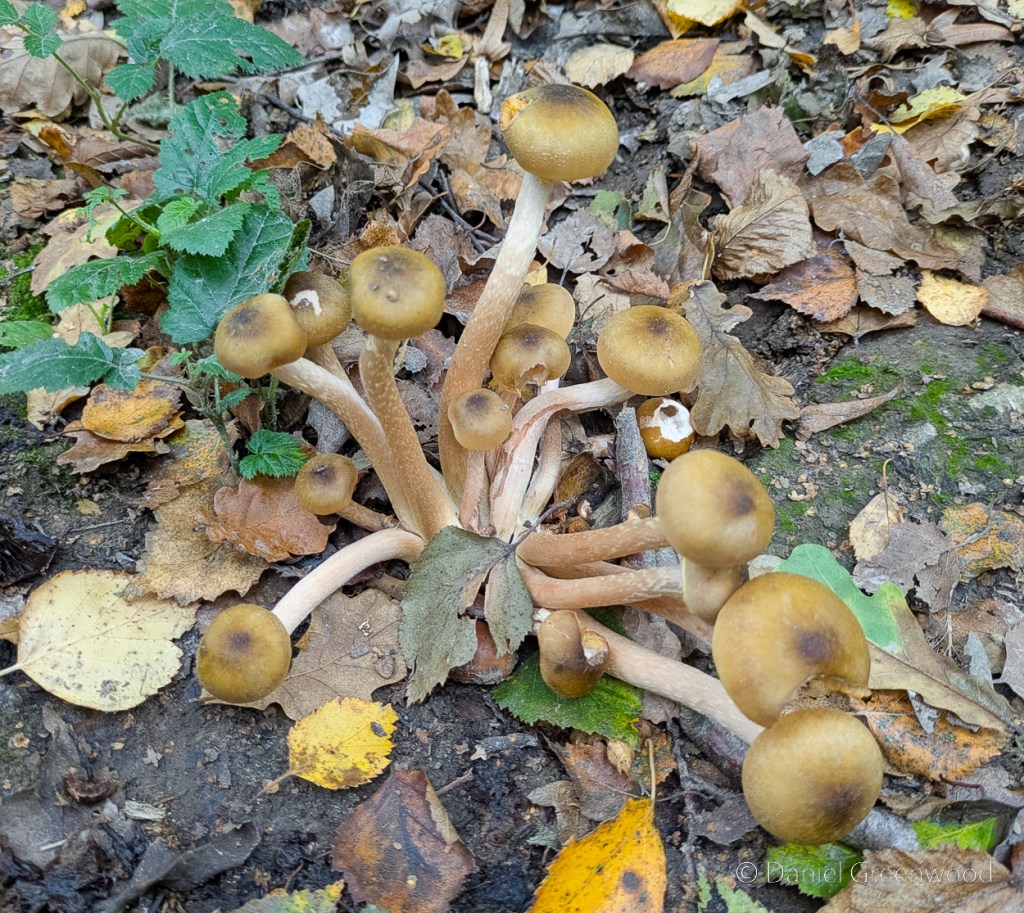
This is where it gets more difficult. Around the roots of an ash tree was a large community of honey fungi. My guess would be dark honey fungus (Armillaria ostoyae on iNat) because of the stipe colour, the fact its shorter than honey fungus’s, and the dark patches on the cap.
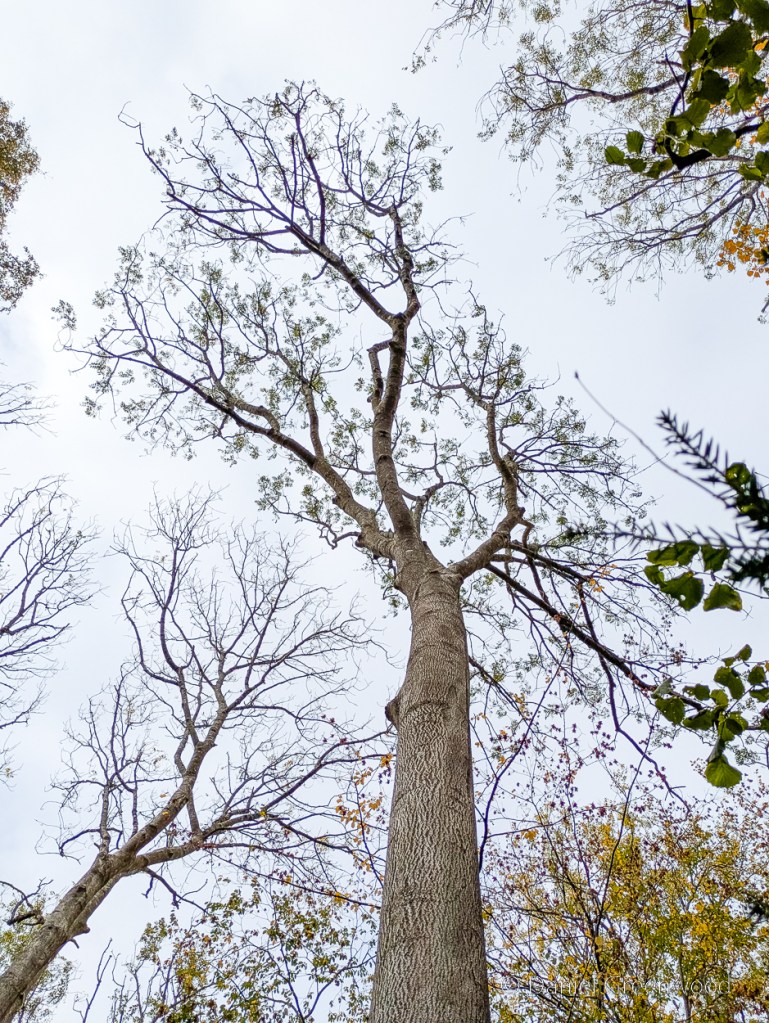
The presence of honey fungus suggests this ash is dying, which is a common sight across Sussex. Honey fungus has been known for a while to be making ash trees weakened by ash dieback to succumb more quickly. Ash dieback is another fungus but one that is non-native and invasive.
‘Honey fungus is not invasive?’ I hear you bellow. Here we go.
If you’re a forester or a horticulturalist then maybe. In both those situations we as humans are enforcing the reimagining of how landscapes should function. Honey fungus has been around for millions of years growing in woods and limiting the lives of trees, so it’s important to consider the context of our place in the landscape. Forestry is invasive by nature, as is turning once ‘natural’ landscapes into ornamental gardens filled with non-native plants that may not be able to cope with honey fungi, though some native species can. The impact of ash dieback is the reverse scenario as it’s a non-native invasive species affecting native ash trees. No doubt the drought exacerbated by human-made climate change will make trees more vulnerable, too.
I’ve written the dark web of honey fungi before.
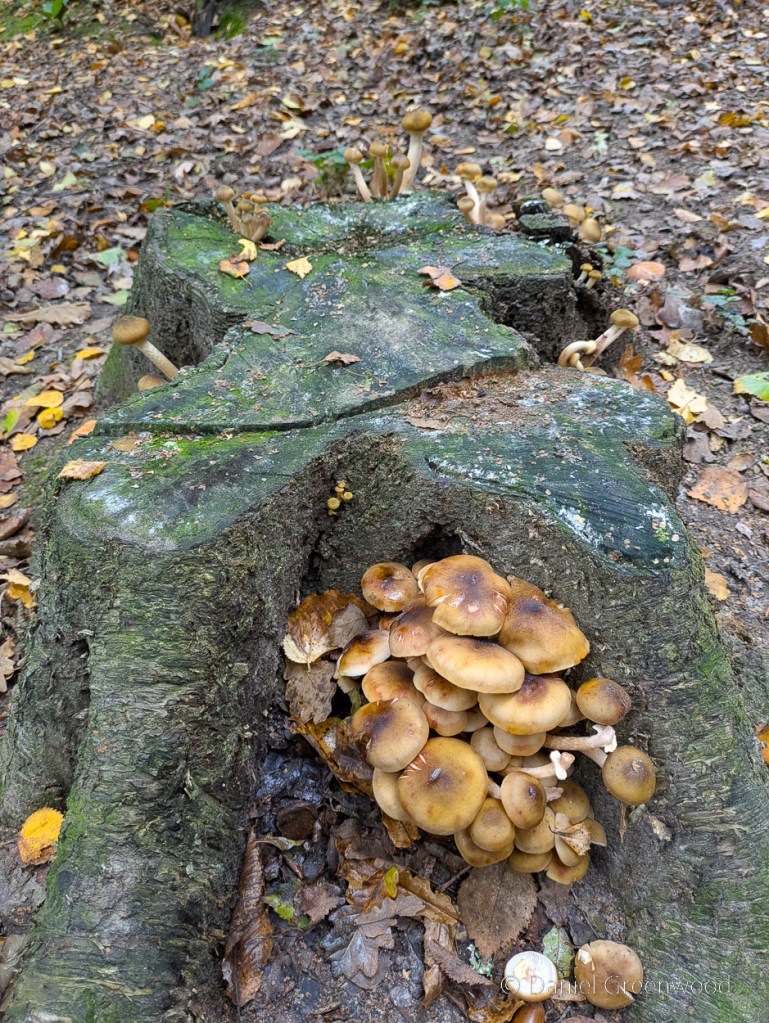
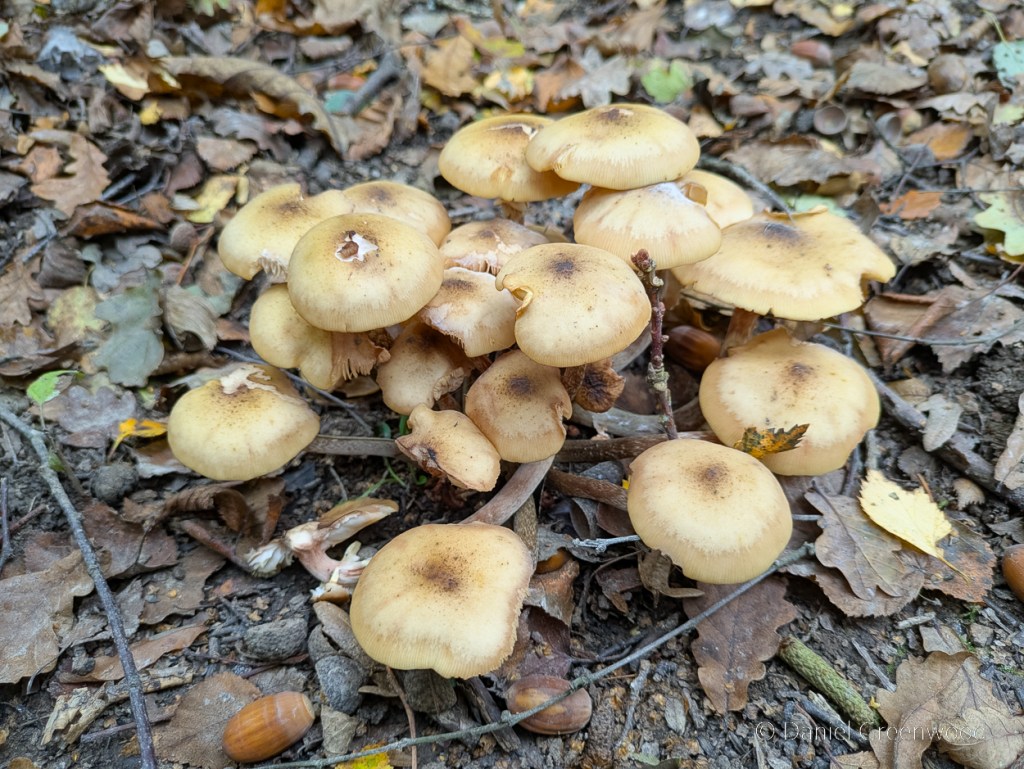
I am identifying this as honey fungus (Armillaria mellea) because of the very long stipe and honey colour. You can see that the tree stump is evidence a tree has already succumbed, potentially to honey fungus.
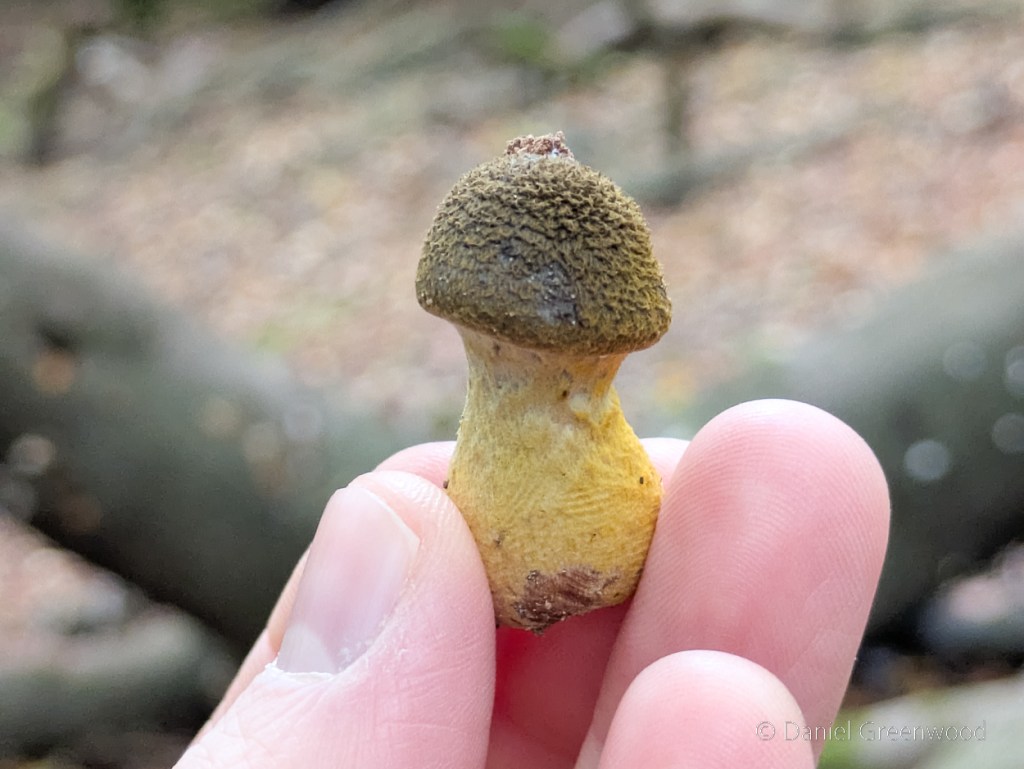
This little gnome could be mullet honey fungus (iNat), but it could also be the species above.

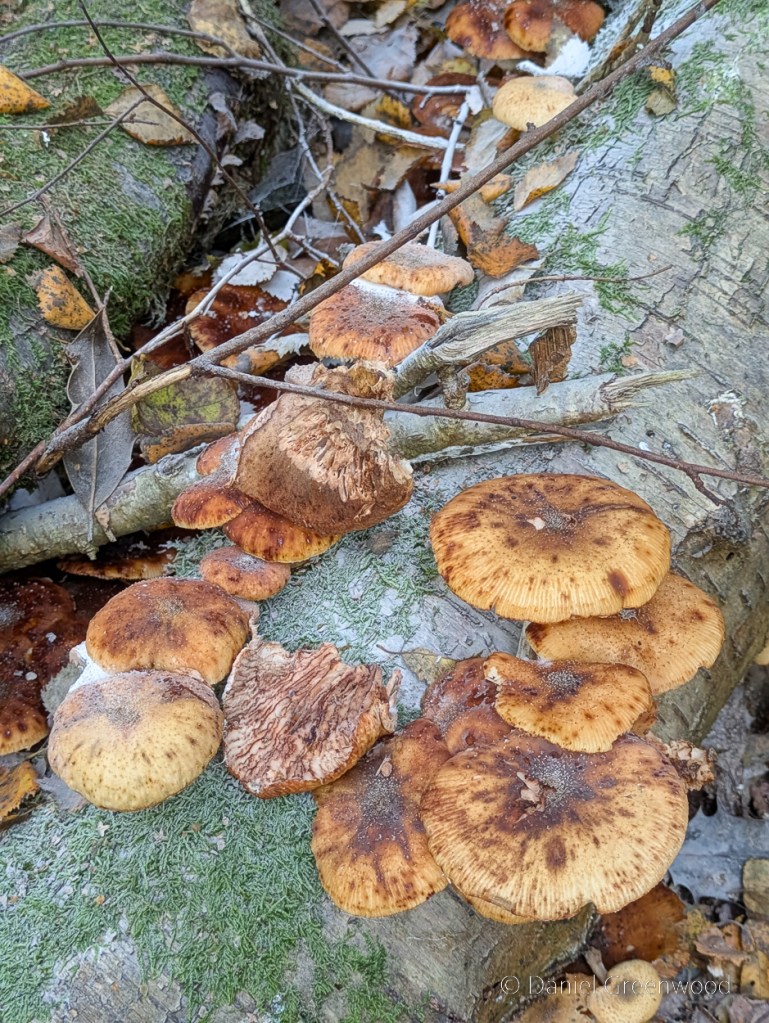
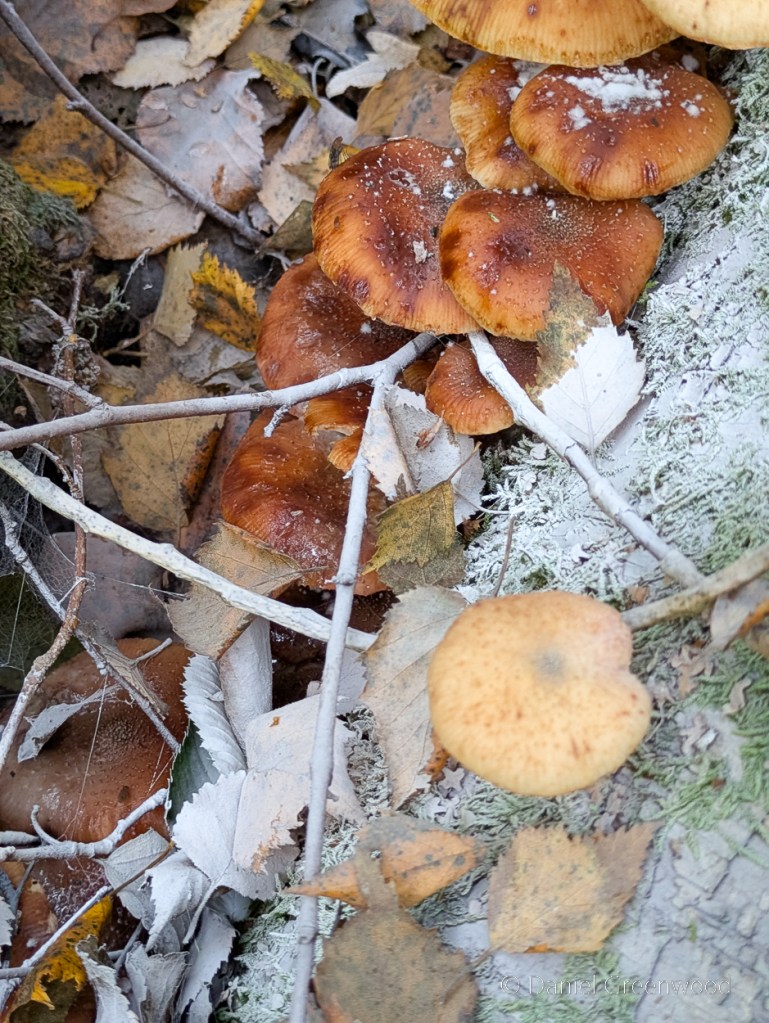

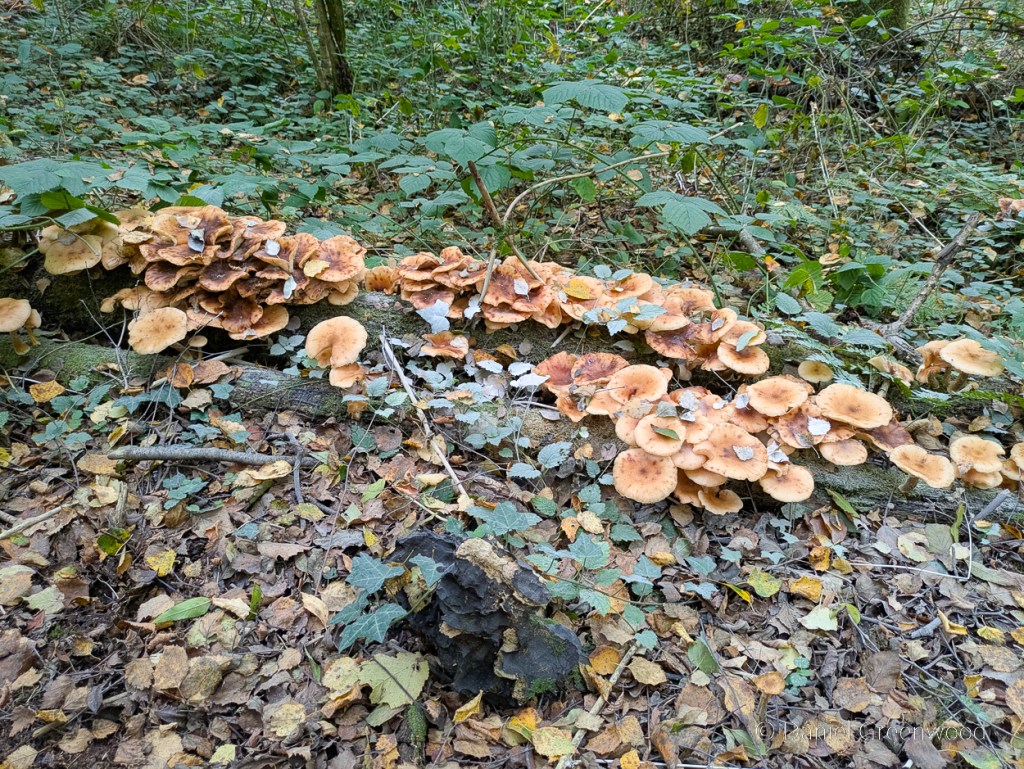
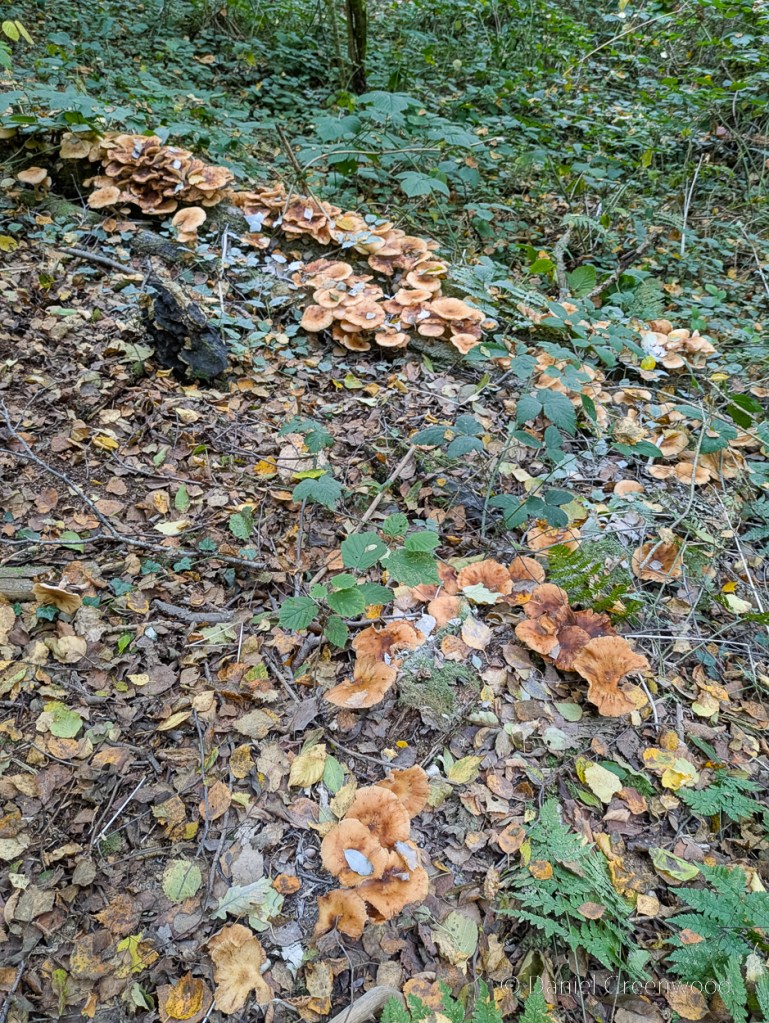
I saw a lot of this honey fungus in nearby Ashenground & Bolnore Woods around the same time. This species develops a dark red or brown patchwork on the cap as it ages. I’ve also included images to show the spores which are white and can really paint the surrounding vegetation. You can also see the black ‘bootlaces’ or rhizomorphs of the honey fungus.
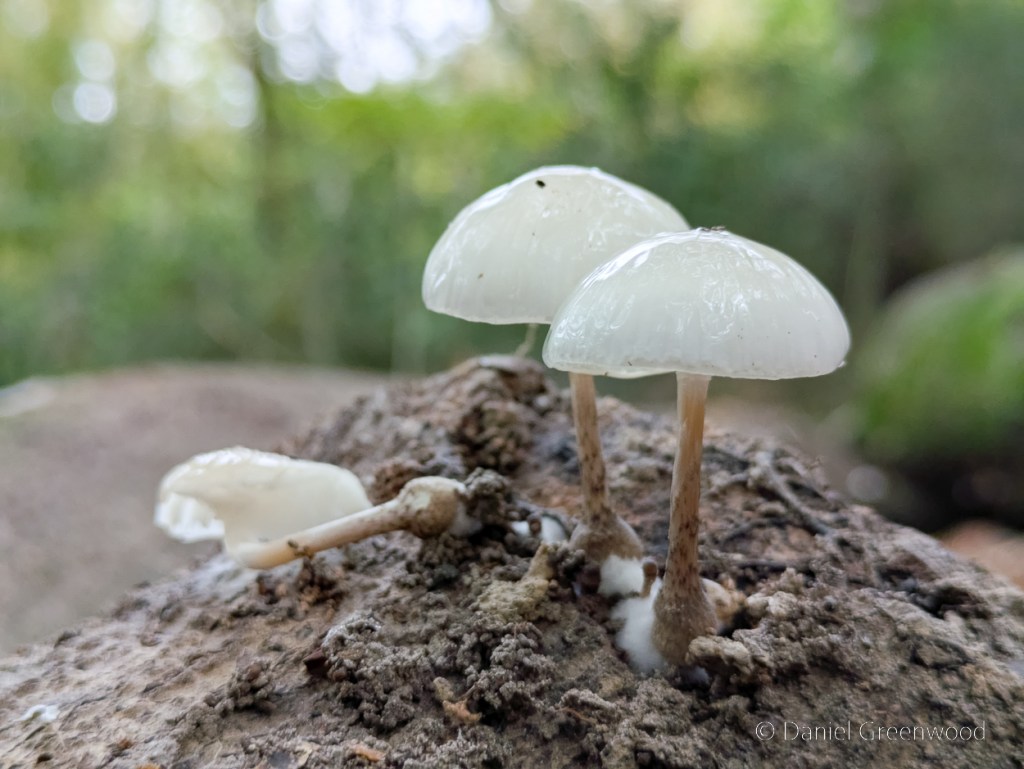
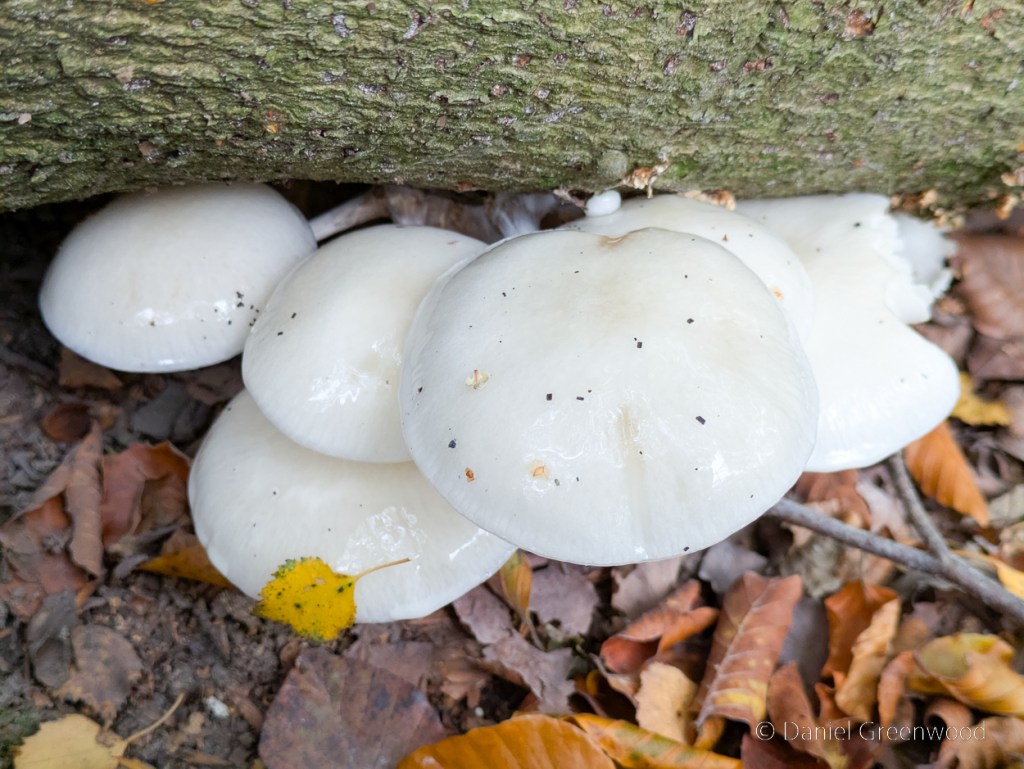
Ah, porcelain fungus, so much easier to identify. If you find a cluster of fallen beech branches or tree, you are very likely to find porcelain fungus growing on it. You can see it from as early as June in the Sussex Weald.

Amethyst deceiver can turn to white in dry weather, or at least after a little while. They haven’t looked particularly purple this year from what I’ve seen.
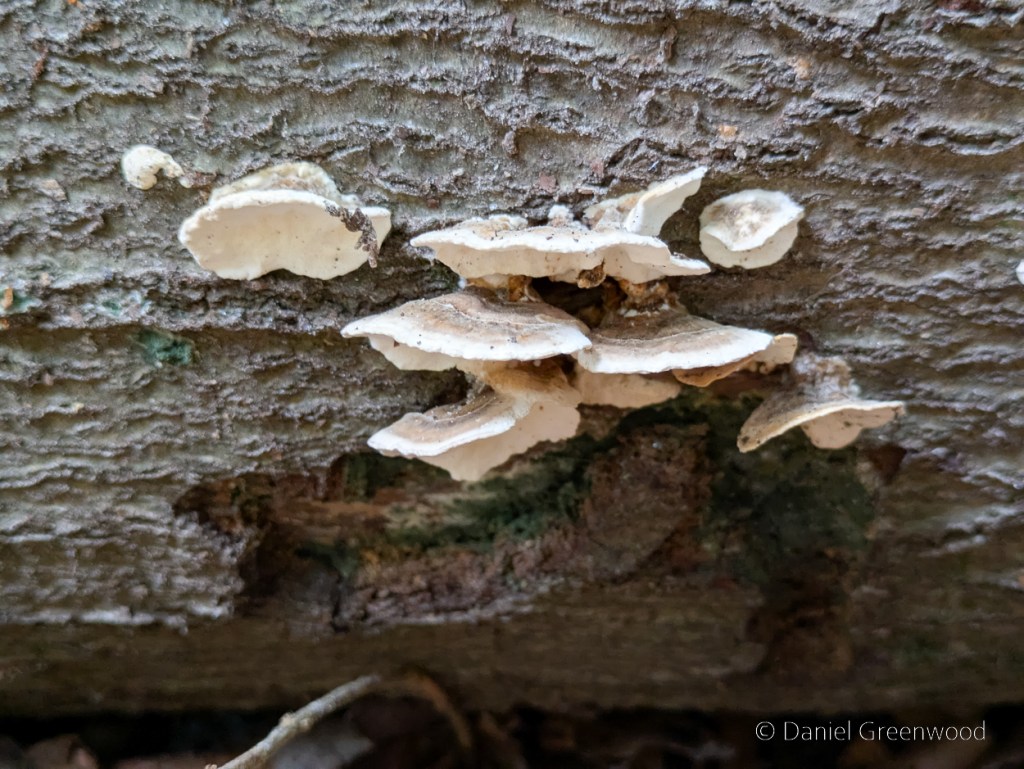
Such a bad pic but this is probably turkeytail.

Sussex has experienced drought this summer and autumn, and I can’t remember such a dry period in my 40 years in the wood-wide web of life. This is a ghyll, which you can see is being eroded quite severely by people and their pets entering the stream on the left-hand side.
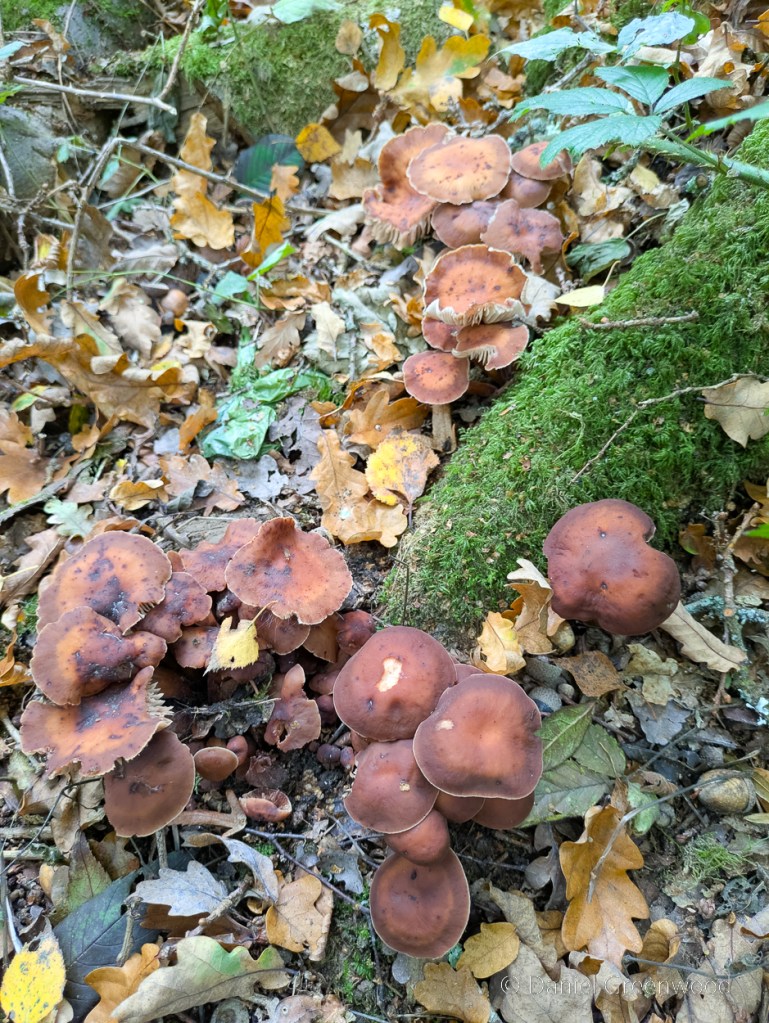

Spindleshank is a common species in southern England at this time of year, always nibbling at the toes of oaks. Dog poo bag for scale! No, I’ll never understand that either.
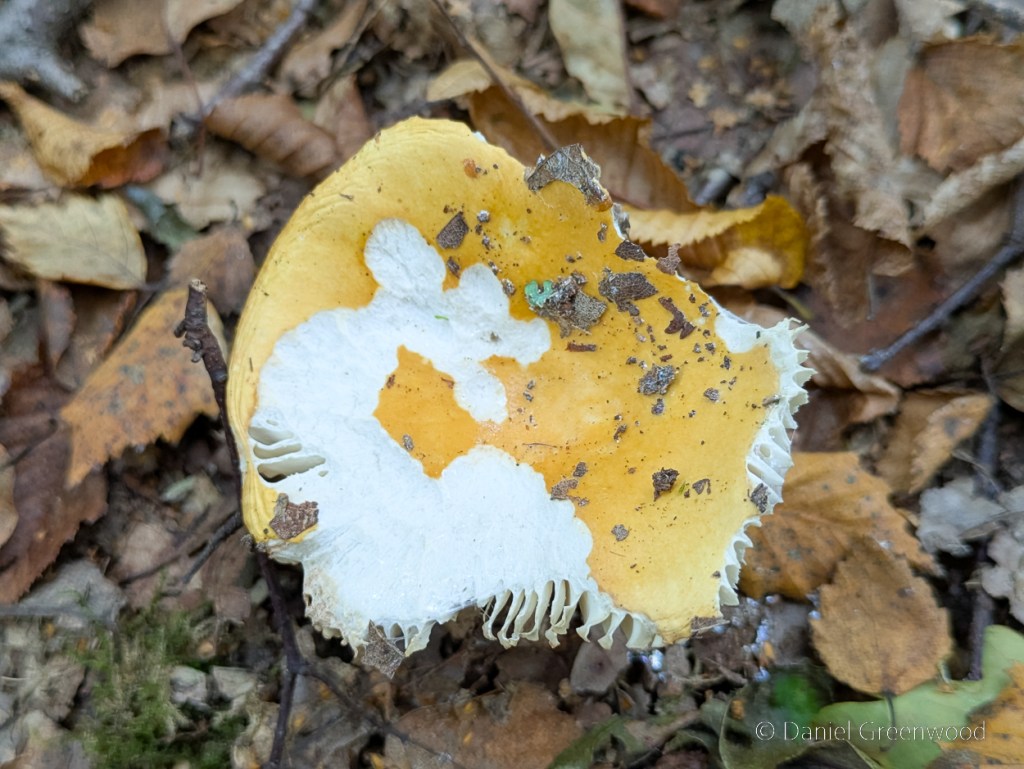
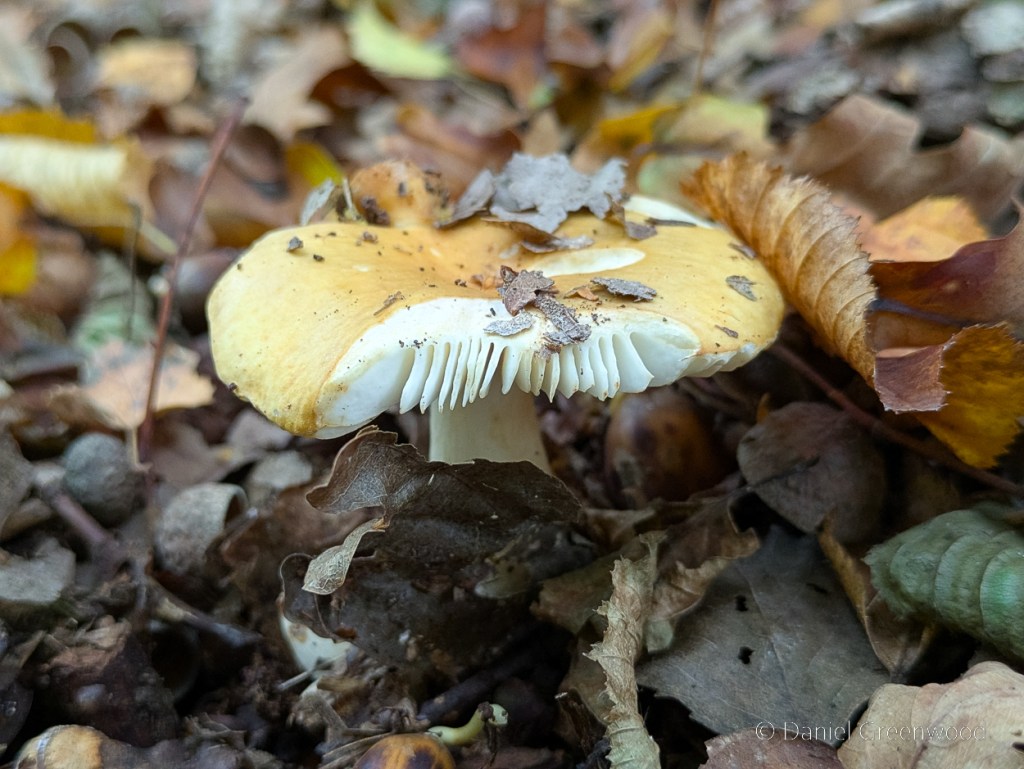
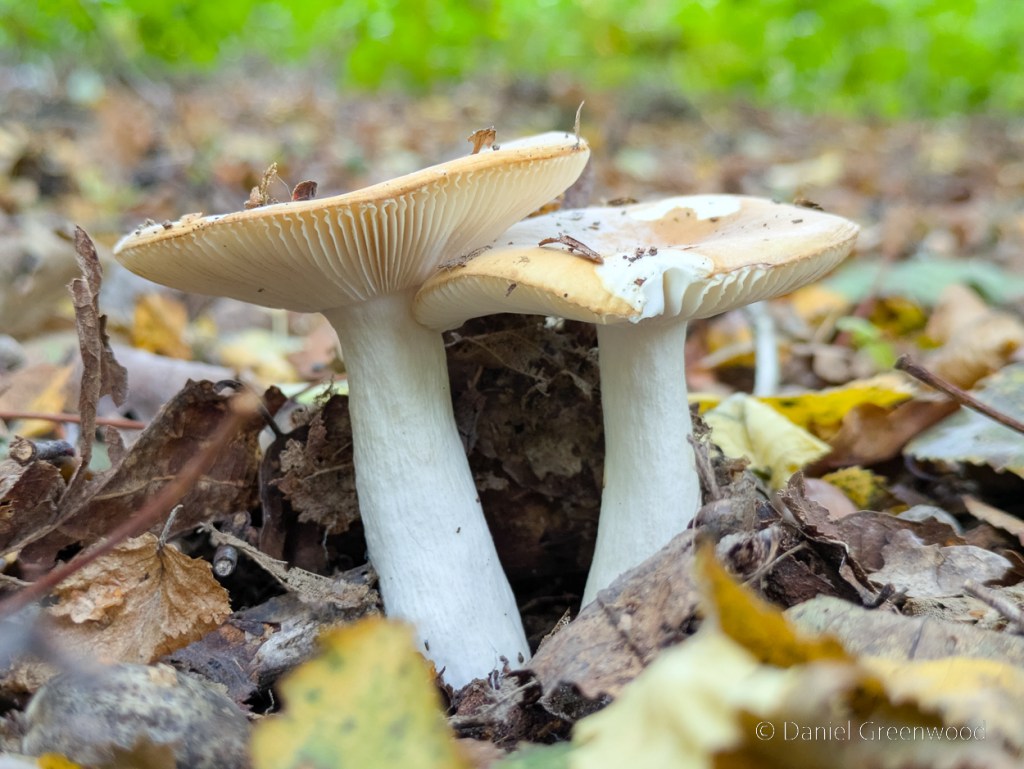
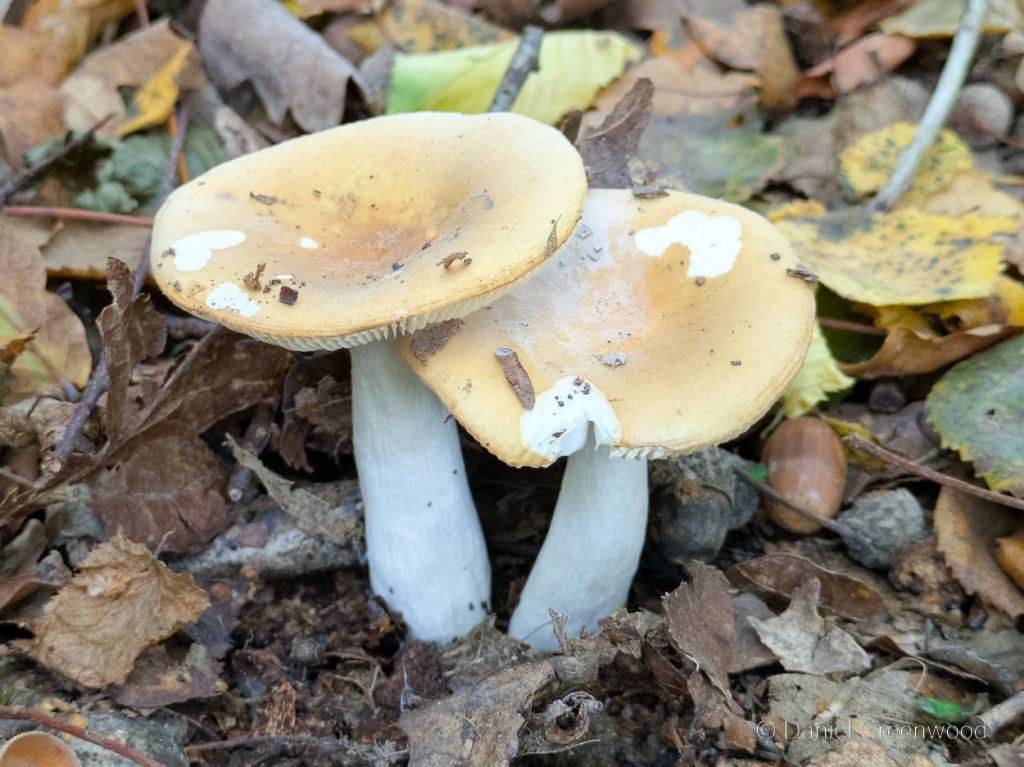
Ochre brittlegill is a very common mushroom in the Sussex Weald, here are three different specimens.

Evidence that 2025 was a mast year could be found underfoot.
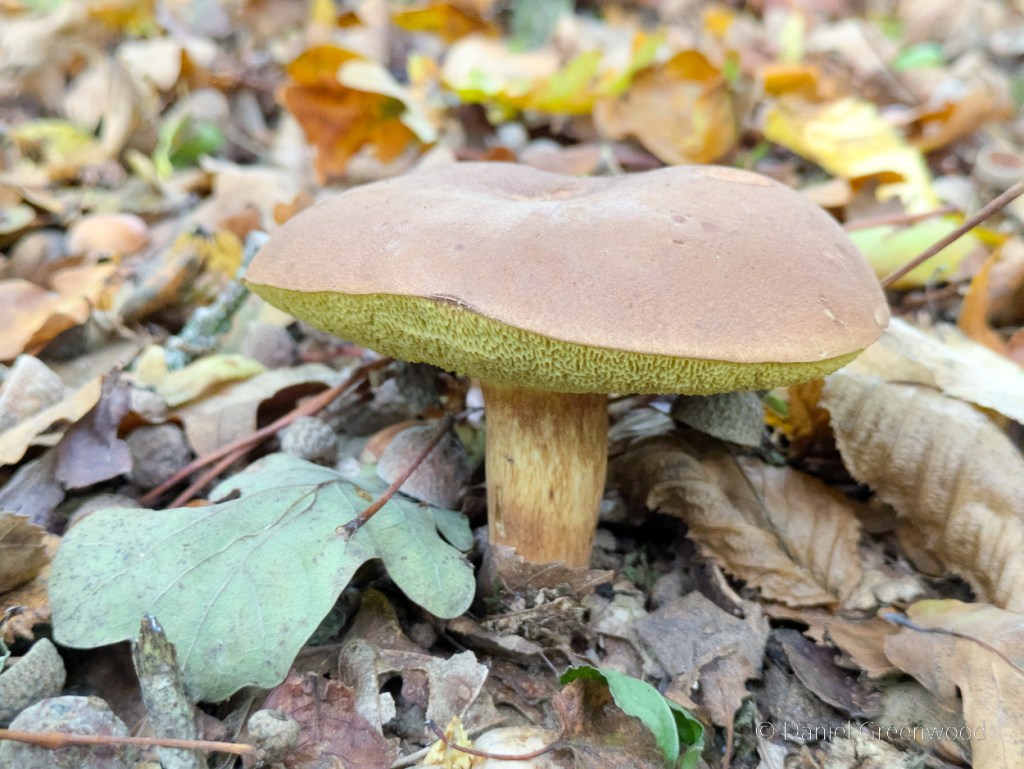
Now then – the world of the summer boletes. These Xerocomellus and Xerocomus boletes can be difficult to identify. The above could be in either genus.
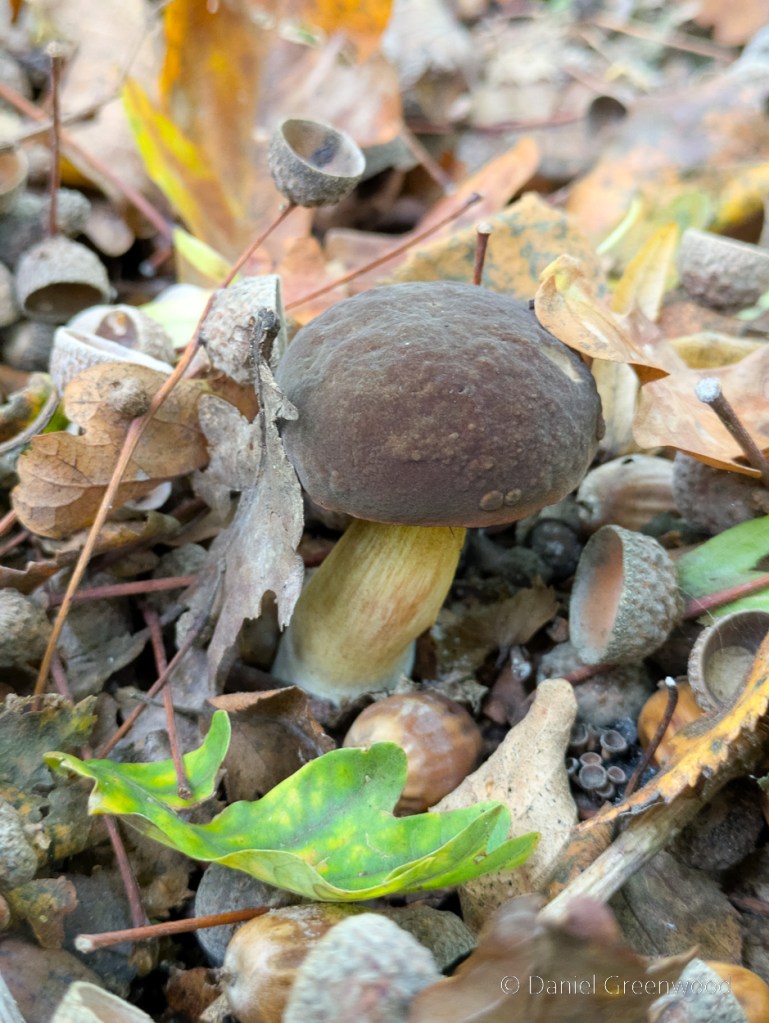
I’m fairly confident the above is a matt bolete in younger form.

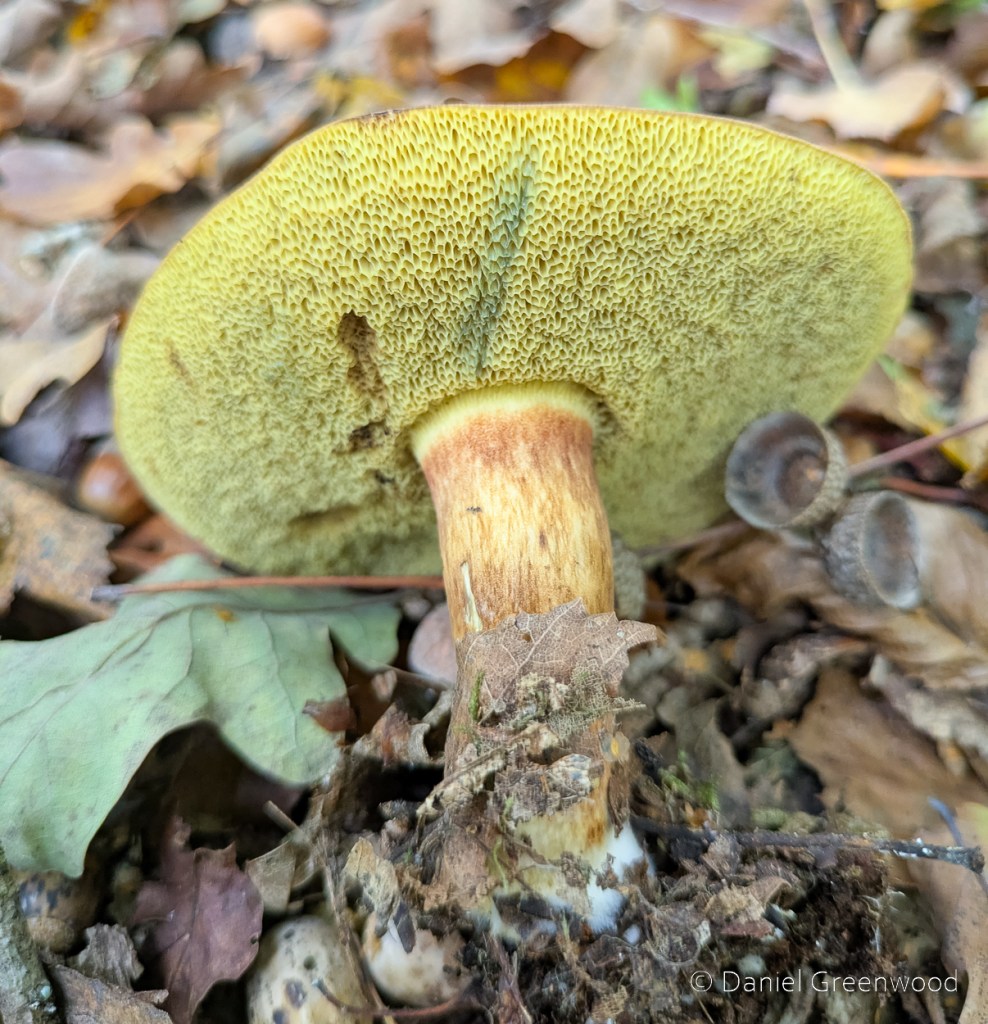
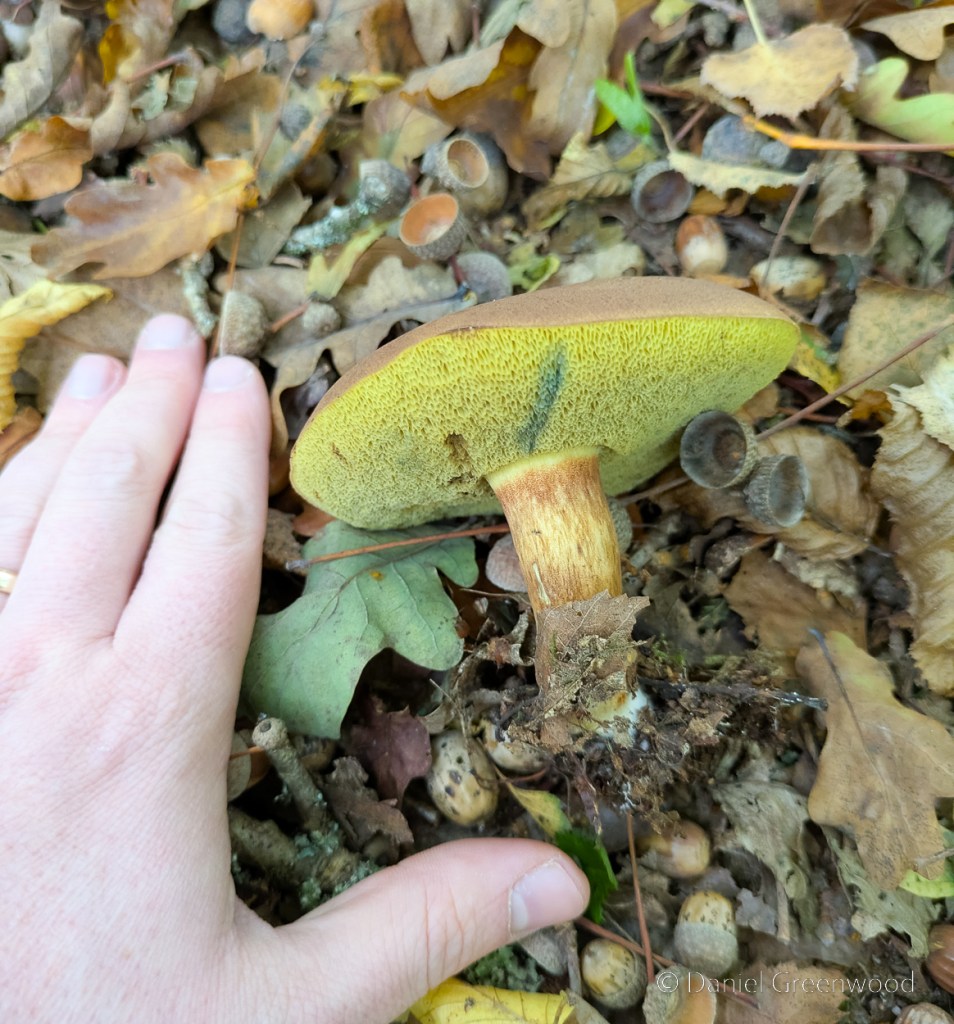
And I’m even more confident that this is a mature matt bolete. I’ve come to this conclusion from the red band on the cap of the mushroom in the first image, and the yellow breaker band under the pores on the stipe.
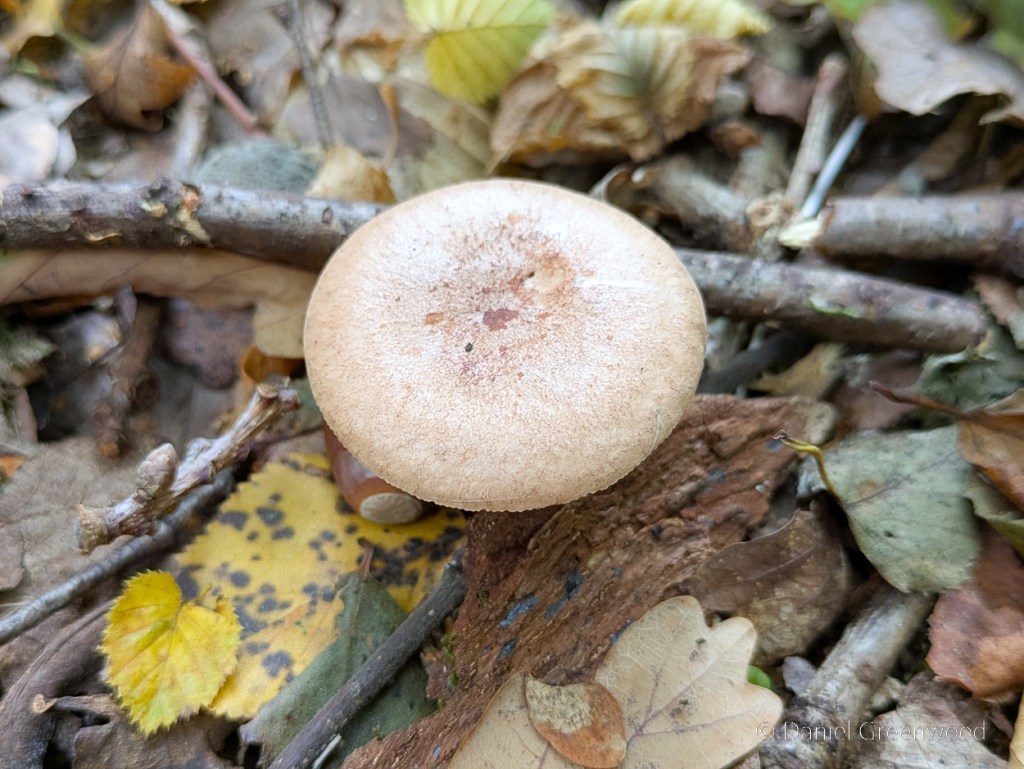

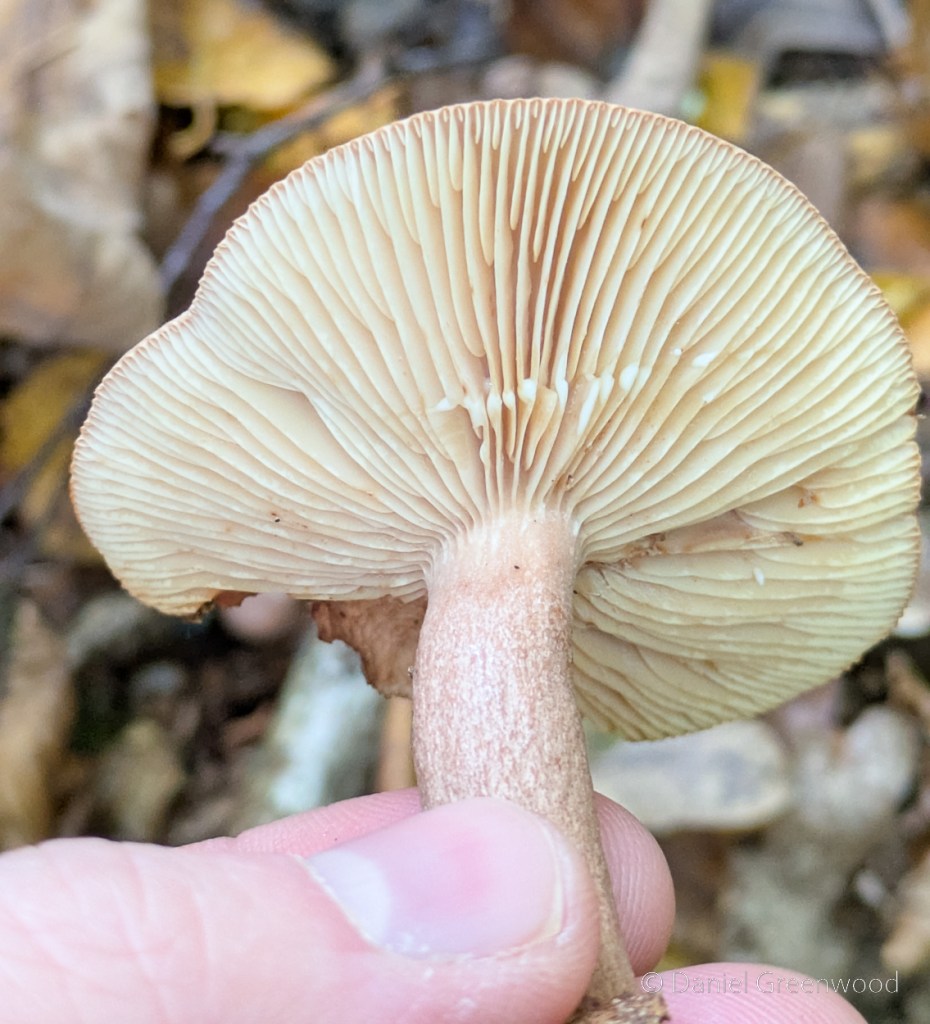
There were plenty of milkcaps around. You can help to close in on an identification from the colour of the milk. You can release the milk (latex) by using your fingernail or a broken twig. I’m unsure of this species.
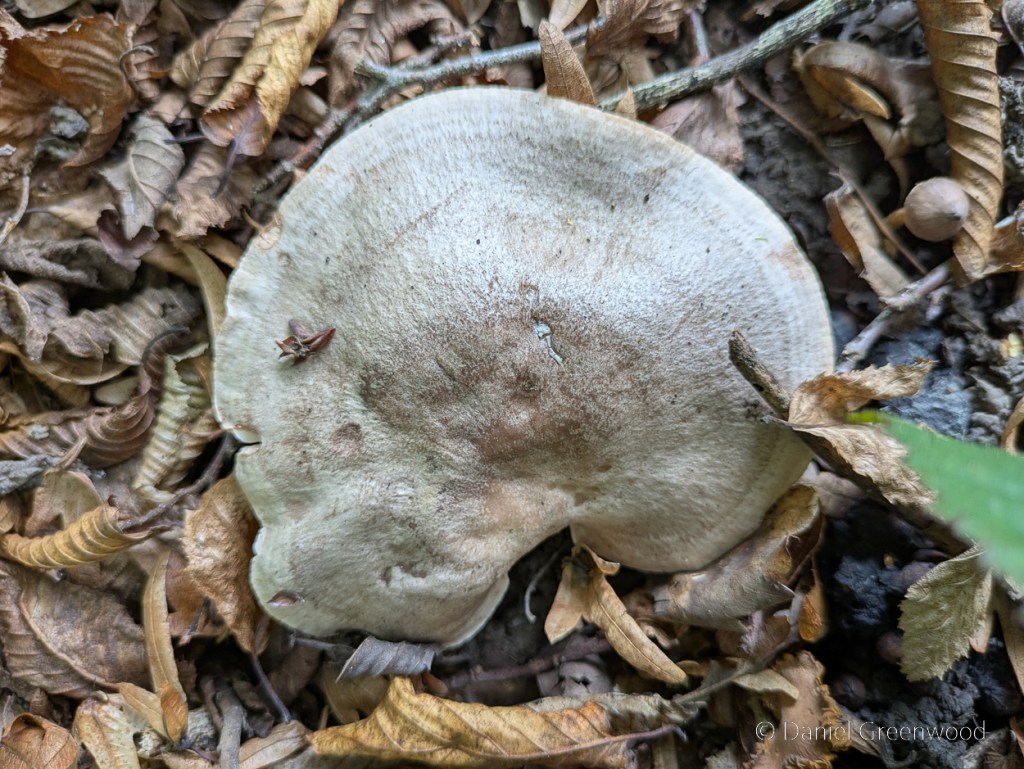
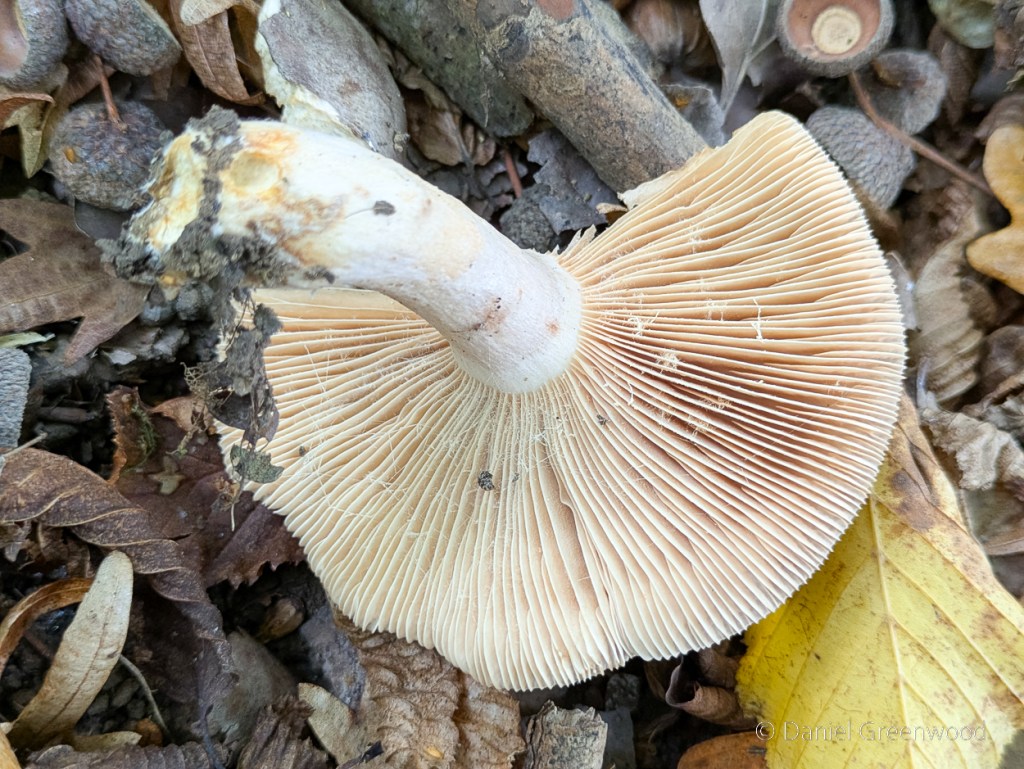
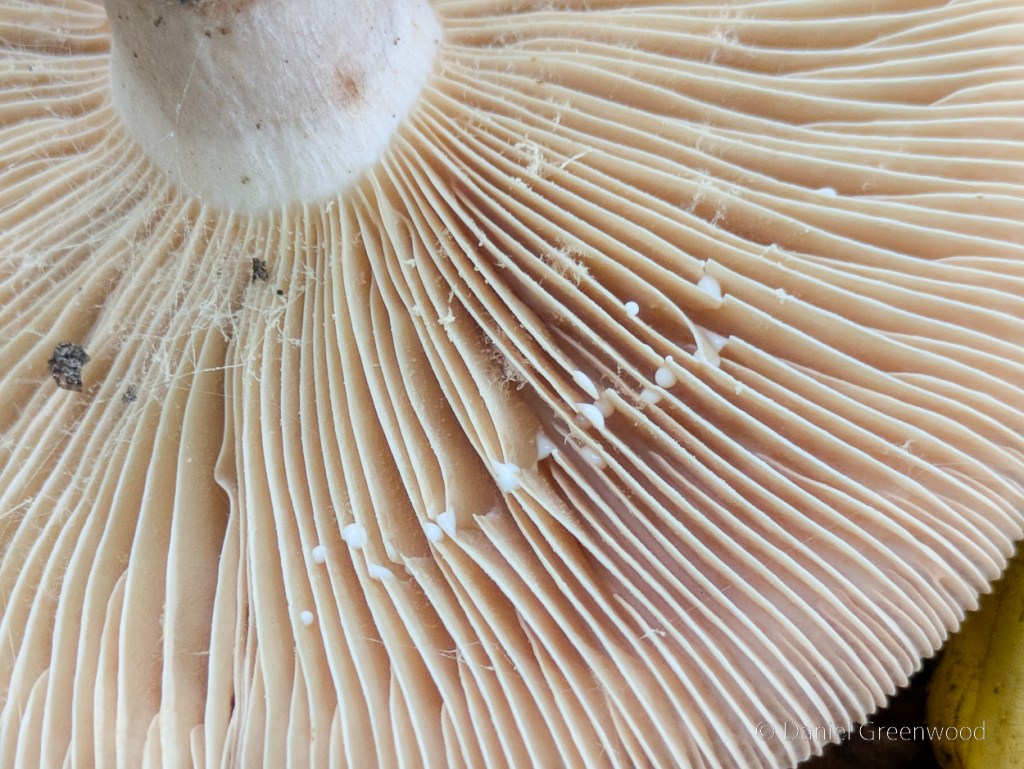
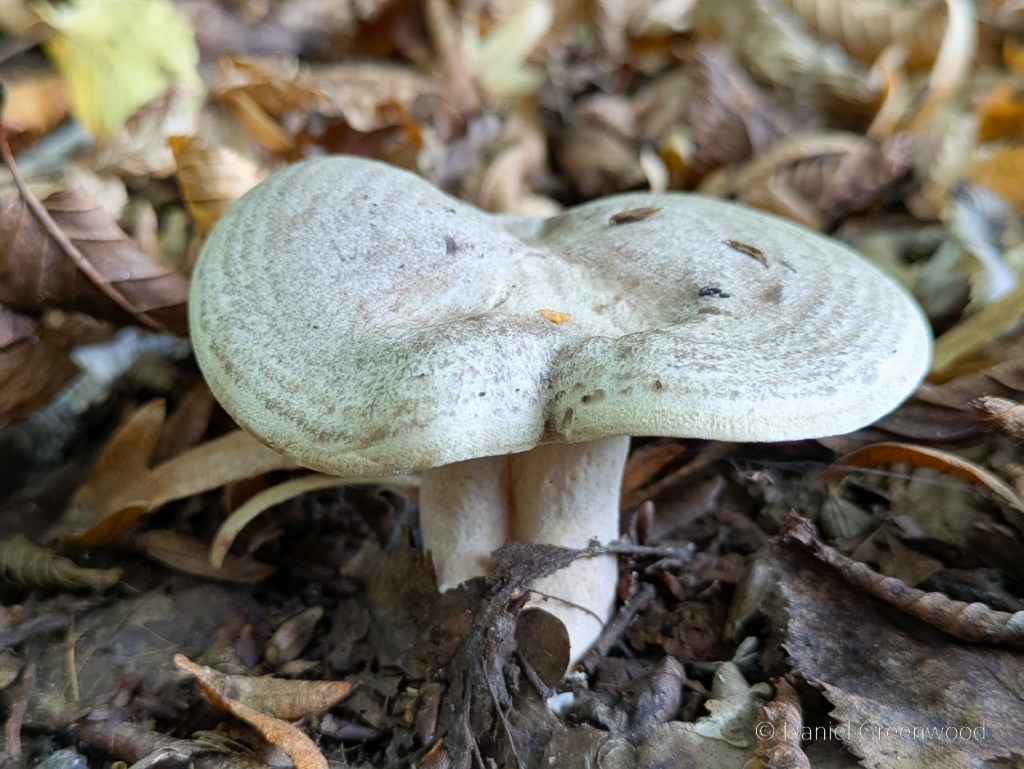
I think this is circled milkcap due to the patterning on the cap. Also, it has a partnership with hornbeam, and this was growing right underneath hornbeams!
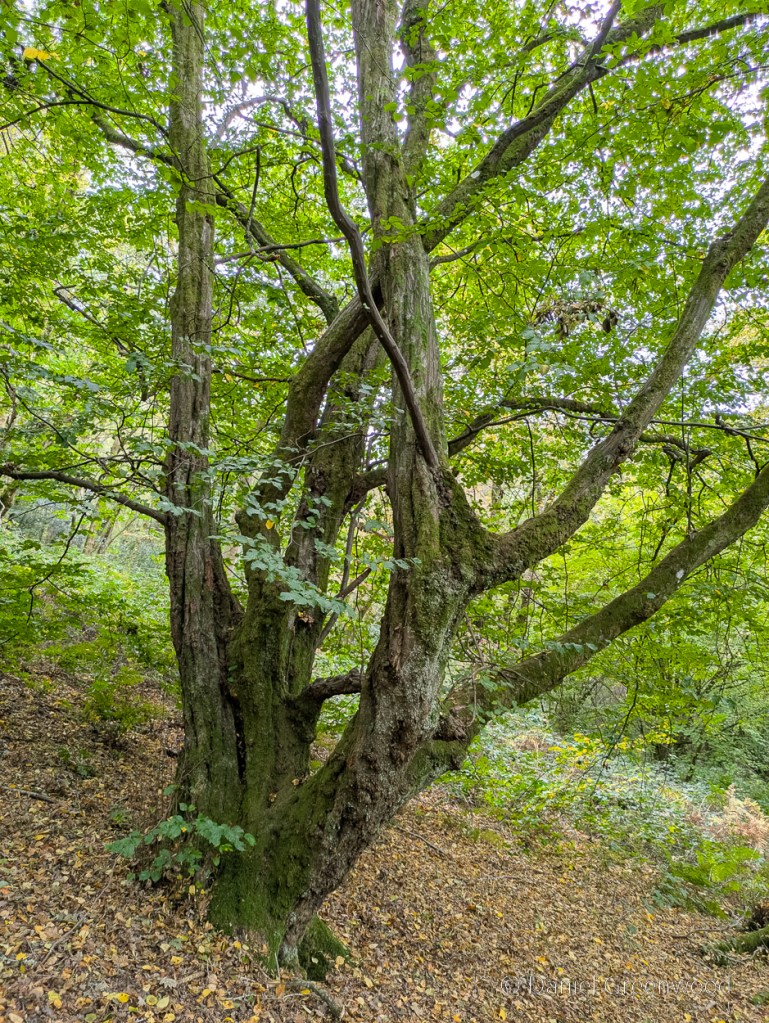
I was pleased about this because I’ve never knowingly found a fungus that has a link to hornbeam, what is one of the Scrooges of the tree world. I find that odd because hornbeam is a birch, and birch is known for its connectivity with fungi (fly agaric, etc.). Hornbeam is one of ancient woodland trees of Sussex (and London), where it does well on clays. It has a storied industrial past and was once coppiced for use in charcoal production.

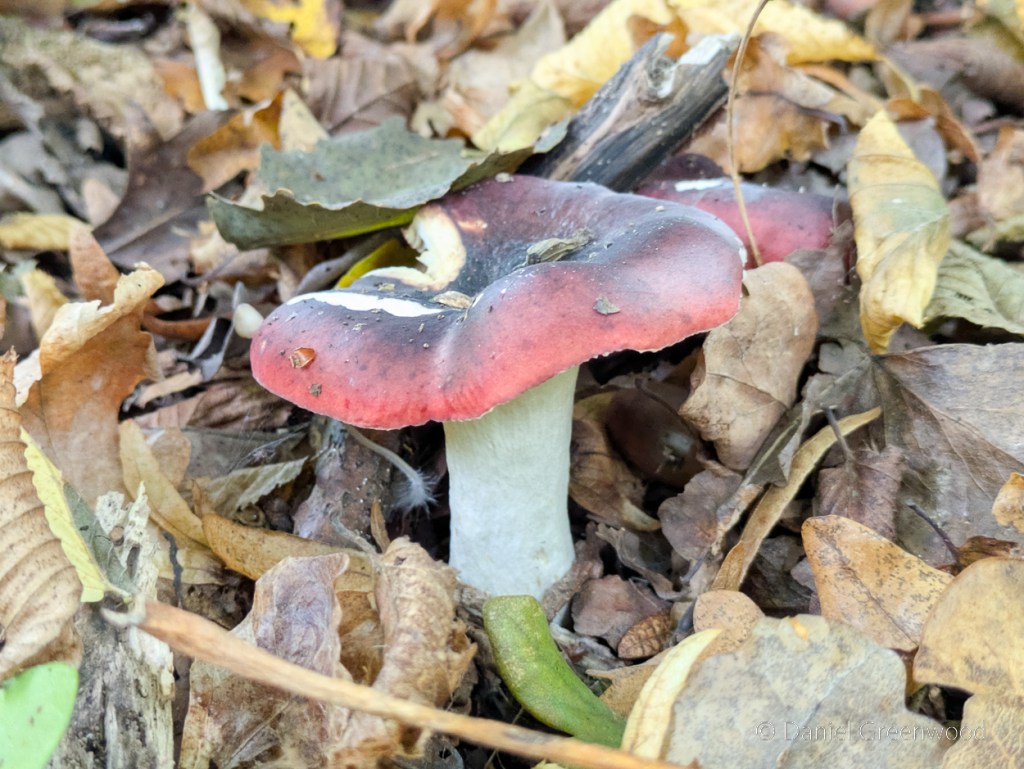
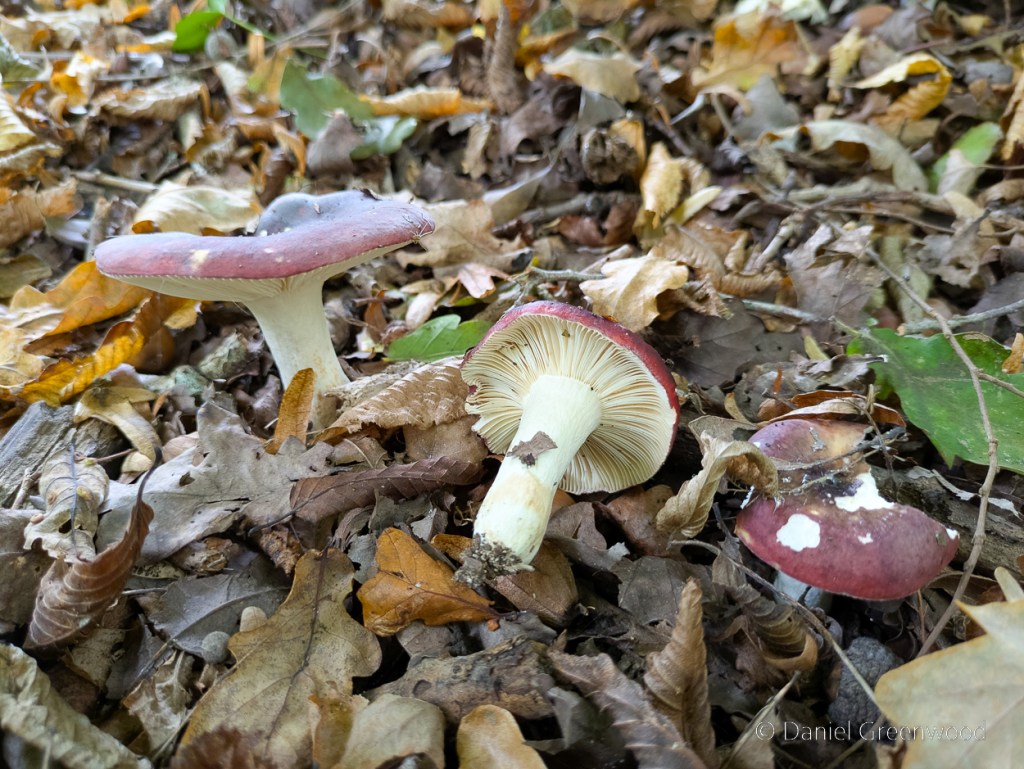
These lovely brittlegills were growing nearby and under hornbeam. This could be purple brittlegill but looking at iNaturalist there seem to be some issues with that. The German is ‘Purpurschwarzer Täubling’, which means purple-black russula. But as ever with this family of mushrooms, let’s leave them there!
Thanks for reading.
More from Fungi Friday:
 Fungi Friday 🍄
Leave a comment