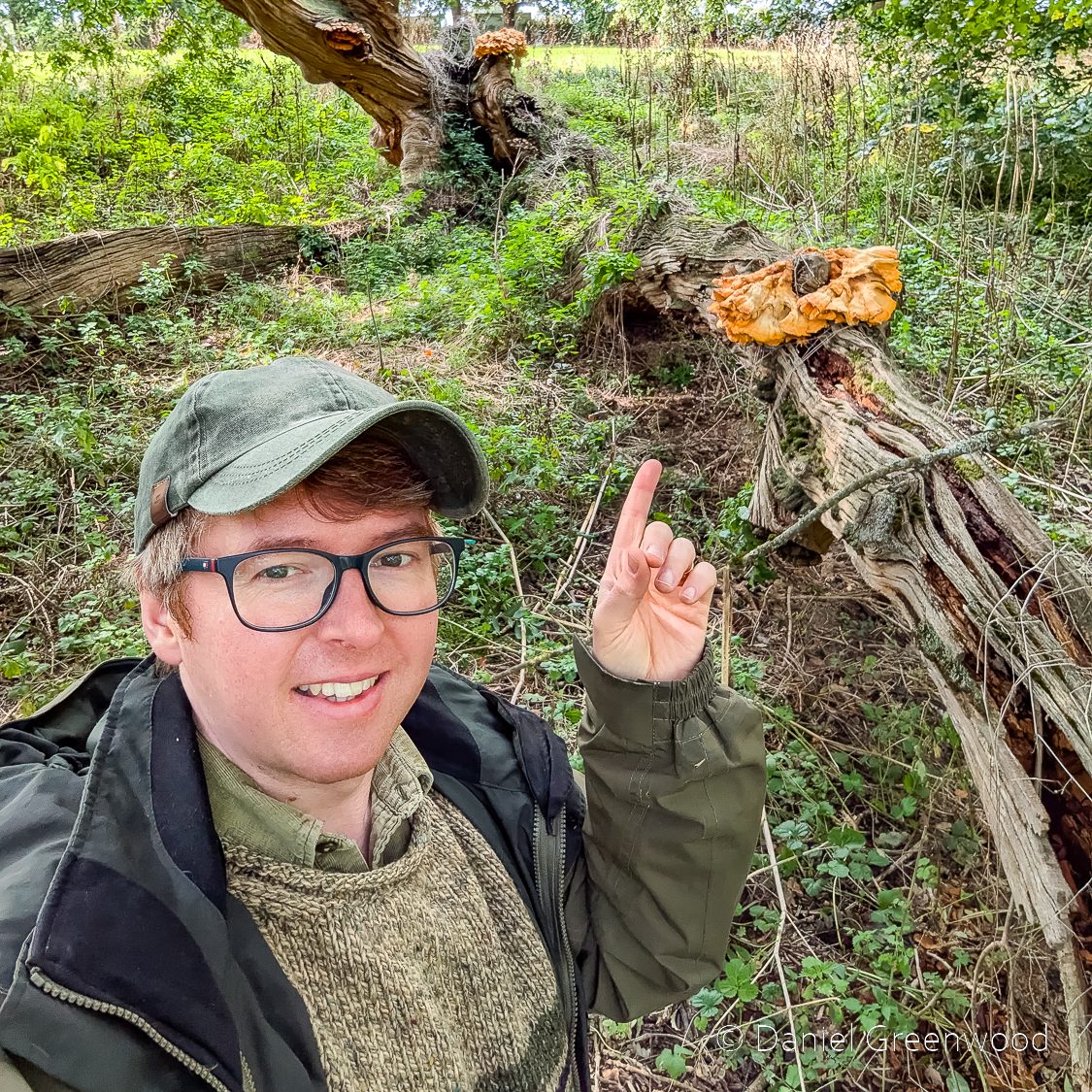
Lower Beeding, West Sussex, September 2025
This is the second part of a bike ride round the edge of the western High Weald, which was surprisingly fruitful. This post focuses on a little churchyard at the edge of Coolhurst Wood, which has no public access (according to the hostile signage).
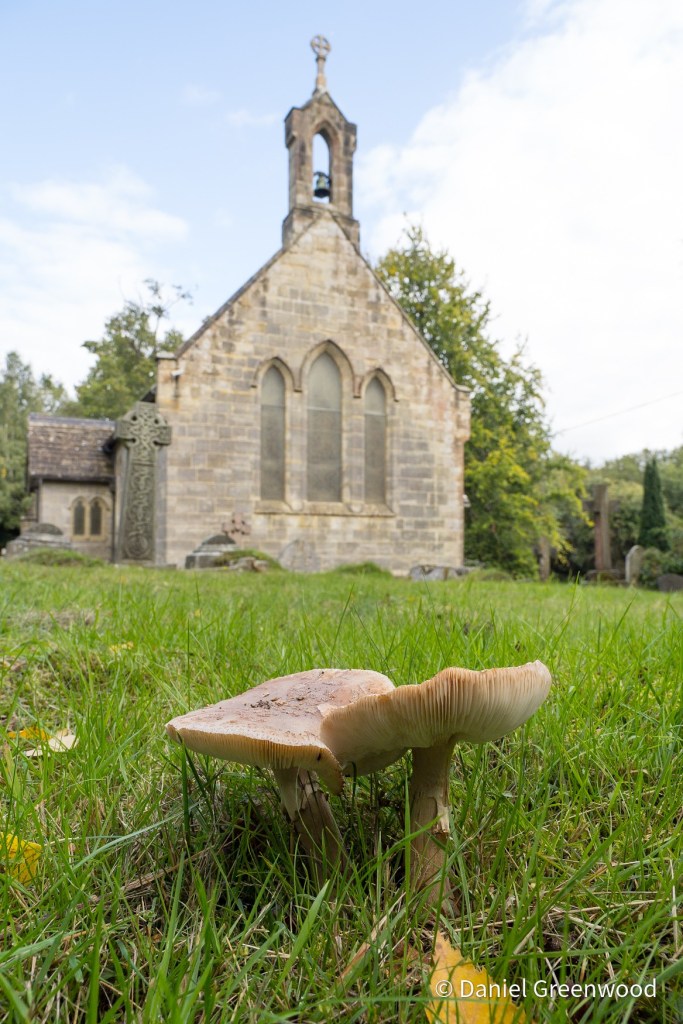
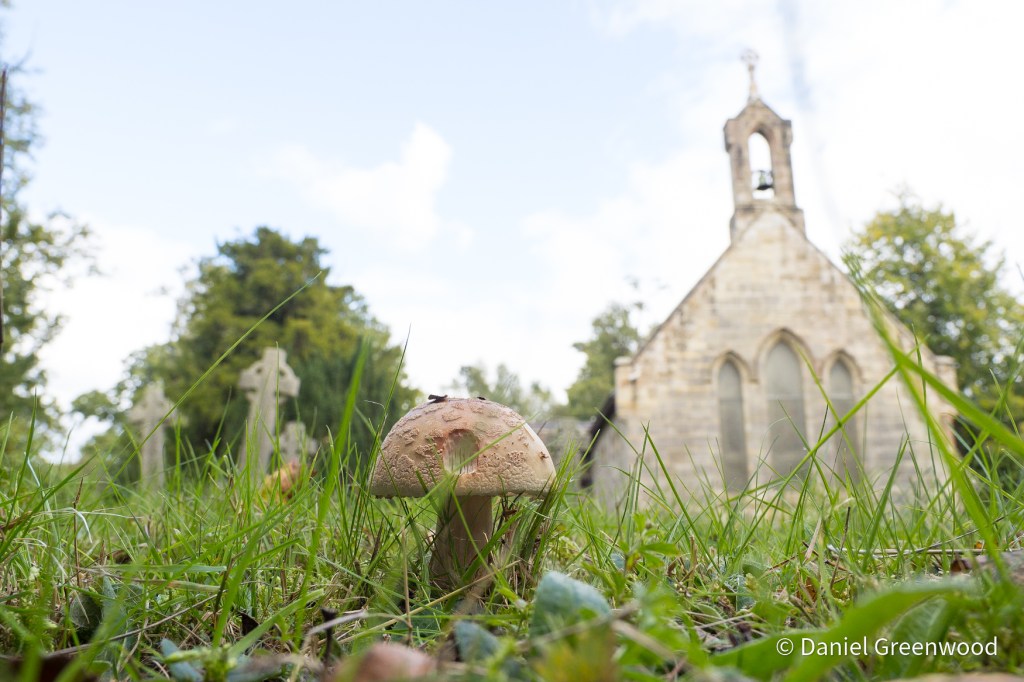
There were lots of blushers in the grasslands, which were fun to frame against the church itself (see the blog header image, also).
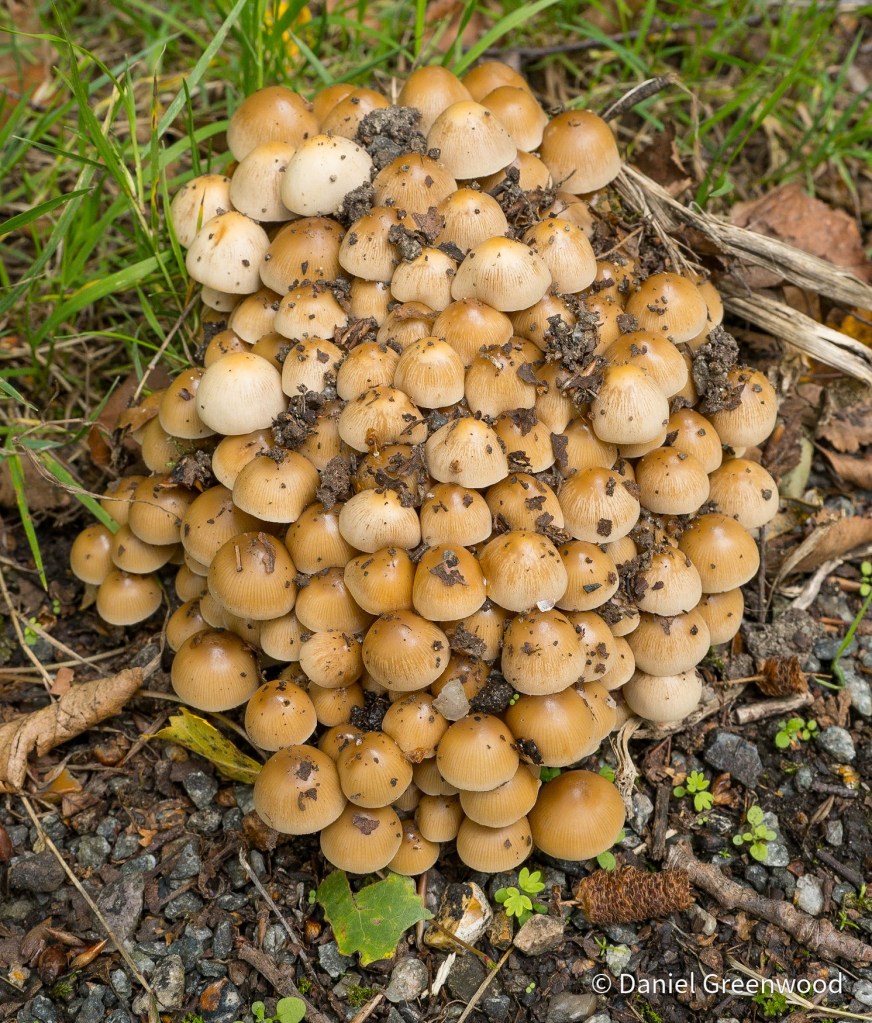
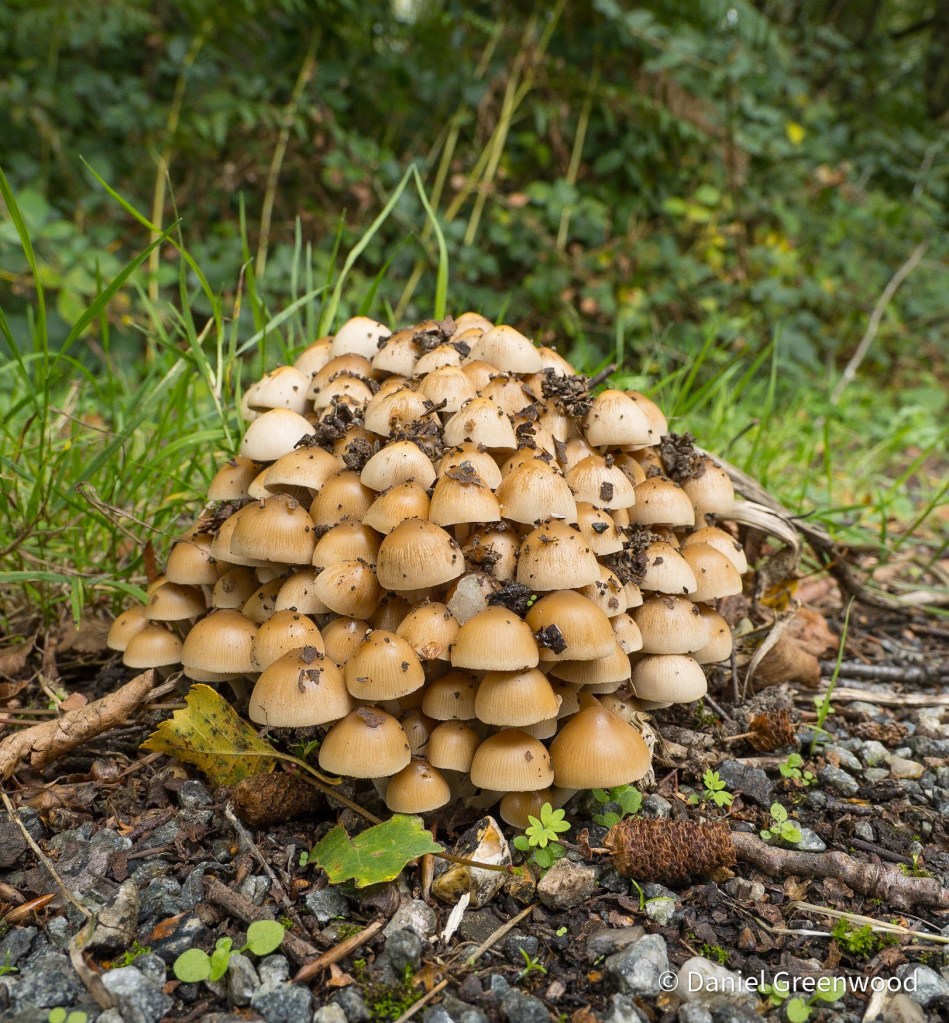
Clustered brittlestem (iNaturalist) is one of the brittlestems I am comfortable identifying along with stump brittlestem, as they are quite typical. This brittlestem is one of the most photogenic, and quite dramatic pushing through the gravel.
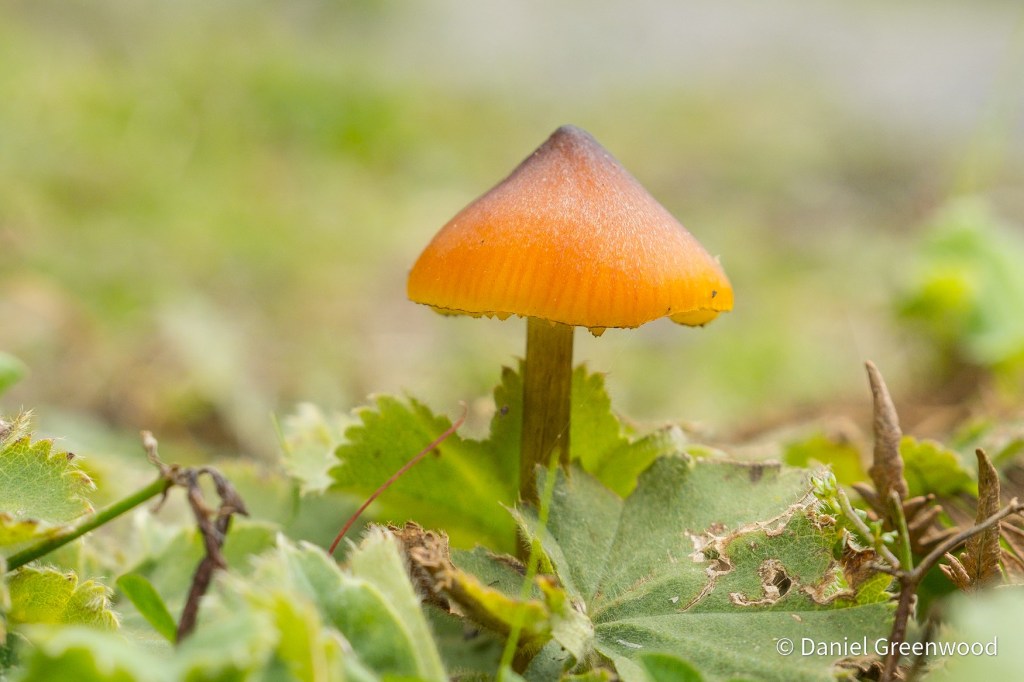
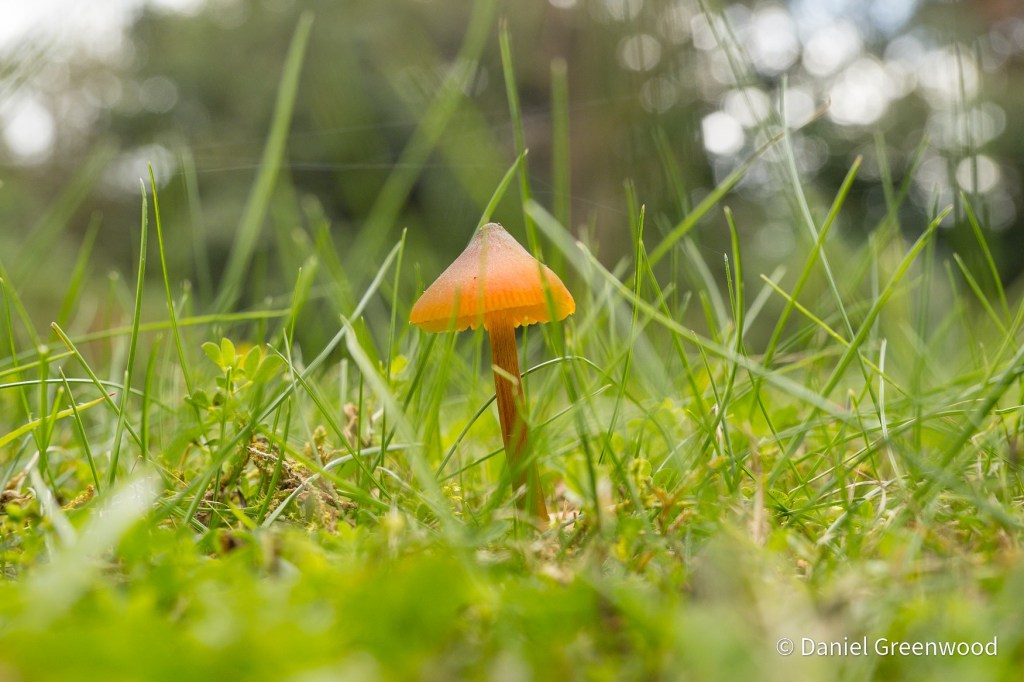
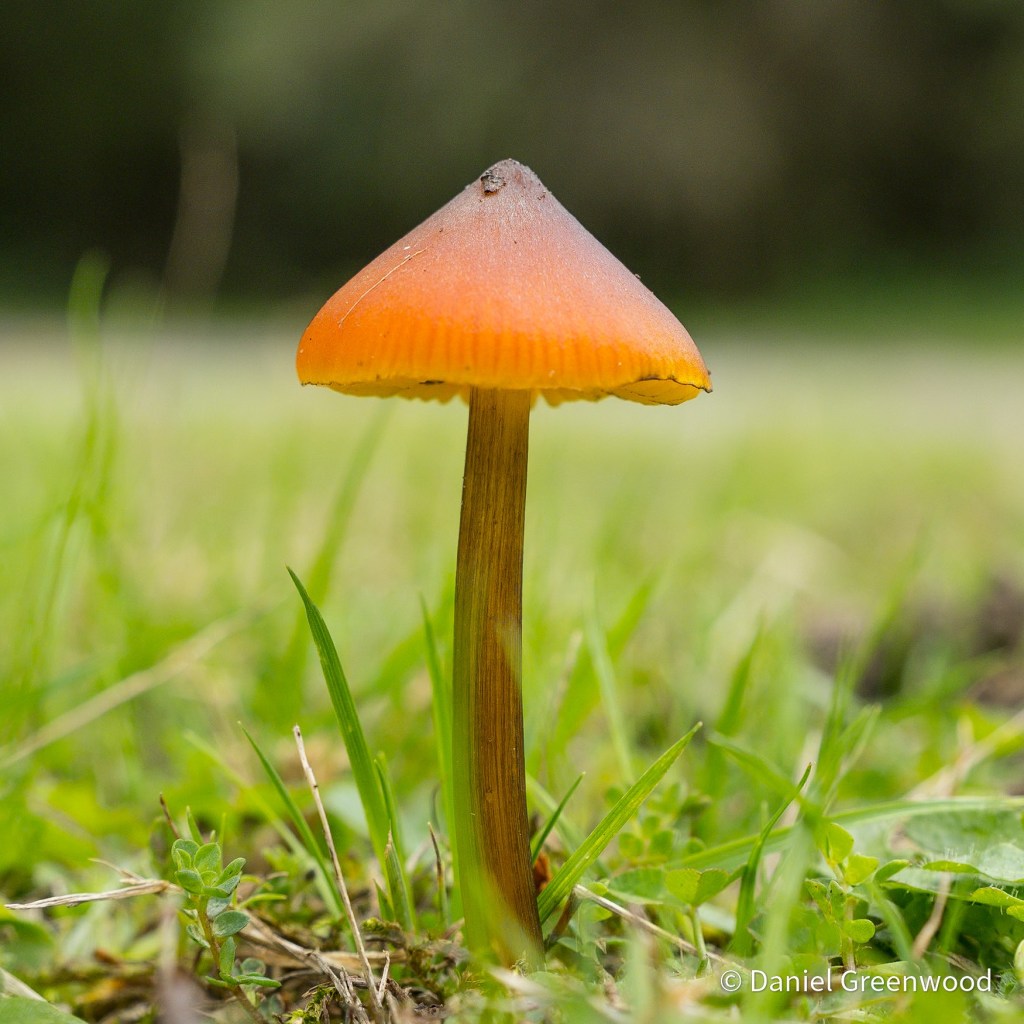
Blackening waxcap is one of the most common waxcaps I find, and it’s a beauty. Also known as witches bonnet, probably because it goes black.
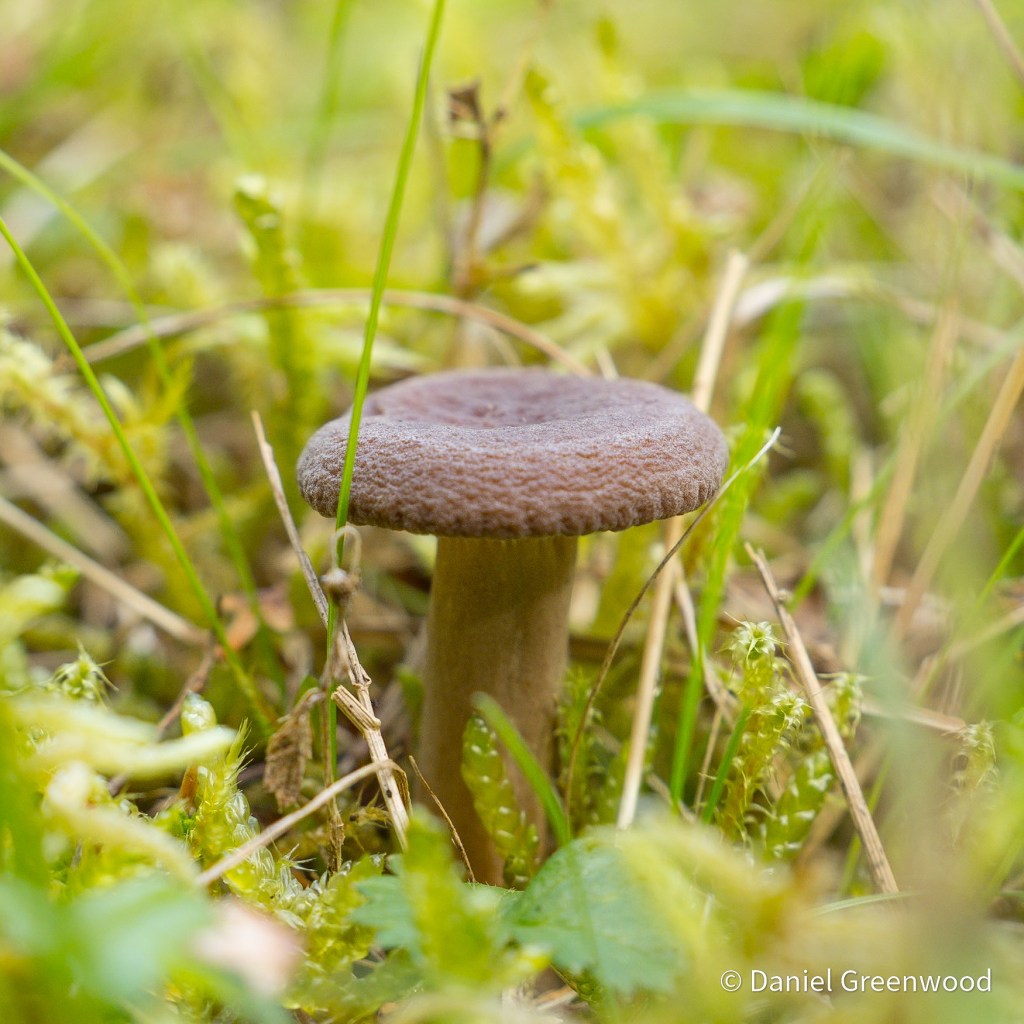
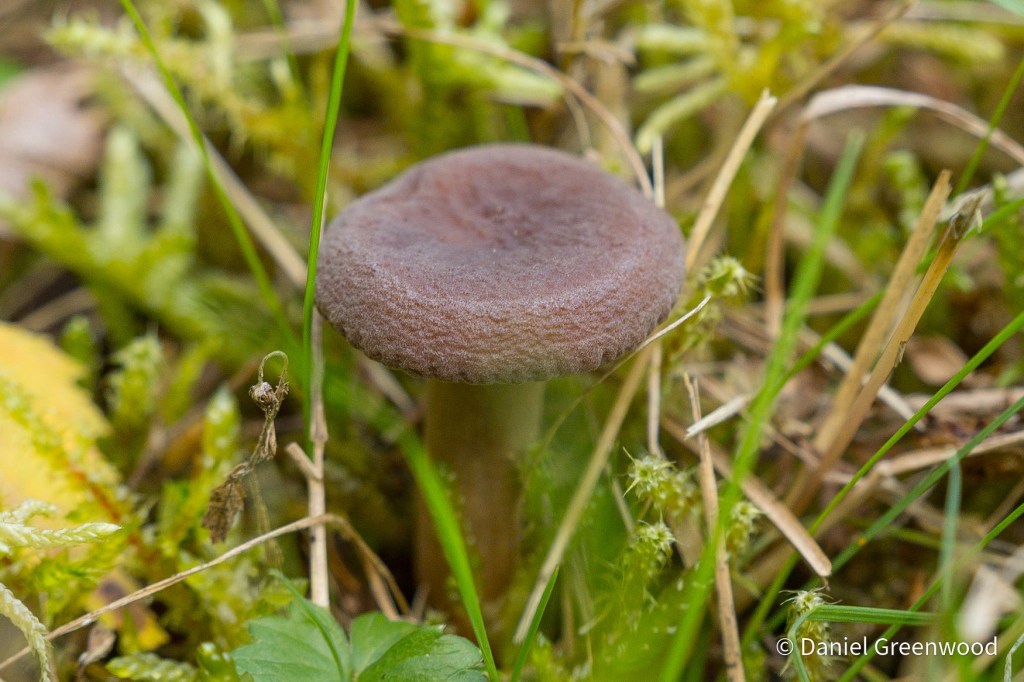
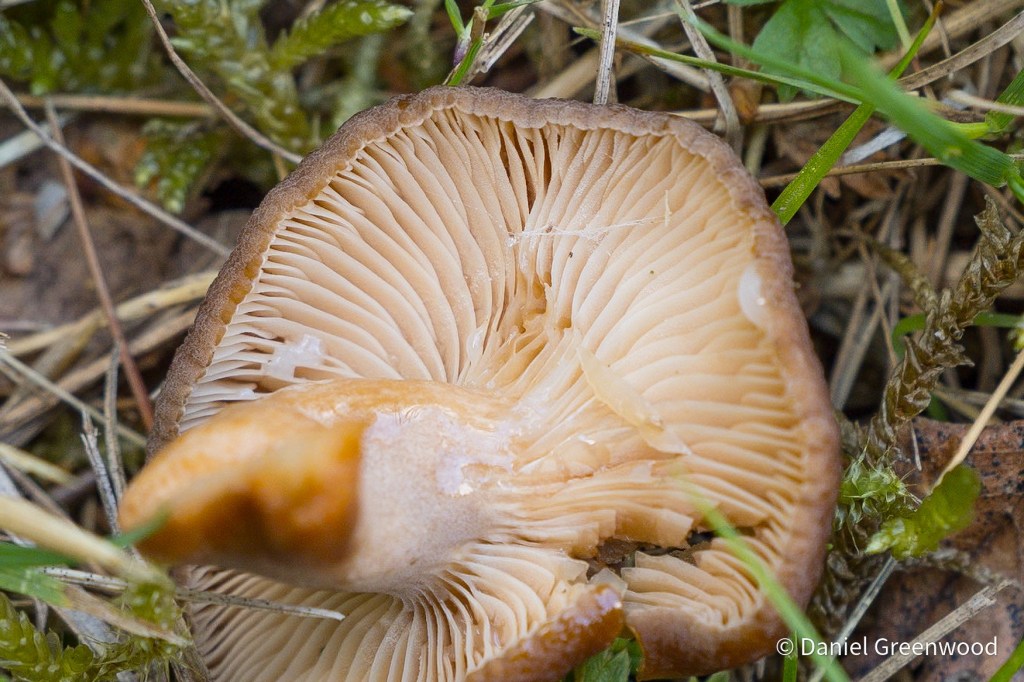
New species alert! I’ve done the book-learning on this one and am pretty sure this is watery milkcap (iNaturalist). It has quite watery milk from the gills, which can be seen in the third photo.
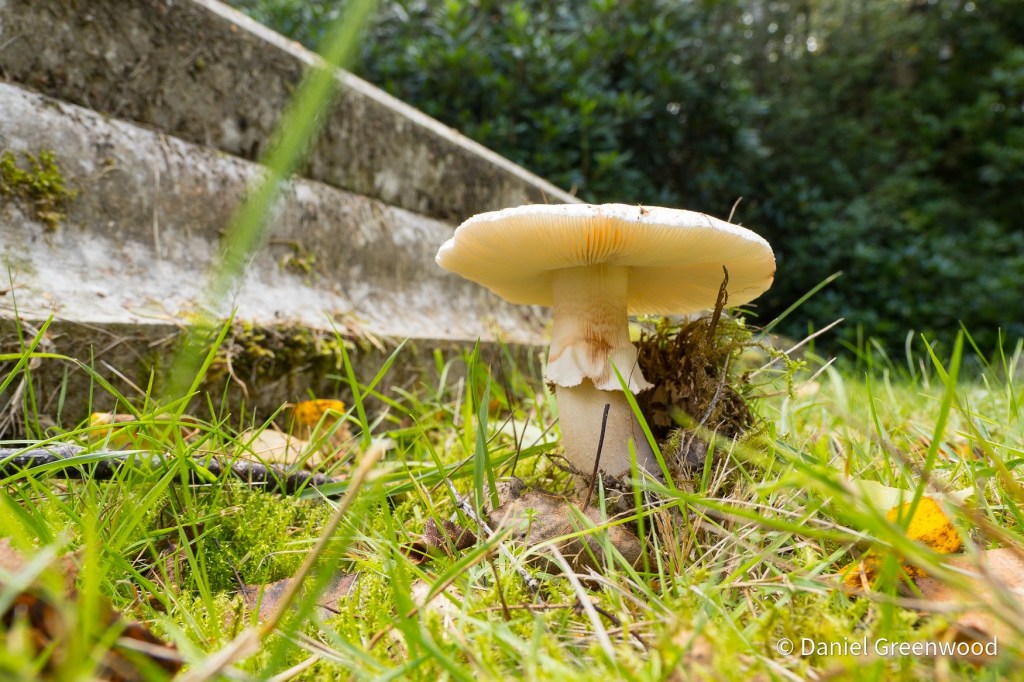
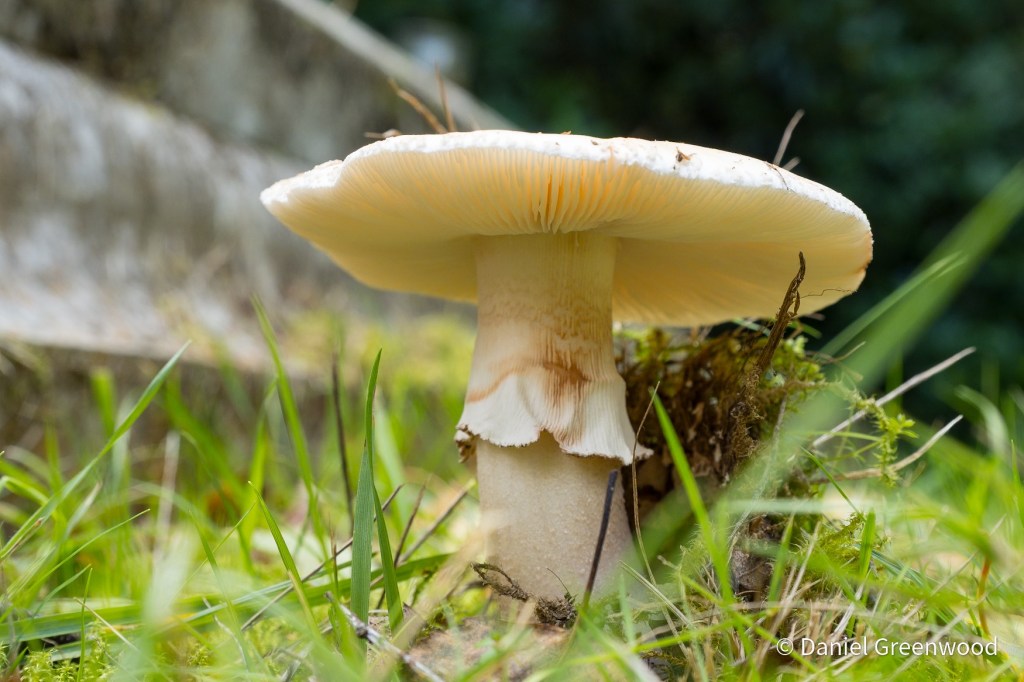
I don’t seem to have taken a photo of the cap of this Amanita, so I can’t really guess what it is beyond the family.
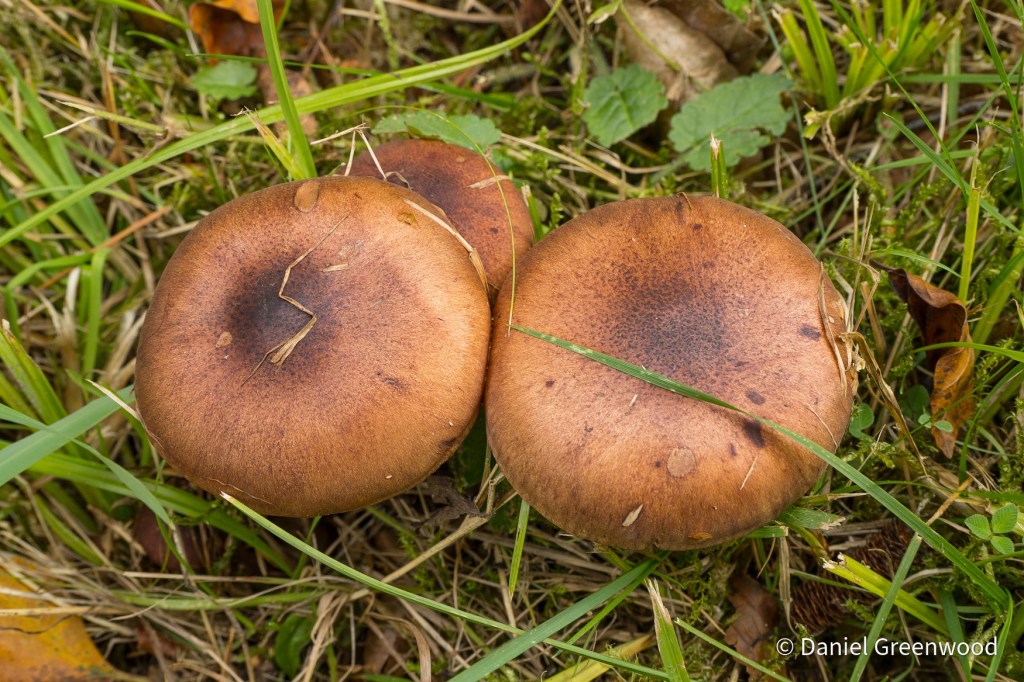
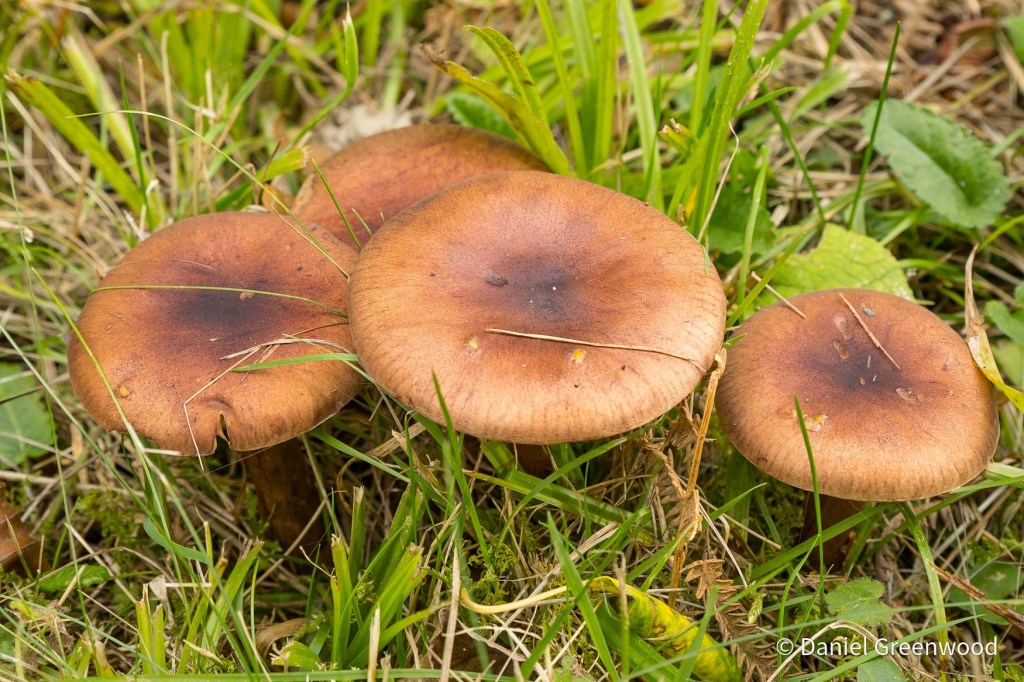
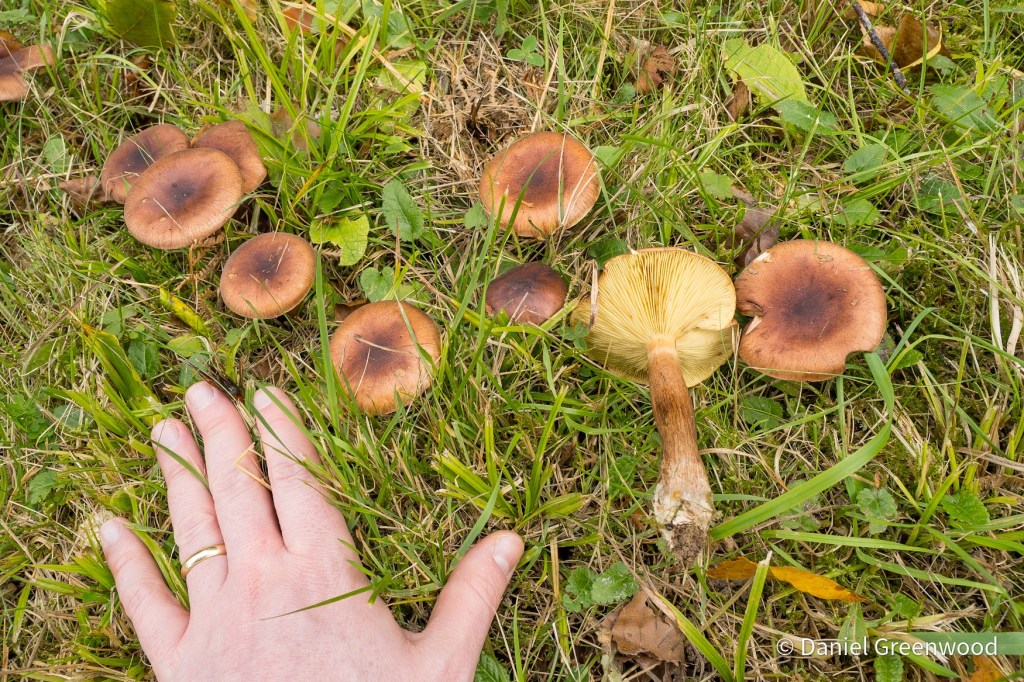
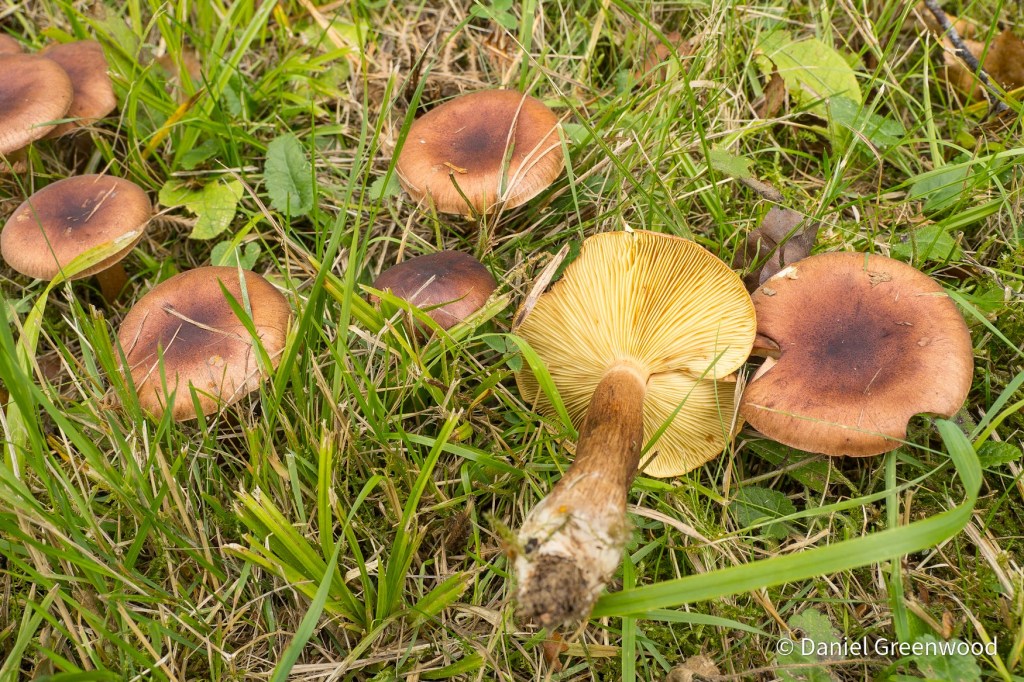
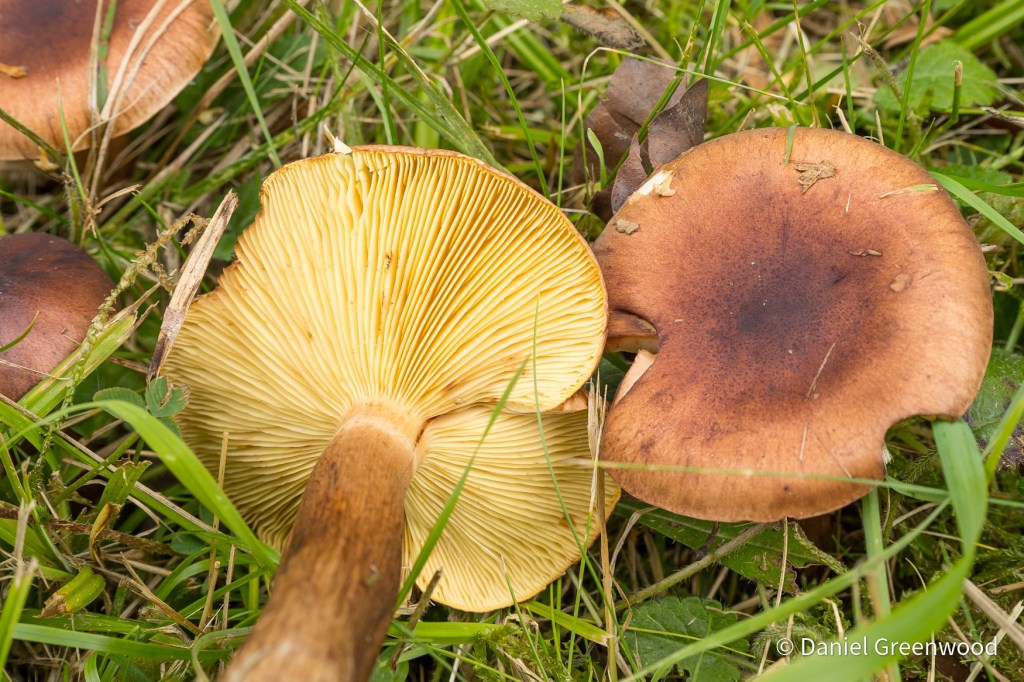
Another new species alert – birch knight (iNaturalist). Apparently this is a very common species, but I haven’t seen it before as far as I know. The gills are described as ‘yellowish’ and become spotty as they age.
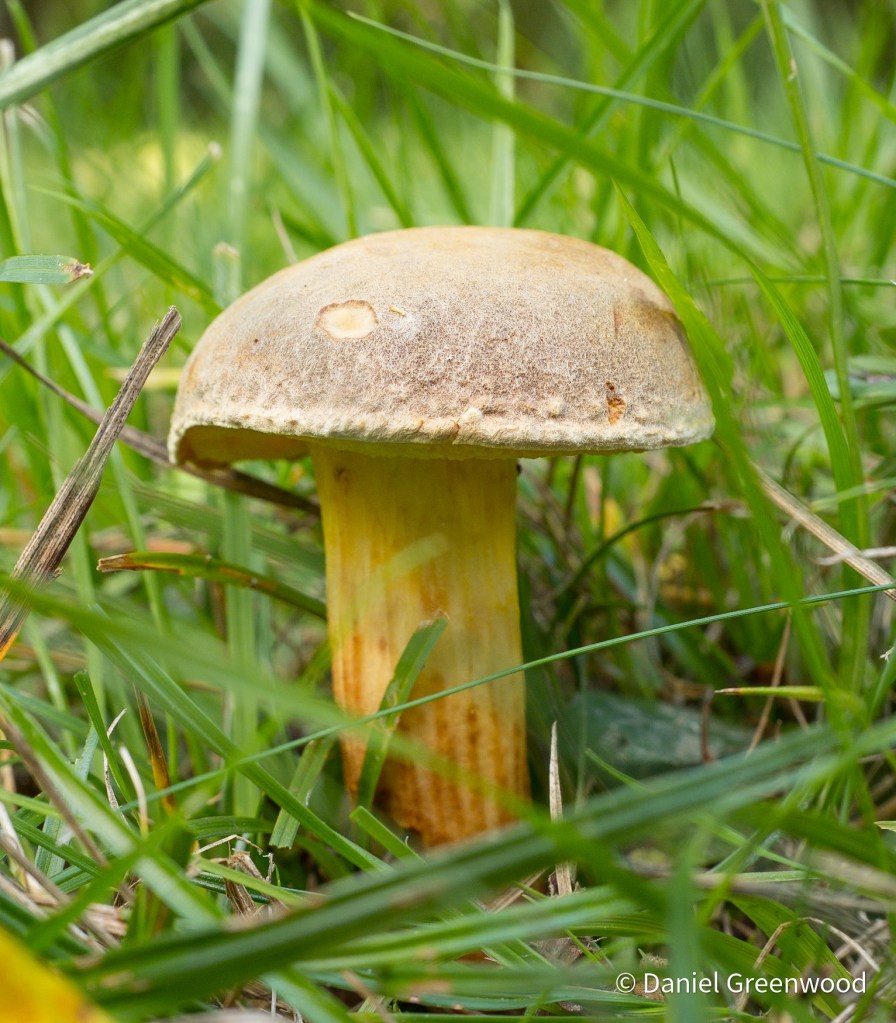
This one of those boletes that can be tricky to identify. It’s probably suede bolete but I can only really get it to Genus level of Xerocomus (iNaturalist).
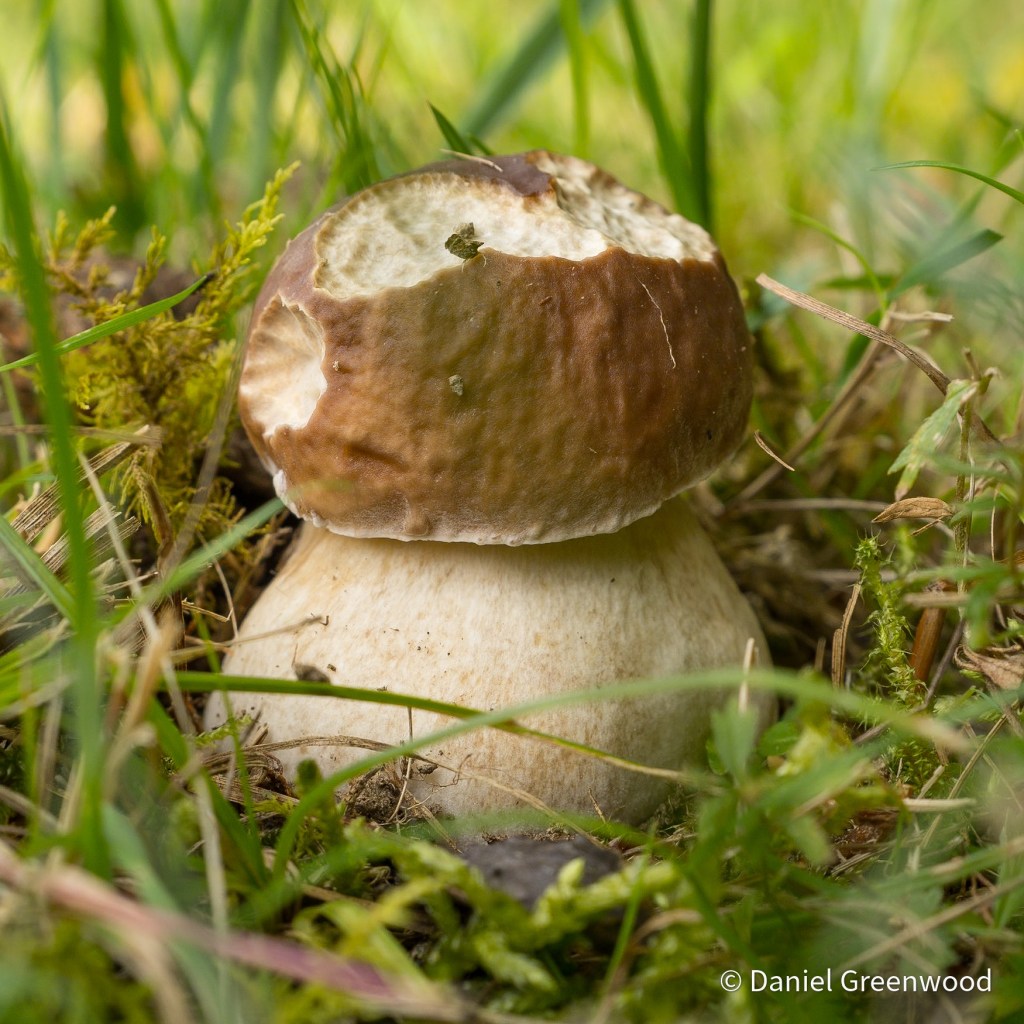
This lovely little penny bun was in the mossy grassland. Its cap has been eaten by a slug or snail.
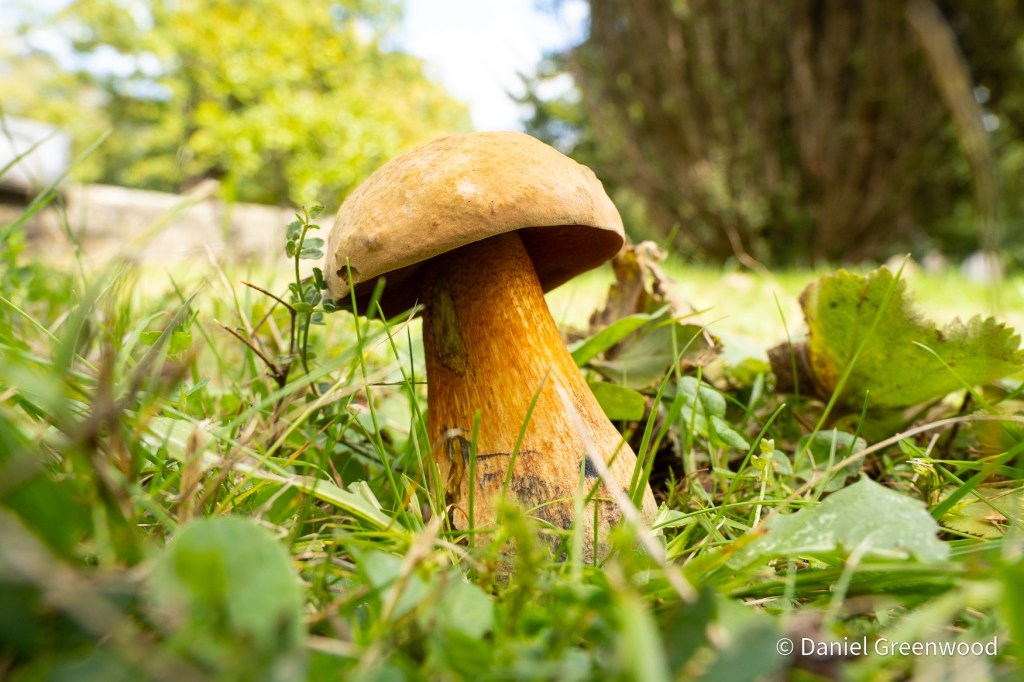
I’ve seen a few lurid bolete this summer/autumn, so I am feeling more confident that this is another one. There’s some blue staining at the base, such is their wont.
Thanks for reading.
 Fungi Friday 🍄
Leave a comment